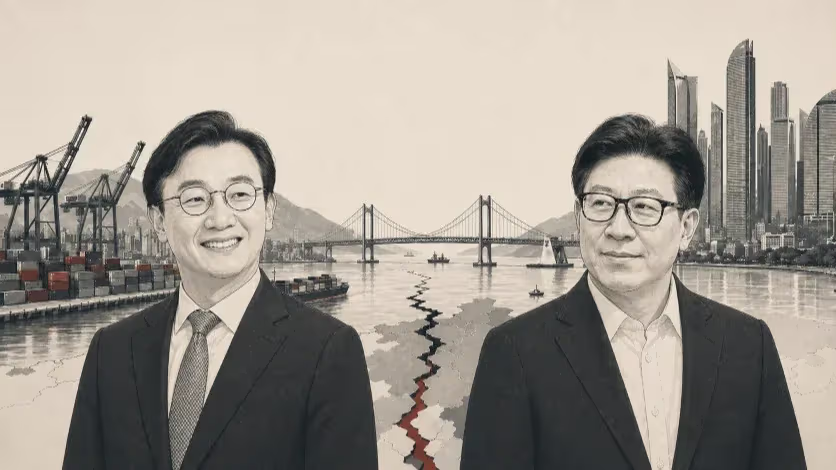
Busan mayoral race tests conservative dominance in South Korea
Jeon Jae-soo’s polling strength has made Busan’s mayoral race unexpectedly competitive, forcing incumbent Park Heong-joon to defend conservative continuity in Busan.
Busan news, in-depth reporting, and editorial insights covering the city’s politics, economy, development, institutions, and social change.
About this section
Coverage of Busan's politics, economy, civic institutions, and urban change, with local developments placed in their wider context.
Jeon Jae-soo’s polling strength has made Busan’s mayoral race unexpectedly competitive, forcing incumbent Park Heong-joon to defend conservative continuity in Busan.
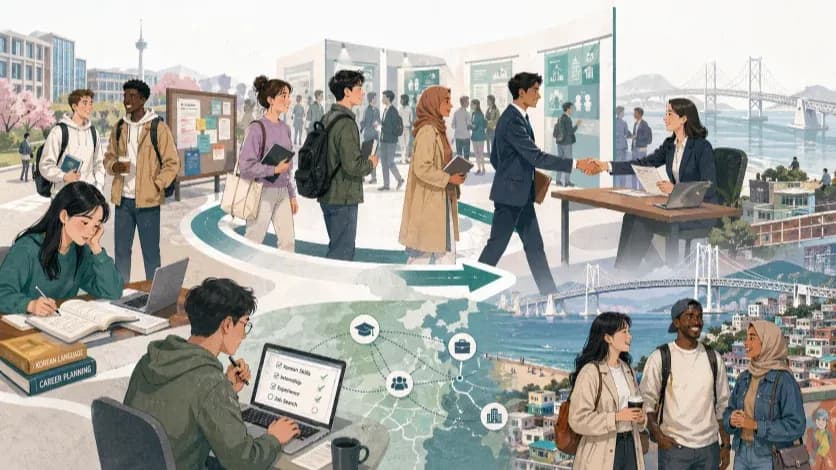
Busan has expanded its Dream Job Fair into a broader system linking jobs, visas and settlement support, but it remains less clear how many students are hired, change status and stay.
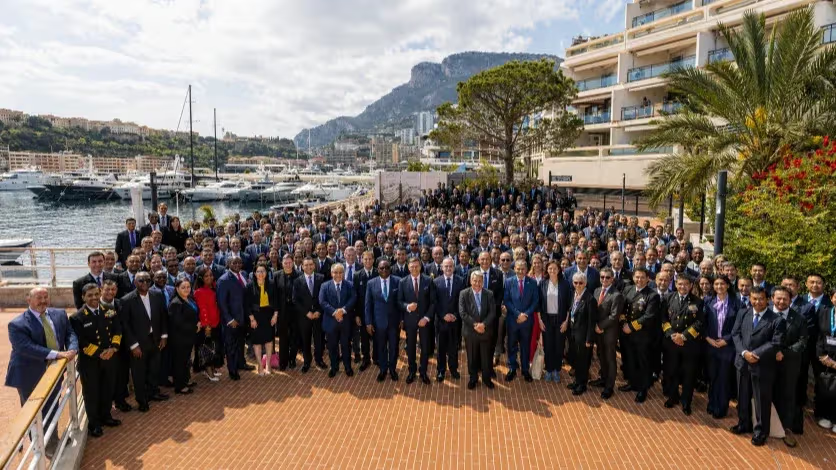
Busan has secured final approval to host an International Hydrographic Organization infrastructure centre, giving the city a role in the systems behind the global transition to new digital maritime standards.
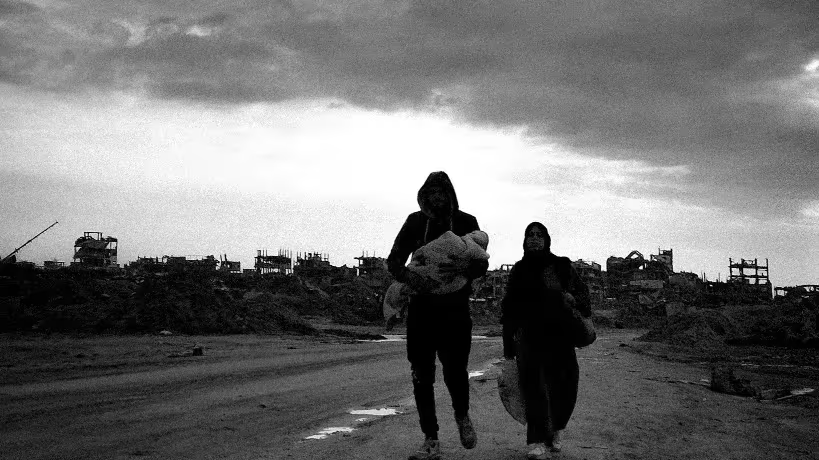
Arise Art Space in Busan opens On a Soil I Nourished on May 2, presenting photographs by Gaza-based artist Moayed Abu Ammouna that follow displacement, waiting and the persistence of daily life under siege.
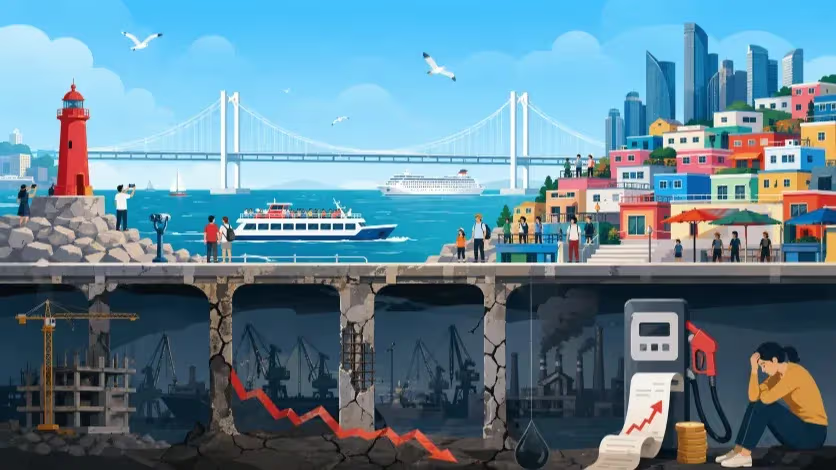
Visitors are back, but the sectors that give the city economic depth remain under pressure — leaving Busan busier on the surface and more exposed underneath.
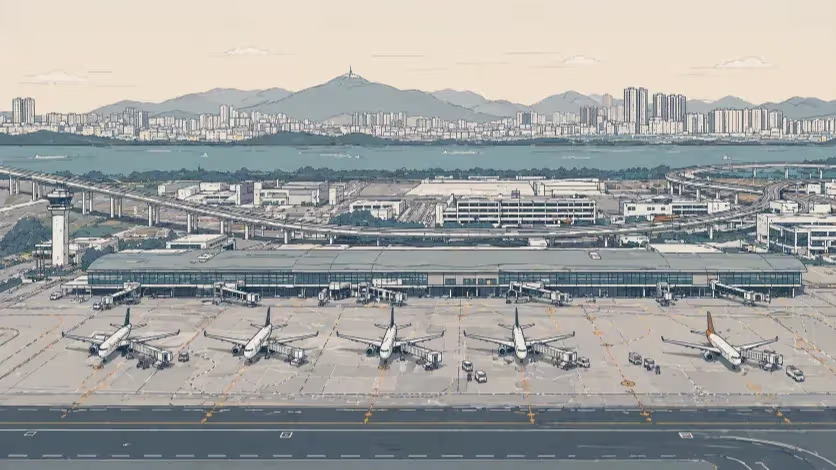
Gimhae is already under pressure, Gadeokdo remains years from opening, and the hardest question in Busan’s airport debate is no longer whether the city needs a new gateway, but how it lives through the wait.

At Seobusan Smart Valley, Busan is trying to use an integrated control system to manage the risks of an older industrial complex. Whether that becomes a working public-safety tool or a technology showcase will depend on results the city has yet to prove.
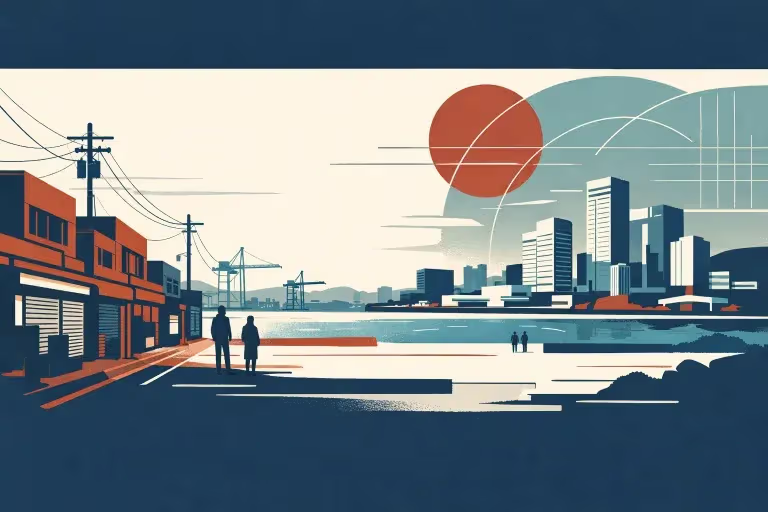
Busan is aging, losing younger residents, and struggling to sustain confidence in North Port, its flagship waterfront project. With World Design Capital 2028, the city is trying to show that visible ambition can still produce real urban renewal.
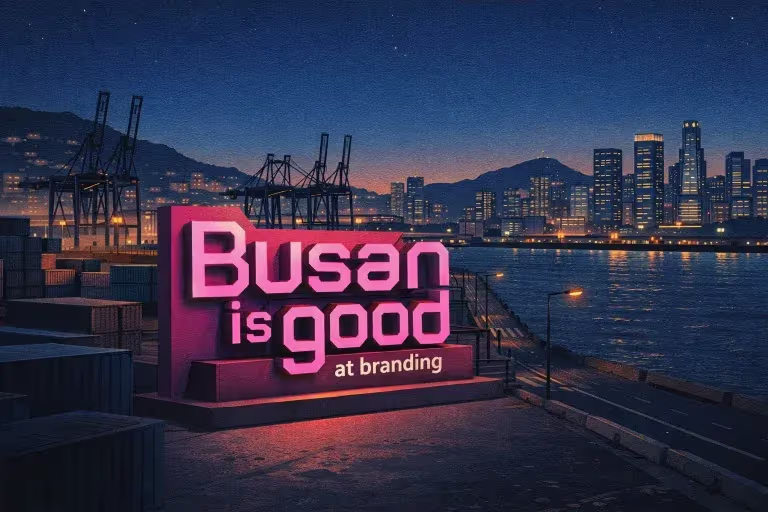
City branding is not unusual. What makes Busan worth examining is how closely branding, public language and broader policy messaging came to overlap, raising harder questions about visibility, priorities and the cost of future revision.

Busan is increasingly credible as a regional investment base, but firms still prefer the capital region and Chungcheong when making final location decisions. The gap lies in ecosystem depth, strategic services and long-term corporate staying power.
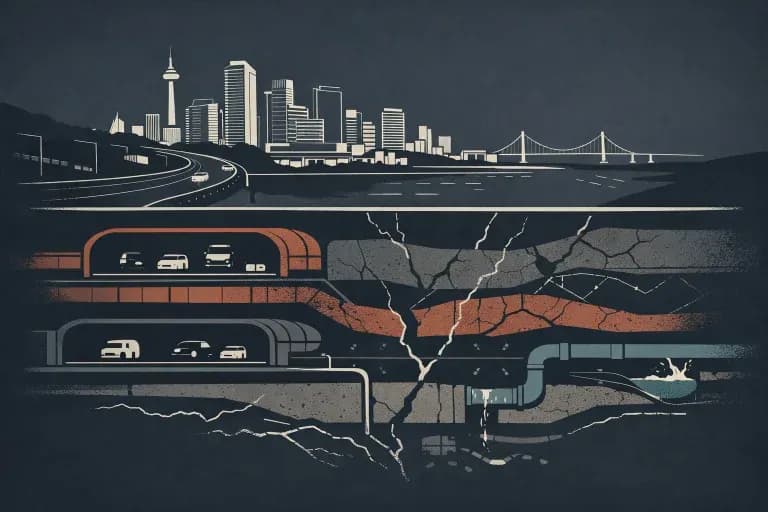
The latest settlement scare near the Mandeok–Centum Urban Expressway has sharpened scrutiny of a broader underground strategy in a city where buried risk has never been fully settled.
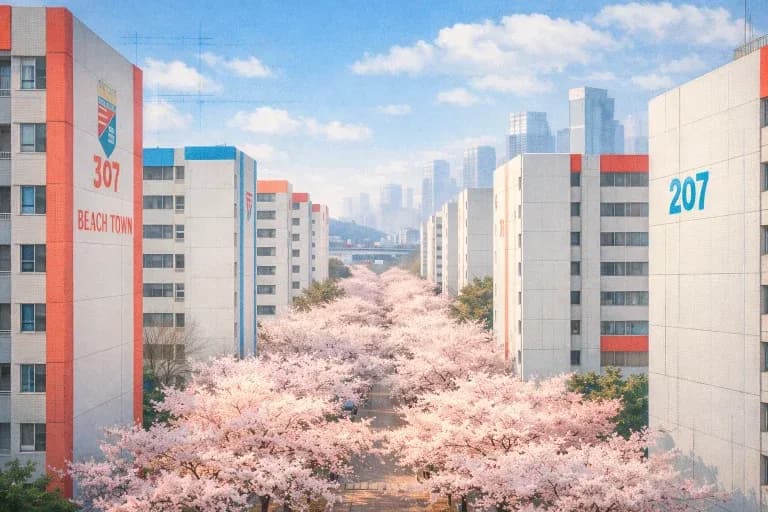
Busan’s design-led planning has repeatedly expanded redevelopment room in districts that were already rich in value, access and infrastructure.
Search within Busan or the wider site.