TechnologyOct 19, 2026
What an Accurate Rainfall Forecast Can Still Miss
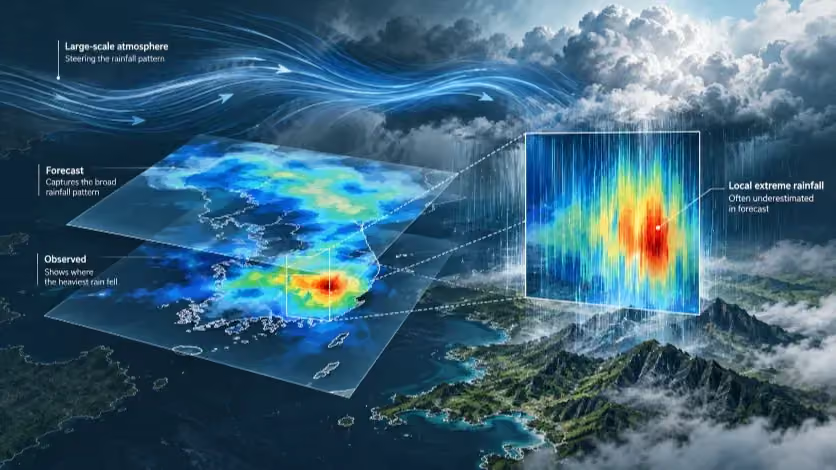
AI weather forecasts can capture where rain will fall while underestimating its heaviest bursts. Research in South Korea and Europe reveals why the difference matters.
Coverage of technology, AI, startups, digital transformation, and tech policy in Korea and the global economy.
About this section
Reporting on AI, platforms, digital infrastructure, startups, research, and how technology changes industry, institutions, and everyday life.
AI weather forecasts can capture where rain will fall while underestimating its heaviest bursts. Research in South Korea and Europe reveals why the difference matters.
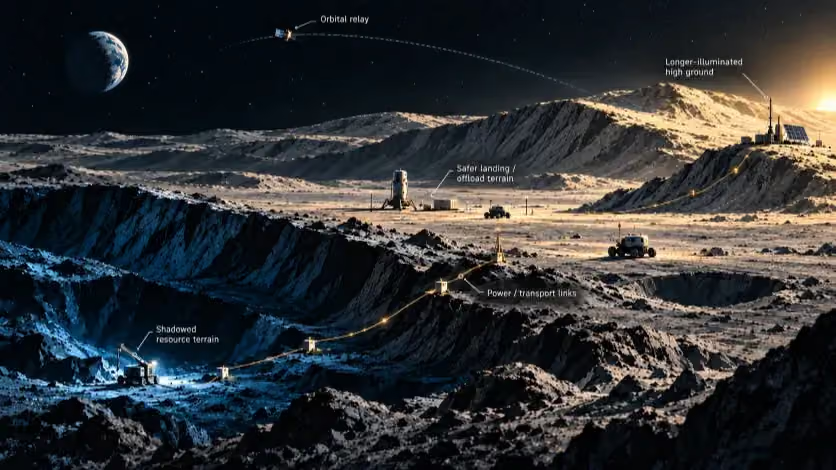
Water, sunlight, safe landing terrain, communications and power do not naturally coincide near the lunar south pole. The next phase of lunar industry will depend on whether infrastructure can connect those conditions reliably enough for later missions to carry less from Earth.
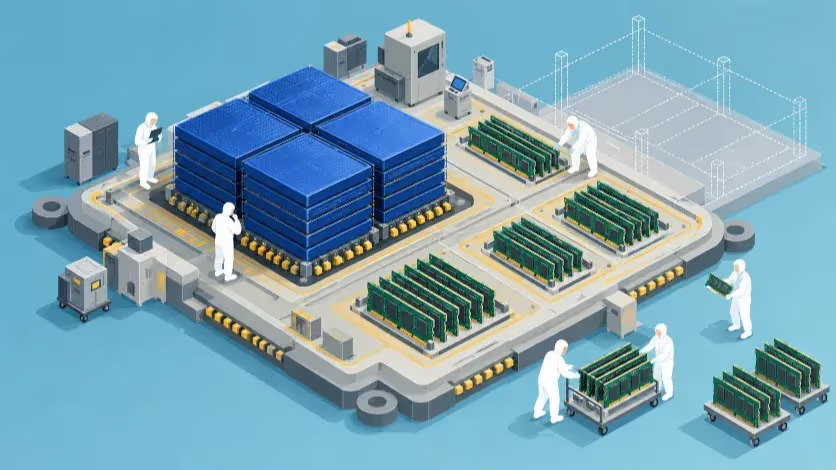
AI demand is forcing memory makers to decide how scarce DRAM capacity is divided among HBM, server memory and other products before new fabs arrive—pushing allocation decisions into customer contracts, factory investment and AI-system design.
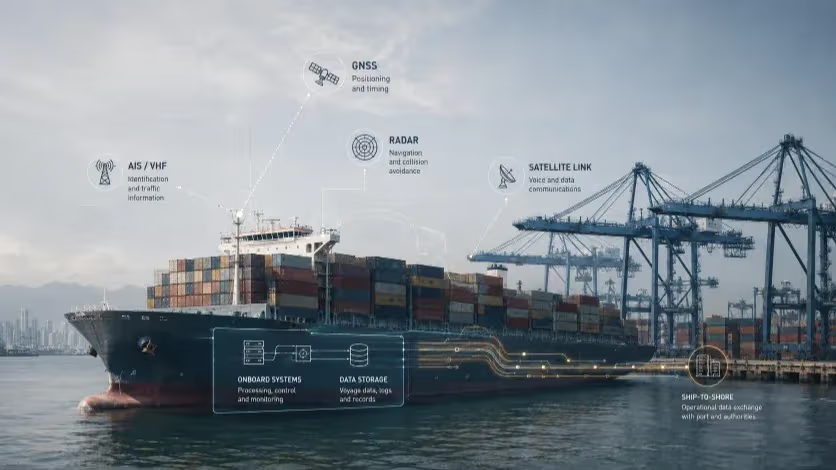
Modern merchant ships already carry dense networks of sensors, radios and computers. The COSCO allegation shows why maritime security increasingly depends on technical baselines, evidence and precise attribution.
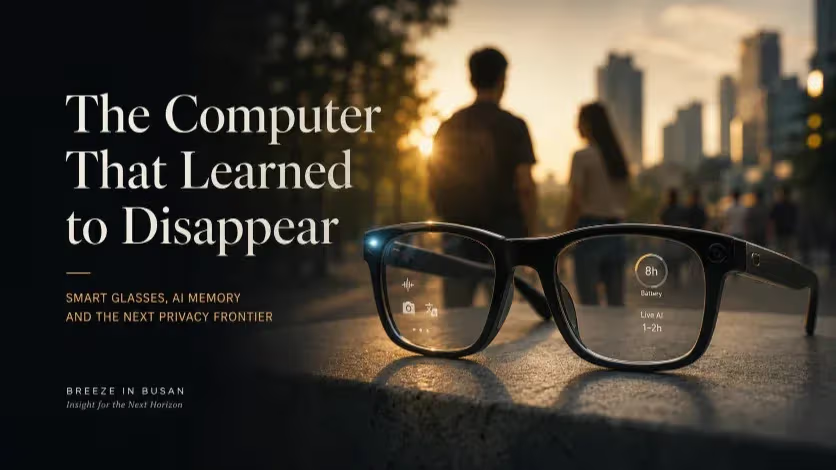
The most successful smart glasses are learning to disappear. Their next challenge may be what everyone else loses when the computer becomes difficult to see.
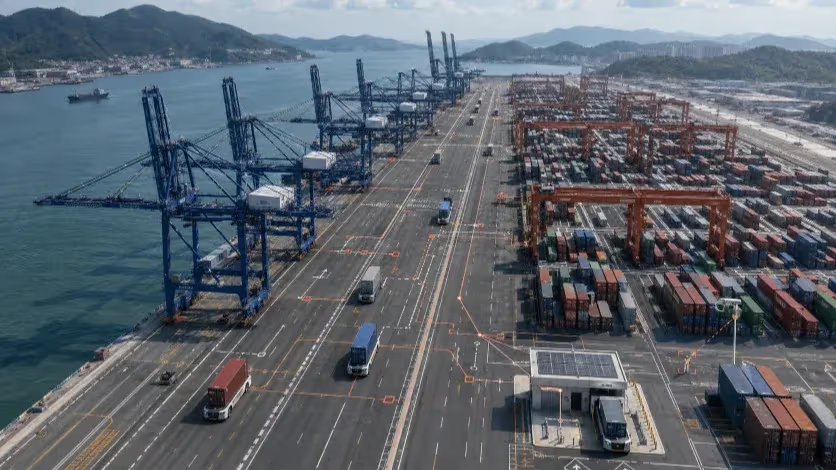
Busan New Port already runs driverless cargo transport. Its next automation programme will be judged by whether new vehicles, software, perception and charging can work inside an existing terminal without adding another proprietary layer.
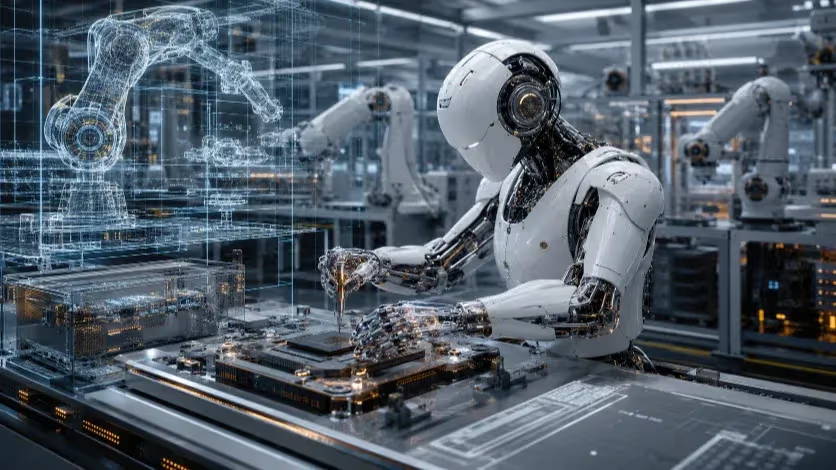
Nvidia needs more than chips and data centres to make physical AI work. Korea’s factories offer the industrial data, machinery and engineering needed to close the gap between simulation and reality—but the long-term value will depend on who controls the models and software built there.
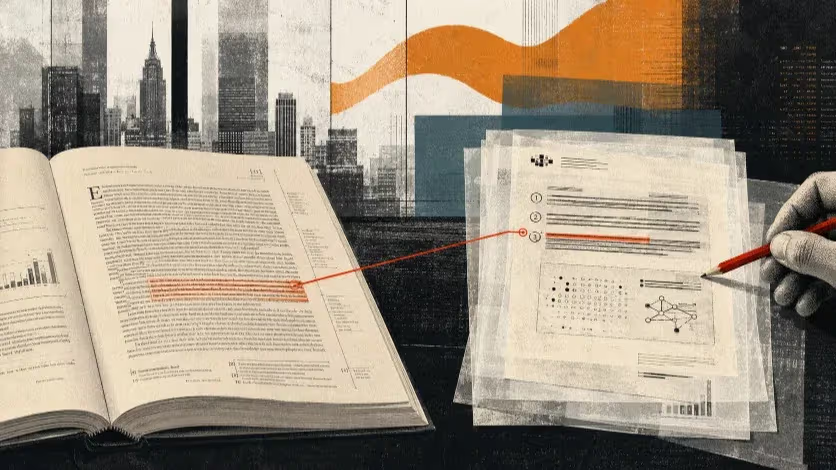
Reading and writing were cultural technologies long before they became school skills. Print multiplied external memory, smartphones made it constantly reachable, and AI is now moving into the middle of thought itself.

Smart apartment apps in Korea are moving beyond notices and management fees into doors, parking, visitors, biometrics and administrator systems — turning convenience at the threshold of home into a new privacy test.

AI companions can help users feel heard, rehearse difficult conversations and endure loneliness. They may also make human relationships feel slower, harder and less responsive by comparison.
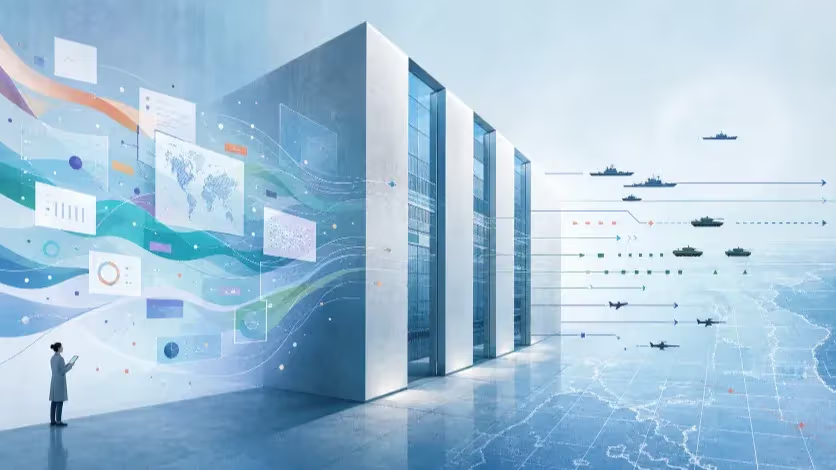
The Pentagon’s push to bring major AI companies into classified networks exposes the limits of “human in the loop” ethics — and raises a harder question about how military institutions shape artificial intelligence before it is ever used.
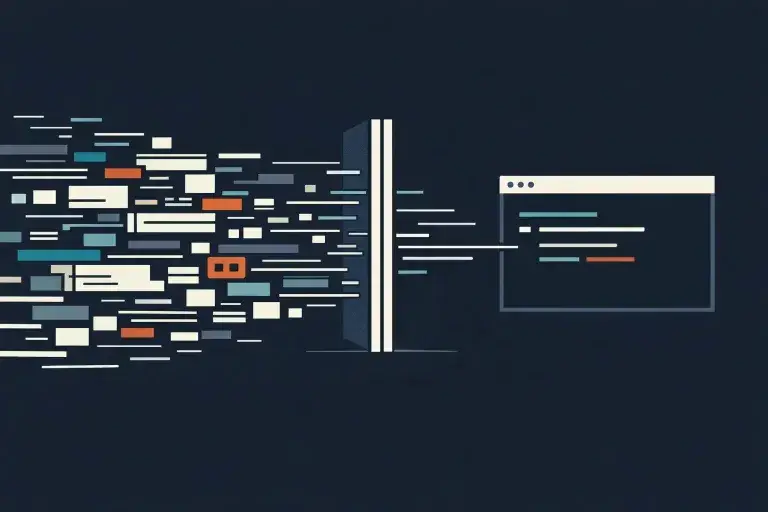
A new class of tooling is emerging to compress prompts, trim shell output, shrink tool metadata, and reset agent memory. The shift suggests that the next frontier in AI coding is no longer just model capability, but the engineering of context itself.
Search within Technology or the wider site.