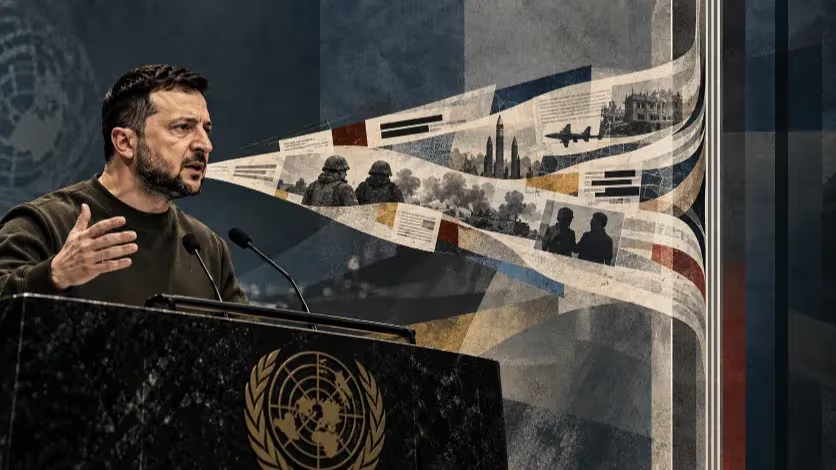
Zelensky, South Korea and the Limits of Wartime Pressure
South Korea says Kyiv broke a confidentiality understanding when Zelensky revealed the transfer of two North Korean POWs. The dispute exposes the limits of Ukraine’s wartime pressure on Seoul.
Reporting and analysis on politics, elections, government, power, and public policy in South Korea and the wider world.
About this section
Reporting on public institutions, power, elections, and policy, connecting political decisions to their consequences in civic life.

South Korea says Kyiv broke a confidentiality understanding when Zelensky revealed the transfer of two North Korean POWs. The dispute exposes the limits of Ukraine’s wartime pressure on Seoul.

President Lee Jae Myung says reform should be judged by results rather than confrontation. His latest cabinet choices offer a test of that doctrine: whether changing the person in charge can actually change the institutions beneath them.

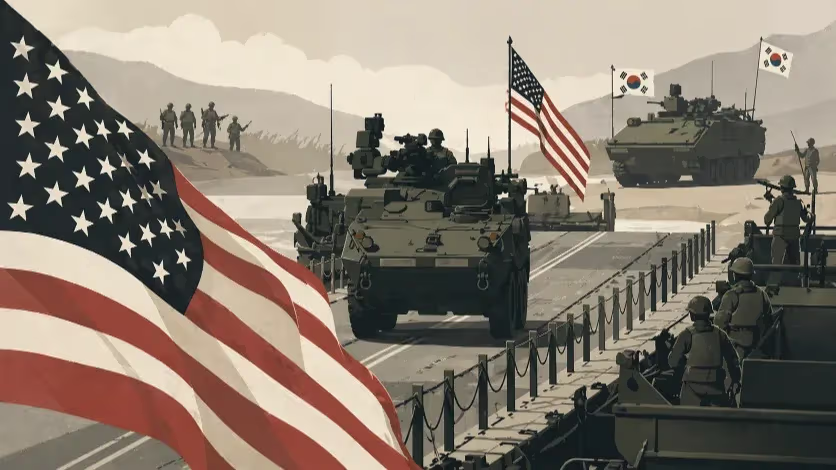
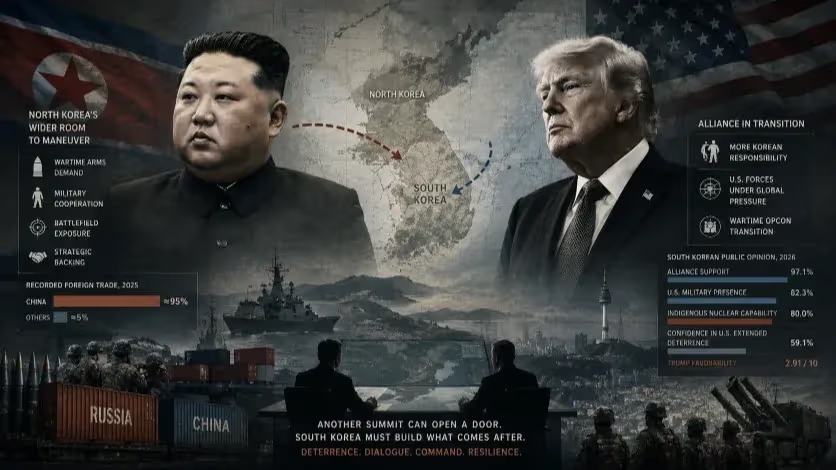
Another Trump-Kim summit would unfold on a peninsula where North Korea is harder to isolate, U.S. military priorities are increasingly global and South Korea is seeking greater authority over the defense of its own state.

From Kaesong to military agreements, South Korea’s history shows why some North Korea policies survive changes of government while others fail. Lee Jae Myung’s new coexistence policy now faces the same test.

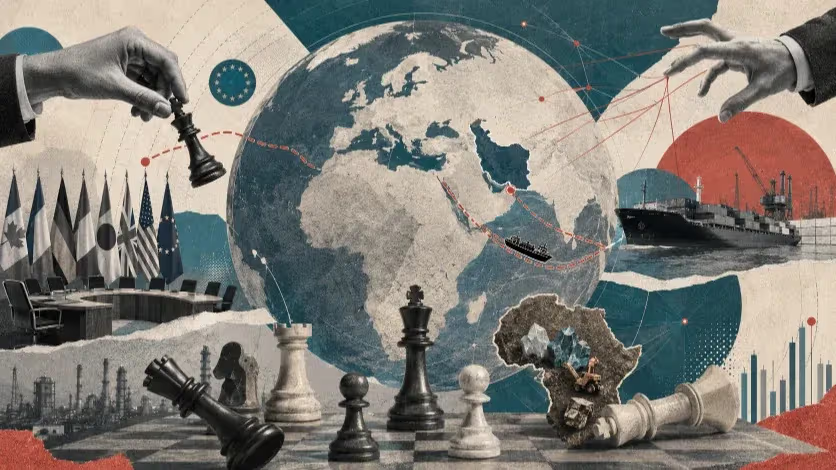
Trump brought an Iran ceasefire to the G7, but the summit exposed a wider order of dependence: Hormuz energy routes, European mistrust, Korean shipyards and African mineral value.

The June 3 local elections show a conservative party burdened by martial law and past presidents, a Democratic Party expanding into the center, and a political system that still gives voters too few exits from hostile camps.

The Reform Party has opened a door into local politics through cheaper campaigns, online screening and digital tools. But youth politics requires more than access. It requires candidate vetting, governing capacity and a public language broad enough to reach beyond a narrow online base.

A Starbucks scandal over Gwangju memory exposed a deeper crisis in South Korea’s right: a movement struggling to defend the institutions it claims to conserve.

For decades, West Busan has carried Busan’s largest development promises. A merger or mega-region would matter only if it gave the city’s western districts and neighboring Gyeongnam cities the authority, money and accountability to function as one urban region.

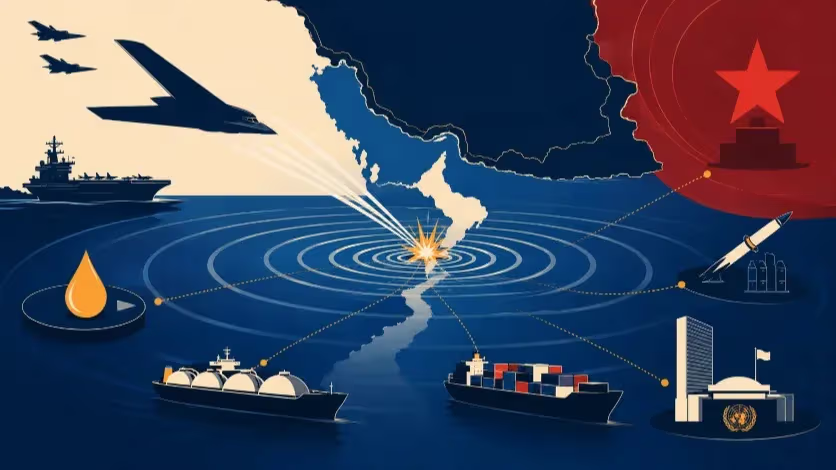
The United States proved it could still strike Iran. What it failed to prove was that force could close the nuclear file, stabilize Hormuz, command allied trust, or keep China outside the diplomatic fallout.

The alliance must remain the core, but it can no longer be the whole architecture. That is where multilateralism stops being a slogan and starts becoming a hedge, giving Seoul more room to absorb shocks from Washington without weakening deterrence.

The southeast’s integration debate has returned to the center of local politics, but the argument itself is not new. What voters are being asked to judge is not only which map looks bigger or cleaner, but which side can explain why its version will last when earlier ones did not.
Search within Politics or the wider site.