Trump Uses Tariff Threats to Pressure South Korea Investment Deal
President Donald Trump warned that tariffs on South Korean exports could be raised without taking formal policy action. The warning shifted attention to how compliance under a long-term investment agreement is judged, with tariff pressure applied through interpretation rather than enforcement.

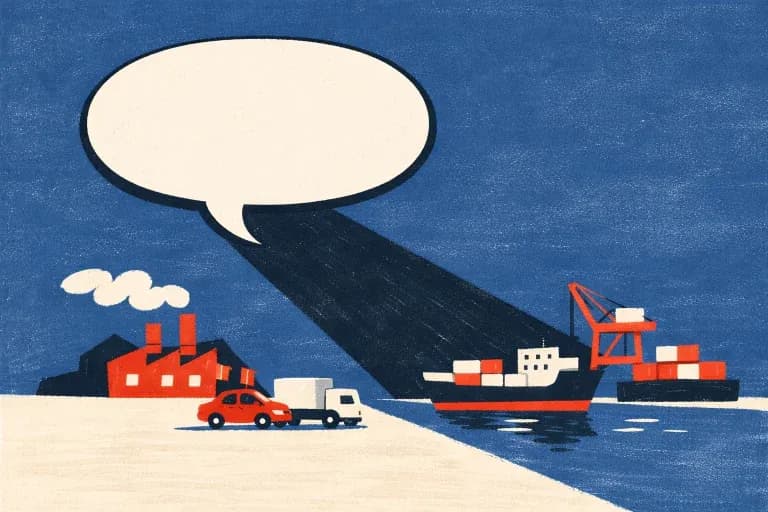
Trade relations between the United States and South Korea have entered a phase defined less by policy change than by uncertainty over enforcement. President Donald Trump said tariffs on South Korean automobiles and other exports could return to 25%, arguing that South Korea’s National Assembly has yet to pass legislation connected to a previously agreed investment commitment. The remarks were not accompanied by an executive order, regulatory notice, or reference to any statutory authority.
U.S. trade agencies have taken no visible steps to alter tariff schedules. No product categories have been identified, no implementation date has been set, and no investigative process has been announced. South Korean officials said no formal notification had been received and indicated that consultations would be sought through established channels. In legal terms, the trade arrangement remains unchanged.
Despite the absence of administrative movement, the warning carried weight. Shares of South Korean automakers declined in early trading before stabilising, while the won weakened against the dollar. U.S. markets showed little response. The divergence reflected exposure rather than surprise, with Korean assets more directly exposed to the possibility that tariff treatment could again become conditional.
The pressure centres on a 2025 trade and investment arrangement under which Washington agreed to cap tariffs at 15% in exchange for a $350 billion South Korean investment pledge in the United States. The agreement preserved existing duties while introducing conditional relief. Tariff treatment was linked to execution of the investment commitment rather than to legislative ratification or treaty entry into force.
That distinction matters. The framework did not remove tariffs, nor did it lock in reductions through statutory language. Instead, it left tariff relief contingent on performance, allowing duties to remain formally in place while their application was softened. The arrangement provided no explicit definition of when execution would be considered sufficient, nor did it establish a single point at which obligations would be deemed complete.
Trump framed compliance as dependent on legislative passage in Seoul, pointing to the absence of enabling legislation as grounds for questioning continued tariff relief. South Korean authorities have treated administrative preparation and institutional design as evidence that execution is under way, noting that the investment framework was constructed to unfold over multiple years. The difference in interpretation was embedded in the arrangement from the outset but remained largely academic while tariff levels were stable.
By elevating legislative passage as the operative benchmark, Washington has introduced a standard that lies outside the immediate control of South Korea’s executive branch. Parliamentary procedure, committee review and domestic political negotiation have become variables in tariff treatment, even though none are specified as conditions in the agreement itself. The shift does not constitute an allegation of breach and does not activate dispute settlement mechanisms. It alters leverage without altering text.
For now, no tariffs have been raised and no investment flows have been suspended. The agreement continues to operate as written. What has changed is the context in which it is read, with tariff relief no longer treated as a settled outcome but as a condition subject to renewed scrutiny.
Execution Without a Terminal Point
The investment commitment underpinning tariff relief was structured to unfold over time, limiting the scope for any immediate judgment of completion. Of the $350 billion pledged under the 2025 arrangement, $200 billion was designated for direct investment, with annual deployment expected to remain near $20 billion. The pacing reflected constraints tied to foreign-exchange management, fiscal oversight and capital-flow stability, embedding gradualism into the framework.
The remaining $150 billion was allocated to sectoral cooperation, including shipbuilding and other industries identified as strategically significant. Investment under that portion depends on project selection, regulatory review and sequential approvals. Capital deployment is contingent on commercial viability, domestic oversight and, in some cases, national security screening. The structure produces a pipeline rather than a single execution event.
From the outset, the framework avoided a fixed endpoint. No date was specified by which the full commitment would be deemed satisfied, and no terminal condition was defined for execution. Progress was expected to be assessed cumulatively, with performance measured across phases rather than against a single legal or political milestone.
South Korean authorities have treated administrative preparation as a core element of execution. Proposals submitted to the National Assembly late last year sought to establish a dedicated investment vehicle to manage long-term deployment, combining public capital with private participation under defined governance rules. The structure was designed to operate over a fixed term, with safeguards intended to address domestic accountability requirements.
Legislative action was anticipated as part of the implementation process, but the framework did not condition initial execution on passage. Institutional design, budgetary planning and early-stage coordination were incorporated into the execution phase, reflecting the scale and duration of the commitment. The absence of a defined completion threshold allowed progress to be recognised before legislative processes were concluded.
That design leaves room for competing assessments. Incremental investment activity can proceed alongside parliamentary delay, while institutional groundwork can advance without immediate capital deployment. Execution, as conceived in the arrangement, does not collapse neatly into a single observable act.
The distinction carries implications for tariff treatment. Relief tied to execution depends on judgment rather than on verification. Without a terminal point, compliance remains open to reassessment, and the question of sufficiency becomes inseparable from the authority to decide when progress is adequate.
Tariffs as Rhetoric
The dispute has unfolded without any allegation of breach or initiation of formal enforcement, placing emphasis instead on who holds the authority to judge compliance. Tariff levels remain unchanged, and no statutory process has been triggered. Yet the possibility of reversal has been reintroduced, shifting attention from implementation to interpretation.
That posture aligns with a familiar pattern in President Donald Trump’s use of tariffs as a political instrument. Tariff threats are deployed at their maximum level, unaccompanied by procedural detail, and left unresolved. The absence of follow-through does not weaken the signal. It sustains it. Pressure is generated not by action, but by keeping action plausible.
In this pattern, enforcement is deferred rather than withdrawn. Deadlines are not fixed, and conditions are not codified. Compliance is framed as an expectation rather than as a requirement anchored in text. The burden shifts to the counterparty to demonstrate adequacy against a standard that has not been formally defined.
What distinguishes the current episode is the object of that pressure. Previous tariff threats were typically aimed at trade balances, purchase commitments or import volumes—targets within the control of the executive branch. Here, the benchmark has moved to legislative passage in South Korea’s National Assembly, a process shaped by parliamentary procedure, committee review and domestic political negotiation. Tariff leverage has been extended beyond policy execution into the structure of a partner’s political system.
The choice of “execution” as the operative term is central to that shift. Execution carries no fixed legal meaning in trade agreements of this kind. It implies progress without specifying completion, sufficiency or timing. By invoking execution while elevating legislative passage as the decisive test, Washington has introduced a moving threshold that can be adjusted without revising the agreement itself.
This approach departs from conventional trade enforcement, where disputes are anchored in identifiable violations and resolved through defined procedures. In the present case, compliance is neither affirmed nor rejected. It is kept under review. Performance can be acknowledged without being accepted, and delay can be cited without constituting non-performance.
Markets have responded to that ambiguity. The reaction to the warning reflected sensitivity to discretionary judgment rather than to any expectation of immediate tariff action. The risk priced in was not a scheduled policy shift, but the possibility that tariff authority could be exercised at a moment of Washington’s choosing.
The broader implication lies in the interaction between executive tariff powers and agreements structured around long-term performance. Where completion is undefined and evaluation is continuous, the authority to declare progress sufficient becomes a source of leverage in its own right. Tariffs need not be imposed to shape behaviour. It is enough that their imposition remains unresolved.
No duties have been raised and no capital flows have been interrupted. The arrangement continues to operate as written. What has changed is the posture surrounding it, with tariff relief treated less as a settled outcome than as a condition subject to political judgment.
In such circumstances, the decisive factor is not the scale of investment delivered at any given moment, but who determines when delivery is deemed adequate.
Continue this reporting
Reporting on the same issue
Related coverage selected from the article's desk, topics and newsroom relationships.
 NewsOct 4, 2026
Zelensky, South Korea and the Limits of Wartime Pressure
South Korea says Kyiv broke a confidentiality understanding when Zelensky rev...
 NewsSep 1, 2026
What Lee Jae Myung Thinks a Minister Can Fix
President Lee Jae Myung says reform should be judged by results rather than c...
 NewsAug 21, 2026
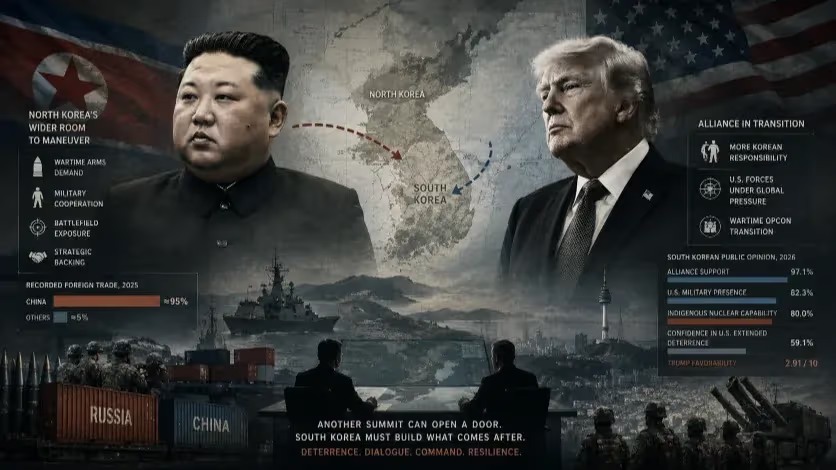
The Korean Peninsula Trump Is Returning To
Another Trump-Kim summit would unfold on a peninsula where North Korea is har...
More from the author
More from this byline
Stay with the same line of reporting through more work from this byline.
 NewsOct 21, 2026
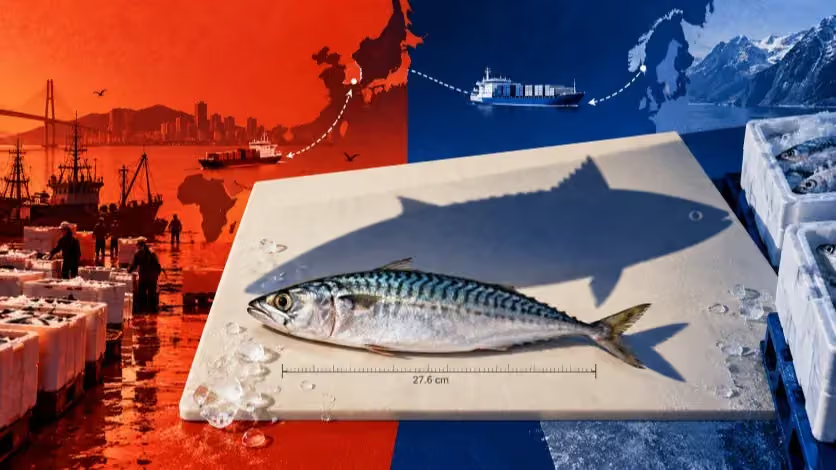
What a Small Mackerel Is Worth
Reader Signal
Community readWhat did this report leave you with?
Choose the signal that best reflects your reading. Select it again to remove it.
One response per article
No response selected
A moderated conversation about the reporting.
One-level replies and newsroom moderation keep the conversation anchored to this article.
Discussion Status
Open
Please sign in to join the discussion.
Newsletter
Weekly reporting and context from Busan and Korea.