
Why the Winter Olympics Feels Less Visible in South Korea
Exclusive broadcasting rights, failed sublicensing talks, and the limits of universal access rules have reshaped how the Games reach the public.
Reporting and analysis on South Korea’s national affairs, government, elections, policy, and the broader forces shaping public life.
About this section
Coverage of Korean public affairs, institutions, and national developments, including their consequences for Busan and the wider policy agenda.
Exclusive broadcasting rights, failed sublicensing talks, and the limits of universal access rules have reshaped how the Games reach the public.
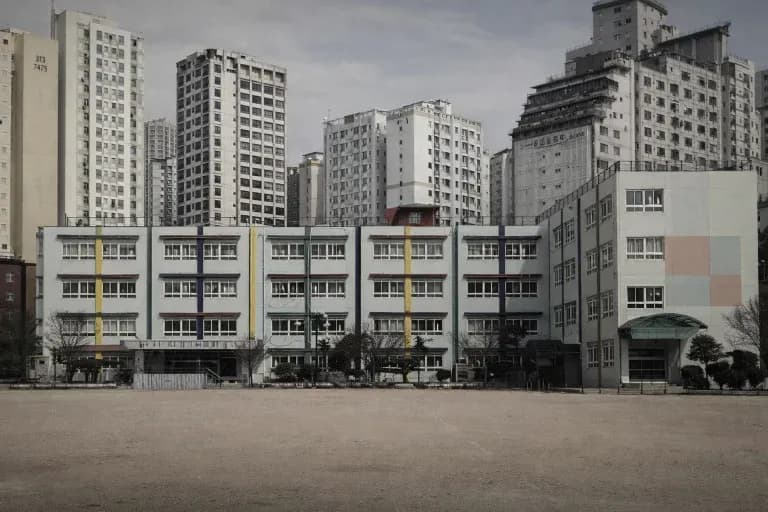
Elementary schools remain open in Seoul’s most expensive districts even as births fall. In Busan, rising property values coincide with school closures—revealing how South Korea’s cities manage demographic decline through exclusion and fragmentation.
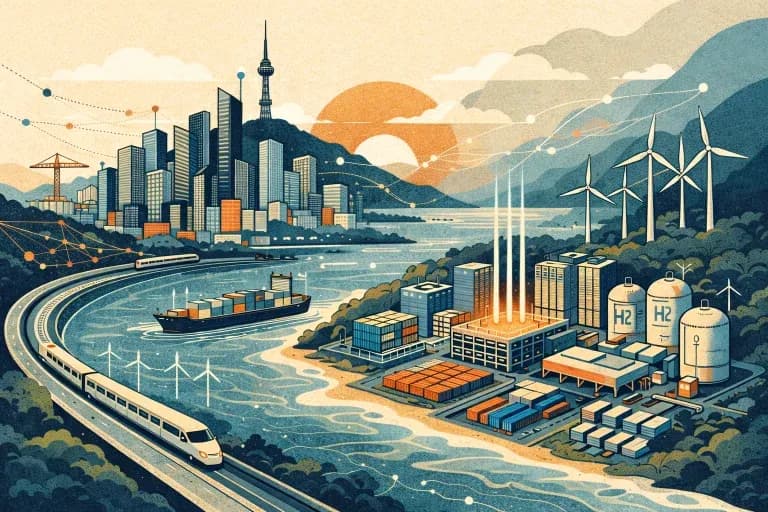
Semiconductors, AI and renewables require a second node beyond Seoul. Administrative integration—not subsidies—will determine whether provinces decline or form a new industrial belt.
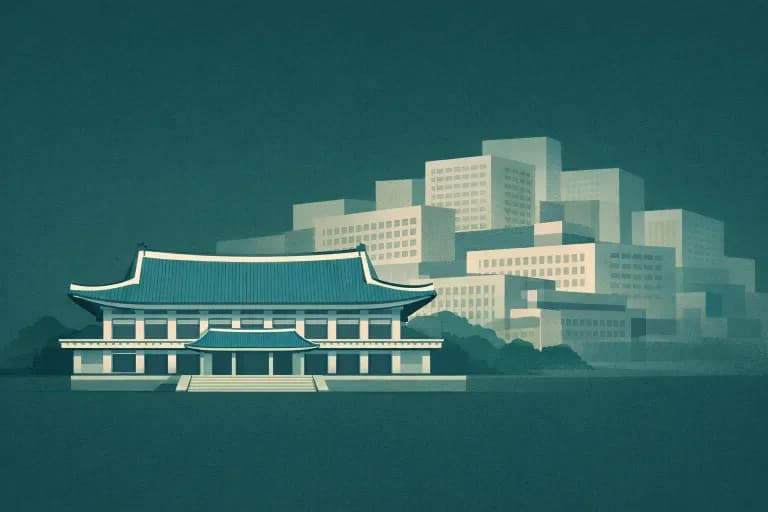
South Korea’s presidential office returns to Cheong Wa Dae after the Yongsan experiment, reopening questions over the administrative capital.

With one of the highest tertiary attainment rates in the OECD, Korea’s universities remain unavoidable. Yet lower employment returns, rising private costs, and widespread AI-assisted coursework raise questions about what university education reliably certifies.

A data breach at Coupang has triggered a parliamentary hearing in South Korea, exposing how fast delivery, consumer lock-in and cross-border corporate governance complicate accountability in the platform economy.

The breach at Coupang revealed how deeply South Korea’s daily life depends on private platforms whose influence now resembles public infrastructure—without the oversight that infrastructure requires.

South Korea’s Nuri rocket completed its fourth flight with a clean night launch, placing 13 satellites into orbit and supplying new data for the country’s reorganized space program.

Daiso was credited with democratizing supplements by dropping prices to pocket-change levels. But a closer look at dosage, duration, and unit cost reveals a different picture—a market rebuilt on micro-doses, impulse purchases, and the illusion of cheap health.

South Korea has declared an “Era of Regions,” unveiling a five-pole development blueprint meant to challenge the gravitational pull of Seoul. Yet the regions themselves remain constrained by a governance architecture designed for an earlier period of centralized industrialization.

A deep look at how South Korean media turned the language of generations into a cultural script — transforming data into identity, and journalism into marketing.

With one-person households rising above 36 percent, the country’s most traditional holiday is adapting to a quieter, individual rhythm.
Search within Korea or the wider site.