
Busan’s Quantum-Sensing Cluster Begins With Battery Inspection
Busan’s battery-sensing project shows what South Korea’s new quantum cluster must solve beyond the lab: machinery, shielding, software, calibration and industrial performance.
Discover the latest news from Busan, covering local events, economy, politics, and culture. Stay informed with Breeze in Busan.
Busan’s battery-sensing project shows what South Korea’s new quantum cluster must solve beyond the lab: machinery, shielding, software, calibration and industrial performance.
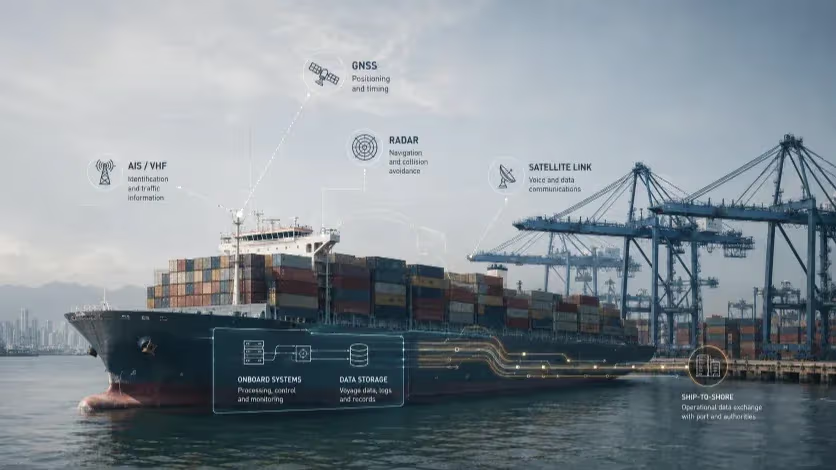
Modern merchant ships already carry dense networks of sensors, radios and computers. The COSCO allegation shows why maritime security increasingly depends on technical baselines, evidence and precise attribution.
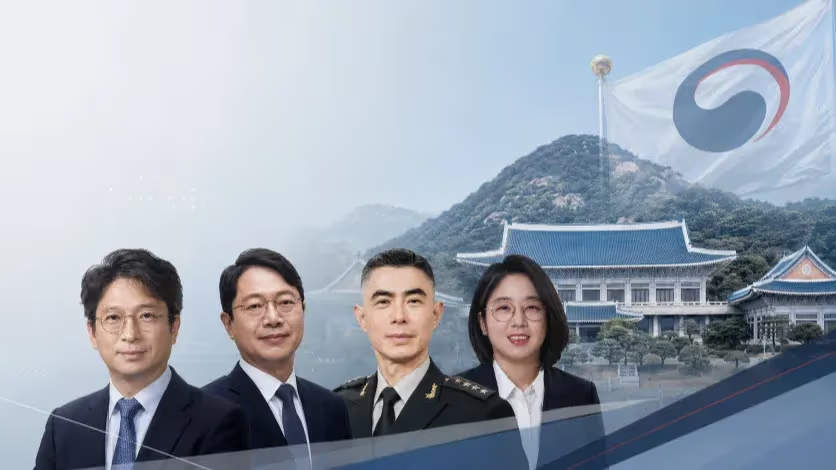
President Lee Jae Myung says reform should be judged by results rather than confrontation. His latest cabinet choices offer a test of that doctrine: whether changing the person in charge can actually change the institutions beneath them.

Busan’s aviation market is growing years before Gadeok is scheduled to open. The harder question is whether rail access, airline capacity, route economics and transfer traffic can turn a larger airport into a larger network.
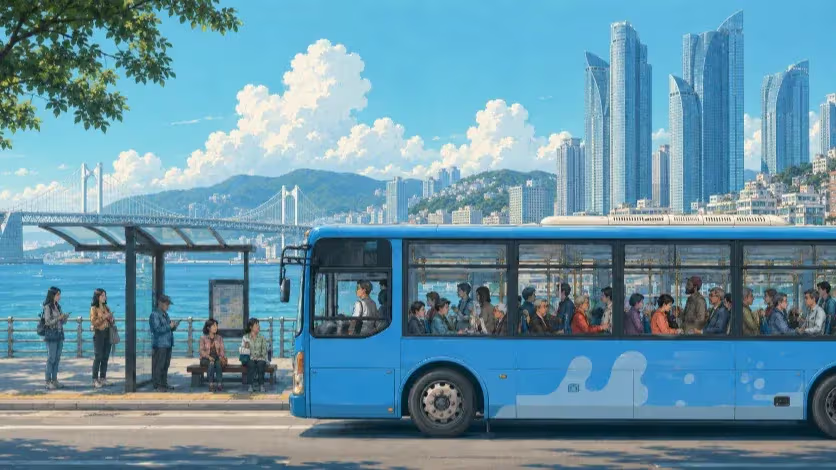
Busan’s latest transport review exposes a wider national problem: South Korea’s integrated transit network is financed through fragmented local ledgers, rising operating costs and increasingly uneven fiscal burdens.
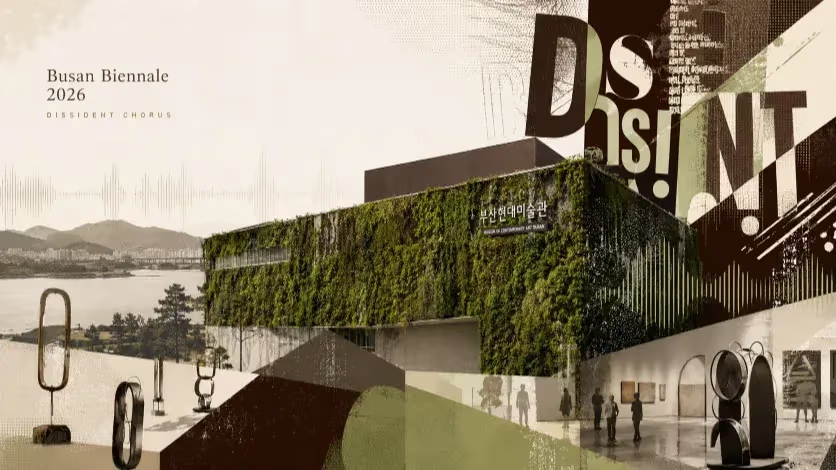
Busan Biennale 2026 opens with ‘Dissident Chorus,’ 46 artists and teams from 22 countries, and a deeper question shaped by 45 years of tension between local agency and international circulation.
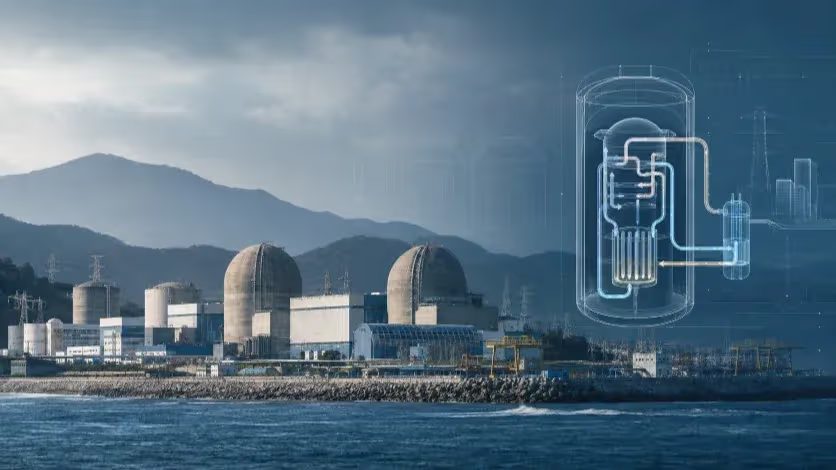
Korea’s i-SMR gives up some of the economies of scale that made conventional reactors large and tries to recover them through standardized manufacturing and repeated deployment. Gijang will be the first place where that proposition meets the real world.
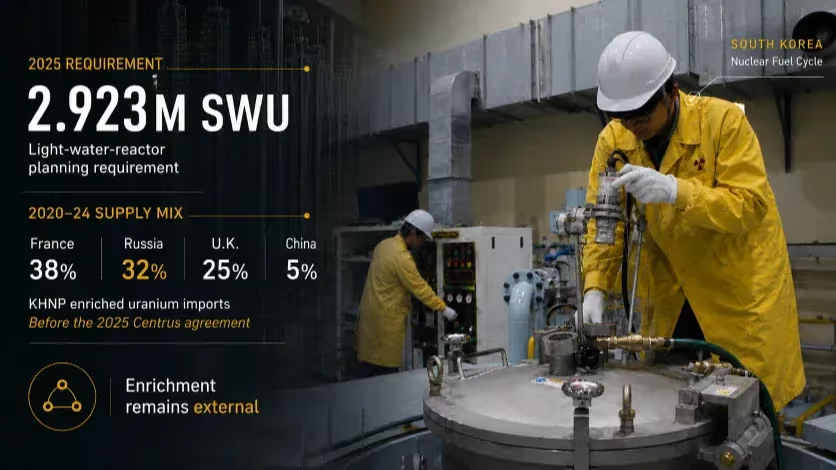
The U.S. once constrained South Korea’s nuclear fuel cycle over real proliferation risks. As Seoul seeks greater uranium-enrichment latitude, those old rules now face a different Korea, a different fuel market and a changing American nuclear policy.

South Korea is preparing a Future Response Fund to redirect exceptional tax revenue into longer-term growth. Its success will depend on whether a semiconductor-driven fiscal windfall can leave behind broader productivity, stronger regional economies and a more durable tax base.

Busan is losing children overall, yet Eco Delta City is adding them fast enough to require new school capacity. Following where families moved — and what happened to the schools they left behind — reveals why a shrinking city can still face a rising infrastructure bill.

Busan is expanding runner facilities, public crews and major events around an already popular sport. The deeper policy issue is how those investments serve a rapidly aging city and residents who face greater barriers to regular exercise.
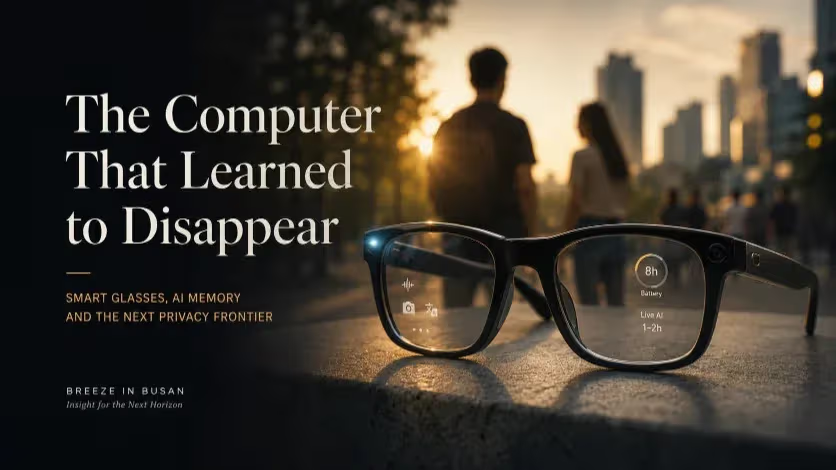
The most successful smart glasses are learning to disappear. Their next challenge may be what everyone else loses when the computer becomes difficult to see.
Search within Lets Go Busan Sports Portal Launch Enhances Access To Local Facilities or the wider site.