Western Busan’s Tourism Push Faces Barriers of Access, Image, and Strategy
New cultural festivals are boosting Dadaepo’s profile, yet industrial backdrops, incomplete environmental fixes, and the absence of year-round programming limit its ability to rival Busan’s eastern icons.

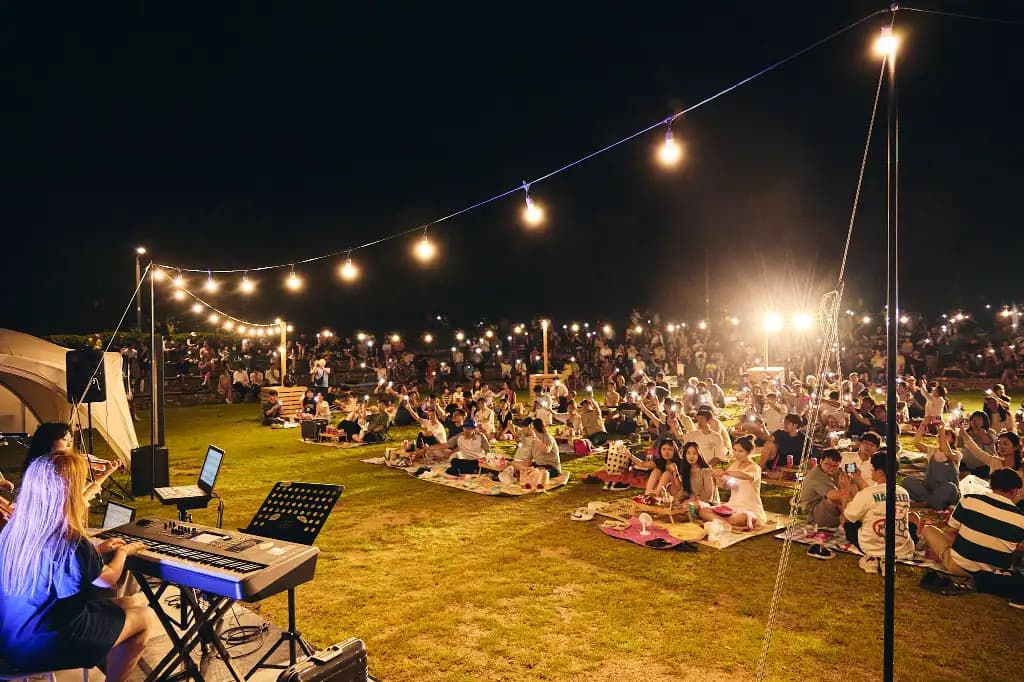
Busan, South Korea — Dadaepo Beach on Busan’s western edge is known for its vast tidal flats and glowing sunsets that spill across the horizon. In recent years, city officials and the Busan Tourism Organization have sought to reframe the area as more than a local sunset spot, rolling out new programs such as the Super Earthing Nature Festival and the Starry Sea Campnic & Travel Show.
The concept is inventive—wellness activities on the sand by day, illuminated walks and evening performances by night—and domestic response has been encouraging. City data indicate that more than 2.4 million people visited Dadaepo in August this year, more than double the figure from the previous summer.
The momentum, however, raises a more difficult question about whether a series of seasonal festivals can genuinely alter the geography of tourism in Busan. International visitors continue to cluster in the east, where Haeundae and Gwangalli have been firmly established for decades as the city’s calling cards.
Both offer not only beaches but also infrastructure, nightlife, hotels, and international branding. Haeundae is synonymous with high-rise luxury and the film festival, while Gwangalli has developed into a year-round stage for weekly drone and laser shows set against its bridge. These locations appear in nearly every global day-tour itinerary sold by major online travel agencies.
Western Busan offers a different picture. Gamcheon Culture Village, once a hillside settlement revitalized through an art-driven regeneration project, is the only consistent exception. Framed as “Korea’s Santorini,” it has become one of the most photographed destinations in the country, sustained by permanent attractions such as a stamp trail, curated photo spots, and a visitor center. Its success owes much to its integration into nearby Nampo, Jagalchi, and BIFF Square, which form a walkable cluster for international tours.
Dadaepo, by contrast, remains dependent on temporary programs. When festival stages are dismantled, what remains is the familiar view of the sunset and a musical fountain that operates in warmer months. Unlike Gamcheon, which draws steady traffic throughout the year, Dadaepo lacks permanent cultural infrastructure that could anchor continuous visitation. Its international accessibility is also limited.
Promotional websites provide English descriptions, but reservations route through Korean-language platforms such as Naver Smart Store or local Google Forms. Few multilingual signs or guides exist on site, leaving international visitors with awareness but little means of participation.
Environmental and infrastructural challenges add another layer of difficulty. Although more than ₩33 billion has been invested in restoration, the eastern section of the beach continues to be associated with sewage outlets, waste, and unpleasant odors. Relocation of storm drains remains incomplete due to insufficient funding, and while official tests declare the water quality acceptable, visitor accounts frequently paint a less favorable picture. The credibility gap undermines efforts to market Dadaepo as a pristine retreat.
Geography and surroundings further complicate the issue. Inland from the beach, industrial roads and factory complexes dominate the landscape. Tourists leaving the shore find themselves facing a corridor of warehouses and heavy traffic, a stark contrast to the cosmopolitan waterfront of the east. This physical and symbolic division reinforces the long-held image of western Busan as an industrial zone rather than a leisure destination.
Opportunities exist, but they remain underdeveloped. The seafood center at Dadaepo is well known among locals, yet it has not been integrated into foreign-language materials or packaged into tours. The nearby wetlands of Eulsukdo, the cliffs of Mollundae, and the observatory at Amisan are assets of ecological and cultural value, but they are rarely linked together into coherent itineraries. Without surrounding nightlife, hotels, or commercial clusters, visitors have few reasons to extend their stay beyond a single sunset.
The imbalance is not merely cosmetic. Concentration of foreign visitor spending in Haeundae and Gwangalli perpetuates uneven development across the city. Dadaepo’s growing domestic attendance demonstrates potential, but without structural changes the area risks being seen as a stage for occasional spectacles rather than as a fully fledged destination.
Addressing this requires more than an expanded festival calendar. Permanent cultural programming—such as regular evening performances, public art installations, and ecological tours—could create year-round appeal. Internationalization of booking systems and on-site services would help translate awareness into attendance.
Environmental rehabilitation must move beyond partial measures, with transparent monitoring of water and air quality. Above all, Dadaepo needs a coherent narrative that connects its seafood, ecology, and sunsets into an identity distinct from the east.
Busan has long marketed itself as a city of dual shorelines, but the balance remains elusive. Eastern beaches thrive on global branding, nightlife, and investment, while the west is still defined by industrial surroundings and temporary events.
Dadaepo’s festivals show imagination and have doubled visitor numbers in a year, yet the challenge is whether those numbers can be sustained and diversified. Without permanent infrastructure and a clear international strategy, the western horizon risks remaining a backdrop of fleeting beauty rather than a recognized destination in its own right.
Continue this reporting
Reporting on the same issue
Related coverage selected from the article's desk, topics and newsroom relationships.
 NewsOct 22, 2026
Busan Port’s LNG and Methanol Plan: Who Pays to Keep Fuel Ready?
Busan already supplies ships with LNG and methanol, drawing on regional and i...
 NewsOct 16, 2026
What Is Still Worth Going to See?
Busan’s biennale faces questions of artistic judgment and institutional care....
 NewsOct 14, 2026
What Became of Busan’s University Streets?
From 2015 to 2023, registered businesses grew near Pusan National University...
More from the author
More from this byline
Stay with the same line of reporting through more work from this byline.
- NewsOct 22, 2026
Busan Port’s LNG and Methanol Plan: Who Pays to Keep Fuel Ready?
 NewsOct 12, 2026
Bukangi, the Shark That Stayed in Busan’s North Port
Reader Signal
Community readWhat did this report leave you with?
Choose the signal that best reflects your reading. Select it again to remove it.
One response per article
No response selected
A moderated conversation about the reporting.
One-level replies and newsroom moderation keep the conversation anchored to this article.
Discussion Status
Open
Please sign in to join the discussion.
Newsletter
Weekly reporting and context from Busan and Korea.