Busan’s Sea Taxi and the Economics of a Connected Coast
Busan’s planned sea taxi would link the Suyeong River, Gwangalli and Haeundae. A six-boat fleet, a million-passenger target and publicly funded landings reveal the business case—and the limits of its value as urban transport.

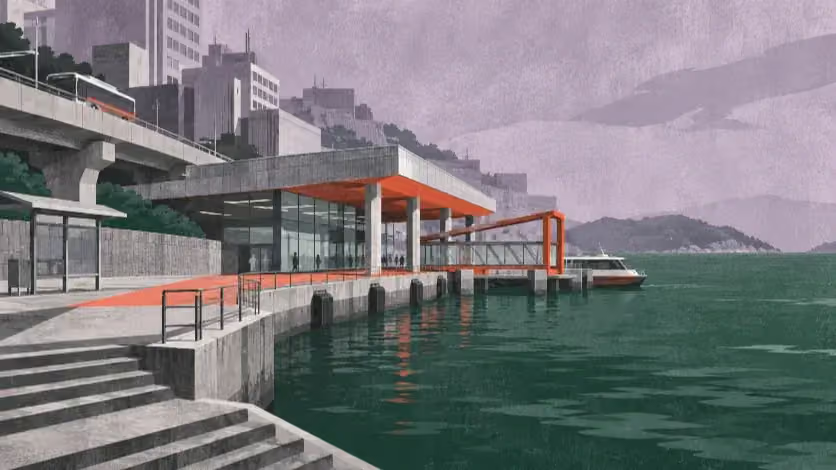
Busan is investing in landings for a private boat service linking three of its busiest waterfront districts. The route may work as a tourism business. Whether it can also improve the city's transport system depends on a different geography of demand, the productive hours of a small fleet and what the public receives for its investment.
On November 11, a small passenger boat left the Suyeong River beside APEC Naru Park, passed the Gwangalli waterfront and traveled toward Haeundae before returning to its starting point. The press trial took about 45 minutes. Reporters experienced a succession of short passages that would ordinarily require more complicated movement along the shore: from the retail and exhibition district at Centum City to the beach at Gwangalli, then beyond the Gwangan Bridge toward the western end of Haeundae. Seen from the water, the route had the qualities of an immediately recognizable tourism product. Its journey was short enough to fit between other activities, yet long enough to offer a view of the city that roads and the subway could not provide.
The demonstration was not the opening of a regular service. Busan plans to finish three permanent boarding facilities in the second half of 2027; Yachtallae, the private operator, intends to introduce six vessels in stages, with the full complement expected by January 2028. A previous plan had called for service during the latter half of 2026. The revised schedule leaves the city with a tangible investment commitment and the operator with a series of demanding commercial decisions: which hulls to deliver, how often to sail them, what customers will pay and how much of that timetable the shoreline can support.
The broader promise attached to the venture is more ambitious than the immediate itinerary. Busan has long contemplated passenger movement by water as a response to traffic congestion and the physical separation of its neighborhoods by rivers, bays and working harbors. Yet the city's strongest evidence of difficult daily travel points to places far from the three tourism landings. A 2025 Busan Development Institute study, based on interviews with 1,506 workers and a separate model of trips into the Noksan industrial area, documents long commutes and costly transfers in the west. These are not unserved customers automatically waiting for a boat. They reveal the different economic task involved in making a route attractive to holidaymakers and making it useful to residents who must arrive at the same workplace every morning.
The sea taxi is therefore a test of two propositions that should not be allowed to validate each other by accident. A private company may be able to sell a desirable coastal journey, especially where visitors already pay for time on the water. A municipality can support that market by investing in access to the shore. Turning the success of such an enterprise into evidence for a wider public transport network, however, requires knowing which journeys the boat replaces, what capacity it provides at the needed hours and whether the value survives the walk and wait at either end.
The Route That Found a Commercial Market
The current three-stop circuit emerged from a larger and less durable ambition. In December 2020, following a feasibility study by Korea Maritime and Ocean University, Busan described a potential mixture of sea buses, smaller water taxis and amphibious tourist vehicles. A larger coastal service would link attractions from Jagalchi toward the Osiria tourism district; smaller craft would serve connections around the old harbor, including Songdo and the waterfront communities of Yeongdo. The concepts joined several different markets on the same planning map. A museum visit, a trip to a beach and a regular journey to work might all involve boats, but they call for different prices, departure times and locations for the last connection on land.
The difficulty of attracting an operator surfaced in the old harbor. Busan moved forward with a Busan Station–Jagalchi–Songdo water-taxi route and selected a private participant in 2024. The prospective operator subsequently withdrew. In testimony to the city council on November 7, 2025, tourism director Kim Hyun-jae described regulatory restrictions and concerns about profitability as reasons for reassessing the original project. That account does not isolate a single failed expense or establish the company's private calculations, but it documents something more consequential than a change of marketing language. A route that looked desirable in a city plan had not secured a durable commercial undertaking on those terms.
The city's replacement concentrated activity around the Suyeong River, Millak and Unchon, in the vicinity of established marine-leisure businesses and heavily visited coastal districts. Six companies attended an explanatory session about the reworked project, according to the same council testimony; that figure should not be mistaken for six verified competitive bids. Yachtallae was named the preferred operator in November 2025. The original announcement spoke of six 12-passenger boats and an intended 2026 opening. Since then the proposed fleet mix, timetable and construction dates have changed. The crucial geographical decision has not. The company is being invited to sell journeys where people may want to be on the water even when a faster or cheaper land route exists.
That choice has a sound commercial rationale. A waterfront visitor has already overcome part of the difficulty that defeats many conventional water-taxi services: finding a reason to go to the quay. Marine excursions, beaches, waterfront restaurants and evening views concentrate discretionary demand near the proposed terminals. Yachtallae also has experience selling leisure trips in Busan, rather than having to create an entirely unfamiliar consumer category. A customer who buys a circuit for the view need not regard the boat as an inferior substitute for the subway. The journey itself is part of what is purchased.
There are costs to that advantage. Leisure demand changes with weather, daylight, holidays and the length of a visitor's stay. A person who remains on board to enjoy the entire circuit occupies space that could otherwise be offered to passengers making shorter journeys. The operator can favor advance scenic bookings or allow intermediate boarding and alighting, but those choices affect available inventory, timetable design and the legal form of the service. Finding people willing to pay for a voyage is the beginning of a business case; turning their different preferences into enough revenue per vessel-hour is the harder part.
Busan's published budget makes the public role explicit. The municipality will develop one principal landing and two auxiliary landing facilities, while the private partner supplies and operates the vessels. The city describes the landing project as costing 1.4 billion won; its 2026 expenditure record also lists an appropriation of 1.405 billion won. Those figures refer to different accounting fields for the same public undertaking and must not be added together. Nor do they measure the cost of the entire fleet, the maintenance of the facilities over their lives or money already paid out. By taking responsibility for the access points, the city reduces a fixed cost the operator would otherwise have to recover from passengers. It also acquires a long-lived asset whose public value will depend on the use rights, upkeep and adaptability secured after construction.
The Revenue a Small Fleet Can Actually Produce
Yachtallae's public ambitions illustrate the difference between a large potential audience and a deliverable timetable. In late 2025, chief executive Kim Geon-woo discussed attracting a million passengers within five years and suggested a goal of 100,000 riders per vessel per year. The latter figure would amount to 600,000 annually if applied to six boats, well above the annual average implied by the five-year cumulative target. In a November 2026 interview he spoke instead of a million passengers within three years. The revised horizon raises the required annual rate by two-thirds, provided both statements count the same sort of passenger journey. The operator's interviews describe aspirations, not a verified forecast showing how many tickets will be sold in each season or how each vessel will be used.
An annual average of about 333,000 paid passenger journeys is a substantial obligation for six small boats. At an illustrative 300 operating days a year, it would require approximately 1,111 passengers on every working day. At 250 operating days, the number becomes about 1,333. Neither calendar is a prediction of the weather or an approved operating plan. The calculation establishes the dependence of a cumulative passenger claim on the days when the fleet is actually available for sale. The target also needs a defined unit: unique customers, paid itineraries, individual boardings and purchased route sections are not necessarily interchangeable.
One useful measure of the boat's productive capacity is a seat available for one section of the route. A traveler leaving at the first stop uses one seat-leg. Someone remaining aboard for two sections uses two; a full circuit consumes three. The measure does not prejudge which ticket is more valuable. A scenic passenger can produce a higher fare from one transaction than a short-hop passenger, while the short-hop model allows the same seat to be sold again if another customer is waiting farther along the route. Whether such turnover is commercially permitted and realistically achievable depends on the final operating authorization, boarding arrangements and ticket rules.
The fleet under discussion has also changed. Busan's November 2025 announcement envisaged six vessels with twelve passenger places each. Reports from the November 2026 trial described four 12-seat craft and two larger vessels, but differed over whether the larger boats would accommodate 32 or 36 passengers. The city has announced six vessels below fifty seats without publishing an independently verified final roster. A 15-minute departure interval has been reported as a plan, not a certified operating schedule. Combining the largest reported capacities with that proposed interval offers a way to test the arithmetic while keeping its assumptions visible.
Imagine 32 complete circuits departing across an eight-hour window, one every fifteen minutes. Each circuit contains three potentially saleable sections. If two-thirds of the departures use 12-seat boats and one-third use 36-seat craft, the average departure offers 20 passenger places, producing 1,920 theoretical seat-legs over the day's sailing program. The final circuits would return after the departure window, and the calculation assumes every section can be sold, all planned boats operate and the larger craft take exactly their assumed share of departures. It is not a description of the actual fleet on duty.
At the three-year passenger target, a customer riding just one section would require about 58 percent of that idealized inventory. An average of one and a half sections would consume nearly 87 percent, before allowing for uneven boarding demand, weather, maintenance or empty seats. An average of two sections would require more capacity than the timetable provides. If the larger boats ultimately have 32 seats rather than 36, the one-and-a-half-section case rises to approximately 93 percent. The first months could be still more constrained: 32 circuits made entirely by 12-seat boats provide only 1,152 seat-legs. Applying the full-fleet daily target to that hypothetical early service would exceed its capacity if passengers averaged one and a half sections. Early service will not necessarily carry the full three-year average, but delayed delivery increases the load that later months must absorb if the cumulative ambition remains unchanged.
CAPACITY STUDY / HYPOTHETICAL MODEL
How a million journeys would occupy a small fleet
The measure is a seat-leg: one seat offered over one saleable section. A passenger traveling two sections consumes two seat-legs.
DAILY THEORETICAL INVENTORY
= 1,920 seat-legs / day
Illustrative mix: two-thirds 12-seat departures, one-third 36-seat departures. Thirty-two complete circuits start in an eight-hour departure window.
THE THREE-YEAR TARGET AGAINST THAT INVENTORY
At 300 assumed operating days a year, one million paid itineraries would average approximately 1,111 per operating day. Each row changes one of the supply or journey assumptions.
12/36-seat mix · 300 days 57.9%
12/36-seat mix · 300 days 86.8%
12/36-seat mix · 300 days 115.7%
12/36-seat mix 104.2%
12/32-seat mix · 300 days 93.0%
300 days · same full-fleet target rate 144.7%
Above 100% means the scenario would require more seat-legs than its assumed schedule can offer, even before uneven demand or cancellations.
Passengers also arrive in particular places, not in an accounting spreadsheet. A packed departure at Millak cannot use an empty seat on a different sailing at Unchon. A boat carrying a large group around the entire circuit may pass a landing where shorter-trip customers are waiting. Additional departures or a larger vessel at a peak can relieve the constraint, but those remedies require hulls, crews and dock space, all of which have a cost. The operator's challenge is to match capacity to demand that varies by landing, hour, season and ticket type while maintaining enough regularity to make a short transfer worth purchasing.
The proposed prices have not resolved the relationship between a booking and its use of capacity. News reports have described roughly 9,000 won for a section and proposals of 16,000 and 24,000 won for longer or multiple-use products, subject to discussions with the city and possible tourist-pass discounts. Some accounts distinguish one, two or three boardings; others refer to sections of the circuit. That is not a semantic detail. A pass permitting separate boardings on separate departures has different inventory consequences from remaining in the same seat for three consecutive sections. The final ticket conditions must be established before anyone can convert the announced fare categories into a meaningful yield per occupied seat-leg.
Even an apparently impressive farebox total would not establish a profitable operation. If a million single-section tickets were sold at the purely illustrative price of 9,000 won, gross receipts would be 9 billion won over the period counted. It is neither a forecast nor a revenue ceiling, and a large share of that sum would have to support boats, financing, crew, propulsion, insurance, periodic inspection, repairs and booking distribution. The better commercial measures are net revenue per departure and per available vessel-hour, alongside the share of departures that can be completed safely and sold at a price customers accept. Those operating figures, rather than a cumulative passenger aspiration, will determine whether the marine-leisure market supports the fleet the company intends to finance.
The Journey Beyond the Landing
What looks like a direct line across water is only one segment of a passenger's journey. APEC Naru Park, where the trial began, lies in Centum City near major shopping and exhibition facilities and Metro Line 2. Visitor information places parts of the park roughly ten to thirteen minutes' walk from the station, but a public park entrance is not the measured walking time to a finished gangway. The ultimate berth location and the route through the park matter. A customer who reaches the district by rail is not necessarily ready to board the moment the train doors open.
The planned Millak stop has a different catchment. It sits near Gwangalli's eastern shoreline, where visitors already move between the waterfront, restaurants and marine attractions. Guidance for the nearby Millak Waterfront Park puts the walk from Millak Station at around 27 minutes, although the future passenger facility may be elsewhere within the port area. For someone already on the beach, a boat may avoid a detour inland to rail. For someone beginning far from the coast, the walk or bus connection to the pier consumes part of the possible time saving. Unchon, near Dongbaek Island and Haeundae's western waterfront, similarly offers a good destination for passengers whose plans end near the shore without providing identical convenience for every home, workplace or hotel in Haeundae.
During the press trial, reporters observed about ten minutes of movement on each of the first two stretches of the route, with boarding and alighting bringing an advertised section to roughly fifteen minutes. At that scale, a marine crossing may beat a surface trip caught in heavy traffic and may be more direct than returning inland to the subway. It does not necessarily beat a train for two addresses close to the rail line. Centum City and Dongbaek stations, for example, are only two stops apart on Line 2. Comparing the boat's time afloat with the metro's time aboard ignores precisely the access and waiting costs that make one option better for one journey and worse for another.
A reliably maintained fifteen-minute interval would generate an average wait of seven and a half minutes for travelers who arrived at the landing uniformly without consulting a timetable. Reservations may reduce uncertainty at the berth while requiring a customer to plan around the sailing. Either way, the relevant measure is the full time from the passenger's actual origin to the destination beyond the pier. A water taxi can have genuine local utility where it removes a road detour between two waterfront points, particularly during busy visitor periods. But any claim that it will relieve congestion requires evidence that a material share of customers would otherwise have used a congested road vehicle, rather than walked, taken a train or purchased a different marine excursion. The farebox can count all three kinds of passenger; traffic relief cannot.
Where Busan's Hardest Journeys Begin
A separate picture of citywide mobility emerges from the industrial west. The Busan Development Institute surveyed 1,506 workers in and around Noksan for a 2025 study. Among the respondents, 57.1 percent commuted by private car and 20.4 percent used combinations of transport modes. Drivers reported an average journey of 48.2 minutes; workers making transfers averaged 78.5 minutes. The thirty-minute difference cannot be assigned wholly to transfers, since people in the two groups may live at different distances from work. Yet the reported dissatisfaction is consistent with a network in which the last connection to a workplace can be as troublesome as the main journey: 74.7 percent of transfer commuters were dissatisfied or very dissatisfied, compared with 58.1 percent of drivers.
To examine where the traffic came from, the researchers separately combined transport origin–destination data, mobile-network distributions and survey-based mode shares. The resulting model estimated about 50,500 work-arrival trips into Noksan in a typical day. It did not observe 50,500 distinct workers boarding or completing journeys, and it is not a measure of latent demand for a ferry. Around 41 percent of modeled arrivals began within Gangseo, another 21.7 percent came from Saha and 8.4 percent from Sasang. The combined eastern grouping of Haeundae, Suyeong and Gijang accounted for only about 3.2 percent. The geography of recurring work travel is concentrated among neighborhoods and industrial approaches much closer together than the eastern tourist circuit suggests.
URBAN MOBILITY / ORIGIN REGISTER
The work trips start elsewhere
Modeled origins of approximately 50,500 daily work-arrival trips into Noksan, western Busan. This is not a map of sea-taxi passengers or potential ferry demand.
71.0%
Gangseo, Saha and Sasang
Combined modeled origins
3.2%
Haeundae, Suyeong and Gijang
Eastern grouping combined
SHARE OF MODELED ARRIVALS BY ORIGIN
This pattern rules out an attractive but misleading inference. A water service touching many recognizable districts would not automatically reach the people facing the most difficult commutes. The model places well over seven in ten Noksan arrivals in Gangseo, Saha and Sasang. A long route from Haeundae toward the western coast might be appealing as a scenic voyage, but it would begin far from the main origins of this particular commuting market and might end far from individual factories. Moving people to a waterfront pier only to require another bus or long walk afterward could exchange one burdensome transfer for another.
The institute's treatment of industrial shuttles reveals where more immediate gains may lie. It estimated roughly 1,140 daily trips using city-supported commuter buses, including 884 trips that also involved another form of public transport. Those figures are derived within the broader model, not counted as direct survey responses. Their significance lies in the dependence of industrial access on timed connections: a train or ordinary city bus may get a worker near the district without getting them to the right factory gate. The study explored stronger links among city buses, local routes, demand-responsive services and industrial shuttles. That is a materially different transport design problem from moving visitors among beaches.
Busan has acted on part of that evidence. In March 2026 it expanded its industrial commuter-bus service to 57 vehicles operating 22 routes and 132 daily trips on workdays, with departures organized around employment districts and shift patterns. The city subsequently added seven vehicles temporarily to heavily used Noksan services between May and September, citing crowded departures and higher fuel costs. This is not proof that the bus network has solved western Busan's commuting difficulties. It does show a practical public response to repeated origin–destination demand, with routes that can be adjusted to reach factories and rail connections rather than to follow the shape of the coastline.
The longer-term land network is also changing. The planned Hadan–Noksan light rail is designed to run from Metro Line 1 through Eulsukdo and Myeongji toward the industrial complex, while several western road bridges remain under construction or in planning. These are future investments, not transport already available to today's workers, and project dates can move. But a new maritime service would have to justify its lifetime costs against the network expected to exist when its vessels and berths need to earn back their investment. A route whose apparent advantage depends entirely on a present-day detour may lose much of its case after the bridge or rail connection intended to eliminate that detour opens.
The city's own maritime planning supplies an instructive comparison. A November 2025 study commissioned by the City Council screened possible coastal terminal locations and drew seven lines across the metropolitan waterfront. Its proposed West Line ran from the North Port waterfront through Jagalchi and Dadaepo to Eulsukdo. The document envisaged approximately forty kilometers and ninety minutes in one direction, using an illustrative 200-ton vessel with around 150 passenger places. It also described the route as a west-coast cruise connecting visitors with the Nakdong estuary, ecological sites and tourist destinations. It was a concept within a research report, not a funded or licensed commuter service, and it was not among the study's preferred pilot lines.
The maritime idea has a coherent tourism logic. A long trip past the city's older port, beaches and estuary could offer an experience not available through land transport. Its transport claim is much weaker when measured against the same start and end points that matter to ordinary passengers. Metro Line 1 already reaches Dadaepo from the old town, and a ninety-minute multi-stop voyage is unlikely to improve the in-vehicle journey for a passenger whose destinations lie near that rail corridor. The actual North Port berth and Dadaepo Port are not the same addresses as the railway stations, so a rigorous comparison would have to include the access legs on both modes. The burden of proof nonetheless falls on the sea bus to demonstrate a specific journey it improves, rather than treating the number of kilometers covered by water as a measure of access gained.
A larger ship would also demand a substantially different capital program. Ninety minutes each way occupies at least three hours of a vessel's duty cycle before turning and recovery time. A departure every thirty minutes would require a minimum of six continuously circulating boats; a fifteen-minute interval would require twelve, with further capacity for maintenance and disruption. None of those ships or schedules has been adopted for the West Line. The comparison demonstrates why extending a small east-coast tourism service across the city is not an inexpensive way of creating metropolitan public transport. Additional distance ties up vessels and crews, while deeper channels, bridge clearances, port traffic and new landing sites add costs that a route map does not display.
Busan also has a precedent for the opposite approach. Passenger boats once crossed the short water gap between Jagalchi and Daepyeong-dong in Yeongdo, offering a practical connection between working waterfronts. Historical accounts differ over precisely when the service ended in the late 2000s and why; the bridge network, waterfront construction and changing passenger patterns cannot be collapsed into one verified cause. Its history is valuable for a narrower reason. A short crossing can serve daily life when it removes a meaningful detour and lands passengers close to where they need to be. The route would have to be re-evaluated against the modern bridges and bus services rather than restored as a historical exhibit.
Yeongdo still has significant movement across district boundaries. Regional statistics for 2025 estimate 47,825 resident commuters, including 22,318 traveling to work outside the district, while a similar number of commuters enter Yeongdo from elsewhere. Those totals do not reveal how many people travel between any particular North Port and Yeongdo pair of piers. A proposed crossing near Busan Station could be attractive to some rail passengers, but its value would be reduced if the Yeongdo landing sat far from the neighborhoods or workplaces they actually wanted to reach. The existing working port also imposes navigation and terminal-access restrictions. North Port–Yeongdo is a candidate for an origin–destination and marine-safety study, not a proven alternative awaiting construction.
The estuary calls for a different study again. A hypothetical Hadan–Myeongji crossing would run through waters affected by shallow channels, changing tides, protected wetlands and industrial as well as residential development. It could not be appraised simply by drawing a straight line between the banks. Any benefit would have to exceed the cost of reaches to safe landings, ecological restrictions and the strong road and planned rail alternatives. A long coastal cruise, a short harbor crossing and an estuarine shuttle may all involve passenger vessels, but they are not interchangeable technologies in either engineering or public finance.
The Different Results on Seoul's River
Seoul has already tested a version of Busan's proposed division between public landing facilities and a private fleet. The Han River's original water taxis began in 2007 with 1.2 billion won of municipal investment in seventeen docks and 2.5 billion won of private capital for vessels and supporting facilities, according to the Han River administration's April 2016 report to the city council. When the service stopped in 2014, the landings remained but the business and fleet did not provide a reliable passenger offering. Efforts to revive operations were complicated by seized vessels, repairs, facility permits and the condition of the operating base. The lesson is not that a municipal landing is inherently wasteful; it is that a public asset can outlast the private service necessary to make its intended use possible.
An investigation by Kyunghyang Shinmun in February 2024 documented what the system had become for an ordinary customer. Some docks were difficult to find or reach from public transport, seasonal operating information was incomplete, and the discounted commuter product required employment documentation and a group of at least five. Several vessels were unavailable. Later figures supplied by Seoul showed 2,424 passengers in 2021, 1,388 in 2022 and 907 in 2023. The reported 2024 count of 214, including only 34 commuters, was recorded in an interrupted operating period and should not be read as a full-year demand experiment. The observed problems were operational as well as commercial: a service cannot become a useful individual connection if passengers cannot reliably reach, book and board it.
The newer Hangang Bus demonstrates that a different water service can attract considerable traffic. Launched in September 2025, it had recorded 802,117 boardings by October 31, 2026, according to the city. Almost half of an earlier total of roughly half a million had occurred on weekends. At hearings in November, council members disclosed a Seoul Institute survey in which tourism and leisure accounted for 95.8 percent of stated journey purposes and commuting 2.1 percent. These are reported survey shares, not a census of every boarding, and passenger purposes depend in part on the service offered. The figures do show a large recreational audience; they do not establish that a comparable number of workers have replaced trips in road vehicles.
Seoul's coming winter timetable makes the relationship between supply and observed demand unusually clear. From December 1, the city plans to reduce the number of daily sailings, arrange hourly intervals and begin its eastern departures around 11 a.m., with western departures later still. A service that starts in late morning cannot demonstrate the demand for an ordinary early commute because it does not offer one. The city is also preparing to reinforce seven docking facilities in 2027. Strong total patronage and continuing infrastructure obligations can coexist, just as a successful tourism product and a limited commuting role can coexist. Neither is a verdict on the eventual financial sustainability of the system.
The effect on other tourist businesses is contested. Figures reported on November 9 showed that E-Cruise's passenger numbers had fallen by about 12 percent in the first nine months of 2026 compared with the same period a year earlier, alongside fewer sailings. Seoul countered that the combined customers of E-Cruise and Seoul Cruise had increased by roughly 21 percent. The second operator contributed a different and much shorter period to the 2025 baseline, so the two aggregates answer different questions. Neither identifies how many passengers shifted between cruise and bus products or whether the city's total tourism spending increased. The disagreement illustrates why new boat boardings cannot simply be counted as entirely new economic activity.
Busan's proposed route differs in important ways: smaller craft, established coastal-leisure demand, and a circuit involving both the Suyeong River and the open seafront. Seoul nevertheless supplies two useful tests. The old taxis show how booking rules, fleet condition and dock access can defeat the utility of a nominal connection. Hangang Bus shows how a service can attract a large audience for the voyage itself while the commute function remains limited. Both point beyond the number of tickets sold toward the specific journeys being supplied and the resources required to keep them available.
The Contract Between the Fleet and the Shore
A fifteen-minute departure interval is a promise about an entire operating system. The vessels must complete their route, passengers must be exchanged safely at each berth, and the next departure must not be delayed by a boat still maneuvering alongside. A forty-five-minute circulation requires three boats operating continuously to sustain departures every fifteen minutes if the quoted circulation already includes all necessary stops and allows no further recovery. Five additional minutes in the duty cycle would require a fourth active craft to preserve that interval. Holding a spare boat for failures would impose still more capital, without adding a scheduled fare-paying departure. The delivered fleet's nominal six hulls do not determine the actual timetable unless their availability, duty cycles and berth capacity are specified.
The shores will present different problems. The Suyeong River approach, Millak's working harbor and Unchon on the Haeundae side will not have identical wave exposure, maneuvering space or fishing and leisure traffic. During the trial, reports described continuing consultations over the use of coastal berths, while the city was still finalizing precise landing locations. Moving a proposed pontoon to accommodate fishing activity could change the passenger's walk; putting it closer to a busy beach could complicate marine operations. A vessel able to cross the water on a particular day may not be able to transfer passengers safely at every quay. That is why the final dock design, use rights and access arrangements are productive parts of the transport system rather than secondary amenities.
Regulation also affects the product a company is able to sell. South Korea's Excursion Ship and Ferry Business Act distinguishes sightseeing operations from forms of passenger carriage. Article 7 of its September 2026 implementing decree restricts the creation of intermediate stopping places for excursion services where those stops may function as passenger transportation. Busan's budget cites the same statute as the project's legal basis, while public descriptions of the taxi include the possibility of disembarking at intermediate destinations. Those facts do not establish an unlawful plan. They make the actual license or other authorization indispensable: the permission must cover the intermediate passenger exchanges assumed in any model of repeat seat sales. Until that status and the ticket rules are matched, seat-leg turnover is an analytical opportunity, not a verified commercial entitlement.
Weather and seasonal demand put another limit on the supply of revenue-producing hours. Marine warnings, authorized sailing limits, wind and wave conditions near each berth and safe procedures for passenger exchange can all interrupt the schedule. A recorded weather alert cannot mechanically be converted into a count of lost days without knowing the final boats and their licensed waters. Nor is a quiet summer afternoon a proxy for a winter weekday. Selling fewer departures in a weak tourist season may be commercially sensible, but a highly seasonal offering would have a different value to residents seeking a dependable return journey. Regularity itself is a service for which someone must pay, whether through fares, higher occupancy at the peaks or an explicitly financed public obligation.
The operator has discussed hybrid craft, while reporters described the November demonstrator as diesel-powered with emissions-control equipment. Neither account establishes the propulsion of the complete future fleet. The financial and environmental results will depend on the actual engines, energy use, occupancy and trips displaced. A leisure passenger who would otherwise remain on the waterfront creates a different emissions comparison from several car travelers replacing a road crossing. Claims of an environmentally beneficial new transport system need to be supported by delivered passenger-distance and the alternatives people would otherwise have used, rather than by a technology label or an announced fleet size.
What the Public Investment Must Secure
Public financing makes the shoreline more accessible to a private operator, but does not transfer all the risks of running boats into the private sector. During a November 2025 hearing, Busan's tourism director discussed potential private vessel investment on the order of five billion won, before Yachtallae had been selected. It was a prospective scale mentioned by an official, not a purchase invoice or proof that the selected company had secured the entire amount. The distinction matters because the city can complete permanent landing works before the planned fleet is fully delivered, and the public facility's usefulness then depends on how many vessels can actually operate.
On November 15, Maeil Business Newspaper reported questions about the provenance of the demonstration vessel and Yachtallae's ability to finance its proposed expansion. Its report said municipal officials and the operator had given differing accounts of where the craft was built, and cited the company's registered capital and financial figures. Yachtallae said its assets had increased and that it intended to obtain further investment as the fleet expanded. Those are attributed accounts of a financing and oversight issue, not independently audited findings of insolvency, a defective vessel or an unlawful procurement. Documentary confirmation would require the vessel's registration and inspection records, actual purchase or construction contracts, financing commitments and the terms of the city's agreement with the operator. In evaluating the public project, the immediate issue is whether the infrastructure and the promised service can be delivered on compatible schedules.
The full cooperation agreement is also essential to understanding that compatibility. Contemporary reports describe a ten-year arrangement, but a start date and end date in a newspaper do not establish how later service commencement, contract extension, early termination or new vessel deliveries are handled. Those provisions affect the time available for the operator to recover capital and the public authority's options if vessels arrive late or the service is reduced. Equally significant are berth access, maintenance responsibility, insurance, charges and whether a different operator could use the public facilities. A pier built to suit only one company becomes a less valuable public asset if the original service ends without a workable alternative use.
There is a legitimate economic case for investing in a well-designed tourism landing. The facility can broaden access to the coast, support a commercial journey and perhaps enable additional visits or spending in the neighborhoods it connects. The benefit needs to be measured incrementally: some passengers may be making a new trip, while others may be changing from one leisure product to another. The city may obtain nonfare benefits from safe public access and the capacity to accommodate compatible future services. These are real forms of value, but they depend on the physical design and the rights preserved by the public owner, not solely on the private operator's ticket sales.
A commuter ferry would require a different economic decision. A public authority may choose to pay for departures at times when few passengers can cover the cost, or provide integrated fares to make repeated trips affordable. The City Council's 2025 maritime study considered fare integration and possible operating support, but these were recommendations for a wider system, not established obligations in Yachtallae's contract. The relevant comparator for a proposed civic crossing is not the cost of a tourist pier on its own. It is the full discounted cost of ferries, berths, crews, maintenance and public support per useful journey, weighed against bus routes, transfers, bridges and rail over the same period. Busan's industrial commuter-bus program already demonstrates an alternative way of buying access to workplaces; its annual operating budget cannot be compared directly with a one-time landing investment as though the two bought the same service.
That separation permits the eastern sea taxi to be judged fairly. It may become an appealing, viable addition to Busan's tourism economy, and a short marine connection may also be useful to travelers whose origins and destinations lie close to its berths. Its public performance should be measured by dependable sailings, actual prices, cost-bearing responsibilities and evidence of additional local benefit. A future route serving residents should begin with the different evidence found in journey surveys: repeated travel between specific places, a material and reliable advantage over the existing network, and shore connections close enough to preserve that advantage. The same city can support both ventures, but the success of one cannot stand in as the business case for the other.
The November trial established that three prominent waterfront districts can be visited from the water in a compact circuit. The more difficult evidence will come from the ordinary departures that follow: what people buy, which stops they use, what the fleet can deliver through the seasons and what remains publicly useful when the day's ticket sales are over. Busan's opportunity is not measured by the length of coastline it can put on a route map. It is measured by the journeys the water can make genuinely better—and by the infrastructure and obligations required to keep that improvement available.
Continue this reporting
Reporting on the same issue
Related coverage selected from the article's desk, topics and newsroom relationships.
 NewsNov 14, 2026
Who Pays to Host Busan’s Waste?
Busan’s Saenggok waste site has been shaped by relocation deals, recycling ri...
 NewsNov 11, 2026
The Cost Behind Busan's 10,000-Won Rent Promise
Busan's 10,000-won rent plan offers four months of relief, but reopening empt...
 NewsNov 8, 2026
Inside Busan’s International Student Boom: Degrees, Language and Work
Busan’s international student population has surged to 24,328. Data on housin...
More from the author
More from this byline
Stay with the same line of reporting through more work from this byline.
- NewsNov 14, 2026
Who Pays to Host Busan’s Waste?
 NewsNov 9, 2026
The Tomato Virus Challenging Modern Crop Resistance
Reader Signal
Community readWhat did this report leave you with?
Choose the signal that best reflects your reading. Select it again to remove it.
One response per article
No response selected
A moderated conversation about the reporting.
One-level replies and newsroom moderation keep the conversation anchored to this article.
Discussion Status
Open
Please sign in to join the discussion.
Newsletter
Weekly reporting and context from Busan and Korea.