Breeze in Busan newsroom
"We cover regional developments, local politics, community issues, and public policy, highlighting how local actions shape global conversations and affect people's daily lives."
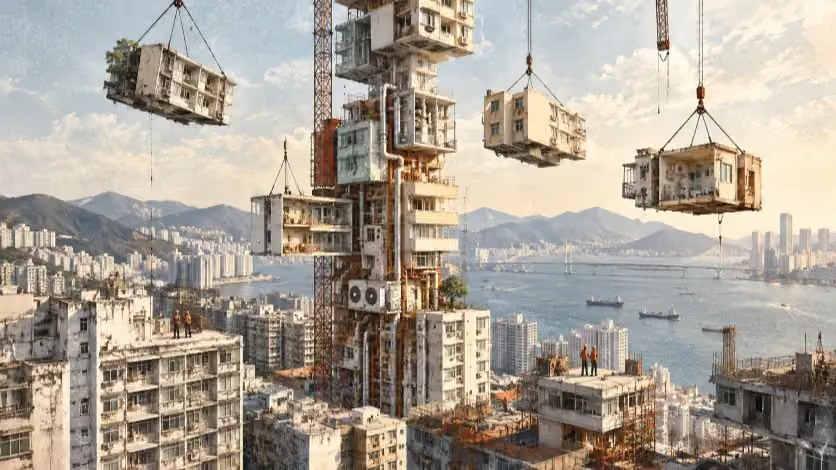
Busan has recast its old hillside districts as a problem of urban access rather than symbolic regeneration. But steep terrain, land acquisition, financing and resident trust will determine whether the plan reshapes the old downtown or remains a compelling idea.
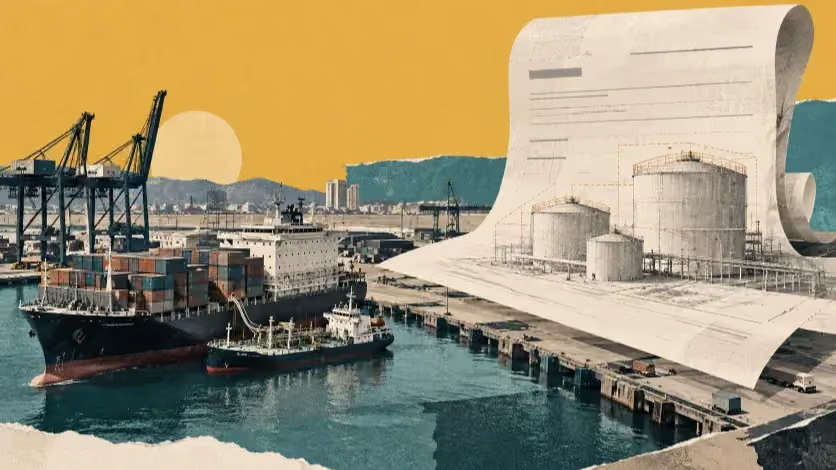
Busan has joined a regional naval MRO initiative, but whether it can turn that opening into lasting industrial capacity may depend on the subcontracted labor system beneath its yards.
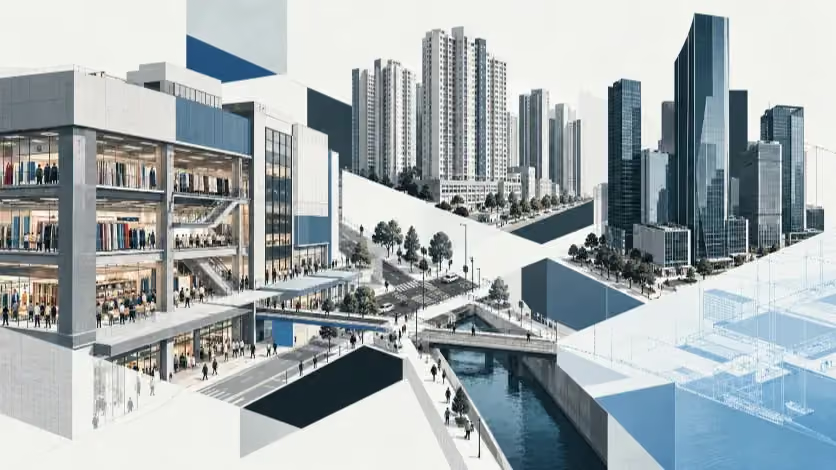
The planned second city hall in Sasang is designed to relocate public functions, strengthen Busan’s western administrative base and anchor the wider redevelopment of an aging industrial district.
Busan continues to expand rail and launch autonomous bus pilots, but the city’s real transport challenge lies in uneven access, steep topography and the high cost of reaching the network. The question is no longer whether rail matters, but whether rail alone is enough.
The Busan-Jinhae Free Economic Zone has scale, logistics strength and industrial weight. What remains less settled is whether 22 years of development produced a durable regional system — or simply a large zone with strong parts and weak links.
The Busan mayor’s head-shaving demonstration was framed as a push for the Global Hub City Special Act, but it also exposed a more immediate reality: political strain at home and growing doubt over symbolic gestures.