South Korea’s 2025 Budget Focuses on Non-Tax Revenues
Seoul, South Kroea - As South Korea unveils its 2025 budget proposal, one key component stands out: the government's increased reliance on non-tax revenues, including fines, penalties, and administrative fees, to address its fiscal challenges. Set at 13 trillion KRW, this category has increased by 1.6 trillion KRW compared to 2024, marking the highest amount ever recorded. This shift towards non-tax revenues raises a question: is this an innovative fiscal strategy, or is it an indirect tax burde

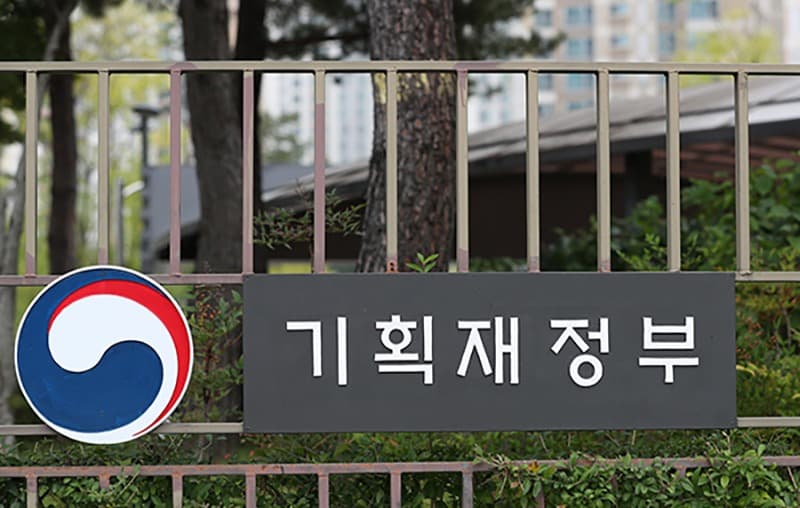
Seoul, South Kroea - As South Korea unveils its 2025 budget proposal, one key component stands out: the government's increased reliance on non-tax revenues, including fines, penalties, and administrative fees, to address its fiscal challenges. Set at 13 trillion KRW, this category has increased by 1.6 trillion KRW compared to 2024, marking the highest amount ever recorded. This shift towards non-tax revenues raises a question: is this an innovative fiscal strategy, or is it an indirect tax burden that will weigh heavily on businesses and citizens?
The total budget proposal for 2025 is 677.4 trillion KRW, marking a 3.2% increase from the previous year. As public debt and social spending demands rise, the government is balancing fiscal consolidation with investment in key areas like welfare and defense. Notably, it is leaning on non-tax revenues to fill budgetary gaps without raising traditional taxes—a move that is drawing significant attention.
The government’s reliance on non-tax revenues has become clear, with the budget proposal showing an 13.8% increase in this category, bringing the total to 13 trillion KRW. These revenues primarily come from fines, penalty fees, and other regulatory charges.
This approach signals a shift towards tougher regulatory enforcement, particularly targeting businesses, as a way to boost non-tax revenues without increasing taxes on the general public.
The increase in non-tax revenues is part of a broader strategy to maintain fiscal consolidation. The government aims to keep the fiscal deficit at 2.9% of GDP in 2025, while public debt is projected to reach 48.3% of GDP. Non-tax revenues, especially from penalties, are a crucial tool in achieving this balance.
Yet, the long-term sustainability of this strategy is up for debate. While it offers immediate financial relief, over-reliance on fines and penalties can lead to concerns about fairness and potential public backlash.
While non-tax revenues provide a temporary solution to fiscal challenges, their reliance on fines and penalties may disproportionately affect certain groups. Businesses, especially those subject to increased regulatory scrutiny, face significant risks. Compliance failures could result in steep fines, increasing operational costs and potentially discouraging growth and innovation in key sectors.
For citizens, particularly low-income individuals and small business owners, heightened fines for minor infractions may feel like indirect taxation. Although income taxes are not rising, the financial burden from fines could lead to increased discontent, especially if the public perceives these penalties as an unfair way to raise government revenue.
South Korea’s reliance on non-tax revenues follows a global trend where governments increasingly turn to fines and penalties as a revenue source. In 2023, penalties for financial and regulatory violations surged worldwide. Anti-money laundering (AML) and Know Your Customer (KYC) fines totaled $6.6 billion, a 57% increase from the previous year, with cryptocurrency firms like Binance facing record fines for compliance failures.
However, there are significant risks with this approach. Countries like the U.S. and China, which have also ramped up regulatory fines, face criticism for placing undue pressure on certain industries. This can stifle innovation, particularly in emerging sectors like cryptocurrency and financial technology, and exacerbate economic inequality as smaller firms struggle to cope with steep penalties.
Governments that increasingly depend on non-tax revenues, such as fines and penalties, encounter several challenges that can create long-term risks. First, there is the issue of indirect taxation. When fines and penalties become major revenue sources, the public may perceive them as an indirect form of taxation. This perception is especially strong if these fines disproportionately affect specific industries or lower-income groups. As a result, such revenue-raising tactics can lead to public backlash, with many viewing these charges as unfair, especially when they seem aimed at raising funds rather than enforcing laws or regulations.
Additionally, this burden often falls heavily on small and medium-sized businesses. These companies typically lack the financial flexibility of larger corporations to absorb the costs of regulatory fines. The growing pressure from compliance costs can stifle innovation and discourage these businesses from taking necessary risks, ultimately slowing economic growth. In environments with stringent enforcement, businesses may become overly cautious, reducing investment in new technologies or expansion.
Moreover, fines and penalties are inherently a short-term solution. While they provide an immediate boost to public finances, they are not sustainable. As businesses adapt to regulations and improve their compliance, the flow of revenue from fines will likely decrease. This can lead to future budget shortfalls, forcing governments to either raise taxes or find other revenue sources.
Finally, the risk of over-regulation looms large. Governments that rely too heavily on fines for revenue may be tempted to impose excessive regulations. While these regulations might generate revenue, they can also discourage investment and business operations by creating an overly restrictive environment. In the long run, over-regulation can hurt economic competitiveness, as businesses opt to relocate to regions with more business-friendly policies.
South Korea’s 2025 budget proposal relies heavily on non-tax revenues, particularly from fines and penalties, as a tool for addressing fiscal challenges without raising traditional taxes. While this may offer a quick fix, the long-term effects remain uncertain. The burden on businesses and citizens could lead to public discontent, and the sustainability of relying on fines as a revenue source is questionable.
As the government seeks to balance fiscal responsibility with social welfare, it must consider whether its current approach—heavily reliant on fines and penalties—can provide lasting solutions or whether it risks being seen as a hidden form of taxation. The coming years will determine whether this strategy can be maintained or whether South Korea will need to pivot to more sustainable fiscal policies.
Continue this reporting
Reporting on the same issue
Related coverage selected from the article's desk, topics and newsroom relationships.
 NewsSep 26, 2026
South Korea’s 490 Regional Doctor Seats Begin a Longer Route to Care
South Korea’s first 490 regional-doctor seats tie medical-school admission to...
 NewsAug 30, 2026
The Hidden Economics of South Korea’s Public Transport
Busan’s latest transport review exposes a wider national problem: South Korea...
 NewsAug 11, 2026
Korea’s Innovation Cities Did Not Grow the Same Way
Nearly two decades after South Korea began relocating public institutions, th...
More from the author
More from this byline
Stay with the same line of reporting through more work from this byline.
 NewsSep 18, 2026
The Other AI Race Is for the Freedom to Change Course
 NewsSep 5, 2026
How a Political Appointment Becomes a Judgment of Character
Reader Signal
Community readWhat did this report leave you with?
Choose the signal that best reflects your reading. Select it again to remove it.
One response per article
No response selected
A moderated conversation about the reporting.
One-level replies and newsroom moderation keep the conversation anchored to this article.
Discussion Status
Open
Please sign in to join the discussion.
Newsletter
Weekly reporting and context from Busan and Korea.