South Korea Grapples with Population Crisis and Struggling Pediatric Sector
South Korea's National Assembly Special Committee on Population Crisis, created in November last year to address the country's aging population, low birthrate, and regional depopulation, is finally set to begin its work on March 31st after a four-month delay. However, the committee faces criticism for its lack of urgency in addressing the pressing population crisis, which is impacting the country's pediatric sector. With a declining number of pediatricians and pediatric practices shutting down,

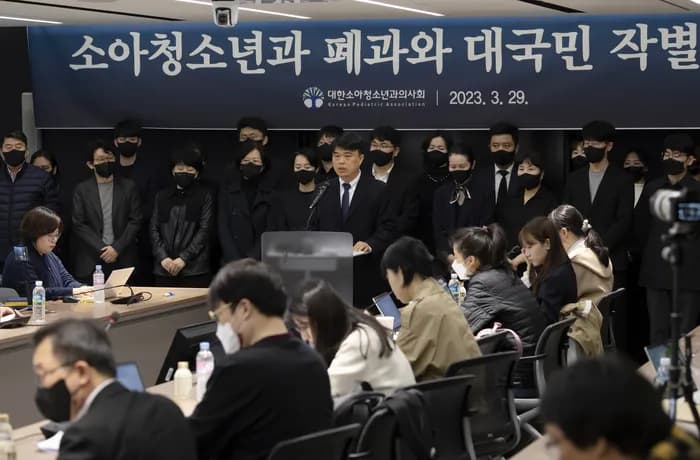
South Korea's National Assembly Special Committee on Population Crisis, created in November last year to address the country's aging population, low birthrate, and regional depopulation, is finally set to begin its work on March 31st after a four-month delay. However, the committee faces criticism for its lack of urgency in addressing the pressing population crisis, which is impacting the country's pediatric sector. With a declining number of pediatricians and pediatric practices shutting down, South Korea's healthcare system is under strain.
The special committee's first meeting was initially scheduled for March 29th but was postponed when ministers opted to send their vice ministers to an emergency economic livelihood meeting presided over by the president. The delay has raised concerns about the committee's effectiveness, particularly as it has no legislative authority to examine and pass bills. Furthermore, doubts surround whether proper discussions will take place and whether political action will be effective, given the country's current "political vacuum."
The Korean Pediatric Society has declared the closure of pediatric departments due to low birth rates, stagnant low fees, and a drastic drop in patient numbers resulting from the COVID-19 pandemic. The government has formed an emergency response team to address the situation, but questions remain about the long-term sustainability of the pediatric sector.
In Korea, there are almost no items covered by the national medical fee system for pediatric specialties, with the average medical fee per person remaining around KRW 10,000 (approximately USD 8.38) for 30 years. The inclusion of pediatric vaccinations in the National Immunization Program (NIP) and health insurance has also made it difficult for neighborhood clinics to operate.
The Korean Pediatric Society has reported that the income of pediatric specialists has decreased by 25% over the past 10 years, leading to 662 clinics closing down in the past five years alone. Additionally, the pediatric sector faces a severe shortage of manpower due to interns' reluctance to support the pediatric department. The decline in available healthcare for children has raised alarm within the nation.
The Ministry of Health and Welfare announced last month its "Pediatric Medical System Improvement Plan," which includes increasing the number of public clinics for severely ill children and pediatric emergency medical centers. However, The Korean Pediatric Society Chairman Lim Hyun-taek criticized the plan as insufficient and claimed that facility expansion alone would not address the root of the problem. Lim emphasized that the medical system cannot operate without pediatric specialists, and the Ministry's plan fails to address this key issue.
Furthermore, Lim criticized the proposed 24-hour pediatric specialty counseling center, stating that it is "ridiculous" to think that such a center could diagnose and treat over the phone, especially given that children with weaker immune systems can have their conditions worsened rapidly.
South Korea's low birthrate policies have also been called into question, as critics argue that the government's efforts are insufficient to address the core issues. The Yun Suk-yeol administration unveiled a low birthrate and aging population policy that includes increasing parental allowances for families with infants aged 0-1 to a maximum of one million won and extending spouse childbirth leave from five to ten days. However, critics say that specific measures to raise the birth rate among young people, such as realizing full pay for parental leave and promoting men's childcare leave, have been omitted.
In conclusion, South Korea's response to this crisis will have a significant impact on its healthcare infrastructure, social, economic, and cultural fabric. A comprehensive and forward-looking approach will be necessary to address the complex web of factors contributing to the population crisis and to ensure a stable and prosperous future for the country. Collaboration across party lines will be necessary to create and implement lasting policy changes that can reverse the declining birth rate and support the healthcare system.
Continue this reporting
Reporting on the same issue
Related coverage selected from the article's desk, topics and newsroom relationships.
 NewsSep 26, 2026
South Korea’s 490 Regional Doctor Seats Begin a Longer Route to Care
South Korea’s first 490 regional-doctor seats tie medical-school admission to...
 NewsAug 30, 2026
The Hidden Economics of South Korea’s Public Transport
Busan’s latest transport review exposes a wider national problem: South Korea...
 NewsAug 11, 2026
Korea’s Innovation Cities Did Not Grow the Same Way
Nearly two decades after South Korea began relocating public institutions, th...
More from the author
More from this byline
Stay with the same line of reporting through more work from this byline.
 NewsOct 9, 2026
Why “Busan Is Good” Falls Short as a City Brand
 NewsSep 18, 2026
The Other AI Race Is for the Freedom to Change Course
Reader Signal
Community readWhat did this report leave you with?
Choose the signal that best reflects your reading. Select it again to remove it.
One response per article
No response selected
A moderated conversation about the reporting.
One-level replies and newsroom moderation keep the conversation anchored to this article.
Discussion Status
Open
Please sign in to join the discussion.
Newsletter
Weekly reporting and context from Busan and Korea.