The High Stakes of Busan’s Future Aviation Cluster
Busan, South Korea - Busan is advancing its ambitious plan to establish itself as a pivotal hub in the global aerospace industry through the development of a Future Aviation Cluster near Gimhae Airport. On December 18, industry representatives, government officials, and academic experts convened at the Haeundae Homers Hotel for the “Busan Future Aviation Cluster Forum.” The event showcased the city’s efforts to foster innovation, strengthen global partnerships, and drive sustainable growth in th

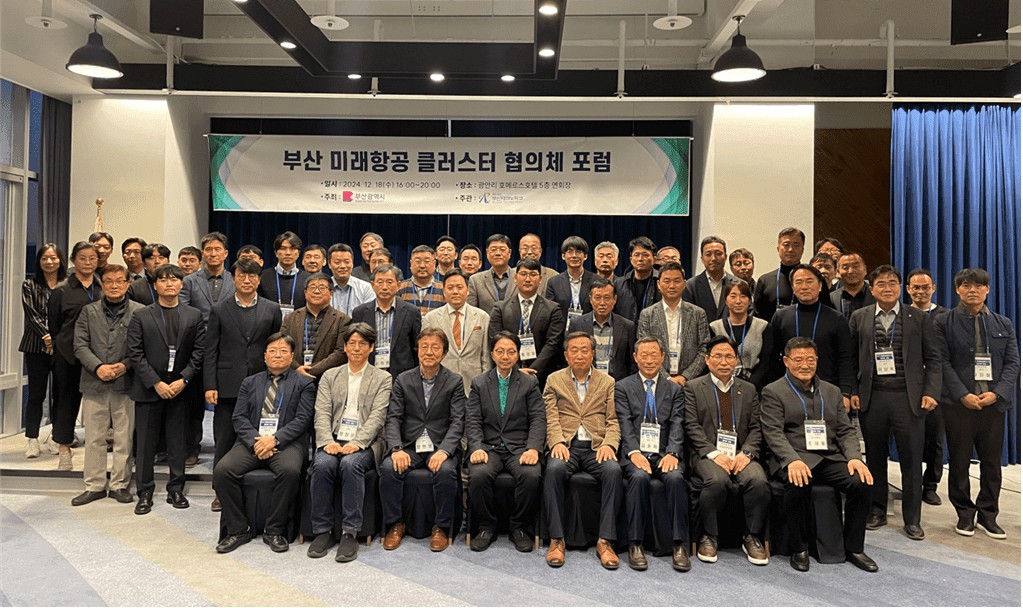
Busan, South Korea - Busan is advancing its ambitious plan to establish itself as a pivotal hub in the global aerospace industry through the development of a Future Aviation Cluster near Gimhae Airport. On December 18, industry representatives, government officials, and academic experts convened at the Haeundae Homers Hotel for the “Busan Future Aviation Cluster Forum.” The event showcased the city’s efforts to foster innovation, strengthen global partnerships, and drive sustainable growth in the aviation sector.
The Future Aviation Cluster aims to integrate advanced technologies such as lightweight composite materials, artificial intelligence (AI)-driven autonomous manufacturing systems, and urban air mobility (UAM). This initiative aligns with the rapidly growing global aerospace market and the industry's focus on sustainability and innovation. By partnering with Airbus’s Composite Technology Center (CTC) and Korean Air, Busan is solidifying its position in the international supply chain and fostering innovation across the region.
The vision for the Future Aviation Cluster was formalized in March 2024 when Busan City, Airbus’s CTC, Korean Air, and Busan Techno Park signed a partnership agreement in Stade, Germany. This collaboration, the first of its kind between a South Korean local government and Airbus, paved the way for the creation of Asia’s first Airbus CTC office within Busan Techno Park. This facility will serve as a hub for research and development, focusing on the production and localization of aviation-grade composite materials and advanced manufacturing technologies.
In October 2024, Busan hosted further discussions with Airbus representatives to finalize plans for the cluster. These discussions emphasized the importance of establishing resilient supply chains and leveraging innovative manufacturing processes to meet the demands of a dynamic global market.
The Future Aviation Cluster is expected to play a transformative role in revitalizing Busan’s local economy, particularly its traditional manufacturing sector. By fostering a high-value aerospace manufacturing ecosystem, the cluster is anticipated to create thousands of jobs, attract substantial foreign investment, and drive innovation in related industries.
Strategically located near Gimhae Airport and with the Gadeokdo New Airport slated to open in 2029, Busan is well-positioned to capitalize on its geographic advantages. The cluster’s focus on lightweight composite materials and UAM technologies will help the city secure a competitive edge in the global aerospace industry.
The forum provided a platform for stakeholders to assess progress and discuss the cluster’s future trajectory. Presentations covered a range of topics, including advancements in composite material research by Korean Air and AI-based manufacturing systems by the Korea Institute of Industrial Technology. A panel discussion explored opportunities to align the cluster with global trends, including the aviation industry's shift towards decarbonization and the increasing demand for sustainable technologies.
The insights shared at the forum will inform the cluster's strategic planning, ensuring it remains adaptive to industry needs. Stakeholders highlighted the importance of fostering collaboration among academia, research institutions, and industry to maximize the cluster's potential.
Economic Potential Versus Execution Risks
The economic potential of the Future Aviation Cluster is significant. The project is expected to inject vitality into Busan’s struggling manufacturing sector, create thousands of jobs, and attract foreign investment. The upcoming Gadeokdo New Airport, set to open in 2029, adds to the city’s strategic advantage.
However, the execution risks are substantial. Competing with established aerospace hubs like Toulouse, Seattle, and Hamburg requires not only technological innovation but also a well-developed supply chain and skilled workforce. The cluster’s success hinges on Busan’s ability to foster long-term partnerships with global aerospace players while supporting local small and medium-sized enterprises (SMEs) to integrate into the supply chain.
One of the critical challenges facing the project is talent development. Aerospace manufacturing is a high-skill industry, and Busan must invest heavily in education and training to meet the demands of its ambitious plans. The city will need to collaborate with universities and technical institutions to ensure a steady pipeline of qualified professionals.
Infrastructure readiness is another potential bottleneck. While the CTC office and research facilities are key starting points, the scale of investment required to create a fully functional cluster is immense. The city must also address logistical challenges, including supply chain efficiency and the integration of domestic SMEs into the global aerospace ecosystem.
The Future Aviation Cluster’s focus on sustainability is timely, as the aviation industry faces mounting pressure to reduce carbon emissions. However, Busan is entering a fiercely competitive market. Established hubs already have advanced infrastructure, strong supplier networks, and years of experience. For Busan to compete, it must offer compelling incentives to attract investment and partnerships, while also ensuring rapid technological progress.
Additionally, the global aerospace market is highly volatile, with demand fluctuations driven by economic cycles, geopolitical factors, and technological breakthroughs. Busan’s plans must account for these variables to ensure the cluster’s resilience.
While Busan’s vision for the Future Aviation Cluster is ambitious and forward-looking, some aspects of the plan appear overly optimistic. The city’s emphasis on high-value manufacturing is promising, but the lack of detailed strategies for addressing workforce shortages and infrastructure gaps raises concerns. Similarly, while partnerships with Airbus and Korean Air are noteworthy, they may not be sufficient to establish Busan as a globally competitive hub in the short term.
Moreover, the initiative seems to lean heavily on public sector leadership, with limited clarity on how private sector investment will be mobilized to scale the cluster effectively. Without robust private sector involvement, the cluster risks becoming a government-driven project that struggles to sustain momentum beyond its initial stages.
The cluster has the potential to position Busan as a leader in the next generation of aviation. However, its success will depend on how effectively the city balances its ambitious vision with the practical realities of execution. As the initiative unfolds, it will serve as a critical test case for whether regional hubs can emerge as global players in the highly competitive aerospace industry.
Continue this reporting
Reporting on the same issue
Related coverage selected from the article's desk, topics and newsroom relationships.
 NewsOct 6, 2026
Busan’s Water System Is Entering a Harder Era of Renewal
Busan spent decades building a water system that can absorb major failures. N...
 NewsSep 28, 2026
Why Some Commercial Space in Busan Is Hard to Reuse
Two empty commercial spaces exposed to the same broader economy can have very...
 NewsSep 20, 2026
What It Takes for U.S. Navy Repair Work to Become a Busan Industry
HJ Shipbuilding has brought U.S. Navy maintenance work to Yeongdo. Whether it...
More from the author
More from this byline
Stay with the same line of reporting through more work from this byline.
 NewsSep 18, 2026
The Other AI Race Is for the Freedom to Change Course
 NewsSep 5, 2026
How a Political Appointment Becomes a Judgment of Character
Reader Signal
Community readWhat did this report leave you with?
Choose the signal that best reflects your reading. Select it again to remove it.
One response per article
No response selected
A moderated conversation about the reporting.
One-level replies and newsroom moderation keep the conversation anchored to this article.
Discussion Status
Open
Please sign in to join the discussion.
Newsletter
Weekly reporting and context from Busan and Korea.