Economic Shadows Over Busan: A City Grappling with Decline
Busan, South Korea - Small businesses that have operated for decades are closing their doors, downtown streets echo with the emptiness of shuttered shops, and even longstanding landmarks of the local economy are struggling to stay afloat. Citizens are expressing alarm over the rapid decline, pointing to visible signs of economic distress in their daily lives: restaurants closing early, retail spaces left vacant, and a general sense of uncertainty pervading the city. The situation is underlined


Busan, South Korea - Small businesses that have operated for decades are closing their doors, downtown streets echo with the emptiness of shuttered shops, and even longstanding landmarks of the local economy are struggling to stay afloat. Citizens are expressing alarm over the rapid decline, pointing to visible signs of economic distress in their daily lives: restaurants closing early, retail spaces left vacant, and a general sense of uncertainty pervading the city.
The situation is underlined by grim statistics. In 2024’s first quarter, Busan saw an 11.3% drop in self-employed workers, far outpacing the national average decline of 0.2%. Major business districts, such as those near Pusan National University, reported skyrocketing vacancy rates, with small-scale commercial properties reaching a staggering 25.6% vacancy rate. Compounding these woes are demographic shifts: an aging population and declining birth rates are shrinking the workforce and consumer base, while young people migrate to other regions in search of better opportunities.
Experts are concerned that Busan’s economy may have passed a critical threshold, veering dangerously close to systemic collapse. While the city government has launched emergency measures, including financial aid packages and small business support programs, the effectiveness of these interventions remains uncertain.
While external factors such as the COVID-19 pandemic and global economic shifts have exacerbated the situation, many of Busan’s challenges are rooted in longstanding economic vulnerabilities and demographic trends.
Busan’s population dynamics pose a significant hurdle to sustainable growth. The city’s population is rapidly aging, with over 21% of residents now aged 60 or older, making it the oldest among South Korea’s major cities. Simultaneously, a declining birth rate and the migration of young professionals to cities like Seoul and Daegu have led to a shrinking workforce and consumer base.
This demographic shift reduces economic productivity and dampens demand in key sectors such as retail and housing, creating a feedback loop that further undermines growth.
Efforts to diversify Busan’s economy have been sporadic and insufficient. Initiatives to promote tourism, while moderately successful, have not compensated for the decline in traditional sectors. Tourism-focused strategies, such as the development of Haeundae and Gwangalli as cultural and entertainment hubs, have drawn visitors but failed to address the broader structural issues of job creation and industrial innovation.
Additionally, support for startups and small-to-medium enterprises (SMEs) has been inconsistent. While some government programs have provided financial aid and training, they lack the scale and focus needed to foster a dynamic entrepreneurial ecosystem.
Busan’s governance has often been criticized for being reactive rather than proactive. Policies addressing economic challenges frequently prioritize short-term relief over long-term planning. For instance, while financial aid packages and tax incentives have offered temporary respite to struggling businesses, they have done little to address the root causes of economic distress.
Furthermore, coordination between municipal authorities, local businesses, and civic organizations has been inadequate, leading to fragmented efforts and missed opportunities for collaborative problem-solving. A lack of strategic vision has left the city ill-equipped to adapt to rapid economic and societal changes.
The city’s shrinking economy has led to changes in how people spend and live. Household budgets are tightening as disposable incomes drop, compounded by rising inflation and stagnant wages. A recent survey of Busan residents revealed that 64% of respondents have reduced discretionary spending, avoiding dining out, entertainment, and other non-essential expenses. This behavior has further strained the local economy, creating a feedback loop of declining demand and reduced business activity.
Another troubling trend is the psychological toll of the crisis. Uncertainty about the future has led to increased reports of stress and anxiety among residents, particularly small business owners and young job seekers. Many families are also opting to leave Busan entirely, contributing to the population decline and weakening the city’s consumer base even further.
For local businesses, especially small and medium enterprises (SMEs), the situation is dire. Many longstanding establishments have been forced to shut down, unable to cope with declining foot traffic and rising operational costs. In sectors such as food service and retail, businesses are reporting revenue declines of 20-30% compared to the previous year.
One of the hardest-hit areas is the food service industry. Many restaurants have resorted to reducing their operating hours or closing altogether during evenings, a time once considered peak for dining out. Owners cite high utility costs, increasing rent, and a shrinking customer base as primary reasons for these changes.
Larger enterprises are not immune either. Some manufacturers and logistics firms in Busan’s industrial zones have downsized operations or relocated to other regions, further eroding the city’s job market. The port, historically a cornerstone of Busan’s economy, has also faced challenges due to global supply chain disruptions and increased competition from nearby ports in China and other Korean cities.
The crisis has also led to rising unemployment and underemployment, disproportionately affecting younger generations. Job seekers in their 20s and 30s are leaving the city in search of opportunities elsewhere, a trend that exacerbates the existing demographic challenges. Furthermore, older residents who remain in Busan are struggling with reduced support networks and limited job prospects, heightening the burden on social services.
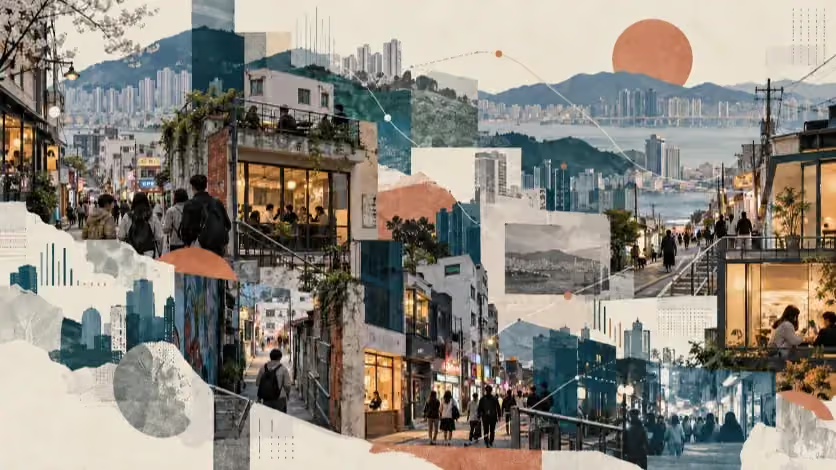
The shrinking economy has had visible effects on the urban landscape as well. Commercial districts, once vibrant with activity, are now dotted with empty storefronts. Public spaces, previously hubs of community interaction, feel desolate, reflecting the economic and social struggles faced by the city.
Busan’s economic trajectory suggests it may have crossed a critical threshold, where traditional methods of recovery are no longer sufficient. The reliance on legacy industries like shipping, coupled with an aging population and youth migration, has created a cycle of economic stagnation that threatens to spiral into long-term decline. While the government’s current measures provide a safety net, they fail to address the underlying forces driving the city’s challenges.
Busan’s economic crisis is a sobering reminder of the challenges facing many cities that rely heavily on traditional industries while grappling with demographic shifts and global economic pressures. While the city government’s efforts to stabilize the economy are commendable, they fall short of addressing the deep-seated structural issues that have brought Busan to this critical juncture. To chart a new path forward, Busan must embrace bold, innovative solutions that prioritize long-term resilience over short-term relief.
The question remains: Will Busan seize this opportunity to redefine itself, or will it continue on a path of decline? The answer lies in the actions of its leaders, businesses, and citizens in the coming years.
Continue this reporting
Reporting on the same issue
Related coverage selected from the article's desk, topics and newsroom relationships.
 NewsOct 16, 2026
What Is Still Worth Going to See?
Busan’s biennale faces questions of artistic judgment and institutional care....
 NewsOct 14, 2026
What Became of Busan’s University Streets?
From 2015 to 2023, registered businesses grew near Pusan National University...
 NewsOct 12, 2026
Bukangi, the Shark That Stayed in Busan’s North Port
A rescue net guided Bukangi toward the sea, but the dusky shark returned to B...
More from the author
More from this byline
Stay with the same line of reporting through more work from this byline.
 NewsOct 9, 2026
Why “Busan Is Good” Falls Short as a City Brand
 NewsSep 18, 2026
The Other AI Race Is for the Freedom to Change Course
Reader Signal
Community readWhat did this report leave you with?
Choose the signal that best reflects your reading. Select it again to remove it.
One response per article
No response selected
A moderated conversation about the reporting.
One-level replies and newsroom moderation keep the conversation anchored to this article.
Discussion Status
Open
Please sign in to join the discussion.
Newsletter
Weekly reporting and context from Busan and Korea.