Busan’s Struggle with Urban Polarization
In the port city of Busan, South Korea's second-largest metropolis, an acute contrast in the housing landscape paints a vivid picture of urban disparity. On one hand, the skyline is punctuated by gleaming clusters of high-rise buildings that symbolize modern prosperity; on the other, sprawling across older districts are the remnants of decades-old houses, silently narrating tales of urban neglect. This dichotomy not only defines the physical landscape of Busan but also underscores deeper social


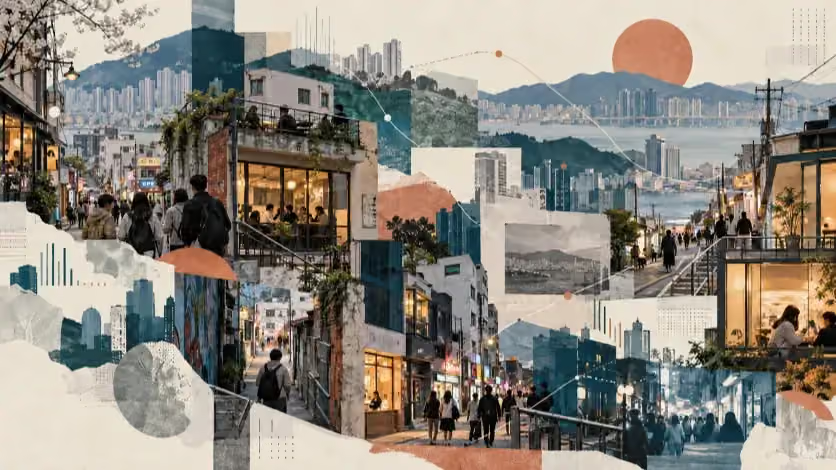
In the port city of Busan, South Korea's second-largest metropolis, an acute contrast in the housing landscape paints a vivid picture of urban disparity. On one hand, the skyline is punctuated by gleaming clusters of high-rise buildings that symbolize modern prosperity; on the other, sprawling across older districts are the remnants of decades-old houses, silently narrating tales of urban neglect. This dichotomy not only defines the physical landscape of Busan but also underscores deeper social and economic divisions within the city.
Busan, a city characterized by its rapid urban development, now faces the challenge of managing an aging housing stock. Remarkably, over 68% of residential buildings in the city are over 30 years old, a statistic that highlights the aging infrastructure problem more acutely than anywhere else in South Korea. Districts like Yeongdo-gu and Saha-gu show some of the highest concentrations of these old houses, reflecting the broader trend of residential decay that contrasts sharply with the newer developments.
Amidst this backdrop of decay, Busan's landscape is also defined by its high-rise buildings, particularly noticeable in areas like Haeundae-gu and Marine City area, where luxury apartments and commercial skyscrapers dominate the skyline. This architectural dichotomy not only illustrates the physical disparities in living conditions but also represents a broader socio-economic divide. While these towering structures are equipped with the latest amenities and designed for affluence, the old districts suffer from neglect and underinvestment.
The juxtaposition of old and new within such close proximity in Busan raises important questions about urban planning and housing policy. It is clear that while parts of the city have thrived, stepping into the future with gleaming facades, other parts have been left clinging to the vestiges of past decades, often overlooked by modern development plans. This stark contrast serves as a visual and practical representation of the residential polarization affecting the city, highlighting a split that runs deeper than just the buildings themselves—it cuts through the heart of the community, affecting the quality of life and economic opportunities available to its residents.
Historical Context of Housing in Busan
The rapid influx of refugees during and after the Korean War significantly shaped Busan's urban landscape. As one of the few cities that remained largely uncontrolled by North Korean forces during the war, Busan saw a sudden spike in its population as refugees sought safety. This led to the hasty construction of makeshift housing, often erected in a disorganized manner to accommodate the immediate needs of the displaced population. This form of unplanned urban development set the stage for the city's long-term challenges with residential decay and congestion.
The post-war urgency and lack of a cohesive urban plan meant that many of Busan's residential areas were developed without adequate infrastructure, leading to persistent issues with traffic congestion and poor accessibility. These areas, particularly in older and western parts of the city, are characterized by narrow roads and high population density, making them less pedestrian-friendly and more prone to vehicular accidents.
The construction techniques and materials used during this period were often substandard, prioritizing quick shelter over long-term sustainability. This has resulted in a high proportion of buildings that are not only aesthetically displeasing but also pose significant safety risks due to their dilapidated state.
The historical context of Busan's residential issues requires the need for comprehensive urban planning that incorporates both renewal of decaying structures and the integration of adequate road and safety features. Modern urban planning must address these inherited challenges by enforcing stricter building codes, enhancing infrastructure, and ensuring sustainable development practices to prevent further urban decay.
Understanding the historical roots of urban development issues in Busan is of critical importance for policymakers and urban planners. By acknowledging the past decisions and their implications, they can better strategize effective solutions that are tailored to the unique challenges of the city. Furthermore, integrating advanced planning tools and methodologies such as AI and data analytics could enhance the effectiveness of these strategies, leading to a safer and more sustainable urban environment for future generations.
Impact of the Housing Crisis
The prevalence of old and deteriorating buildings in Busan poses significant safety risks. These structures are often not compliant with modern building standards and are vulnerable to natural disasters such as earthquakes and typhoons, which are not uncommon in the region. The safety risks are compounded by the fact that these buildings are densely packed into narrow streets, further complicating evacuation efforts and emergency responses.
Moreover, the aesthetic impact of these aging structures cannot be understated. They contribute to a general sense of urban decay, deterring investment and lowering the quality of life for residents. This visual blight contrasts sharply with the sleek modernity of Busan’s newer districts, further emphasizing the city's residential polarization.
The disparity in housing quality also has profound social implications. Residents of older buildings often face stigma and isolation, leading to social stratification based on where one lives. This segregation can hinder community cohesion and contribute to social instability.
Economically, the polarization affects property values, with newer developments fetching premium prices while older areas lag behind. This uneven development can stifle overall economic growth and lead to missed opportunities for city-wide prosperity. The concentration of wealth and resources in certain areas can exacerbate income inequality, creating economic enclaves that benefit a few at the expense of the broader community.
Causes of Residential Polarization
The origins of residential polarization in Busan can be traced back to the rapid urbanization processes that followed the Korean War, when the city had to accommodate a massive influx of refugees. The lack of coordinated urban planning during these early years led to the haphazard construction of housing that has now aged into obsolescence.
Throughout the decades, government policies have often favored new developments over the renovation of existing structures, leading to a proliferation of new high-rises and the neglect of older residential areas. Market forces have also played a role, with developers naturally gravitating towards more profitable new constructions rather than investing in the upkeep of old properties.
Solutions and Policy Recommendations
One key strategy for addressing the housing disparities in Busan is through comprehensive urban renewal projects. These projects should not only focus on tearing down and rebuilding but also on preserving the cultural and historical character of older neighborhoods. Successful urban renewal will require collaboration between the government, private sector, and local communities to ensure that redevelopment efforts are inclusive and beneficial for all residents.
To combat urban decay, Busan could implement policies that incentivize the renovation of existing buildings and the construction of affordable housing. Such policies could include tax breaks, grants, and low-interest loans to property owners and developers who invest in older properties. Additionally, integrating modern urban planning technologies, such as AI, could help in making informed decisions about where to focus renewal efforts and how to optimize the use of space in densely populated areas.
As Busan continues to grow and evolve, it is imperative that urban planning and policy-making are approached with an eye towards equity and sustainability. Addressing the challenges of residential polarization and housing decay will not only improve safety and aesthetics but will also enhance the social and economic fabric of the city. With strategic planning and inclusive policies, Busan can transform its urban challenges into opportunities for a vibrant and resilient future.
Continue this reporting
Reporting on the same issue
Related coverage selected from the article's desk, topics and newsroom relationships.
 NewsOct 16, 2026
What Is Still Worth Going to See?
Busan’s biennale faces questions of artistic judgment and institutional care....
 NewsOct 14, 2026
What Became of Busan’s University Streets?
From 2015 to 2023, registered businesses grew near Pusan National University...
 NewsOct 12, 2026
Bukangi, the Shark That Stayed in Busan’s North Port
A rescue net guided Bukangi toward the sea, but the dusky shark returned to B...
More from the author
More from this byline
Stay with the same line of reporting through more work from this byline.
 NewsOct 9, 2026
Why “Busan Is Good” Falls Short as a City Brand
 NewsSep 18, 2026
The Other AI Race Is for the Freedom to Change Course
Reader Signal
Community readWhat did this report leave you with?
Choose the signal that best reflects your reading. Select it again to remove it.
One response per article
No response selected
A moderated conversation about the reporting.
One-level replies and newsroom moderation keep the conversation anchored to this article.
Discussion Status
Open
Please sign in to join the discussion.
Newsletter
Weekly reporting and context from Busan and Korea.