Busan’s Empty House Projects: A Real Solution or Symbolic Fix?
Busan City has launched a new initiative to convert vacant homes into micro-dorms and public parks. But as critics point out, meaningful urban change requires more than scattered projects — it demands a systemic approach to life, work, and community.

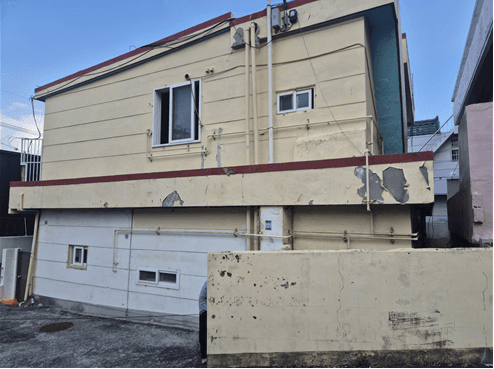
Busan, South Korea — In April 2025, Busan City announced four new pilot projects as part of its ambitious plan to repurpose vacant homes into small-scale community assets. The initiative, grounded in the city’s “Empty House Innovation Plan” released in late 2024, includes transforming two derelict houses into student dormitories for foreign students in Yeongdo, and two more into a compact public gym in Dong-gu. The city’s leadership touts these interventions as early models of urban innovation — low-cost, high-impact conversions designed to revitalize aging neighborhoods.
But as these modest proposals are rolled out, a more pressing question looms: can isolated conversions really change the trajectory of neighborhood decline?
While the city frames the initiative as a step toward long-term regeneration, critics and urban researchers are pointing to deeper structural limits. With a total budget of just 1.4 billion KRW, and only four properties selected out of dozens of applications across Busan’s 16 districts, the scale of intervention appears too small, and too fragmented, to drive durable transformation. It is, they say, a classic example of “point-based urbanism” — the attempt to treat systemic decay with architectural acupuncture.
Vacant homes are not simply aesthetic blemishes. They are physical evidence of urban systems in retreat — aging residents, outbound youth, shrinking tax bases, and a lack of economic magnets to retain life. In this context, converting one house into a dormitory or gym may improve a corner of the city, but does little to reshape the conditions that produced vacancy in the first place.
The challenge for Busan — and for many mid-sized cities across East Asia — lies not in imagining what one house can become, but in organizing what entire districts can become together.
The Missing Urban Strategy
To date, Busan’s approach to neighborhood revitalization has been limited to fragmented upgrades — a co-working space here, a pilot housing retrofit there — without a clear strategy to link these nodes into a living system. The result is an urban quilt made of disconnected patches, where infrastructure and community functions lack the critical mass to generate momentum.
Experts suggest that Busan must now shift from “point-based” to “pattern-based” regeneration — building linear, contiguous, and thematic clusters that can produce cumulative effect. That means identifying not just empty houses, but potential micro-districts where social housing, youth-oriented amenities, local entrepreneurship, and green public space can be layered into a new kind of urban ecology.
It also means shifting focus from building things to cultivating life. Public gyms and dormitories are a starting point, but without food options, mobility connections, cultural programming, and social infrastructure, their impact is unlikely to extend beyond the property line.
Another tension is demographic. Busan’s core challenge is not just vacancy, but the outflow of young people and the overconcentration of seniors in marginal areas. Yet few of the city’s proposals appear calibrated to attract and retain new residents. “We are treating symptoms without understanding the patient,” notes one urban sociologist based in Busan. “You can’t ask young professionals to return to hollowed-out neighborhoods unless you offer more than just housing. You need life.”
This has led some policy observers to call for more comprehensive “youth living zones”, anchored by affordable housing, job incubators, co-ops, and communal facilities like shared kitchens or laundries. These zones, if concentrated and networked, could provide the density of services needed to shift perceptions and behaviors.
In this vision, the empty house becomes the raw material — but not the solution.
One of the major obstacles remains institutional. Urban regeneration in Korea is often trapped in short budget cycles and project-oriented frameworks, making it difficult to coordinate across departments, districts, and development stages. Programs like Busan’s current initiative are valuable, but insufficient without a more robust operating system behind them.
Experts are now calling for the establishment of a dedicated digital urban regeneration team within city government — not only to manage physical interventions, but to collect real-time data, track migration trends, evaluate usage patterns, and engage residents in participatory planning. This team could also oversee more integrated use of local currencies (like Dongbaekjeon), tech-enabled housing vouchers, and data platforms for mapping urban vacancy.
What is needed is not just a program, but an institutional architecture capable of steering long-term change.
The story of empty homes is not a story of architecture. It is a story of social abandonment, spatial mismatch, and planning inertia. Busan’s efforts to repurpose some of these structures are well-intentioned, but unless embedded in a broader spatial, demographic, and economic framework, they risk becoming symbolic gestures in a city that needs structural reform.
True urban regeneration will not be achieved through four houses and one press release. It will require an urban pact — one that brings government, residents, universities, and businesses into a shared project of reimagining what city life can look like, street by street, block by block.
And it must begin with the hardest question of all: not what we can build, but whom we are building for.
Continue this reporting
Reporting on the same issue
Related coverage selected from the article's desk, topics and newsroom relationships.
 NewsOct 14, 2026
What Became of Busan’s University Streets?
From 2015 to 2023, registered businesses grew near Pusan National University...
 NewsOct 12, 2026
Bukangi, the Shark That Stayed in Busan’s North Port
A rescue net guided Bukangi toward the sea, but the dusky shark returned to B...
 NewsOct 6, 2026
Busan’s Water System Is Entering a Harder Era of Renewal
Busan spent decades building a water system that can absorb major failures. N...
More from the author
More from this byline
Stay with the same line of reporting through more work from this byline.
 NewsOct 9, 2026
Why “Busan Is Good” Falls Short as a City Brand
 NewsSep 18, 2026
The Other AI Race Is for the Freedom to Change Course
Reader Signal
Community readWhat did this report leave you with?
Choose the signal that best reflects your reading. Select it again to remove it.
One response per article
No response selected
A moderated conversation about the reporting.
One-level replies and newsroom moderation keep the conversation anchored to this article.
Discussion Status
Open
Please sign in to join the discussion.
Newsletter
Weekly reporting and context from Busan and Korea.