Busan’s 15-Minute City Policy: Progress or Empty Promises?
Busan, South Korea - When Mayor Park Heong-joon introduced the 15-Minute City policy in 2021, it was lauded as a bold step toward creating accessible, sustainable neighborhoods. The promise was clear: to design urban spaces where healthcare, education, work, and recreation would be reachable within a 15-minute walk or bike ride. Over the years, the initiative gained international recognition, particularly for its design-focused projects like the award-winning wallscapes in Dangam-Gaegeum. Howev

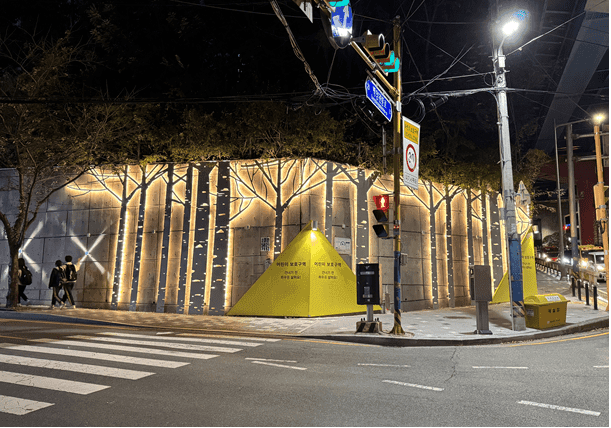
Busan, South Korea - When Mayor Park Heong-joon introduced the 15-Minute City policy in 2021, it was lauded as a bold step toward creating accessible, sustainable neighborhoods. The promise was clear: to design urban spaces where healthcare, education, work, and recreation would be reachable within a 15-minute walk or bike ride. Over the years, the initiative gained international recognition, particularly for its design-focused projects like the award-winning wallscapes in Dangam-Gaegeum.
However, as 2024 ends, critics argue that the 15-Minute City policy remains more of a showcase than a substantive urban transformation. While Busan has invested heavily in aesthetic improvements and branding, the question lingers: has the policy delivered meaningful changes in accessibility, inclusivity, and functionality for its residents?
The concept of the 15-Minute City is built on accessibility. It seeks to minimize commuting times, encourage walkability, and foster localized services. Global cities like Paris and Melbourne have embraced the model, focusing on equitable distribution of resources and community-driven development. For Busan, the policy was envisioned not only to reshape its physical landscape but also to redefine urban living, aligning with the city’s aspirations for sustainability and modernity.
Pilot projects like the green wallscapes and linear parks in Dangam-Gaegeum were launched as part of this vision. These efforts earned Busan international acclaim, with accolades such as the 2024 Pin-Up Design Award Best 100. The city has highlighted these projects as evidence of the policy’s success, framing them as symbols of innovation and progress.
Despite these achievements, critics argue that the 15-Minute City policy has fallen short of its transformative potential. The emphasis on design has created a polished exterior that masks deeper systemic issues. While green walls and rebranded taxis enhance Busan’s image, they do little to address the foundational goals of accessibility and convenience.
For instance, the creation of linear parks in Dangam-Gaegeum revitalized public spaces but did not significantly improve connectivity or mobility for residents. Similarly, while the taxi redesign project aligns with the city’s branding efforts, it does not address practical concerns such as transit availability or affordability. These projects, critics contend, prioritize visual appeal over real impact, making the policy appear more like a showpiece than a functional urban strategy.
The 15-Minute City’s core promise—providing access to essential services within a short walk or bike ride—remains inconsistently realized. In many districts, residents report that commuting times have not improved, and access to healthcare, education, and recreational facilities remains limited. Public transportation networks have seen little expansion, and pedestrian pathways, while beautified in some areas, are still insufficient for creating truly walkable neighborhoods.
The policy’s focus on highly visible projects also risks alienating residents who feel excluded from its benefits. Aesthetic upgrades in central districts are celebrated, but they fail to address the day-to-day challenges faced by Busan’s broader population, such as inadequate public transit or outdated infrastructure in residential areas.
The policy’s heavy investment in design has drawn criticism for prioritizing global recognition over local impact. Awards and international acclaim may bolster Busan’s image as a modern city, but they do not translate into tangible improvements for its residents. This disconnect raises concerns about whether the policy has been executed with the needs of Busan’s communities in mind or primarily as a tool for branding and marketing.
Urban planning experts caution against overemphasizing aesthetics at the expense of functionality. While design can play a crucial role in shaping livable cities, it must be accompanied by systemic improvements that address mobility, equity, and sustainability. Without these elements, the 15-Minute City risks becoming a symbolic initiative rather than a substantive one.
To fulfill the 15-Minute City’s original promise, Busan must shift its focus from aesthetics to functionality. This means investing in practical solutions that directly improve residents’ lives. Expanding public transportation networks, creating accessible pedestrian pathways, and ensuring equitable distribution of resources are essential steps toward achieving this goal.
Moreover, the city must establish clear metrics to measure the policy’s effectiveness beyond design achievements. Key performance indicators such as reduced commuting times, increased public transit usage, and improved access to essential services would provide a more accurate picture of the policy’s impact.
Citizen engagement must also play a central role in the policy’s evolution. Involving residents in the planning process ensures that their needs and priorities are reflected in the policy’s implementation. This approach not only fosters trust but also increases the likelihood of success by aligning the policy with the realities of urban living.
Busan’s 15-Minute City policy embodies a compelling vision for the future, but its execution has so far leaned heavily on design and visibility. While the city has achieved international recognition for its aesthetic projects, the practical benefits of the policy remain elusive for many residents.
As Busan moves into 2025, it faces a critical juncture. To transform the 15-Minute City into a model of sustainable urban living, the city must refocus its efforts on delivering tangible improvements in accessibility, inclusivity, and functionality. By shifting its priorities from showmanship to substance, Busan can turn its ambitious vision into a reality that serves all its residents, not just its global image.
Continue this reporting
Reporting on the same issue
Related coverage selected from the article's desk, topics and newsroom relationships.
 NewsOct 16, 2026
What Is Still Worth Going to See?
Busan’s biennale faces questions of artistic judgment and institutional care....
 NewsOct 14, 2026
What Became of Busan’s University Streets?
From 2015 to 2023, registered businesses grew near Pusan National University...
 NewsOct 12, 2026
Bukangi, the Shark That Stayed in Busan’s North Port
A rescue net guided Bukangi toward the sea, but the dusky shark returned to B...
More from the author
More from this byline
Stay with the same line of reporting through more work from this byline.
 NewsOct 9, 2026
Why “Busan Is Good” Falls Short as a City Brand
 NewsSep 18, 2026
The Other AI Race Is for the Freedom to Change Course
Reader Signal
Community readWhat did this report leave you with?
Choose the signal that best reflects your reading. Select it again to remove it.
One response per article
No response selected
A moderated conversation about the reporting.
One-level replies and newsroom moderation keep the conversation anchored to this article.
Discussion Status
Open
Please sign in to join the discussion.
Newsletter
Weekly reporting and context from Busan and Korea.