Busan Invests in Igidae Art Park to Create a Global Public Art Landmark
Busan is transforming Igidae Park into a world-class cultural and artistic landmark, blending contemporary art with its breathtaking coastal scenery.
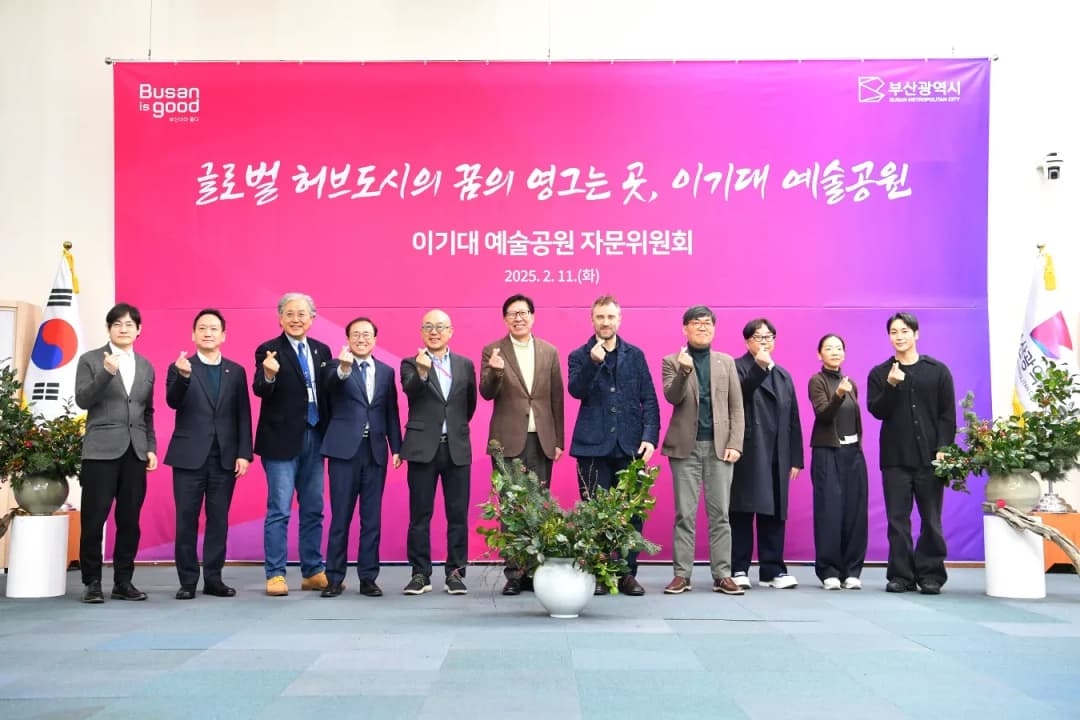
BUSAN, South Korea —Busan is embarking on an ambitious transformation of Igidae Park, envisioning it as a world-class cultural and artistic landmark that merges contemporary art, architectural innovation, and environmental preservation. Set to begin in March 2025, the Igidae Art Park project aims to establish a global hub for public art while positioning the city as a leader in cultural tourism. However, while the vision is bold, the project faces financial scrutiny, logistical hurdles, and a growing public discourse over its long-term feasibility.
At the heart of the initiative is a commitment to seamlessly blending art with nature, creating an environment where visitors can engage with world-class exhibitions while experiencing Busan’s coastal beauty. Mayor Park Heong-joon, speaking at the advisory committee meeting on February 11, 2025, emphasized the project’s significance in shaping Busan’s cultural identity. He described it as the beginning of a movement that would ripple across the city, reinforcing its status as a global hub. The city has already invested over 73.7 billion KRW ($55 million USD) in acquiring 712,000 square meters of private land within Igidae Park, a process that concluded in June 2023. With the groundwork laid, officials are now shifting their focus toward shaping the park’s cultural identity through artistic collaborations and architectural innovation.
Central to the plan is the construction of the Art Pavilion, envisioned as the artistic centerpiece of the park. This space is set to feature large-scale sculptures and rotating exhibitions curated by some of the world’s most influential artists. Contract negotiations for the construction are expected to be finalized by late 2025, paving the way for an international selection process to determine the participating artists. The pavilion is expected to become a defining landmark that merges contemporary art with Busan’s natural landscapes, drawing visitors from around the world. Beyond the pavilion, the project also includes a Seaside Forest Gallery, designed to host up to six or seven globally recognized artists and institutions. Unlike traditional museums, this space will integrate open-air exhibitions within the forested coastline, offering a unique artistic experience that evolves with the natural surroundings. Applications for artists and institutions to establish permanent or semi-permanent galleries will open in March 2025, ensuring a diverse range of artistic contributions.
As part of the project’s broader cultural framework, the Oryukdo Art Center and the ‘Old Stone Street’ will provide additional layers of historical and artistic engagement. The area will feature a wooden observation deck constructed with sustainable materials, offering panoramic views of the Oryukdo coastline. A sculpture street, featuring 65 repatriated stone artifacts, will incorporate elements of narrative-driven storytelling, merging historical artifacts with contemporary public art.
While the scale of the project is undeniably ambitious, what has drawn even greater attention is Busan’s partnership with the world-renowned Centre Pompidou in Paris. Under an agreement between the city and the French institution, a 15,000-square-meter "Pompidou Center Busan" will be established within Igidae Art Park, further cementing the city’s status as a global cultural player. The facility is expected to feature a rotating collection of exhibitions curated by the Centre Pompidou, connecting Korean and international art communities in unprecedented ways. The project will also incorporate creative studios, performance venues, and educational programs aimed at fostering artistic innovation. With construction set to begin in 2027 and a target opening in 2031, Busan’s collaboration with Pompidou places it alongside cities such as Shanghai and Málaga, where other satellite Pompidou museums have been established.
Despite the excitement surrounding the project, it has also sparked intense debate among politicians, civic groups, and the local art community. Critics argue that the estimated construction cost, which exceeds 1 trillion KRW ($750 million USD), alongside annual operational expenses surpassing 100 billion KRW ($75 million USD), raises serious questions about financial sustainability. Many have voiced concerns that the funds allocated for Igidae Art Park could instead be directed toward enhancing Busan’s existing cultural institutions, such as the Busan Museum of Art and the Museum of Contemporary Art Busan. Some experts believe that with the right investment, these institutions could achieve global recognition without the need for such an expensive new venture. Others worry about financial transparency, urging city officials to ensure that the project does not come at the expense of local artists and cultural programs.
To shape the artistic and architectural vision of the park, Busan has enlisted world-class designers, urban planners, and curators. Among them is the celebrated British architect Thomas Heatherwick, whose transformative urban designs have gained international acclaim. His involvement, along with contributions from leading Korean designers and curators, raises expectations for a carefully curated and architecturally significant cultural landmark. Experts such as Na Geon, a professor at Hongik University and former chief city designer of Busan, and Kim Seong-yeon, chairman of the Busan Biennale Executive Committee, have also joined the advisory committee, ensuring that the project aligns with both global and local cultural perspectives.
As the project moves forward, city officials remain committed to engaging the public and addressing concerns through a transparent and phased development process. Public forums scheduled for mid-2025 will allow residents to voice their opinions on the project’s scope and financial structure, while the artist selection and gallery proposals opening in March will ensure that both international and local artists contribute to the park’s identity. Meanwhile, construction plans for the Pompidou Center Busan will continue as the city cements its place in the international art scene.
As the debate over Igidae Art Park continues, Busan finds itself at a critical juncture. The success of the project will depend on striking a balance between its international ambitions and its responsibility to the local community. If executed thoughtfully, the park has the potential to redefine Busan as a cultural powerhouse, where nature, art, and architecture merge to create an unparalleled artistic experience. However, without careful financial planning and public engagement, the project risks becoming an expensive symbol of misplaced priorities. In the coming months, the direction of Busan’s cultural landscape will be shaped not just by policymakers and architects, but by the voices of the city’s residents, artists, and institutions who will determine whether Igidae becomes the thriving artistic haven it aspires to be.
Continue this reporting
Reporting on the same issue
Related coverage selected from the article's desk, topics and newsroom relationships.
 NewsOct 16, 2026
What Is Still Worth Going to See?
Busan’s biennale faces questions of artistic judgment and institutional care....
 NewsOct 14, 2026
What Became of Busan’s University Streets?
From 2015 to 2023, registered businesses grew near Pusan National University...
 NewsOct 12, 2026
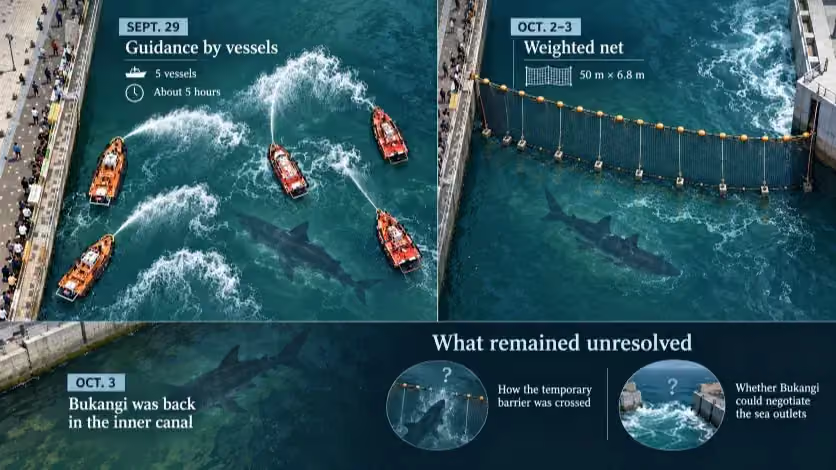
Bukangi, the Shark That Stayed in Busan’s North Port
A rescue net guided Bukangi toward the sea, but the dusky shark returned to B...
More from the author
More from this byline
Stay with the same line of reporting through more work from this byline.
 NewsOct 9, 2026
Why “Busan Is Good” Falls Short as a City Brand
 NewsSep 18, 2026
The Other AI Race Is for the Freedom to Change Course
Reader Signal
Community readWhat did this report leave you with?
Choose the signal that best reflects your reading. Select it again to remove it.
One response per article
No response selected
A moderated conversation about the reporting.
One-level replies and newsroom moderation keep the conversation anchored to this article.
Discussion Status
Open
Please sign in to join the discussion.
Newsletter
Weekly reporting and context from Busan and Korea.