Blockchain-Based Smart Containers Ensure Lithium-Ion Battery Transport Safety
Busan, South Korea - Busan has unveiled a pioneering solution to one of the shipping industry's most pressing challenges: the safe transportation of lithium-ion batteries. By deploying blockchain-powered smart containers, the city has completed successful trials on the Busan-Singapore shipping route, setting a new benchmark for safety, efficiency, and transparency in global logistics. With lithium-ion batteries powering the surge in electric vehicles and renewable energy storage, their global t

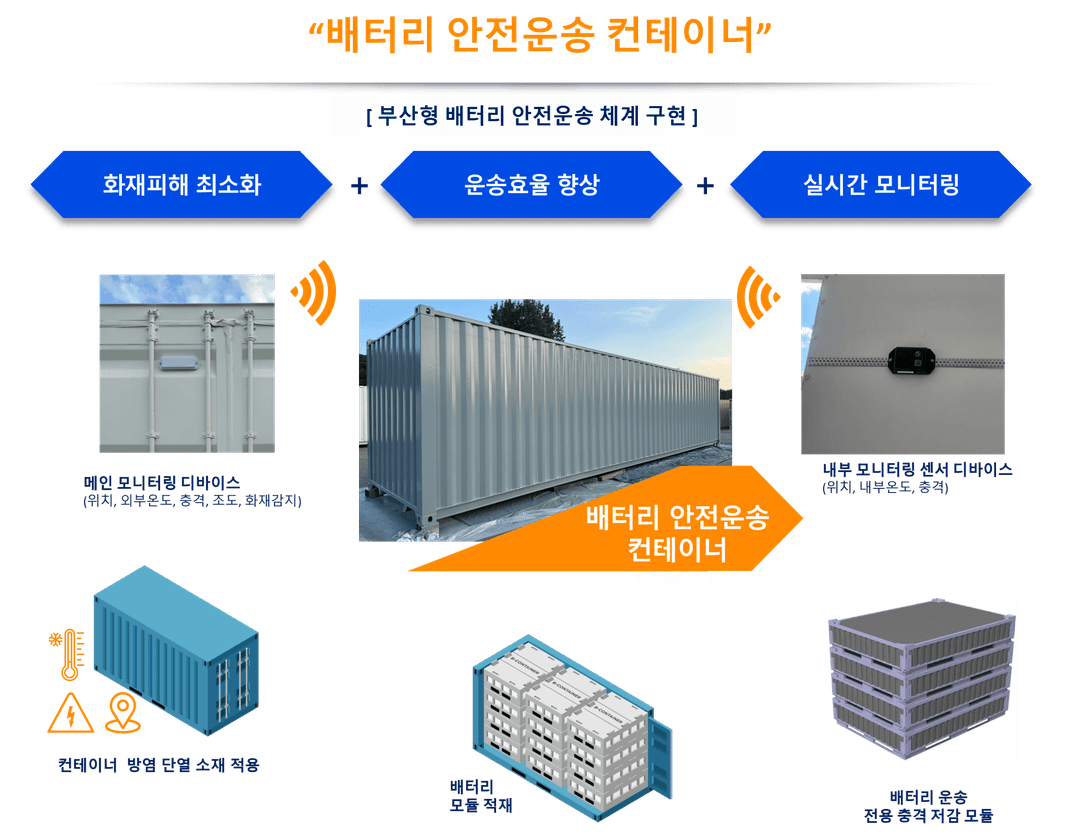
Busan, South Korea - Busan has unveiled a pioneering solution to one of the shipping industry's most pressing challenges: the safe transportation of lithium-ion batteries. By deploying blockchain-powered smart containers, the city has completed successful trials on the Busan-Singapore shipping route, setting a new benchmark for safety, efficiency, and transparency in global logistics.
With lithium-ion batteries powering the surge in electric vehicles and renewable energy storage, their global transportation has become a logistical necessity. However, these batteries carry significant fire risks when exposed to high temperatures or physical shocks. As the gateway to over 90% of South Korea’s battery exports and imports, Busan has positioned itself at the forefront of innovation, tackling these challenges with smart containers equipped to monitor and protect shipments.
Lithium-ion batteries, the backbone of the modern energy economy, are not without their dangers. Recent reports of shipping fires linked to these batteries have alarmed global logistics operators. The rapid rise in electric vehicle production has further exacerbated the issue, with shipping routes seeing increased traffic of these high-risk cargoes. Busan, a hub of global trade and South Korea’s largest port, recognized the urgent need for a comprehensive safety solution.
Busan’s innovative solution to the challenges of transporting lithium-ion batteries is embodied in its blockchain-powered smart containers. These advanced containers are equipped with fire-resistant materials that provide specialized insulation to contain and withstand potential battery fires, ensuring greater safety during transit. Additionally, their shock-absorbing structures are designed to minimize the impact of physical shocks, further protecting the batteries from damage.
A key feature of these containers is their blockchain-based monitoring system, which offers real-time tracking of critical metrics such as temperature and pressure. This system not only enhances transparency throughout the transportation process but also enables swift responses to any irregularities. By integrating these advanced features, the smart containers significantly elevate safety standards while also streamlining compliance with international shipping regulations.
The technology, initially deployed for lithium-ion batteries, has the potential for broader applications. Busan plans to extend its use to South Korea’s top battery manufacturers, including LG Energy Solution, Samsung SDI, and SK Innovation. The project’s scalability and adaptability make it a promising candidate for adoption in other high-risk cargo transportation.
Continue this reporting
Reporting on the same issue
Related coverage selected from the article's desk, topics and newsroom relationships.
 NewsOct 6, 2026
Busan’s Water System Is Entering a Harder Era of Renewal
Busan spent decades building a water system that can absorb major failures. N...
 NewsSep 28, 2026
Why Some Commercial Space in Busan Is Hard to Reuse
Two empty commercial spaces exposed to the same broader economy can have very...
 NewsSep 20, 2026
What It Takes for U.S. Navy Repair Work to Become a Busan Industry
HJ Shipbuilding has brought U.S. Navy maintenance work to Yeongdo. Whether it...
More from the author
More from this byline
Stay with the same line of reporting through more work from this byline.
 NewsSep 18, 2026
The Other AI Race Is for the Freedom to Change Course
 NewsSep 5, 2026
How a Political Appointment Becomes a Judgment of Character
Reader Signal
Community readWhat did this report leave you with?
Choose the signal that best reflects your reading. Select it again to remove it.
One response per article
No response selected
A moderated conversation about the reporting.
One-level replies and newsroom moderation keep the conversation anchored to this article.
Discussion Status
Open
Please sign in to join the discussion.
Newsletter
Weekly reporting and context from Busan and Korea.