Striking the Right Balance: Reevaluating the OWHC Travel Scholarship Program Amid Controversy
The Organization of World Heritage Cities (OWHC) Travel Scholarship program has recently faced criticism due to the actions of scholarship recipients. Their controversial attempt to hitchhike from Seoul to Busan in South Korea, which they documented and shared on social media, has sparked a heated debate on the delicate balance between cultural awareness and sustainability in the context of the program. The couple's social media video soon ignited discussions on Twitter, where detractors argued


The Organization of World Heritage Cities (OWHC) Travel Scholarship program has recently faced criticism due to the actions of scholarship recipients. Their controversial attempt to hitchhike from Seoul to Busan in South Korea, which they documented and shared on social media, has sparked a heated debate on the delicate balance between cultural awareness and sustainability in the context of the program. The couple's social media video soon ignited discussions on Twitter, where detractors argued that their approach to travel, particularly their hitchhiking efforts, showcased a sense of entitlement and a disregard for the local culture, given that hitchhiking is not a widespread practice in South Korea. Additionally, critics have raised concerns about the relevance of hitchhiking and Couchsurfing in relation to the program's sustainability objectives.
This issue has brought to light the need for a comprehensive assessment of the OWHC Travel Scholarship program and its underlying principles. As a result, this introduction will be followed by an exploration of the importance of cultural awareness in sustainable travel, an examination of sustainable travel practices in the context of the climate crisis, and a discussion of potential modifications to the OWHC Travel Scholarship program to better balance cultural sensitivity and sustainability.
Context and Background
The OWHC Travel Scholarship program is designed to provide winners with a budget of up to 1,000 €, enabling them to visit a minimum of three different World Heritage Cities across at least two distinct countries. Over the years, the program has enjoyed considerable success in fulfilling its principal aim of promoting the value of World Heritage and the necessity of preserving it among younger generations. Nevertheless, the recent controversy involving scholarship recipients has underscored the importance of establishing more precise guidelines and expectations for scholarship recipients. This measure would serve to preclude potential misunderstandings and cultural conflicts, ensuring that the program remains aligned with its fundamental objectives.
In light of these recent events, it is essential to consider the broader implications of the OWHC Travel Scholarship program and examine how it may evolve to better address the complex interplay between cultural awareness and sustainability. This will involve a thorough analysis of the program's structure, selection criteria, and the training and preparation provided to its participants. Additionally, it is crucial to explore how the program can promote best practices for sustainable travel that respect local cultures while still fostering a deeper understanding of and appreciation for World Heritage sites around the world.
Cultural Awareness in Sustainable Travel
The OWHC Travel Scholarship program's aim to promote World Heritage preservation among young people is certainly commendable. However, it is vital to guarantee that participants are well-equipped to tackle the intricacies of varying cultural contexts while exemplifying sustainable travel practices. Cultural awareness is a critical component of responsible travel. Being knowledgeable about and respectful of local customs and traditions fosters positive interactions between travelers and host communities, ultimately enhancing the overall travel experience.
In light of the recent controversy, it becomes evident that incorporating cultural awareness into the program's framework is essential for fostering responsible and sustainable travel. This could include providing participants with pre-travel training that emphasizes the importance of understanding cultural norms, values, and practices within the host countries. Additionally, guidelines should be put in place to encourage culturally sensitive behavior during their travels, such as engaging with local communities and seeking out authentic cultural experiences. By integrating cultural awareness into the program's structure, the OWHC Travel Scholarship can better support its participants in becoming respectful and responsible travelers who contribute positively to the preservation and appreciation of World Heritage sites.
Addressing Hitchhiking and Couchsurfing Concerns
The recent controversy involving hitchhiking and Couchsurfing among OWHC Travel Scholarship recipients has raised valid concerns about the potential risks associated with these practices. In some countries, hitchhiking and Couchsurfing can be dangerous and may detract from the original purpose of the program, which is to promote World Heritage preservation and foster cultural understanding.
Ensuring participant safety: The OWHC should prioritize the safety of its scholarship recipients by providing guidelines on safe and appropriate travel practices. This may include discouraging hitchhiking and Couchsurfing in countries where these activities are considered risky or culturally inappropriate.
Emphasizing the program's purpose: The OWHC Travel Scholarship should refocus its efforts on promoting cultural exchange and learning experiences rather than cost-saving measures. This could involve setting clearer expectations for scholarship recipients regarding their accommodation and transportation arrangements and encouraging them to seek out more culturally immersive and secure options.
Encouraging responsible budgeting: Participants should be encouraged to budget their travel expenses responsibly to avoid resorting to potentially unsafe practices like hitchhiking and Couchsurfing. The OWHC could offer guidance on budgeting and share resources on affordable yet culturally enriching travel experiences.
By addressing these concerns, the OWHC can reinforce the primary objectives of its Travel Scholarship program and ensure that participants engage in safe, culturally aware, and sustainable travel experiences while promoting the preservation of World Heritage sites.
Balancing Cultural Awareness and Sustainability in the OWHC Travel Scholarship Program
The recent controversy surrounding the OWHC Travel Scholarship program has brought to light the delicate balance between cultural awareness and sustainability that must be maintained to ensure the program's continued success. As the OWHC works to promote the preservation of World Heritage sites and foster intercultural understanding among young people, it must also address the concerns raised by the hitchhiking and Couchsurfing practices of some scholarship recipients.
To achieve this balance, the OWHC should consider refining its selection criteria, providing pre-travel cultural training, encouraging regional travel, and advocating for environmentally friendly transportation options. Moreover, the organization should prioritize participant safety, emphasize the program's original purpose, and encourage responsible budgeting.
By addressing these issues, the OWHC can create a more robust and effective Travel Scholarship program that not only fosters cultural awareness and appreciation for World Heritage sites but also promotes sustainable and responsible travel practices. In doing so, the OWHC can continue to inspire and empower young travelers to become ambassadors for global heritage preservation and sustainable development, fostering a brighter future for our shared cultural and natural treasures.
Continue this reporting
Reporting on the same issue
Related coverage selected from the article's desk, topics and newsroom relationships.
 NewsSep 30, 2026
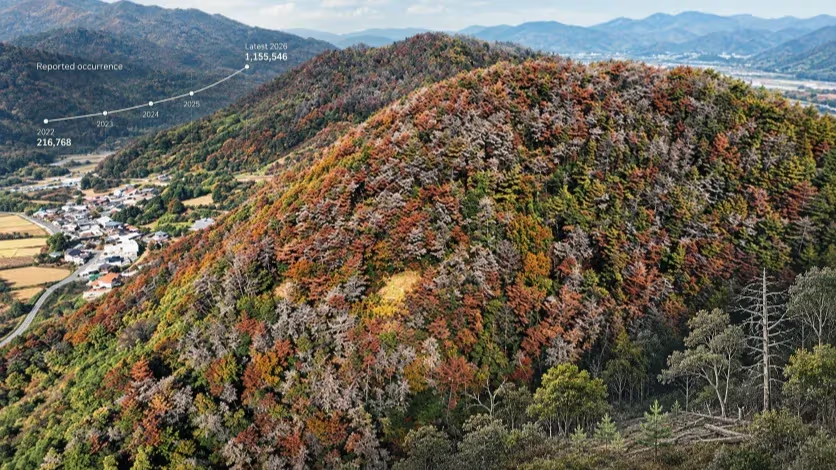
Gyeongnam’s Pine-Wilt Surge Is Forcing a Shift From Tree Removal to Forest Management
Gyeongnam’s pine-wilt outbreak has grown beyond a tree-removal problem. As re...
 NewsSep 22, 2026
Busan Is Growing Westward as Its Waste Infrastructure Stays Put
Busan’s proposed Saenggok incinerator has moved from 800 to 500 tons a day. T...
 NewsAug 17, 2026
What South Korea’s 87% Drop in Aquaculture Heat Losses Really Measures
South Korea reported an 87 percent drop in aquaculture losses from high water...
More from the author
More from this byline
Stay with the same line of reporting through more work from this byline.
 NewsOct 9, 2026
Why “Busan Is Good” Falls Short as a City Brand
 NewsSep 18, 2026
The Other AI Race Is for the Freedom to Change Course
Reader Signal
Community readWhat did this report leave you with?
Choose the signal that best reflects your reading. Select it again to remove it.
One response per article
No response selected
A moderated conversation about the reporting.
One-level replies and newsroom moderation keep the conversation anchored to this article.
Discussion Status
Open
Please sign in to join the discussion.
Newsletter
Weekly reporting and context from Busan and Korea.