Reporting, analysis, and commentary on sustainability from Breeze in Busan.
South Korea’s food systems face increasing strain as climate change exacerbates agricultural challenges and shifting dietary patterns redefine the nation's consumption habits. Extreme weather events, such as heatwaves, erratic rainfall, and more intense rainy seasons, have significantly driven up prices for essential crops like apples and cabbages, highlighting the vulnerabilities within the country’s food supply system. Farmers, in particular, are grappling with these unpredictable conditions,
In 2024, South Korea, one of Asia's most advanced economies, is grappling with an unexpected crisis: food insecurity. With climate change reshaping traditional agriculture and global supply chains fraying due to geopolitical tensions, South Koreans are paying the price — quite literally — at the grocery store. South Korea's agricultural landscape is facing an unprecedented challenge as climate change and international instability converge to threaten the nation's food security. The country, whi
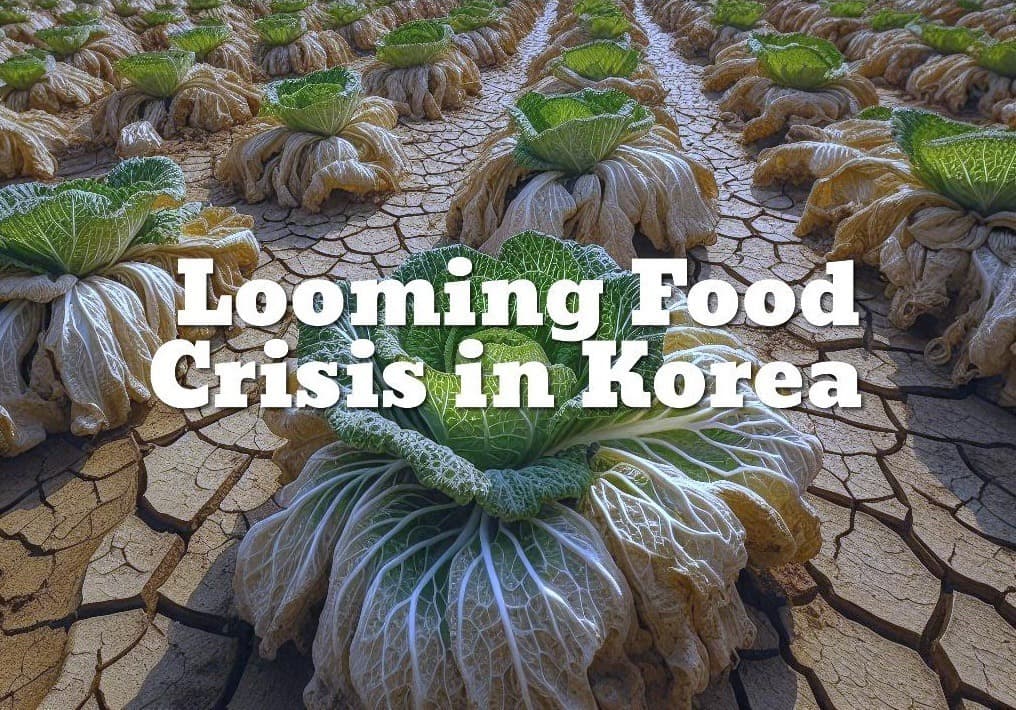
Imagine a future where kimchi, South Korea’s beloved staple, becomes a rare delicacy due to the scarcity of its essential ingredient—napa cabbage. As the global climate crisis deepens, this scenario is no longer a far-off possibility but a pressing concern for Korea’s agricultural industry. Rising temperatures, erratic rainfall, and frequent extreme weather events are disrupting the nation’s food production, pushing key crops to the brink of collapse and causing food prices to soar. Over the la
Imagine waking up in the heart of a rapidly growing city, only to find that the ground beneath you is shifting, sinking, or even collapsing. This unsettling scenario is not a dystopian fiction but a real and pressing concern in Western Busan, where geotechnical challenges threaten the safety and sustainability of its ambitious urban development plans. Western Busan, a region of strategic importance and rapid development, is currently grappling with significant geotechnical challenges that are r
Seoul, South Korea - South Korea's recent announcement of its 15-year power supply plan has sparked significant controversy. The plan, which includes a renewable energy target of 21.6% by 2030, stands in stark contrast to the aggressive renewable energy goals set by other OECD countries. As the world embraces the RE100 initiative, aimed at transitioning to 100% renewable energy by 2050, South Korea's policy appears to be out of step with global trends. The South Korean government has committed
The recent announcement by Act-Geo about potential oil and gas reserves in the East Sea has captured significant public and governmental attention. The South Korean government swiftly approved an expensive exploration project based on Act-Geo's optimistic analysis. However, this development has not been without controversy, raising questions about the project's viability, the credibility of Act-Geo, and the wisdom of such a large financial commitment in the face of global energy shifts. In a st
Busan Metropolitan City, South Korea's port city known for its vibrant economy and rich cultural heritage, is embarking on an ambitious journey to reshape its urban landscape. The city has unveiled the "Future-Oriented Urban Regeneration Projects Promotion Plan," a comprehensive strategy designed to foster sustainable development and address long-standing urban challenges. This initiative is not just a response to the current needs but a visionary blueprint aiming to transform Busan into a more
In the urban landscapes of South Korea, the process of redevelopment plays a pivotal role in shaping the future of cities, transforming aging neighborhoods into vibrant, modern communities. Central to this transformative endeavor are the homeowner associations, groups of property owners who collectively initiate and drive redevelopment projects forward. This model, deeply ingrained in South Korea's approach to urban renewal, seeks not only to enhance housing quality but also to revitalize urban
In the serene landscapes of cemeteries and memorial parks across the country, a troubling environmental issue quietly unfolds. At first glance, the vibrant wreaths and bouquets adorning graves present a picturesque scene of remembrance and respect for the departed. However, a closer inspection reveals a less commendable truth: these beautiful tributes are often made from artificial flowers, primarily composed of plastic and synthetic materials. This practice, deeply rooted in tradition and conve
In the global pursuit of sustainability, the RE100 initiative emerges as a pivotal force, advocating for the transition of businesses worldwide to 100% renewable energy. This movement is not merely an environmental mandate but a strategic imperative in the face of climate change. However, in South Korea, a striking contrast is evident. The nation, home to a powerhouse semiconductor industry, integral to the global technology landscape, finds itself at a crossroads. The industry's vast energy dem
South Korea's healthcare system stands as a paragon of modern medical achievement, recognized globally for its exceptional efficiency and state-of-the-art technology. Its journey to this acclaim is rooted in a strong commitment to healthcare innovation and public welfare, making it a model worth emulating in the international arena. The system is underpinned by a universal healthcare insurance framework, ensuring that medical services are accessible to all citizens at reasonable costs. This incl
South Korea is currently grappling with an unexpected deluge, the likes of which have not been seen in recent memory. This torrential downpour is having a significant impact on agricultural production across the country, disrupting farming schedules, destroying crops, and causing concerns over food security. The rain has poured relentlessly, flooding fields and drenching farmlands, leaving farmers and consumers alike in a state of worry and uncertainty. Adding to the concern is the threat this