The Truth About Political Lies: Why We Keep Believing
In an age of information overload, where access to facts is easier than ever, one might expect that political lies would struggle to take root. Yet, despite the abundance of credible sources and fact-checking mechanisms, many individuals continue to believe and even defend political falsehoods that have been repeatedly debunked. The persistence of these beliefs reveals a complex interplay of psychological, social, and cultural factors that influence human cognition and behavior. Political decep

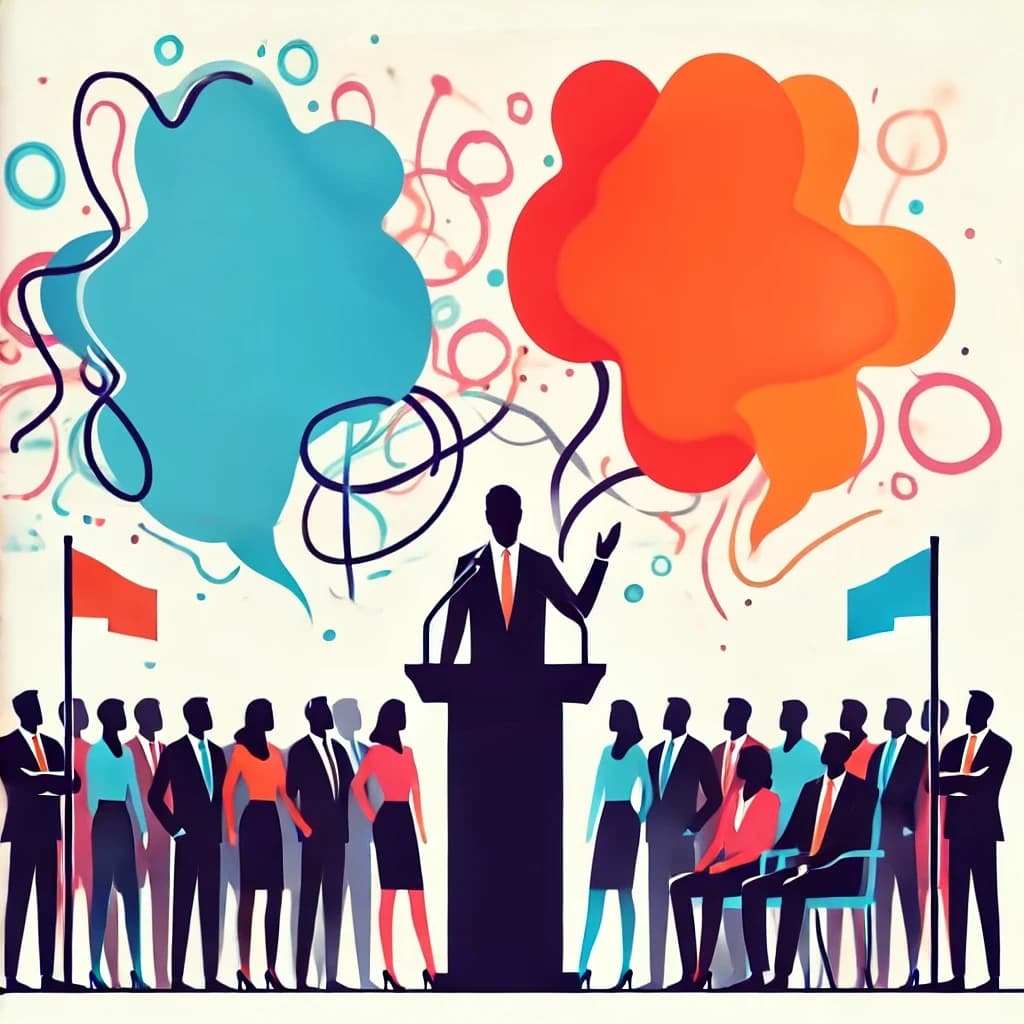
In an age of information overload, where access to facts is easier than ever, one might expect that political lies would struggle to take root. Yet, despite the abundance of credible sources and fact-checking mechanisms, many individuals continue to believe and even defend political falsehoods that have been repeatedly debunked. The persistence of these beliefs reveals a complex interplay of psychological, social, and cultural factors that influence human cognition and behavior.
Political deception is not a new phenomenon. From historical instances such as Nixon’s Watergate scandal to modern misinformation campaigns surrounding elections and public policies, lies have long served as tools for political gain. What has changed in recent years, however, is the speed and scale at which falsehoods propagate, largely due to the rise of social media. Information spreads rapidly, often reaching millions before fact-checkers can intervene, and once false narratives take hold, they become remarkably resistant to correction.
Psychologically, the human brain is wired to seek consistency and validation. One of the primary cognitive biases at play is confirmation bias—the tendency to favor information that aligns with existing beliefs while disregarding evidence that challenges them. When faced with inconvenient truths that contradict their worldview, individuals often experience cognitive dissonance—a psychological discomfort that arises from conflicting thoughts. To alleviate this discomfort, people may rationalize the falsehoods, convincing themselves that they are true or, at the very least, acceptable within a broader context.
Repetition also plays a significant role in the acceptance of political lies. The illusory truth effect, a well-documented psychological phenomenon, suggests that repeated exposure to a statement increases its perceived accuracy. In the political arena, this effect is frequently exploited; repeated messaging, regardless of its veracity, embeds itself into the public consciousness, making it more difficult to refute.
However, the persistence of political lies cannot be attributed to cognitive biases alone. Social and emotional factors significantly contribute to this phenomenon. Fear and anxiety, particularly in times of crisis or uncertainty, create an environment where people are more susceptible to simplified, often misleading narratives. In such moments, individuals seek reassurance and clarity, which political actors are more than willing to provide, even if it means distorting the truth.
Moreover, the influence of group identity cannot be overlooked. People derive a sense of belonging and security from their social and political affiliations, and admitting that their chosen leaders or ideologies are flawed can feel like a personal betrayal. This social conformity leads individuals to defend falsehoods as a means of protecting their identity and maintaining cohesion within their group.
Culturally, different societies have varying tolerances for political deception, influenced by historical, economic, and social factors. In some collectivist cultures, loyalty to one's group or leader may outweigh the pursuit of objective truth, while in more individualistic societies, personal responsibility and critical thinking are often emphasized. Regardless of cultural context, the proliferation of social media has created echo chambers where people are exposed only to information that reinforces their pre-existing views, further entrenching belief in political lies.
In the case of South Korea, cultural factors such as Confucian values that emphasize hierarchy and respect for authority contribute to the persistence of political deception. The societal emphasis on harmony often discourages open confrontation, leading individuals to accept or tolerate misinformation to maintain social cohesion. Furthermore, Korea's rapid technological advancement and highly connected digital society provide fertile ground for the swift spread of misinformation through platforms such as KakaoTalk and Naver. Political polarization in South Korea, often exacerbated by historical tensions and generational divides, also plays a role in shaping how people process and react to political information.
The consequences of widespread political falsehoods are far-reaching. Trust in democratic institutions erodes when citizens feel manipulated and misled. Policy decisions based on misinformation can lead to disastrous outcomes, as seen in public health crises and economic policies influenced by distorted narratives. Perhaps most concerning is the deepening of societal polarization, with opposing factions clinging to different versions of reality and making constructive dialogue nearly impossible.
Addressing this issue requires a multi-faceted approach. Media literacy programs must be prioritized to equip individuals with the critical thinking skills necessary to evaluate information effectively. Fact-checking initiatives need to be strengthened and made more accessible to the public. Furthermore, political leaders and influencers must be held accountable for the dissemination of false information through transparent legal frameworks that balance free speech with the responsibility to provide truthful communication.
Ultimately, combating political lies is not solely the responsibility of governments or media organizations; it requires a collective effort from individuals to cultivate a culture of truth and accountability. As we navigate an increasingly complex information landscape, fostering skepticism, encouraging open-mindedness, and promoting fact-based discourse will be critical in safeguarding democracy and social cohesion.
Continue this reporting
Reporting on the same issue
Related coverage selected from the article's desk, topics and newsroom relationships.
 NewsSep 5, 2026
How a Political Appointment Becomes a Judgment of Character
What Yong Hye-in’s nomination reveals about political representation, fairnes...
 NewsMay 14, 2026
When Inequality Sounds Fair
In South Korea, fairness is used to challenge inherited privilege and defend...
 NewsJan 16, 2026
Do We Even Know What We Want Anymore?
Selection pressure in algorithmic environments resembles evolutionary dynamic...
More from the author
More from this byline
Stay with the same line of reporting through more work from this byline.
 NewsOct 9, 2026
Why “Busan Is Good” Falls Short as a City Brand
 NewsSep 18, 2026
The Other AI Race Is for the Freedom to Change Course
Reader Signal
Community readWhat did this report leave you with?
Choose the signal that best reflects your reading. Select it again to remove it.
One response per article
No response selected
A moderated conversation about the reporting.
One-level replies and newsroom moderation keep the conversation anchored to this article.
Discussion Status
Open
Please sign in to join the discussion.
Newsletter
Weekly reporting and context from Busan and Korea.