South Korea and Japan Face Similar Challenges
Japan and South Korea, two of Asia's most developed countries, are grappling with a set of challenges that threaten their long-term economic growth and social stability. Both countries are experiencing declining birth rates, long working hours, and intense social pressures that contribute to a strained workforce and an aging population. Addressing these issues requires a multifaceted approach that combines policy changes with cultural shifts. This article will delve into the similarities and dif


Japan and South Korea, two of Asia's most developed countries, are grappling with a set of challenges that threaten their long-term economic growth and social stability. Both countries are experiencing declining birth rates, long working hours, and intense social pressures that contribute to a strained workforce and an aging population. Addressing these issues requires a multifaceted approach that combines policy changes with cultural shifts. This article will delve into the similarities and differences between the challenges faced by Japan and South Korea and explore potential solutions for both countries.
Declining Birth Rates:
In Japan, the fertility rate has fallen to 1.3, far below the 2.1 required to maintain a stable population. Prime Minister Fumio Kishida recently announced a series of policies aimed at boosting the birth rate, including increased child support and encouraging more men to take paternity leave. However, experts argue that these measures alone will not significantly change the birth rate, as they do not address the underlying cultural factors that discourage couples from having children.
South Korea faces a similar issue, with the fertility rate currently standing at 0.87. The country has seen an increase in private education spending, which puts additional financial strain on families and potentially contributes to the declining birth rate. Moreover, an increasing number of South Koreans are renouncing their citizenship, with many opting to settle in developed countries such as the United States, Japan, and Canada. This trend highlights the need for South Korea to create a more attractive environment for its citizens to live, work, and raise families.
Long Working Hours and Social Pressures:
Both Japan and South Korea are notorious for their long working hours and demanding work cultures. In Japan, this culture has been linked to the phenomenon of "karoshi," or death from overwork, and has contributed to the country's low birth rate. The government has attempted to address this issue by promoting "ikumen," or men who actively participate in childcare, and by encouraging companies to be more accommodating of workers who take paternity leave. However, many men remain reluctant to take leave due to concerns about career repercussions.
Similarly, South Korea's intense work culture and academic pressure contribute to the "Hell Joseon" sentiment among young people, who feel disillusioned with the country's socio-economic conditions. High youth unemployment, fierce competition for jobs, and an emphasis on academic success create a challenging environment for young South Koreans, potentially exacerbating the country's declining birth rate.
Potential Solutions:
Addressing these challenges in both countries requires a combination of policy changes and cultural shifts. In Japan, the government's efforts to increase paternity leave uptake and provide child support are steps in the right direction, but more needs to be done to change the country's work culture and gender attitudes. This may involve implementing policies that promote a better work-life balance, such as flexible working hours and increased support for working parents.
In South Korea, the government's plan to reduce private education spending could help alleviate some of the financial strain on families. However, broader reforms are needed to address the country's workforce issues, such as tackling youth unemployment and promoting a more balanced approach to education and career success. Encouraging the return of skilled South Koreans who have emigrated and attracting international talent could also help strengthen the country's human capital.
Brain Drain and Global Competition for Human Capital:
Both Japan and South Korea are experiencing a brain drain, as skilled and talented individuals seek opportunities in other countries. In South Korea, as previously mentioned, a significant number of dual citizens by birth or acquisition have renounced their Korean citizenship over the past 11 years, with the majority of them migrating to developed countries. This trend underscores the challenges that South Korea faces in retaining its human capital amid global competition.
Similarly, Japan is struggling to retain its talented workforce, as many individuals opt for opportunities abroad. The Japanese government has implemented various measures to encourage skilled foreign workers to settle in Japan, such as the Highly Skilled Foreign Professionals visa program. However, more needs to be done to both retain Japanese nationals and attract international talent to the country.
Addressing the Brain Drain:
To tackle the issue of brain drain in both countries, governments must create more attractive environments for their citizens and skilled professionals. This may involve providing better career opportunities, promoting innovation, and ensuring a high quality of life. Some potential strategies include:
- Improving working conditions: Encouraging companies to adopt more flexible working hours and better work-life balance policies can help make the domestic labor market more attractive to skilled workers.
- Promoting entrepreneurship: Supporting startups and small businesses can create new job opportunities and foster innovation, which can in turn attract skilled professionals.
- Investing in education and research: Increased investment in education and research can improve the quality of the domestic talent pool and promote cutting-edge developments in various fields.
- Enhancing international collaboration: Collaborating with other countries on research projects, educational exchanges, and cultural programs can help build global networks and create opportunities for talent exchange.
- Strengthening support for returning nationals: Providing assistance for Japanese and South Korean nationals who wish to return after working or studying abroad, such as job placement services and networking opportunities, can help retain valuable human capital.
By addressing these issues and implementing targeted strategies, both Japan and South Korea can work towards retaining their skilled workforce and staying competitive in the global economy.
Japan and South Korea face similar challenges when it comes to declining birth rates, long working hours, and intense social pressures. Addressing these issues requires not only policy changes but also a willingness to confront and change deeply ingrained cultural norms and attitudes. By working together and learning from each other's experiences, both countries have the potential to overcome these challenges and build a more sustainable and prosperous future for their citizens.
Continue this reporting
Reporting on the same issue
Related coverage selected from the article's desk, topics and newsroom relationships.
 NewsOct 4, 2026
Zelensky, South Korea and the Limits of Wartime Pressure
South Korea says Kyiv broke a confidentiality understanding when Zelensky rev...
 NewsSep 1, 2026
What Lee Jae Myung Thinks a Minister Can Fix
President Lee Jae Myung says reform should be judged by results rather than c...
 NewsAug 21, 2026
The Korean Peninsula Trump Is Returning To
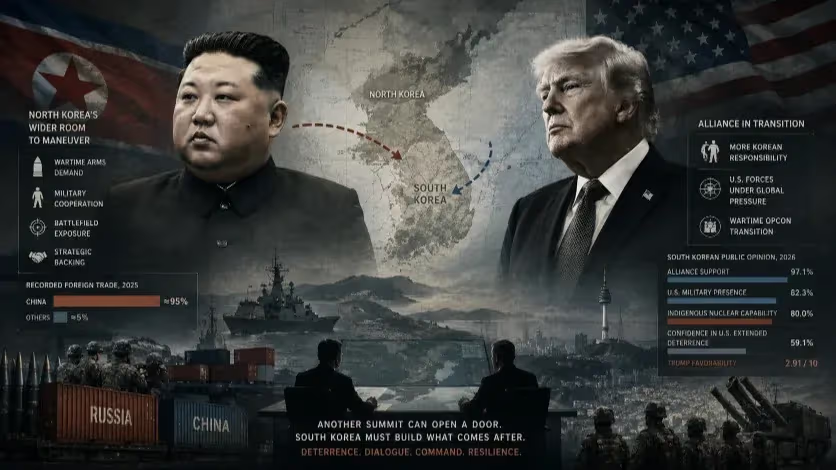
Another Trump-Kim summit would unfold on a peninsula where North Korea is har...
More from the author
More from this byline
Stay with the same line of reporting through more work from this byline.
 NewsOct 9, 2026
Why “Busan Is Good” Falls Short as a City Brand
 NewsSep 18, 2026
The Other AI Race Is for the Freedom to Change Course
Reader Signal
Community readWhat did this report leave you with?
Choose the signal that best reflects your reading. Select it again to remove it.
One response per article
No response selected
A moderated conversation about the reporting.
One-level replies and newsroom moderation keep the conversation anchored to this article.
Discussion Status
Open
Please sign in to join the discussion.
Newsletter
Weekly reporting and context from Busan and Korea.