How Korean Picture Books Travel the World
The art, translation, and publishing networks behind Korean picture books’ international lives, ahead of the Busan International Children’s Book Fair.

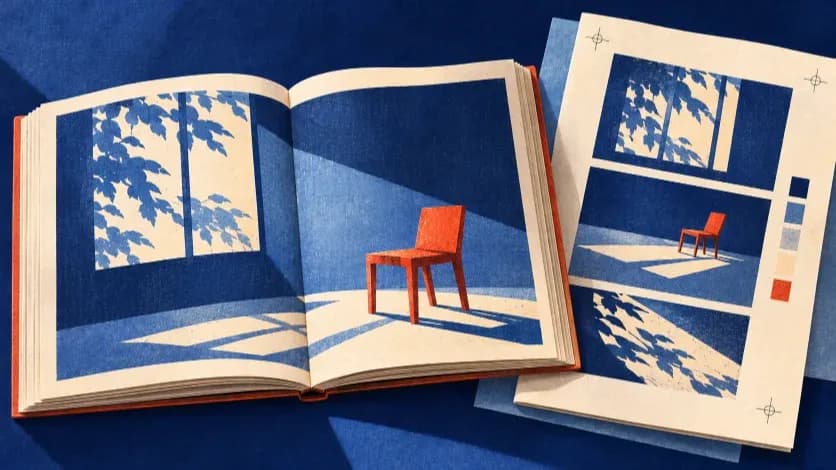
From Suzy Lee’s wordless narratives to Baek Heena’s translated voices and Lee Uk-bae’s landscapes of division, Korean picture books reveal how artistic form shapes the passage of a story into another culture.
On the opening pages of Baek Heena’s 2012 picture book Jangsutang Fairy, a small sign announces in red Korean lettering that a neighborhood bathhouse is open for business. Four years later, when the book appeared in Japan, the sign changed. In a 2018 study comparing the two editions, translation scholar Hejeong Yoon noted that the Japanese version replaced the announcement with a steaming-bath symbol and the name of the bathhouse, written in both kanji and Hangul. The alteration brought part of the illustration itself into the work of translation. The young protagonist, whose account of her visits to the bathhouse was originally written in standard Korean, acquired the rhythms and inflections of Japan’s Kansai dialect through the work of Yoshifumi Hasegawa, an Osaka-born picture book artist who translated Baek’s story. A story set in a Korean bathhouse was now told in a voice associated with a particular region of Japan.
Baek’s bathhouse is an ordinary neighborhood establishment, overshadowed in the story by a newer and more elaborate spa, where the pleasures of plunging into cold water and receiving a small bottle of yogurt drink coexist with the indignity of being scrubbed clean. Into this familiar environment Baek introduces an elderly woman who claims to be a celestial fairy. The peculiar vitality of the encounter owes much to the artist’s method of combining handcrafted figures with photography. Speaking about the book shortly after its Korean publication, Baek explained that she had photographed miniature characters against actual bathhouse surroundings, seeking a visual expression for the kind of fantasy that might plausibly arise within everyday life. The photographed surroundings lend physical credibility to the improbable encounter.
Preserving that relationship between the familiar and the fantastic became part of the Japanese edition’s creative work. During a conversation published by Bronze Shinsha in 2018 on the occasion of a later translation, Hasegawa recalled Baek asking him to omit expressions that the illustrations already conveyed. Baek’s father, who knew Japanese, helped check the translation; Hasegawa explained that he did not know Korean. The economy of language was integral to the composition of the original work, and an apparently helpful addition could disturb the delicate distribution of information between words and images. Hasegawa’s use of regional speech also gave the characters a conversational presence grounded in the expressive possibilities of Japanese. Their collaboration illuminates a particularly demanding aspect of translating picture books, whose meanings emerge through the interplay of visual detail, spoken language, silence, and the reader’s participation in assembling a narrative from successive pages.
The relationship between artistic expression and the making of a book takes different forms in the work of Baek and two other Korean artists. In Suzy Lee’s Wave, a wordless book first published in the United States in 2008, the physical division between facing pages helps organize a child’s encounter with the sea, making the construction of the book inseparable from the movement of the story. In Lee Uk-bae’s When Spring Comes to the DMZ, the seasonal rhythms of the natural world unfold within a landscape shaped by the division of the Korean Peninsula, bringing the historical circumstances of a particular place into a form that can be encountered by young readers elsewhere. The three artists followed distinct publication paths: Baek’s Korean editions preceded their translations, Wave was published first in the United States, and the DMZ book originated in an international collaboration. Each involved different creative and editorial decisions in bringing a work to readers abroad.
The Busan International Children’s Book Fair, scheduled for December 3–6, 2026, will bring some of those publishing relationships into view alongside a public program for families and young readers. Among the scheduled speakers is Chiara Tognetti, whose agency represents translation rights outside Asia for Baek’s Magic Candies. Long before a book reaches an agent’s table, however, its form has begun to determine what can be carried into another edition. In the work of Suzy Lee, that form includes the very structure through which a reader encounters the images.
The Art of the Fold
A British bookseller once asked Suzy Lee whether something had gone wrong in the printing of Wave. In one of the book’s illustrations, part of the young protagonist’s arm and the wing of a seagull disappear abruptly where the two pages meet. Lee had deliberately interrupted the drawing at the central fold, using the binding to establish an invisible boundary within the fictional space. She recounted the episode at a lecture in Seoul in 2011; it also appears in the Italian publisher Corraini’s account of the trilogy. What the bookseller had understood as a possible manufacturing defect belonged to the visual logic of the story, in which the narrow division between facing pages acquires the imaginative force of a shoreline.
The expansive horizontal format of Wave, published by Chronicle Books in 2008 as a hardcover measuring twelve by seven inches, gives Lee considerable space in which to develop the changing relationship between a small human figure and the sea. The restrained charcoal drawing of the child and the blue of the water establish distinct visual territories within the composition, while successive images develop an encounter through gestures, movements, and intervals of anticipation. Lee drew upon memories of childhood holidays on South Korea’s western coast and visits to the beach at Galveston during her years in Texas, where she observed the familiar game of people advancing toward and retreating from the water. By organizing those observations around the central fold, she gave a commonplace physical experience an imaginative structure. The reader comes to recognize the spatial relationship established by the earlier images, so that a subsequent disturbance of that arrangement can carry the emotional weight of an event. Turning the page introduces an element of uncertainty into the encounter, its timing governed partly by the person holding the book.
The three works Lee collectively calls the Border Trilogy explore what that physical division can do in different orientations. In Mirror, published in Italy in 2003, the narrow, upright format accommodates a play of reflections across the vertical binding. For Shadow, published in 2010, Lee began with the idea of a book that would open upward, creating an upper and a lower world separated by a horizontal fold. The story grew out of that arrangement: a child plays among ordinary objects whose shadows gradually acquire an independent imaginative existence. The change in orientation alters the way the reader holds the book and apprehends its fictional space, establishing a relationship between the upper image and its counterpart below. Lee described the clicking of the light switch as having something of the theatrical effect of stage lighting, bringing the shadow world into being and allowing it to resume its existence even after the child has departed. The conventions of the printed book thus supply the conditions for a small theatrical performance, conducted through the reader’s hands.
Sources: Corraini: Mirror; Chronicle: Wave; Corraini: Shadow; Suzy Lee interview, 2011.
The interpretive freedom Lee creates within these carefully designed structures can extend beyond anything the artist originally contemplated. During a presentation reported by School Library Journal in 2023, she recalled a young reader who singled out an entirely black double-page spread in Shadow as his favorite part of the book. Holding the page against a window, he revealed the outlines of illustrations printed on its reverse, visible through the paper. The translucency of the paper had become part of the story through a use of the book Lee had not planned. Lee also showed examples of children composing their own stories in the margins of Wave. Such encounters suggest the extent to which a picture book can provide a framework for the reader’s imagination, leaving room for language and meaning to emerge through the experience of reading rather than prescribing every element of that experience in advance.
Lee’s early experiments found publishers in Europe and the United States. Having studied painting at Seoul National University, Lee pursued book arts at Camberwell College of Arts in London and took a prototype of her graduate project, an interpretation of Alice in Wonderland, to the Bologna Children’s Book Fair. Corraini published it in 2002. When Lee subsequently presented Mirror to the same publisher at the London Book Fair, the Italian house accepted the experimental work without alterations to her original mock-up, according to her account in a 2011 interview. For Wave, Lee and her American editor decided to omit both the author’s name and the publisher’s name from the front cover, treating the handwritten title as part of the image of the sea. The 2008 American publication preceded the book’s Korean release in 2009, giving it an international history that differed considerably from that of a domestically published work subsequently licensed for translation.
When a story depends on the properties of paper, the orientation of the binding, and the sequencing of images, a publisher’s design decisions can affect its very intelligibility. Preparing a new edition involves preserving the relative scale, sequence, and spatial relationships on which the narrative depends. A different trim size need not destroy those relationships, but changes to the binding or the placement of an illustration could alter the experience the artist designed. Even in the absence of sustained written narration, its passage into another publishing culture entails a set of material and editorial decisions. The Italian publisher’s willingness to preserve Lee’s mock-up suggests how much an artist’s latitude can depend on the way a house understands the medium. In Korea, a network of artists, editors, booksellers, and specialist publishers had begun exploring comparable questions about the picture book a decade before Lee’s first overseas publication.
A Culture of Making Books
In 1988, the Korean painter and illustrator Ryu Jae-soo published The Story of Baekdu Mountain, an ambitious rendering of a creation myth in which a giant intervenes in the formation of the natural world and eventually becomes the mountain itself. Its publication by Tongnamu, a house established by the philosopher Kim Yong-ok, represented an unusual undertaking within a children’s publishing industry where illustrated books had often been marketed as components of larger collections. In her 2019 study of the work, the children’s literature scholar Cho Eun-sook identified Ryu’s conscious exploration of the picture book as an artistic genre as central to its historical significance. His illustrations participated directly in the narration, drawing upon contemporary approaches to painting to convey emotional and imaginative dimensions of the story that emerged through the relationship between image and text. At a moment when South Korean artists were intensely engaged with questions of cultural identity, the book demonstrated the expressive possibilities of bringing a Korean myth into a modern visual medium.
The work entered Japanese publishing within two years. In January 1990, the Japanese children’s publisher Fukuinkan Shoten issued a translation under the title Yama ni Natta Kyojin, or The Giant Who Became a Mountain, with a translation credited to Lee Sang-geum and Tadashi Matsui. Its appearance in Japan preceded much of the institutional development that would subsequently support Korean picture books abroad. The two publications also belonged to a period of increasingly active exchange among illustrators. An exhibition of international children’s book illustrations organized by Japan’s Otani Memorial Art Museum had been held in Seoul in 1986, and a further international exhibition organized in Korea in 1988 brought together artists from across Asia and beyond. The growing visibility of original illustrations in exhibition spaces, where they could be appreciated independently of their printed reproductions, accompanied a broader reconsideration of the illustrator’s place within publishing. Artists whose work had traditionally been commissioned to accompany written stories were exploring the possibilities of conceiving complete works of their own, with the rhythm and organization of the book becoming part of their artistic practice.
In 1990, Shin Gyeong-suk opened ChoBang, a children’s bookstore near Ewha Womans University in Seoul. In a 2025 historical report for Japan’s International Library of Children’s Literature, scholar Kiyomi Otake describes the shop as a place to discover imported picture books, receive training in illustration and editing, and exhibit work that might subsequently be published. Among the works conceived under Shin’s art direction were Kwon Yoon-duck’s Manhee’s House and Lee Uk-bae’s Sori’s Harvest Moon Day, both published by Gilbut Children in 1995. Other specialist houses, including Bori, Biryongso, and Jaimimage, had emerged during the first half of the decade. Translated books remained an important part of the developing market, providing publishers and aspiring artists with opportunities to encounter different approaches to visual narration, book design, and the relationship between the verbal and the pictorial.
One of the books emerging from ChoBang, Sori’s Harvest Moon Day, brought older Korean painting into conversation with the contemporary city. Lee Uk-bae had studied art at Hongik University and participated in the Minjung art movement, which sought to engage artistic practice with the social circumstances of contemporary Korea. His introduction to picture books came partly through reading to his young daughter, and in 1993 he established a relationship with ChoBang that led to the publication of his first picture book two years later. For the illustrations depicting the family’s journey from the city to their grandmother’s village during Chuseok, Lee drew inspiration from the processions portrayed in Goguryeo tomb murals and older Korean paintings. In an interview recorded by the Korean Children’s Book Association, he described his fascination with the modern phenomenon of holiday migration, in which the inhabitants of increasingly urbanized communities undertake long and often arduous journeys to their ancestral hometowns. He wanted to render that collective movement in the visual idiom of a contemporary procession painting. The crowded bus terminals and congested roads therefore belong as much to the book’s cultural landscape as the harvest celebrations and family rituals awaiting the travelers in the countryside.
Lee’s treatment of the holiday illustrates how the picture book could accommodate a much wider range of cultural expression than the retelling of traditional stories alone might suggest. The subject was rooted in the experiences of families living through South Korea’s rapid urbanization, while the composition of the illustrations drew upon much older ways of representing collective human activity. Within a single pictorial field, numerous small incidents could coexist with the central narrative, allowing a reader’s attention to wander among individual figures, gestures, objects, and encounters. The relative brevity of the accompanying text left considerable space for such discoveries. An English-language edition appeared in 1999, making this portrayal of Korean life available in another language. Gilbut Children issued a thirtieth-anniversary edition in January 2026.
New professional and legal institutions accompanied the development of original picture books. The Korean section of the International Board on Books for Young People was established in 1995, expanding formal connections with an international community devoted to children’s literature. South Korea’s accession to the Berne Convention took effect in August 1996, bringing the country into the multilateral framework for the protection of literary and artistic works established under that treaty. Reading associations, specialist publications, and booksellers also contributed to the development of a public vocabulary for discussing the quality of children’s books, gradually enlarging the community in which illustrations, narrative form, and artistic originality could be evaluated. The circulation of books and professional knowledge across national boundaries formed part of the setting in which original Korean picture books developed; it offered artists a wider repertoire without prescribing the subjects they chose.
Commercial interest abroad developed unevenly. Speaking to Publishers Weekly in 2009, Kang Hyun-joo, then responsible for copyright at the Korean publisher Sakyejul, recalled that when the company began attending the Bologna Children’s Book Fair in 2000, much of the interest it encountered came from Chinese publishers seeking educational material, while Western publishers showed comparatively little enthusiasm for its picture books. She had observed a change in the intervening years, although cultural differences continued to complicate negotiations outside Asia. The experience points to the importance of the publishing traditions into which a book arrives: a visual idiom cultivated over years of experimentation may offer unfamiliar expressive possibilities to readers abroad, yet its accessibility and appeal still have to be considered within the linguistic and cultural circumstances of a new edition. For works such as those of Baek Heena, in which the textures of everyday Korean life coexist with extraordinary imaginative events, that encounter would place considerable creative demands on the people entrusted with giving the characters a voice in another language.
Finding a Voice in Another Language
In the miniature apartment Baek Heena constructed for Magic Candies, the domestic surroundings contain traces of a life that extends well beyond the immediate concerns of its young protagonist. In a 2023 interview with the Korean film magazine Cine21, Baek described how her own experience of combining professional work with the demands of raising children had informed her conception of the household. The schedules she had to remember and the recipes she kept in her kitchen belonged to a repertoire of everyday details that helped her imagine the circumstances of Dong-dong’s father, who was raising his child alone. Much of the painstaking work involved in creating such surroundings remains peripheral to the finished photographs, where the choice of focus and the positioning of the characters determine how much the reader is invited to see. Those details establish a household whose adult responsibilities and private routines exist beyond the boy’s immediate understanding.
Originally published in Korea in 2017, Magic Candies develops its story around the gradual enlargement of a solitary child’s awareness of the world. Having acquired a collection of mysterious sweets while looking for marbles, Dong-dong discovers that each candy allows him to hear a voice previously inaccessible to him. His aging dog, the living room sofa, and even his deceased grandmother acquire perspectives of their own, revealing a world of relationships that had existed beyond the limits of his understanding. The resemblance between some of the candies and their corresponding speakers allows the illustrations to anticipate encounters that the narrative has yet to disclose. Baek’s background in animation informs the carefully constructed relationship between these visual details and the unfolding story, although her chosen medium leaves the transformation from one photographed scene to the next to the reader’s imagination. As she explained in an interview published by the Astrid Lindgren Memorial Award, her work generally begins with a story, after which she develops its images and language concurrently, exploring the expressive properties of different materials as the narrative takes shape.
One of the book’s most intricate achievements lies in its treatment of the father’s voice. The apparently inexhaustible stream of parental instructions occupies a densely lettered page, giving the accumulation of everyday admonitions a visual magnitude disproportionate to the significance of any individual remark. A child reading the book with an adult can experience that accumulation through the increasing duration and effort of the spoken passage, while the crowded arrangement of the words conveys something of the pressure that Dong-dong experiences. The subsequent revelation of his father’s unspoken affection invites a reconsideration of the earlier passage, whose emotional meaning changes once the child becomes aware of what lies beneath its surface. Baek has given the two dimensions of the father’s communication distinct forms of expression, allowing typography to participate in the unfolding of a relationship. In another language, preserving that cumulative effect involves decisions about how much space the instructions occupy and how long they take to read aloud, as well as what each of them says.
Elizabeth Bird, writing for School Library Journal in May 2021 after receiving an advance copy of Sophie Bowman’s English translation, drew attention to several ways in which the lettering had been incorporated into the visual composition. Comparing portions of the Korean book with the forthcoming American edition, she observed that the English text introduced colors associated with certain speakers: orange for the sofa and a raspberry shade for the dog’s collar, where the Korean examples she had examined used black lettering. In the advance copy, these colors established an additional visual connection between words and images. Bird also described the considerable effort involved in reading the father’s extended reprimand aloud, an experience that brought its emotional implications into the foreground for her as a parent. Her account offers a glimpse of the way typographic decisions and the performance of a text can interact in shared reading. Within the space of a few pages, a story ostensibly concerned with a child’s difficulty in communicating can also invite an adult to reconsider the language through which care and affection are ordinarily expressed.
Such possibilities complicate the translator’s task because the relationship between a picture book’s written and spoken forms varies across languages. A sequence of brief Korean expressions may require considerably more space when rendered in English, while a recurring sound or colloquial phrase may carry associations that cannot readily be reproduced through its closest dictionary equivalent. Lettering can function as an indication of volume, a change in the emotional register of a character’s speech, or an invitation to pause, and the translation has to remain responsive to these functions within the fixed dimensions of the printed page. The translation scholars Riitta Oittinen and Eliisa Pitkäsalo have explored how characterization in picture books emerges through the interaction of verbal expression, bodily gesture, visual composition, and sound, much of which acquires its audible form when the book is read aloud. The choice of wording may therefore shape the performance of the adult reading aloud as well as the characterization of the fictional speaker.
In Japan, where Bronze Shinsha published Yoshifumi Hasegawa’s translation of Magic Candies in August 2018, the search for Dong-dong’s voice involved a linguistic decision similar to the one Hasegawa had made two years earlier in translating Jangsutang Fairy. The scholar Hejeong Yoon, examining the Japanese version in a 2021 study, interpreted the adoption of Kansai dialect as part of Hasegawa’s attempt to find a form of speech suited to the protagonist’s character and to Baek’s underlying concern with the difficulty of communication. The regional associations of the dialect introduce a linguistic dimension absent from the standard Korean narration. In the 2018 conversation with Bronze Shinsha, Hasegawa described choosing a hesitant form of invitation at the story’s end because he understood Dong-dong as a child who feared rejection. The choice of dialect depends in part on the translator’s sensitivity to such associations, including the risk that a regional identity familiar to readers in one country may suggest something unintended about a character living in another.
The Japanese edition received both the translation picture book award and the readers’ award at the 2019 Japan Picture Book Awards, two forms of recognition recorded by the country’s school library association. Three years after its Japanese publication, the book appeared in North America through Amazon Crossing Kids, with Bowman’s translation bringing its visual and verbal intricacies into a different linguistic environment. Before an edition could be prepared, someone within each publishing culture had to discover Baek’s work and imagine a place for it on a local publisher’s list. That judgment is particularly difficult when an editor has access to the illustrations but cannot read the words through which the characters acquire their voices.
The Editors Who Find the Books
When Amazon Crossing Kids prepared to publish its first books from Asia in 2021, Baek Heena’s Magic Candiesbelonged to a small list of works selected from several different publishing cultures. Speaking to Publishing Perspectivesthat April, the imprint’s editor, Marilyn Brigham, dwelt on the mixture of humor and tenderness with which Baek had depicted a lonely child’s gradual discovery of the people around him. Several of the books Brigham was preparing for publication that year explored children’s experiences of isolation and their efforts to establish relationships with others. In a subsequent interview with World Kid Lit, she also emphasized the distinctiveness of Baek’s handcrafted illustrations. The book’s treatment of loneliness was consonant with other titles Brigham had chosen, while its photographic illustrations offered a different way of expressing that experience. An acquiring editor has to imagine how the unfamiliar book will sit alongside the rest of a publisher’s list and what it might add to it.
For publishers committed to literature in translation, unfamiliar approaches to storytelling may themselves be an attraction. Claudia Zoe Bedrick, the publisher and art director of the independent American house Enchanted Lion Books, has described how works from abroad introduce children to forms of storytelling that differ from the conventions prevalent in American picture books. Finding such works requires a network of people who can recognize their qualities and convey them to editors who may be unable to read the original language. Brigham described relying on agents, translators, professional contacts, and the wider networks of Amazon Publishing in her search for books; Bedrick, discussing her own publishing practice in 2021, likewise emphasized the importance of translators who bring works to her attention, sometimes accompanied by a draft translation. The people who introduce a manuscript to a foreign publisher are already making consequential judgments about its literary possibilities, often before an acquisition editor has had an opportunity to encounter the work in a language they understand.
Chiara Tognetti, an Italian literary rights agent whose agency specializes in children’s and young adult literature, identified one of the difficulties of this process in a 2023 interview with the translator Kelly Zhang. Illustrations and a preliminary translation can help an editor grasp the narrative of a picture book, she explained, but the distinctive voice of an author may remain elusive. She had encountered projects for which insufficient translation material led to rejection and was encouraging overseas publishers to commission assessments by readers familiar with the original language. This creates a cost before any sale is assured: a rights holder or agent may need to finance a sample that communicates the author’s voice before an overseas editor can adequately assess the work. The 2026 export-promotion program of the Publication Industry Promotion Agency of Korea addresses part of this problem by offering eligible publishers and agencies reimbursement of up to two million won per approved sample-translation application. Publishers can also apply for assistance with translated portfolios. The support can reduce the initial cost of presenting a book; acquisition still depends on how the receiving editor assesses it.
The history of Magic Candies after its Korean publication shows how individual acquisitions can develop into relationships with overseas publishers. A May 2021 rights roundup in Publishing Perspectives, based on information submitted by rights professionals, identified Tognetti as the contact for the title and reported an eight-book agreement with the Spanish publisher Editorial Kókinos covering Spanish and Catalan, alongside deals for Magic Candies in North American English, Swedish, and Russian. Kókinos’s own catalog now contains separate Spanish and Catalan editions, Caramelos mágicos and Caramels màgics, each with its own ISBN. Its list also includes other works by Baek, among them Cómo hacer caramelos mágicos, which returns to the imaginative world of the earlier book. A relationship extending across several works gives a publisher the opportunity to introduce readers to an artist’s evolving body of work over time. The catalog establishes that the Spanish and Catalan editions reached publication; the rights announcement disclosed neither the financial terms of the agreement nor sales of the resulting books.
The economics of an illustrated book are closely bound to the material characteristics explored by artists such as Lee and Baek. Under a translation license, an acquiring publisher may undertake the translation, design, manufacture, and distribution of its own edition within the language and territorial limits of the agreement. Another arrangement, known in the trade as a co-edition, allows publishers producing books in different languages to combine their printing requirements. A shared production run can spread fixed costs across a larger number of copies, making elaborate full-color books more affordable to manufacture. Yet as the British Independent Publishers Guild has explained, coordinating the production of these editions entails its own financial and logistical risks, and the design of an illustrated work may complicate the substitution of translated text. Where lettering forms part of an illustration, as in Baek’s work, replacing the text may require changes to an image that publishers would otherwise be able to print together. Whether a particular book can benefit from a joint printing arrangement depends on its design and the agreements reached by its publishers. The expense of translation and production is only part of the calculation: an editor must also consider how a book will be introduced to booksellers, librarians, and families in a market where it competes for limited space and attention.
A publisher’s recommendation brought Magic Candies to the attention of Takashi Washio of Toei Animation, the producer recalled in a February 2025 interview with Animation World Network. He was struck by the expressiveness of Baek’s figures and the emotional credibility of their young protagonist. He later met the artist in Sapporo in connection with the adaptation. The filmmakers chose computer-generated animation rather than attempting to reproduce the original figures through stop-motion photography, giving themselves scope to articulate facial expressions and movements that Baek had conveyed through carefully arranged still images. Their preparations included reference photography in Seoul, where ordinary homes, rooftops, children’s rooms, and stationery shops helped them develop a visual understanding of the boy’s surroundings. The search for a Korean neighborhood stationery shop of the kind depicted in the book was especially difficult, Washio recalled. Understanding the ordinary objects and spaces of Baek’s fictional world had become part of the Japanese production team’s research.
Directed by Daisuke Nishio, the completed short combined elements of Magic Candies and Baek’s later picture book I Am a Dog, drawing on the latter to develop the story beyond the narrative material of the first. The 21-minute film appeared in the program of the Busan International Film Festival in 2024 and was nominated for the Academy Award for Best Animated Short Film the following year. In passing from a printed book into a moving image, Baek’s work had entered a medium in which the duration of a scene, the timing of a gesture, and the sound of a character’s voice could be determined by the filmmakers rather than left partly to the reader. The filmmakers’ search for an ordinary Korean stationery shop shows how much cultural knowledge can reside in an incidental detail of an illustration. In Lee Uk-bae’s work, the landscape itself carries the historical knowledge on which the narrative depends.
A Landscape That Carries Its History
In July 2010, shortly after the publication of When Spring Comes to the DMZ, Lee Uk-bae showed a reporter from the Korean newspaper Kyunghyang Shinmun a sketchbook he had kept as a middle school student in 1973. Among its pages was an anticommunist poster, drawn during a period when such exercises formed part of the educational experience of South Korean children. Rediscovering the drawing had prompted Lee to reflect on the distance between the boy once praised for drawing anticommunist posters and the artist who, decades later, was addressing the consequences of division for another generation of children. For about two years, he had made dozens of visits to areas within the Civilian Control Line and consulted specialists familiar with the region’s ecology. The resulting book, published by Sakyejul on the sixtieth anniversary of the outbreak of the Korean War, grew out of an encounter with a landscape whose beauty and historical significance proved considerably more complex than the representations of division with which Lee himself had grown up.
The project had its origins in a series of exchanges among East Asian picture book artists. In 2005, four Japanese illustrators, including Seizo Tashima and Keiko Hamada, approached colleagues in China with the idea of creating books that would encourage younger generations to reflect on the history of conflict in the region. Korean artists were invited to participate the following year. Publishers joined the discussions, meeting in Nanjing in November 2007 and confirming their agreement at the Seoul International Book Fair in 2008, according to records maintained by the Japanese publishing house Doshinsha. Over the course of their collaboration, artists and editors from the three countries developed individual projects and discussed the historical and artistic questions raised by one another’s work. They planned a collection of twelve original picture books to be published in the languages of all three countries. The international dimension of Lee’s book was consequently present in its conception, when its subject, narrative approach, and prospective audience were still taking shape.
Lee organized his account of the demilitarized zone around the passage of the seasons. Spring brings new vegetation and the migration of seals toward Baengnyeong Island; summer brings nesting birds to the Imjin River and young animals to its waters. The recurring descriptions of seasonal change establish a temporal pattern within which the reader encounters the enduring restrictions imposed on human movement. The grandfather returns to the observatory as the months pass, looking north toward the homeland to which he cannot return. His quiet persistence gives the landscape a human dimension without requiring an extended historical explanation within the narrative itself. The illustrations carry much of that history through the presence of fences, military remnants, and other objects whose significance gradually emerges from their relationship to the living world around them. Lee’s treatment of time is particularly affecting because the familiar cycle of renewal makes the duration of the grandfather’s separation perceptible: the natural environment undergoes successive transformations while the central circumstances of his life remain painfully unchanged.
The ecological richness depicted in the book also carries an ambiguity that Lee encountered during his research. In an interview conducted by Chungyon Won in January 2019, he recalled seeing cranes and geese moving across the barriers, an experience that impressed upon him the coexistence of extraordinary natural beauty and a deeply troubled human history. The restrictions on civilian activity have allowed wildlife to find refuge in parts of the border region, although the material remnants of armed conflict continue to threaten the creatures living there. Lee’s Korean publisher recounts his encounters with animals injured by mines and wire fencing. Those experiences complicate the apparent tranquility of the landscape and lend greater significance to the details through which the artist represents it. The vegetation and animals cannot be understood independently of the historical conditions that have shaped their habitat, just as the grandfather’s longing acquires its particular force through his repeated proximity to a place that remains beyond his reach.
Toward the end of the book, a foldout extends the physical space of the illustration. In descriptions of the English edition by Publishers Weekly and the publisher, the grandfather’s imagined journey takes shape as the barrier opens and he walks into the landscape with his grandson. The enlargement of the image momentarily releases the reader from the spatial limitations that have governed the preceding narrative. There is an affinity here with Suzy Lee’s experiments in the Border Trilogy, where the material construction of the book establishes the imaginative conditions of a story. In When Spring Comes to the DMZ, the unfolding of paper carries a historical and emotional significance: an action readily performed by a child holding the book corresponds to a transformation that has remained beyond the power of generations of people living on the divided peninsula. Its poignancy derives from the distance between that imagined journey and the reality that has governed the earlier narrative.
Doshinsha published the Japanese edition, translated by Kiyomi Otake, in April 2011. An English translation by Chungyon Won and Aileen Won followed through Plough Publishing House in 2019, extending the book’s circulation beyond the East Asian collaboration in which it originated. For readers with little knowledge of the Korean War, the relationship between the grandfather’s experience and the geography of the peninsula may require additional explanation. The English edition provides historical background outside the main narrative, allowing the lyrical pattern of its seasonal descriptions to remain intact. In 2020, the American Library Association recognized Plough with a Mildred L. Batchelder Honor, an award for American publishers of distinguished children’s literature originally written and published in another language abroad. The honor was one form of recognition within the literary institutions through which translated books can become visible to librarians and educators.
Educational resources developed around the book in the United States offer another route into the historical setting. The East Asian Studies Center at Ohio State University offers resources explaining the history of divided families, the region’s wildlife, and the cultural significance of objects and places appearing in the illustrations. Materials prepared for the National Consortium for Teaching About Asia suggest activities in which students investigate the Korean War, examine the relationship between human conflict and biodiversity, and consider how images can communicate different understandings of peace. These approaches extend the possibilities of the work beyond its original narrative while returning attention to the particular historical circumstances from which it emerged. Conceived through collaboration among East Asian artists, the book now has a place in American educational resources, where its images can serve as an introduction to the historical setting as well as an object of literary interpretation. International book fairs bring some of the people responsible for such connections together, often before a book has found a publisher in a new language.
The Next Encounter
On December 3, the opening day of the Busan International Children’s Book Fair, three scheduled sessions will address different aspects of the making and circulation of illustrated books. Lee Uk-bae will discuss his illustrations of Korean folktales, while the Italian rights agent Chiara Tognetti and Allison Olson, a co-founder of the American rights agency DropCap, will examine the conditions under which publishers in Europe and North America acquire children’s books from abroad. What an artist discovers while creating an illustration is part of what a foreign editor must learn to recognize. For an editor considering a Korean folktale, the qualities that distinguish one artist’s interpretation from another may be discernible in the treatment of space, the movement of figures across the page, or the recurring details that give a landscape its particular identity. Understanding what these choices contribute to a story requires a degree of attention that a synopsis and a list of literary awards can scarcely supply.
Now in its third year, the Busan fair brings the practical work of making those judgments into proximity with a public celebration of children’s literature. Its fellowship program invites overseas professionals who have previously acquired Korean children’s content or expressed an interest in doing so. Selected participants are eligible for reimbursement of round-trip economy airfare within regional limits; accommodation is not covered. The program provides access to the rights center and requires at least five meetings a day with Korean rights professionals, each lasting approximately half an hour. The arrangements address a practical difficulty for editors who cannot readily follow new publications in unfamiliar languages. A meeting offers an opportunity to examine a book, discuss the artist’s intentions, and establish whether further reading or a translation sample is warranted. The conversations may continue long after the exhibition closes, particularly when a publisher needs to assess the costs of an edition or consider how an unfamiliar work would fit into its list.
For families attending the fair, the discovery of a book takes a more immediate form. In its November 23 announcement, the Busan Metropolitan Government anticipated the participation of 174 publishers and organizations from 20 countries during the four-day event at BEXCO. The program includes a planned exhibition of internationally recognized children’s books, with works by Lee Uk-bae and Suzy Lee among those announced. The program also includes workshops and encounters with authors, and the city has announced a book-purchase voucher worth 5,000 won for the first 10,000 eligible children. Alongside the arrangements for international rights discussions, these activities recognize the importance of the ordinary circumstances in which a young reader discovers a book. The decisions made by families, booksellers, librarians, and teachers contribute in their own ways to the cultural life of the illustrated works that artists and publishers have brought into circulation.
The sign outside Baek’s bathhouse offers a small example of what the people gathering in Busan may be called upon to consider. In the Japanese edition the bathhouse’s name still appears in Hangul alongside Chinese characters, even as the symbol above the lettering gives the setting an additional point of recognition. Such a detail may pass almost unnoticed as a story unfolds, although the decisions behind it are part of the work of bringing a picture book into another language. A child holding the book may know nothing of the years of work that made the new edition possible. There is time to linger over a detail, return to an earlier image, or discover something between one page and the next.
Continue this reporting
Reporting on the same issue
Related coverage selected from the article's desk, topics and newsroom relationships.
 NewsDec 3, 2025
Sacheon Hosts the Space Agency, but Seoul Still Makes the Decisions
Korea placed its headquarters in the south, but authority, engineering and la...
 NewsJun 27, 2025
Foreign Students Trapped in Korea’s Failing Universities
Foreign students arrive in Korea expecting opportunity—but many find empty ca...
 NewsJun 2, 2025
Talk Talk Korea 2025 Opens for Global Creators
The Talk Talk Korea 2025 competition opens its doors to global creators, offe...
More from the author
More from this byline
Stay with the same line of reporting through more work from this byline.
 NewsOct 9, 2026
Why “Busan Is Good” Falls Short as a City Brand
 NewsSep 18, 2026
The Other AI Race Is for the Freedom to Change Course
Reader Signal
Community readWhat did this report leave you with?
Choose the signal that best reflects your reading. Select it again to remove it.
One response per article
No response selected
A moderated conversation about the reporting.
One-level replies and newsroom moderation keep the conversation anchored to this article.
Discussion Status
Open
Please sign in to join the discussion.
Newsletter
Weekly reporting and context from Busan and Korea.