The Significance of Narrative in the Branding of Cities: An Editorial Perspective
The Significance of Narrative in the Branding of Cities City branding has become an indispensable aspect of advertising a city's history, quality of life, cultural and natural resources, social amenities, attractions, lifestyle, and environment, with the aim of creating a favorable reputation, fortifying its position, or capitalizing on opportunities in an ever-evolving market. However, the escalating competition among cities, along with the changing tastes, resources, finances, and demographics


The Significance of Narrative in the Branding of Cities City branding has become an indispensable aspect of advertising a city's history, quality of life, cultural and natural resources, social amenities, attractions, lifestyle, and environment, with the aim of creating a favorable reputation, fortifying its position, or capitalizing on opportunities in an ever-evolving market. However, the escalating competition among cities, along with the changing tastes, resources, finances, and demographics at a global level, presents a formidable challenge to city branding endeavors. This is where storytelling comes into play, injecting vitality into brands and propelling market transformations.
While the use of storytelling as a technique is well-documented in marketing literature, it has been largely overlooked in the realm of travel and tourism marketing. Despite recognition of the role of storytelling in shaping the image of a destination in the literature on destination marketing, it has primarily been viewed as a valuable tool for constructing effective brands at the corporate and product level.
Just as a corporation should actively promote its products and services, attract people, visitors, entrepreneurs, and activities, and participate in international events, a city should also adopt a similar approach in establishing its brand and marketing it effectively. In this regard, storytelling should occupy a central role.
With cities such as New York, Rio de Janeiro, Istanbul, and London investing in branding efforts, travel and tourism marketers and destination planners are beginning to accord more consideration to the concept. However, Busan still lacks a comprehensive understanding of branding among its stakeholders, with public sector representatives often having a limited comprehension of branding or failing to grasp its purpose and methodology.
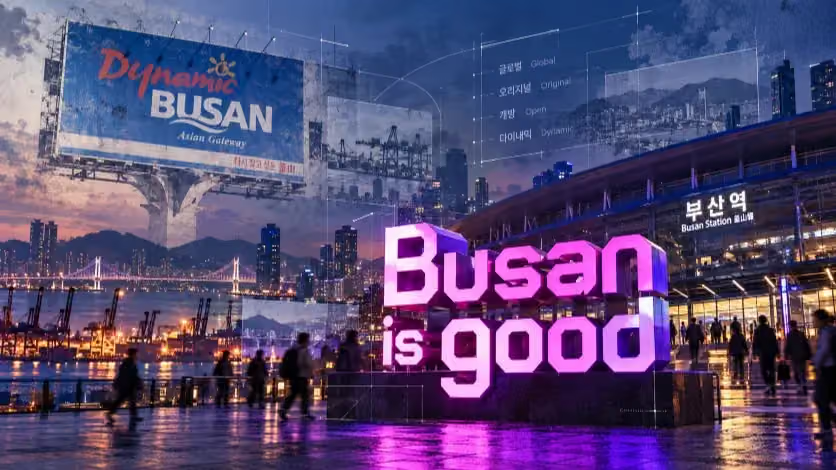
In 2004, Busan chose the phrase "Dynamic Busan" to position itself as a dynamic international metropolis. Despite having a distinct city brand, there is still a lack of insight into how city branding can make a difference. Destination marketers and city planners should initiate the process by crafting a positive and captivating core narrative for their city brand. Recently, Busan has replaced "Dynamic Busan" with the new city slogan, "Busan is Good."
According to the city of Busan, the new city slogan, "Busan is Good," was selected as the final choice after a citizen preference survey was conducted among the three finalists. The survey, conducted both online and offline, received the participation of 25,222 citizens, with "Busan is Good" emerging as the most popular choice with 11,373 votes. The other two finalists, "Bridge for All, Busan" and "True Place, Busan," received 19,881 and 2,866 votes, respectively. However, the new slogan lacks a narrative component.
As a result of the absence of storytelling, Busan has been featured merely as South Korea's second-largest city in various media outlets. The city's population does not reflect its unique characteristics or tales.
Fostering a Clear and Distinctive City Brand The key to successful city branding lies in establishing a positive and resilient city identity that is rooted in a unique array of features and values, encompassing historical, physical, socio-cultural, demographic, economic, and political aspects. City authorities must comprehend the city's circumstances and its perception both internally and externally. People serve as "brand ambassadors" by sharing their experiences with the city, thus it is vital that the city's identity and values align with their experiences.
To define the city's attributes and values, city planners must first delve into the drivers of the city, in order to lay the foundation for its core story. This involves comprehending the city's mission, vision, and essential values and how they are manifested in everyday urban life. Only after this process can they scan external information to determine the city's position and reputation on a global scale, including current global tourism and travel trends, the stories shared by visitors, and the opinions of travel decision-makers and opinion leaders.
In conclusion, storytelling is a powerful tool that can bring new life to city branding efforts and drive market changes. Busan needs to focus on defining its attributes and values and creating a positive and compelling core story to establish a clear and original city brand.
Continue this reporting
Reporting on the same issue
Related coverage selected from the article's desk, topics and newsroom relationships.
 NewsOct 22, 2026
Busan Port’s LNG and Methanol Plan: Who Pays to Keep Fuel Ready?
Busan already supplies ships with LNG and methanol, drawing on regional and i...
 NewsOct 16, 2026
What Is Still Worth Going to See?
Busan’s biennale faces questions of artistic judgment and institutional care....
 NewsOct 14, 2026
What Became of Busan’s University Streets?
From 2015 to 2023, registered businesses grew near Pusan National University...
More from the author
More from this byline
Stay with the same line of reporting through more work from this byline.
 NewsOct 9, 2026
Why “Busan Is Good” Falls Short as a City Brand
 NewsSep 18, 2026
The Other AI Race Is for the Freedom to Change Course
Reader Signal
Community readWhat did this report leave you with?
Choose the signal that best reflects your reading. Select it again to remove it.
One response per article
No response selected
A moderated conversation about the reporting.
One-level replies and newsroom moderation keep the conversation anchored to this article.
Discussion Status
Open
Please sign in to join the discussion.
Newsletter
Weekly reporting and context from Busan and Korea.