Busan's Regional Deprivation Index: A Growing Socioeconomic Gap in Half of the City's Districts
Busan, South Korea - A recent study has revealed that eight out of sixteen districts and counties in Busan have a regional deprivation index higher than the national average. The regional deprivation index, an indicator used to assess socioeconomic deficiencies within specific geographical areas, suggests that half of Busan's local governments exhibit high levels of deprivation. Moreover, the number of districts with an above-average regional deprivation index has doubled in the past decade, spa

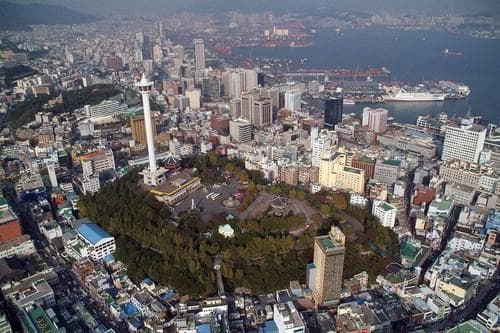
Busan, South Korea - A recent study has revealed that eight out of sixteen districts and counties in Busan have a regional deprivation index higher than the national average. The regional deprivation index, an indicator used to assess socioeconomic deficiencies within specific geographical areas, suggests that half of Busan's local governments exhibit high levels of deprivation. Moreover, the number of districts with an above-average regional deprivation index has doubled in the past decade, sparking concerns about the widening socioeconomic disparities in the region.
The regional deprivation index measures the level of socioeconomic deficiency in a region, taking into account various factors such as income, education, housing, and employment. The index helps policymakers identify areas that require targeted interventions and resources to improve living conditions and reduce inequalities.
To better understand the scope of this issue, it is helpful to examine similar cases in other countries. In the United Kingdom, the Index of Multiple Deprivation (IMD) is used to assess relative deprivation in small areas, highlighting disparities in income, employment, health, education, housing, and other factors. The IMD has been instrumental in informing policy decisions and allocating resources to address socioeconomic inequalities across the country.
Similarly, the United States utilizes the Area Deprivation Index (ADI), which takes into account factors such as income, education, employment, and housing quality to identify areas with high levels of deprivation. This index has been used to target resources and interventions in areas with the greatest need, ultimately working to reduce disparities in health and socioeconomic outcomes.
According to a report released by the Busan Public Health Policy Institute (BHI), eight districts (Jung-gu, Seo-gu, Dong-gu, Yeongdo-gu, Busanjin-gu, Geumjeong-gu, Suyeong-gu, and Sasang-gu) recorded a regional deprivation index higher than the national average in 2020. This figure has doubled since 2010 when only four districts (Jung-gu, Seo-gu, Dong-gu, and Yeongdo-gu) exceeded the national average.
BHI calculates the index every five years using data from the national population and housing census, as well as sample surveys. The index comprises ten indicators, including homeownership rates, the proportion of deteriorated living environments, high school graduation rates, the percentage of single-person households, and the elderly population rate.
Based on the 2020 regional deprivation index results for Busan, Jung-gu had the highest score at 12.2, followed by Dong-gu (7.8), Yeongdo-gu (6.3), Seo-gu (6.0), Busanjin-gu (2.5), Sasang-gu (2.0), and Geumjeong-gu and Suyeong-gu (each at 1.1). Higher scores indicate greater levels of deprivation, with the national average set at 0.0.
In light of these findings, it is clear that targeted and comprehensive policy interventions are necessary to address the growing socioeconomic disparities within Busan. By focusing on the key factors contributing to the high regional deprivation index, policymakers can work to develop effective strategies that foster more equitable and prosperous communities across the city. Drawing inspiration and learning from other countries' experiences with similar indices, such as the UK's IMD and the US's ADI, can provide valuable insights into potential policy solutions and best practices for addressing the widening socioeconomic gap in Busan.
Continue this reporting
Reporting on the same issue
Related coverage selected from the article's desk, topics and newsroom relationships.
 NewsOct 16, 2026
What Is Still Worth Going to See?
Busan’s biennale faces questions of artistic judgment and institutional care....
 NewsOct 14, 2026
What Became of Busan’s University Streets?
From 2015 to 2023, registered businesses grew near Pusan National University...
 NewsOct 12, 2026
Bukangi, the Shark That Stayed in Busan’s North Port
A rescue net guided Bukangi toward the sea, but the dusky shark returned to B...
More from the author
More from this byline
Stay with the same line of reporting through more work from this byline.
 NewsOct 9, 2026
Why “Busan Is Good” Falls Short as a City Brand
 NewsSep 18, 2026
The Other AI Race Is for the Freedom to Change Course
Reader Signal
Community readWhat did this report leave you with?
Choose the signal that best reflects your reading. Select it again to remove it.
One response per article
No response selected
A moderated conversation about the reporting.
One-level replies and newsroom moderation keep the conversation anchored to this article.
Discussion Status
Open
Please sign in to join the discussion.
Newsletter
Weekly reporting and context from Busan and Korea.