Busan Small Businesses Struggle Amid Rising Closures and Vacancies
Busan, South Korea – Busan’s small business sector is grappling with a critical downturn as restaurant closures surge and commercial vacancy rates climb across the city. More than 2,100 restaurants have closed their doors this year alone, representing a 75% increase compared to last year’s figures, leading to vacant storefronts in previously bustling districts. Recent data illustrates the sharp rise in both closures and vacancies. In Nampo-dong, one of Busan’s iconic shopping areas, the vacancy

Busan, South Korea – Busan’s small business sector is grappling with a critical downturn as restaurant closures surge and commercial vacancy rates climb across the city. More than 2,100 restaurants have closed their doors this year alone, representing a 75% increase compared to last year’s figures, leading to vacant storefronts in previously bustling districts.
Recent data illustrates the sharp rise in both closures and vacancies. In Nampo-dong, one of Busan’s iconic shopping areas, the vacancy rate soared to approximately 22% as of the second quarter of this year, up from about 14% in early 2022. The situation in the Pusan National University (PNU) area is similarly dire, with nearly 24% of storefronts standing empty—a marked increase that underscores the severity of the city’s economic strain.
Local businesses are contending with a challenging economic environment. Successive interest rate hikes have driven up the cost of business financing, making it difficult for many owners to sustain operations. Inflation has compounded the issue, eroding consumers’ disposable income and reducing overall spending, especially in sectors like dining and retail.
Adding to these challenges, recent reports show a broader slowdown in domestic demand, impacting a range of service industries. Small businesses, particularly in traditional shopping areas, have been among the hardest hit.
Despite the rise in vacant properties, commercial rents remain stubbornly high, as many landlords aim to return to pre-pandemic rent levels. This disconnect between rent expectations and current market conditions has resulted in frequent disputes between landlords and tenants, with some landlords refusing to lower rents despite tenants’ struggles with declining revenues. This rent stalemate is seen as a major factor contributing to the prolonged vacancies in key commercial areas.
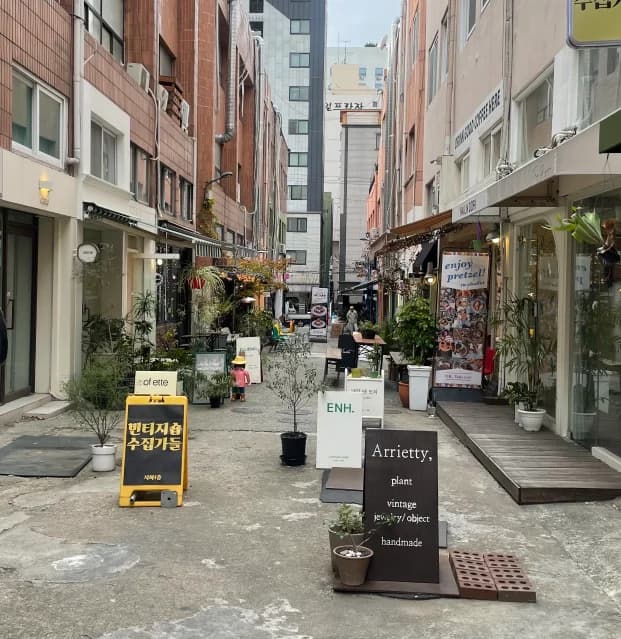
Busan’s traditional business areas are also experiencing shifts in consumer behavior. Newly popular areas like Jeollidan-gil and Haeridan-gil have attracted customers seeking unique, themed experiences. Modeled after Seoul’s hip areas like “Gyeongridan-gil” and “Itaewon,” these neighborhoods feature an eclectic mix of independent cafes, artisanal shops, and restaurants that draw a younger, trend-seeking crowd. With their Instagram-friendly storefronts and niche offerings, these trendy shopping zones have emerged as hotspots, drawing foot traffic away from established districts and putting additional pressure on conventional businesses already struggling with economic challenges.
With consumer preferences shifting toward more personalized and unique shopping environments, traditional storefronts in core commercial zones are feeling the impact.
Emerging shopping areas are not immune to the cycle of vacancy. Many of these areas have seen rapid rent increases due to their newfound popularity, leading to displacement of original businesses. This gentrification effect has created a cycle where high rent costs and low consumer spending result in a wave of business closures and rising vacancies, threatening the stability of these newer areas.
Business owners across Busan express deep concerns over the unsustainable rent levels and shrinking customer bases, citing these as major hurdles in maintaining their operations. Many report that revenue declines, combined with fixed high rents, have placed them in an untenable position.
Real estate experts highlight the disparity between high commercial rental rates and the broader economic downturn. “There’s a pressing need for rental adjustments that reflect the current market,” one analyst noted, pointing out that the existing landlord-tenant divide over rents has only deepened the vacancy issue.
As Busan’s small business crisis unfolds, local leaders and stakeholders agree that comprehensive, coordinated efforts will be essential to stabilizing the sector. Without such interventions, experts fear that the ongoing pattern of closures and vacancies will continue, eroding the vitality of Busan’s commercial landscape.
Continue this reporting
Reporting on the same issue
Related coverage selected from the article's desk, topics and newsroom relationships.
 NewsOct 16, 2026
What Is Still Worth Going to See?
Busan’s biennale faces questions of artistic judgment and institutional care....
 NewsOct 14, 2026
What Became of Busan’s University Streets?
From 2015 to 2023, registered businesses grew near Pusan National University...
 NewsOct 12, 2026
Bukangi, the Shark That Stayed in Busan’s North Port
A rescue net guided Bukangi toward the sea, but the dusky shark returned to B...
More from the author
More from this byline
Stay with the same line of reporting through more work from this byline.
 NewsOct 9, 2026
Why “Busan Is Good” Falls Short as a City Brand
 NewsSep 18, 2026
The Other AI Race Is for the Freedom to Change Course
Reader Signal
Community readWhat did this report leave you with?
Choose the signal that best reflects your reading. Select it again to remove it.
One response per article
No response selected
A moderated conversation about the reporting.
One-level replies and newsroom moderation keep the conversation anchored to this article.
Discussion Status
Open
Please sign in to join the discussion.
Newsletter
Weekly reporting and context from Busan and Korea.