Busan Downtown Redevelopment: Beyond High-Rise Solutions
Busan, South Korea — In a recent move, council members from Busan’s oldest districts — Jung-gu, Seo-gu, Dong-gu, and Yeongdo — have called for the removal of height restrictions that have capped building heights since 1972. These regulations, they argue, inhibit modern redevelopment and discourage investment in areas that have remained relatively low-rise for over 50 years. However, critics contend that lifting these limits to allow high-rise construction may not lead to the revitalization suppo

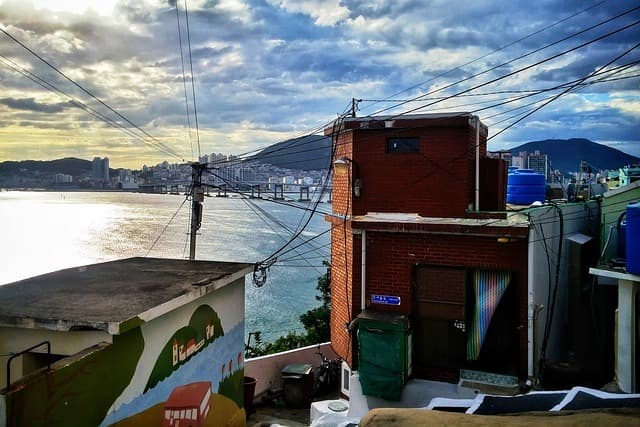
Busan, South Korea — In a recent move, council members from Busan’s oldest districts — Jung-gu, Seo-gu, Dong-gu, and Yeongdo — have called for the removal of height restrictions that have capped building heights since 1972. These regulations, they argue, inhibit modern redevelopment and discourage investment in areas that have remained relatively low-rise for over 50 years. However, critics contend that lifting these limits to allow high-rise construction may not lead to the revitalization supporters hope for, especially in areas as culturally significant and geographically unique as Busan’s historic downtown.
Busan’s oldest neighborhoods are rich in history and were transformed dramatically after the Korean War, as refugees from both North and South Korea poured into the city, making it a dense urban refuge. With little flat land available, newcomers established settlements along the mountainous cityscape, giving rise to iconic hillside communities like Sanbokdoro and Amidong. These neighborhoods stand as testaments to Busan’s resilience, but their narrow roads, steep inclines, and aging infrastructure now pose unique challenges as the city considers redevelopment.
A fundamental issue underlying Busan’s redevelopment challenges is the outmigration of young people to Seoul and its metropolitan areas, drawn by job opportunities unavailable in Busan. Roughly 86.9% of Korea’s major corporations are concentrated in the capital region, with high-paying jobs in sectors like technology and advanced manufacturing heavily clustered there. This reality has led young people, particularly those in their 20s and 30s, to relocate in search of better salaries, career progression, and quality of life advantages that Busan struggles to provide.
Despite efforts to retain its youth through incentives for small and medium enterprises (SMEs), Busan’s economic base remains dominated by traditional industries that are unable to compete with Seoul’s vibrant tech and finance sectors. The ongoing talent drain affects not only Busan’s workforce but also the broader local economy, as demand in consumer-driven sectors like retail, hospitality, and services declines with the young population. For Busan’s revitalization efforts to succeed, city officials may need to refocus on creating a diversified, innovation-driven economy that offers competitive jobs within knowledge-based industries. Without this shift, high-rise apartments alone are unlikely to address the deeper economic forces pushing youth to leave.
Supporters of removing height restrictions argue that taller buildings would increase housing options and attract businesses to these neighborhoods. Yet, this dense approach could strain infrastructure not designed to support high-rise developments. Roads remain narrow, and aging sewage, water, and electrical systems risk overload from a sudden influx of residents. Moreover, tall buildings could obstruct sunlight and airflow, affecting the microclimate and the overall appeal of these neighborhoods.
High-density development also carries social and cultural risks. Many residents and community advocates fear that rapid high-rise development could lead to gentrification, displacing long-time residents and altering the district’s historic character. These neighborhoods’ charm lies in their cultural continuity and heritage architecture, both of which are threatened if new high-rise buildings replace smaller, traditional structures.
As an alternative, some propose low-density, luxury housing that leverages the scenic views and unique topography of the hillsides. Rather than densely packed towers, Sanbokdoro could be developed with townhouses, villas, and terrace homes that respect the landscape while appealing to residents seeking a quieter, more picturesque environment. This approach would elevate the area’s reputation without compromising its historic charm.
A low-density development model would require targeted infrastructure improvements. Expanding road access, improving public transit, and establishing pedestrian-friendly routes could mitigate existing accessibility issues while preserving the neighborhood’s character. This balanced approach would alleviate infrastructure strain without overwhelming the area, allowing for more sustainable growth.
For many residents, preserving the social fabric of their communities is as important as economic growth. Low-density development, paired with community-based planning, could enable growth that benefits residents without displacing them. Additionally, investing in cultural centers, local businesses, and open public spaces would foster a community environment that honors the district’s past while supporting its future.
Relying on increased floor area ratios and high-rise apartments to drive redevelopment is no longer a sustainable model for Busan’s economy. While increasing building heights may appear profitable in the short term, this approach risks long-term economic and social impacts on the area. Existing infrastructure, including roads, sewage systems, and power grids, is outdated and already stretched thin. A sudden rise in population density from high-rise developments would only intensify these infrastructure burdens, adding to the city’s financial strain over time.
High-rise redevelopment further risks dismantling the social and cultural fabric that defines these neighborhoods. The hillside communities along Sanbok Road, for example, have a distinct heritage that should be preserved. Low-density residential developments, cultural spaces, and thoughtful planning would better support the region’s identity and ensure balanced, resident-friendly redevelopment.
Although high-density apartments might bring short-term profits for developers, they risk degrading the quality of life over time, deterring long-term residents and weakening the local economy. As the living environment declines, more residents may leave, worsening the vacant property issues that originally prompted redevelopment.
In light of these issues, revitalizing Busan’s old downtown should prioritize infrastructure improvements and high-quality, low-density residential development over simple density increases. A balanced approach that addresses both economic diversification and quality of life improvements can better support sustainable economic growth and preserve the historic charm that defines Busan’s original urban center. For Busan to retain its youth and attract new talent, creating meaningful career opportunities and investing in modern infrastructure will be essential. As Busan navigates this critical juncture, the question remains: can the city harmonize growth with its heritage, ensuring a future that truly benefits all residents?
Continue this reporting
Reporting on the same issue
Related coverage selected from the article's desk, topics and newsroom relationships.
 NewsOct 16, 2026
What Is Still Worth Going to See?
Busan’s biennale faces questions of artistic judgment and institutional care....
 NewsOct 14, 2026
What Became of Busan’s University Streets?
From 2015 to 2023, registered businesses grew near Pusan National University...
 NewsOct 12, 2026
Bukangi, the Shark That Stayed in Busan’s North Port
A rescue net guided Bukangi toward the sea, but the dusky shark returned to B...
More from the author
More from this byline
Stay with the same line of reporting through more work from this byline.
 NewsOct 9, 2026
Why “Busan Is Good” Falls Short as a City Brand
 NewsSep 18, 2026
The Other AI Race Is for the Freedom to Change Course
Reader Signal
Community readWhat did this report leave you with?
Choose the signal that best reflects your reading. Select it again to remove it.
One response per article
No response selected
A moderated conversation about the reporting.
One-level replies and newsroom moderation keep the conversation anchored to this article.
Discussion Status
Open
Please sign in to join the discussion.
Newsletter
Weekly reporting and context from Busan and Korea.