2024 Busan Social Survey Highlights Quality of Life Improvements
Busan, South Korea - The Busan Metropolitan Government has unveiled the results of its 2024 Busan Social Survey, a comprehensive study involving 31,144 residents across 17,860 households. Conducted from August 23 to September 12, the survey highlights citizens' growing satisfaction in key areas such as healthcare, safety, and family dynamics. The findings are set to play a pivotal role in shaping public policies aimed at improving the quality of life in Busan. This long-running survey, now in i

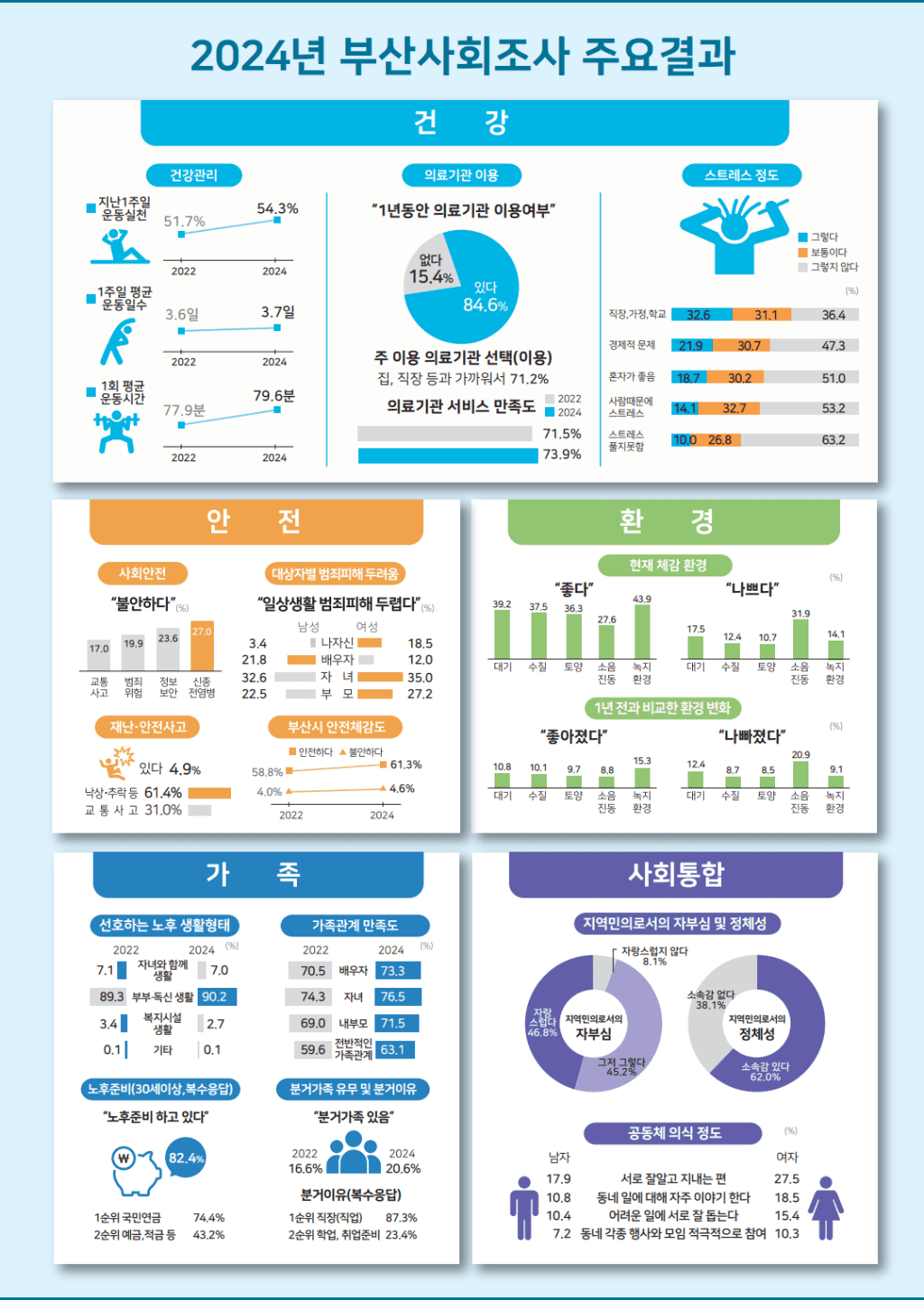
Busan, South Korea - The Busan Metropolitan Government has unveiled the results of its 2024 Busan Social Survey, a comprehensive study involving 31,144 residents across 17,860 households. Conducted from August 23 to September 12, the survey highlights citizens' growing satisfaction in key areas such as healthcare, safety, and family dynamics. The findings are set to play a pivotal role in shaping public policies aimed at improving the quality of life in Busan.
This long-running survey, now in its 29th iteration, provides critical insights into the attitudes and living conditions of Busan residents. The city government plans to use the data to address challenges such as an aging population, youth migration, and environmental concerns, while continuing to enhance life for all its citizens.
The Busan Social Survey, first launched in 1996, remains a cornerstone for understanding social trends and local needs. This year’s survey focused on five major areas: health, safety, environment, family, and social integration. Below are the key takeaways:
The survey revealed that 73.9% of respondents were satisfied with the quality of medical services, marking a 2.4 percentage point increase from 2022. Approximately 85% of citizens reported using medical facilities in the past year. Exercise participation has also improved, with 54% of residents engaging in regular physical activity. Parks were the most preferred location for exercise (40.9%), and the average citizen reported exercising 3.7 times a week for about 80 minutes per session. When asked about the most important factor for maintaining health, nearly half (49.3%) prioritized proper nutrition.
Busan residents continue to feel secure in their city, with 61.3% saying that Busan is safer compared to other regions—a 2.5 percentage point improvement over 2022. The most critical safety concerns for residents were traffic safety (44.8%) and crime prevention (42.0%). Overall, 46% of citizens described the city as “safe,” while only 10.3% expressed feeling “unsafe.”
Green spaces in Busan were rated the most satisfying aspect of the city’s environment, with 43.9% of residents expressing approval. However, noise and vibration were identified as areas of dissatisfaction by 27.6% of respondents. These findings underscore the city’s ongoing efforts to enhance urban green areas while addressing environmental nuisances.
The survey highlighted evolving family preferences, with 55.4% of residents favoring a family structure where adult children live separately from their parents. Among senior respondents, 90.2% preferred an independent living arrangement during their later years. Family satisfaction levels were high, with 63.1% of participants expressing contentment with their family dynamics—an increase of 3.5 percentage points from 2022.
Additionally, residents identified key strategies to boost the birth rate, including increased childcare subsidies (18.6%), improved family income (16.5%), and better working conditions for women (14.9%). The survey also noted that 47.5% of married women were engaged in economic activities, with 85.5% of them participating in dual-income households.
A strong sense of pride in being a Busan resident was evident, with 46.8% of respondents expressing such sentiments. A sense of belonging to their local community was felt by 62% of residents. However, the survey also highlighted concerns about youth migration, as 20% of respondents aged 15 to 39 reported plans to leave Busan for employment opportunities.
Mayor Park Heong-joon emphasized the importance of the survey results in guiding future policies. “We will use these findings to create a city where citizens can enjoy happiness throughout their lives. By addressing key challenges such as youth outmigration and an aging population, we aim to make Busan a city that people want to live in—even if they were born again,” he stated.
The survey results provide a roadmap for initiatives aimed at improving public health, safety, environmental quality, and family life. For instance, the findings about youth migration underscore the need for targeted policies to create more employment opportunities and attract young talent.
The Busan Social Survey has been conducted annually since 1996 and continues to evolve to meet the city’s needs. Initially starting with 5,632 households, the survey now includes nearly 18,000 households across Busan’s districts. The focus alternates between topics like labor and housing in odd-numbered years, and health and safety in even-numbered years.
Continue this reporting
Reporting on the same issue
Related coverage selected from the article's desk, topics and newsroom relationships.
 NewsOct 16, 2026
What Is Still Worth Going to See?
Busan’s biennale faces questions of artistic judgment and institutional care....
 NewsOct 14, 2026
What Became of Busan’s University Streets?
From 2015 to 2023, registered businesses grew near Pusan National University...
 NewsOct 12, 2026
Bukangi, the Shark That Stayed in Busan’s North Port
A rescue net guided Bukangi toward the sea, but the dusky shark returned to B...
More from the author
More from this byline
Stay with the same line of reporting through more work from this byline.
 NewsOct 9, 2026
Why “Busan Is Good” Falls Short as a City Brand
 NewsSep 18, 2026
The Other AI Race Is for the Freedom to Change Course
Reader Signal
Community readWhat did this report leave you with?
Choose the signal that best reflects your reading. Select it again to remove it.
One response per article
No response selected
A moderated conversation about the reporting.
One-level replies and newsroom moderation keep the conversation anchored to this article.
Discussion Status
Open
Please sign in to join the discussion.
Newsletter
Weekly reporting and context from Busan and Korea.