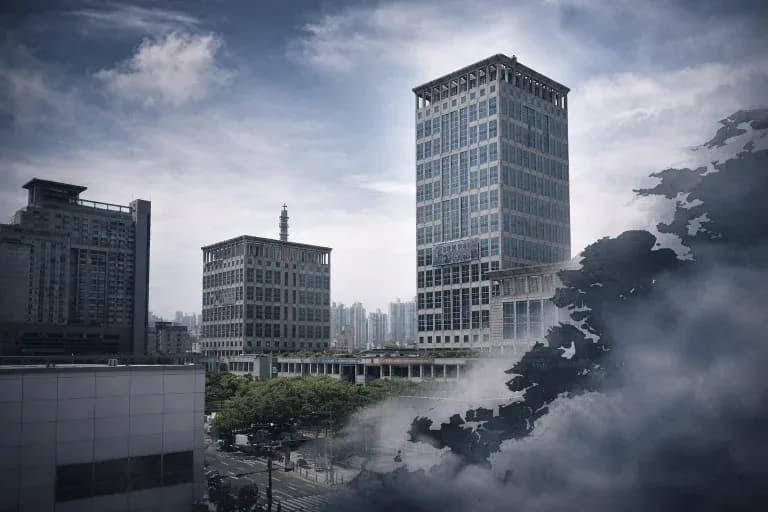
Busan Museum of Art to reopen in 2026 as the city’s cultural landscape shifts
Closed since late 2024, the Busan Museum of Art will return amid rising competition from public and private venues, with plans that test how a municipal museum defines its public role in a changing art ecosystem.

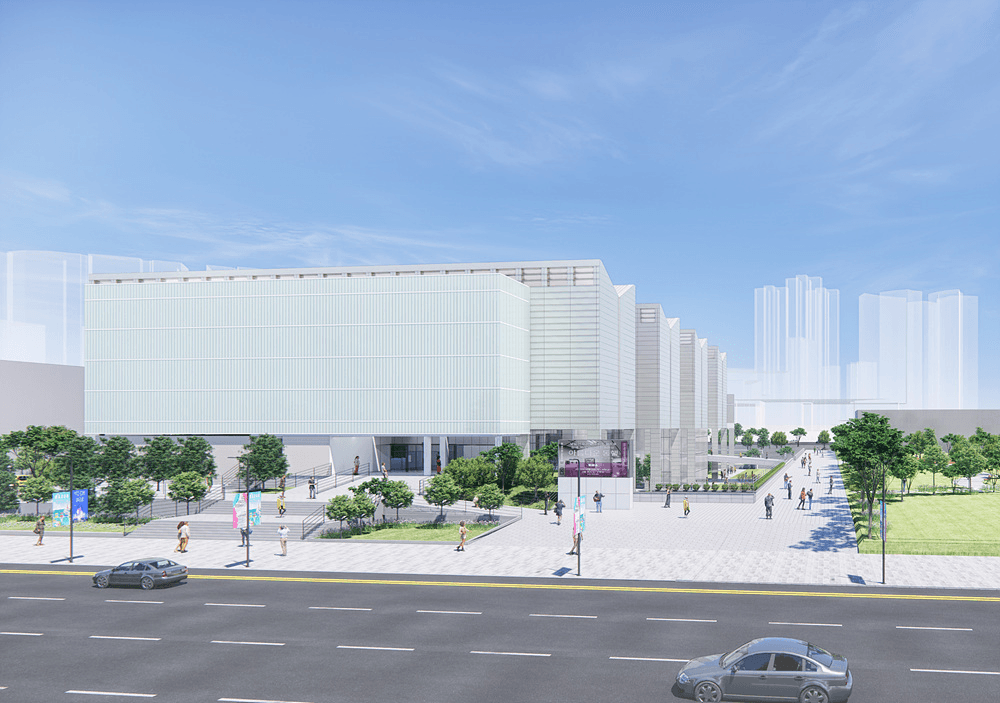
Busan, South Korea — Busan’s flagship public art institution is preparing to return after nearly two years of closure, as the Busan Museum of Art plans a reopening in the fall of 2026 following a large-scale renovation. City officials and museum leadership have framed the project as both a physical upgrade and an institutional reset, positioning the museum as a “public and shared” platform intended to connect art, society and technology. Whether that ambition can be sustained beyond rhetoric will depend on how the museum resolves a series of operational and financial questions that remain open.
Founded in 1998, the Busan Museum of Art has served for more than two decades as the city’s primary publicly funded venue for visual art. Over time, however, the limitations of its original building became increasingly apparent. Aging exhibition spaces, insufficient storage and conservation facilities, and outdated visitor infrastructure prompted the city to pursue a comprehensive renovation. Construction began in December 2024, closing the main building and sharply reducing public access during the project period.
The renovation aims to modernise exhibition halls, improve storage and environmental controls, reconfigure circulation, and expand visitor amenities such as cafés and retail areas. Museum officials have emphasised that the project is not simply architectural. In official statements, the reopening is described as a shift away from a model centred primarily on collection and display, toward an institution that functions as a civic platform encompassing exhibitions, education, research and public engagement.
That repositioning is most clearly expressed through the museum’s planned reopening programme. Five exhibitions are intended to articulate the institution’s renewed direction. The first major international project, provisionally titled Future Museology, is being developed with a consortium of approximately ten domestic and overseas museums. Rather than foregrounding individual artists, the exhibition is conceived as an examination of how museums themselves are changing, addressing questions of institutional responsibility, public value and the pressures introduced by digital technologies and environmental concerns.
Such an approach aligns with ongoing international debates, but it also carries risk. Exhibitions about museums often falter when institutional ideals are not matched by concrete examples. For Busan, the challenge will be whether the project can move beyond general statements to address practical realities such as governance structures, funding models, labour conditions and measurable public outcomes.
The museum’s domestic anchor exhibition, Art and Society: From Liberation to the Korean War (working title), addresses a politically and historically sensitive period. By focusing on artistic production around the time of Korea’s liberation in 1945 and the subsequent war, the exhibition seeks to revisit how artists responded to rapid social and political upheaval. Museum officials have described the project as an attempt to reconstruct overlooked or fragmented historical narratives, including through contemporary reinterpretation. Such exhibitions inevitably attract scrutiny over sources, interpretation and representation, and the museum’s handling of research transparency and loans will be closely watched.
A third exhibition proposal, Rebuilding the Museum (working title), turns the institution’s attention inward. Drawing on architectural plans, administrative records and exhibition documentation accumulated since the museum’s founding, the project aims to trace how the institution has been shaped by shifting cultural policies and social expectations. Institutional self-examination has become a familiar curatorial genre internationally, sometimes functioning as accountability, sometimes as narrative control. In Busan’s case, its credibility will depend on how directly it addresses the realities of renovation, including changes in scope, funding decisions and public procurement.
The reopening programme also includes a dedicated children’s exhibition, Safe Base (working title), designed as a narrative and sensory environment intended to support emotional stability and development. Children’s galleries have become increasingly prominent in public museums seeking to attract intergenerational audiences, but they also represent long-term commitments. Sustaining such spaces requires specialised educators, safeguarding protocols, extended operational planning and consistent funding. For a museum emerging from a major renovation, the issue is whether this initiative will be embedded as a permanent function or remain a symbolic gesture.
In parallel, the museum intends to continue collaborations with external platforms, including LOOP Lab Busan, a media-art initiative that operates across multiple sites in the city. By maintaining these partnerships, the museum appears to acknowledge that audience engagement during its closure has been shaped by decentralised and festival-like formats. The strategy suggests an institution attempting to position itself as a coordinating hub rather than a self-contained venue.
The most high-profile element of the reopening plan is the creation of a large-scale media sculpture involving internationally recognised artists such as Hito Steyerl and Ai Weiwei. The museum has presented the project as emblematic of its post-renovation identity, addressing themes of crisis, coexistence and the relationship between humans, technology and nature through a specially designed media structure.
Large-scale digital commissions, however, bring challenges that extend well beyond initial production. Long-term maintenance, energy consumption, hardware replacement, content management and staffing can place significant strain on public institutions. While the symbolic value of the project has been emphasised, details regarding commissioning processes, budgets and maintenance obligations have not yet been publicly outlined. For a publicly funded museum, transparency around such projects is likely to shape how they are received, both locally and internationally.
The renovation itself has also attracted attention for its cost. Public reporting at earlier stages of the project cited an initial budget of around KRW 26bn. Subsequent coverage and administrative references have pointed to significantly higher figures following changes in scope, rising construction costs and extended timelines, with estimates reaching into the KRW 40–45bn range. However, the museum has not yet published a consolidated breakdown confirming the final total cost, the reasons for any increases, or how additional expenditure altered the project’s scope. As the reopening approaches, pressure is likely to grow for a clearer public accounting.
Visitor data adds further context. Monthly attendance figures from 2011 through mid-2025 show a museum whose footfall has been shaped by seasonal patterns, the Covid-19 pandemic and, more recently, the renovation. From 2024 onward, the data reflects a reduced operational footprint, as the main building closed and only limited spaces remained accessible. As a result, post-closure figures cannot be directly compared with earlier years. This complicates assessments of recovery and underscores the need for clearly defined benchmarks once the museum reopens.
The Busan Museum of Art will also return to a cultural environment that has shifted during its absence. The Busan Museum of Contemporary Art has expanded its profile through experimental programming and large-scale exhibitions, while private and hybrid venues—many oriented toward immersive and media-based experiences—have become increasingly visible, particularly among tourists and younger audiences. The reopening museum will need to define its role within this crowded landscape, balancing its public mandate against pressures to compete for attention.
Cultural participation surveys in Busan indicate that exhibition attendance remains relatively strong but uneven. Older residents, lower-income groups and people with disabilities continue to be underrepresented among museum visitors. If the museum’s stated commitment to publicness is to be more than aspirational, it will need to translate into concrete policies addressing pricing, accessibility, transportation and sustained outreach. Announced expansions in education programmes and docent training suggest awareness of this challenge, but their impact will depend on implementation.
As the reopening date draws closer, several operational details remain unresolved. The museum has not clarified whether reopening will take the form of a phased launch or a full return to public access. Criteria for evaluating performance in the first year after reopening—beyond headline visitor numbers—have not been made public. Nor has the institution outlined how the expanded programme will be staffed and funded over the long term.
The reopening of the Busan Museum of Art will be a visible moment in the city’s cultural calendar. Whether it marks a substantive institutional transformation or a rebranding exercise will depend less on opening-day announcements than on what follows. In the year after reopening, decisions about budgets, governance and access will determine whether the museum’s claims of being “public and shared” are borne out as an operating reality rather than a curatorial position.
The Weekly Breeze
Keep pace with Busan's deep narratives.
Delivered every Monday morning.