Busan’s 2026 Local Election Tests PPP Strength Amid Redistricting Delays
As the electoral map remains unsettled, Busan’s shrinking districts and weakening conservative base are colliding in one of the city’s most consequential local races in years.

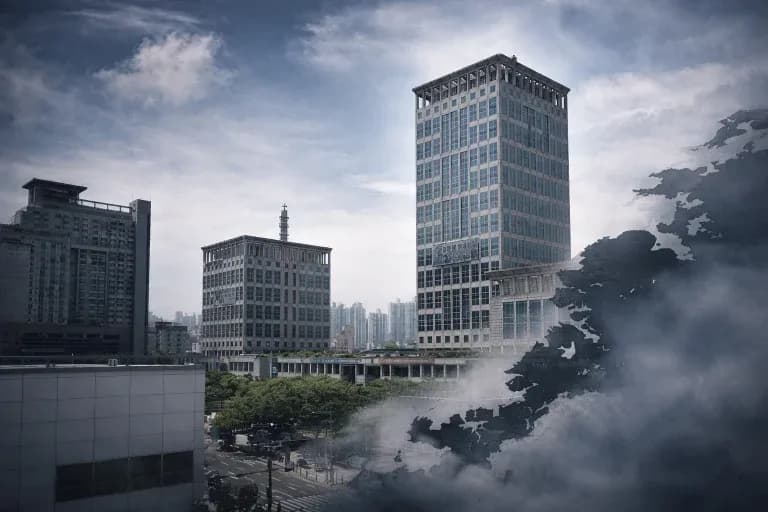
BUSAN — Busan heads toward the June 3 local elections without the political certainty that once insulated its conservative establishment. The campaign calendar is already fixed. Candidate registration will run on May 14 and 15, and official campaigning will begin on May 21. The battlefield is not fixed. District lines remain unsettled after repeated delays in the National Assembly’s political reform process, leaving candidates to organize in a city where the map itself is still under negotiation.
The weakening of the People Power Party has stripped away the old assumption that Busan will correct itself in favor of the right by force of habit. A March KNN survey put the Democratic Party at 31.8 percent in Busan and the PPP at 25.4 percent, with 35 percent uncommitted. In the mayoral field, Democratic lawmaker Jeon Jae-soo led with 29 percent, ahead of incumbent Mayor Park Heong-joon at 17.5 percent and PPP lawmaker Joo Jin-woo at 13.7 percent. A Jeon-Park head-to-head produced a wider gap, 40.2 percent to 26.7 percent. Conservative rule in Busan no longer begins with the comfort of presumption.
Pressure on the election does not come from polling alone. Population decline has begun to move from the social ledger into the institutional one. Official resident-registration data put Busan’s population at about 3.24 million as of February 2026, extending the city’s downward trend into the election year itself. In a city losing residents unevenly, redistricting is no technical exercise. Fewer people mean stronger pressure to cut or consolidate seats, tighter district boundaries, harsher competition inside parties, and a more anxious struggle over which parts of Busan retain political weight and which are absorbed into larger units. Busan enters the 2026 race under a double compression: weakening partisan authority above, shrinking representation below.
The Collapse of Conservative Automaticity
The most consequential change in Busan is not ideological conversion. It is the erosion of automaticity. Conservative politics in the city has long depended on a familiar sequence: party label first, candidate quality second, local machinery third. A weak candidate could survive inside a strong party environment. An ordinary campaign could hold because Busan’s partisan floor was high enough to absorb error. That equation is no longer holding. March polling from KNN placed the Democratic Party ahead of the People Power Party in Busan, 31.8 percent to 25.4 percent, while 35 percent of respondents identified with neither side. A city that still produced conservative majorities a few years ago is now producing a large bloc that refuses to attach itself automatically to the ruling conservative camp.
The significance of that number lies less in the gap itself than in the disappearance of inherited margin. Busan Ilbo’s January survey had already shown the city at near parity, with party support effectively tied at 39.6 percent for the Democratic Party and 39.7 percent for the PPP. March did not create the crisis. March deepened it. The movement from tie to Democratic edge in barely two months suggests a city no longer governed by partisan habit. Conservative dominance in Busan once relied on the assumption that undecided or wavering voters would eventually drift back to the right. A 35 percent unaffiliated bloc makes that assumption dangerous. A city with that much political slack no longer behaves like a stronghold. It behaves like a city in suspension.
The mayoral race sharpens the point. Jeon Jae-soo’s lead over Park Heong-joon matters because it breaks an older hierarchy in which incumbency, municipal visibility and conservative alignment usually reinforced one another. Park is not trailing because Busan has suddenly embraced the opposition. Park is trailing because incumbency no longer sits on a secure partisan base. Jeon’s 29 percent, Park’s 17.5 percent and the 40.2-to-26.7 head-to-head spread are not only candidate figures. They mark a breakdown in the old transfer mechanism through which party strength automatically converted into local executive credibility. Busan voters are now separating city leadership from party inheritance with greater ease than the city’s conservative establishment is accustomed to facing.
National conditions make recovery harder. The National Barometer Survey released this week put the Democratic Party at 43 percent and the People Power Party at 17 percent nationwide. A local conservative machine can outwork a modest headwind. It cannot easily neutralize a national brand that has moved into the zone of broad reputational weakness. Local elections in Korea rarely remain local in the strict sense. Party image descends through the ballot. It shapes volunteer energy, donor confidence, recruitment, and the willingness of loosely aligned voters to cast a straight ticket. A party at 17 percent nationally does not enter municipal contests as a neutral brand. It enters as baggage.
Busan’s conservative camp therefore faces a structural contradiction. The party still controls durable organization across much of the city. The party no longer commands the same reflexive trust from the electorate. Organization remains. Legitimacy has thinned. That gap changes the character of the campaign. Internal competition becomes harsher because party nomination no longer guarantees a comfortable general election. Candidates are pushed toward personal differentiation because the collective brand no longer carries enough weight on its own. A party accustomed to winning by discipline now has to persuade. A city accustomed to voting by inheritance is demanding performance, relevance and local proof. The June election will show whether Busan’s conservatives can still convert organizational memory into electoral authority, or whether the city has already moved into a harsher era where party history counts for less than present credibility.
A Delayed Map and the Politics of Shrinking Representation
Busan’s second crisis sits below the polling line and closer to the machinery of democracy itself. The city is moving toward a June 3 election with the calendar already locked by the National Election Commission — candidate registration on May 14 and 15, official campaigning from May 21 — while the structure of representation remains unsettled. International Newspaper reported on March 12 that the National Assembly’s political reform committee would reconvene on March 13, yet Busan still faced the prospect of a “blind” local election because district-boundary and seat-adjustment issues had not been resolved. Administrative delay has already become political fact. A campaign cannot be fully transparent when candidates know the date of the vote but still lack certainty about the final shape of the constituencies in which they are expected to compete.
The burden of that delay is not evenly distributed. Established parties and incumbents can survive ambiguity longer because they already possess local name recognition, district networks, donor routes and informal intelligence. Challengers cannot. A first-time district chief hopeful or council candidate needs a settled map before deciding where to build an organization, which neighborhoods to canvass, what local grievances to elevate and which rival must actually be beaten. Delay therefore creates a quiet asymmetry before the campaign has properly begun. Under ordinary conditions, that asymmetry would favor Busan’s conservative establishment. In 2026, the effect is more complicated. The People Power Party still retains the thicker local machine in much of the city, but the party enters the race with a damaged brand and weaker reflexive support. Organizational advantage remains; political insulation does not. That mismatch makes redistricting delay unusually combustible in Busan.
Population decline explains why Busan cannot postpone the representational question indefinitely. The city’s official statistics place Busan’s population at 3,329,888 at the end of 2024, down by 19,668 from a year earlier. That is not a symbolic decline. That is a large annual loss in a city already defined by aging, youth out-migration and uneven urban contraction. Once a city reaches that stage, redistricting stops being a periodic technical correction and becomes a recurring negotiation over political weight. Fewer residents mean weaker claims to stand-alone seats, narrower margins for maintaining old district lines and stronger pressure to compress representation into fewer electoral units. The issue is not only where lines are drawn. The issue is which communities remain legible enough to deserve independent political voice.
Busan media have already framed the next step in those terms. Both International Newspaper and Busan MBC have reported that Busan is under pressure to reduce the number of metropolitan and basic council seats because of population decline. International Newspaper described Busan as a first-order candidate for adjustments in seat counts and district boundaries. Busan MBC reported that cuts to both metropolitan and local council representation are being widely anticipated. A reduction in seats does more than thin out councils. It hardens competition inside parties, raises the value of incumbency, narrows entry points for newcomers and transforms local elections into a zero-sum fight over survival. In a city where representation is shrinking, every nomination becomes harsher and every redistricting line becomes a judgment about which localities still matter enough to stand on their own.
The old downtown is where the democratic cost is likely to be highest. Busan’s own policy materials and district-level population profiles show how uneven the city’s contraction has become. As of the end of 2024, Jung-gu had 40,346 residents, Dong-gu 88,412, Seo-gu 106,194 and Yeongdo-gu 106,515. Busanjin-gu alone stood at 362,839. A city with that degree of internal imbalance cannot preserve representation everywhere under old assumptions. The old core does not merely face decline in an abstract urban-policy sense. It faces a loss of political density. Once that happens, residents are no longer only defending neighborhoods, schools or commercial districts. They are defending the right to remain visible on the electoral map. That is why Busan’s redistricting fight cannot be reduced to a technical debate over population ratios. It is a struggle over who remains countable as a distinct constituency in a shrinking metropolis.
June 3 will therefore be decided on more than party mood. Polling tells one story: the conservative floor has weakened. The map tells another: representation itself is under compression. The interaction between the two is where Busan becomes analytically important. A party losing automatic loyalty now has to defend ground in a city where the ground is being administratively remeasured. A voter confronting a weaker ruling party is also confronting uncertainty about whether the district still possesses the same weight it carried in the last election. Busan is not merely experiencing a competitive race. Busan is entering an election in which partisan volatility and representational contraction are operating at the same time, each making the other harder to absorb.
The Ballot as a Measure of Political Weight
June 3 will not settle every question hanging over Busan. No local election can reverse demographic decline, restore lost confidence in a ruling party, or resolve in one cycle the institutional strain created by delayed redistricting. A clearer judgment is still possible. The vote will show whether Busan remains governable under the old conservative architecture, or whether the city has moved into a new phase in which party inheritance, incumbency and territorial habit no longer hold the same authority they once did. The election date is fixed by law. The meaning of the election is not. That meaning will be made in a city where political legitimacy now has to compete with administrative uncertainty and shrinking representational space.
The most important result may not be who wins Busan City Hall. A mayoral result can still be explained away by personality, campaign execution or coalition timing. The deeper verdict will emerge from the full ballot. If the People Power Party absorbs damage across district chief and council races as well as the mayoral race, Busan will have delivered a harsher message than an anti-incumbent protest. It will have signaled that the city no longer grants conservatives an automatic right to organize political space on inherited terms. If the party limits losses despite its weak standing in current polling, the result will suggest that local organization still outweighs reputational decline, at least for one more cycle. Either outcome would be larger than a normal municipal contest. One would mark the exhaustion of conservative default. The other would show that institutional muscle can still delay electoral realignment even after public confidence has thinned.
Busan’s old downtown will make that judgment especially visible. Population data already show how sharply political weight has diverged across the city: Jung-gu ended 2024 with 40,346 residents, Dong-gu with 88,412, Seo-gu with 106,194 and Yeongdo-gu with 106,515, while Busanjin-gu stood at 362,839. A city with imbalances on that scale does not merely head into an election with unequal campaign conditions. It heads into an election in which some districts are fighting to remain fully legible at all. Voting in June will therefore do more than allocate office. It will expose whether Busan still treats its shrinking districts as political communities with independent voice, or as units to be administratively compressed in the name of numerical efficiency. Few local elections ask voters to register an opinion on representation so directly, even when the ballot does not say so openly.
That is where Busan differs from the familiar script of a troubled ruling party facing headwinds in a major city. A brand slump alone would be one story. A delayed district map alone would be another. A shrinking city alone would be a third. Busan enters June carrying all three at once. A weakened conservative party has to defend a city whose electoral boundaries are still unsettled. Voters who have grown less willing to follow party inheritance are being asked to choose under a structure that may no longer preserve the same local political weight from one district to the next. Candidates are not merely contesting offices. They are contesting the scale on which political relevance will be recognized in the next phase of Busan’s decline and adaptation.
A local election usually reveals the mood of a city. Busan’s June election is likely to reveal something more durable: the terms on which the city will continue to count itself. A victory by the opposition would not by itself transform Busan. A defensive hold by the ruling camp would not restore the vanished certainty of earlier cycles. The lasting meaning will lie in how the city distributes authority after months of partisan erosion, demographic contraction and representational strain. June 3 may turn out to be the moment when Busan’s politics becomes harder to read through party history and easier to read through political weight — who still has it, who is losing it, and which parts of the city are no longer willing to pretend that old arrangements still fit the map.
Continue this reporting
Reporting on the same issue
Related coverage selected from the article's desk, topics and newsroom relationships.
 NewsOct 22, 2026
Busan Port’s LNG and Methanol Plan: Who Pays to Keep Fuel Ready?
Busan already supplies ships with LNG and methanol, drawing on regional and i...
 NewsOct 16, 2026
What Is Still Worth Going to See?
Busan’s biennale faces questions of artistic judgment and institutional care....
 NewsOct 14, 2026
What Became of Busan’s University Streets?
From 2015 to 2023, registered businesses grew near Pusan National University...
More from the author
More from this byline
Stay with the same line of reporting through more work from this byline.
- NewsOct 22, 2026
Busan Port’s LNG and Methanol Plan: Who Pays to Keep Fuel Ready?
 NewsOct 12, 2026
Bukangi, the Shark That Stayed in Busan’s North Port
Reader Signal
Community readWhat did this report leave you with?
Choose the signal that best reflects your reading. Select it again to remove it.
One response per article
No response selected
A moderated conversation about the reporting.
One-level replies and newsroom moderation keep the conversation anchored to this article.
Discussion Status
Open
Please sign in to join the discussion.
Newsletter
Weekly reporting and context from Busan and Korea.