South Korea’s Fresh Food Is Slipping Out of Reach
As heatwaves and floods hit crops, fresh vegetables and fruit in Korea now cost more than ultra-processed alternatives—reshaping diets, widening health gaps, and challenging food security.


In late July, Seoul felt like it was holding its breath. The heat did not come in waves; it sat, unmoving, pressed into the city like an extra layer of air. Roads shimmered. Bus stops became waiting rooms for a relief that never arrived. In the markets, greens slumped before noon. Vendors kept one hand on a fan and the other on handwritten price boards, rewriting numbers with each call from the supplier. A salad kit that cost ₩4,800 last month was now ₩5,500. If the phone rang again, it could be ₩6,000 before the week was out.
Two aisles over, nothing had changed. Instant noodles: same price. Microwave rice: unchanged. The processed food index had barely moved—up a tenth of a percent—while fresh produce prices had climbed more than four points in a single month. The gap between the two categories had always existed, but lately it was taking on a new shape. After weather tears through a harvest somewhere in the supply chain, the cost of “fresh” overtakes “packaged” for weeks at a time.
At that moment, the choice at the checkout is no longer about taste or nutrition. It’s about math.
Heat, Water, and the Fragility of a Crop
Far to the south, where Korea’s coastline curves into farming country, the sun has grown harder in recent years. Farmers talk about it in half-jokes: lettuce that bolts before it’s worth picking, spinach that turns bitter after too many hot nights. But the punchline doesn’t hide the truth—it isn’t just the heat. It’s the water.
When rain comes, it comes in bursts so heavy that soil slides away and roots drown. When it doesn’t come at all, irrigation pumps run for hours, draining fuel and budgets. Either way, the harvest shrinks. Smaller harvests bring higher prices the moment they reach wholesale markets.
At Garak Market—the country’s largest agricultural hub—traders see the signs before the numbers appear in any report. After a week of rain in the south, fewer trucks pull into the loading bays. Leafy greens arrive already losing their edge, their shelf life shortened to days. Buyers compete for the better-looking batches, bidding up prices before the produce has even reached supermarket shelves in Seoul. By the time it does, the markups are fixed in place.
In contrast, the processed food aisle stands immune to the week’s weather. Ingredients for instant noodles or snack cakes are stored in bulk, drawn from multiple countries, and locked in under long-term contracts. A bad growing season in one part of the world rarely moves the price tag on a packet of ramen.
Once, this stability was a quiet advantage. Now it’s shaping what ends up in the average shopping basket. The calculation is simple: one bag of greens that wilts before the weekend, or a stack of shelf-stable meals that last until you need them? The latter has begun to win.
Dietary change doesn’t announce itself. It arrives quietly, folded into the smallest of market decisions. A head of lettuce is set back in favor of frozen dumplings. Fresh apples give way to juice cartons. A week passes without a salad on the dinner table. At first, these are temporary swaps—prices will ease, the season will turn. But as months slip into seasons, the new choice hardens into habit.
Nutritionists who track household food spending see the consequences in slow-moving data. Fresh produce carries nutrients—vitamin C, folate, dietary fiber—that no factory can perfectly recreate.
Processing can add back certain vitamins, but not the complex balance of compounds found in just-picked crops. For families watching every won, the arithmetic is harsh: calorie for calorie, processed foods fill a stomach for less money. It solves today’s problem—keeping the pantry full—but shapes tomorrow’s diet, narrowing what the body receives.
A Pattern Beyond Borders
The shift is not unique to Korea. In southern Spain, the American Midwest, and the storm-battered coasts of Vietnam, the story repeats. A season’s peppers or beans are lost to heat or flood, prices spike, and substitutions take hold. By the time the fields recover, the taste for fresh has slipped, replaced by the convenience of something that waits in the cupboard.
Economists have a name for the end stage: “dietary convergence.” When fresh goods are priced out of reach for all but the wealthiest, diets across income levels begin to look the same—built around the same processed staples. In some cities, that point has already arrived.
On a Thursday afternoon, rain came down hard on the tin awnings of a neighborhood market. Inside, the produce stall was half-empty. The owner pointed to a few bundles of lettuce wilting under the misting hose and a pyramid of cucumbers small enough to count. Last week’s heat had burned through the spinach before the rain ever started. “I could restock,” he said, “but who’s going to pay that price? Better to leave the space empty than throw half of it away.”
Across town, the supermarket aisles were calm. Boxes of instant noodles and canned corn stood in neat stacks at the center, while the fresh section felt subdued—lettuces and cucumbers pushed to one side, each price tag glanced at and passed by. A few baskets held imported grapes and bagged salads, reliable enough to stock and slow to spoil.
Bad weather once meant higher prices for a week or two, followed by a return to normal. Now the disruptions stack, season on season. Weather seeps into the market, into receipts, into the quiet choices made about what to cook that night.
What Happens If This Holds
Farmers say the growing season no longer feels like something they can count on. Spring heat comes early, storms strike harder, pests that used to appear once a decade now return every year. In greenhouses, the air is heavy, and keeping plants alive feels like buying time. Each bad month pushes more growers into debt, and when they quit, another local supply line disappears.
If this continues, fresh produce may begin to feel like a seasonal indulgence rather than an everyday staple. It won’t happen in a headline; it will happen one shopping trip at a time. The couple who once bought a basket of greens will walk away with onions and pickles. The young office worker will stop making salads because it’s cheaper—and easier—to grab something sealed in plastic.
What’s lost isn’t just flavor or texture. Fresh vegetables carry water and fragile compounds that don’t survive long after harvest. Processing can boost the numbers on a nutrition label, but it can’t recreate the living balance of the field. The damage is slow, which makes it easy to miss. But over years, the connection between what’s nourishing and what’s affordable wears thin.
The shift will not come with a breaking-news alert. It will unfold in small, almost invisible ways: a shrunken produce section at a corner store; the shorter shelf life of what is on offer; conversations that turn more to sales on frozen dumplings than to which farm has the best greens this season.
Climate is no longer a backdrop. Each year brings its own combination of heat, rain, and disruption. Farmers adapt when they can—changing planting dates, adding shade nets, betting on new crops—but adaptation costs money, and the cost lands somewhere. More often than not, it lands with the consumer.
What remains is a narrowing space between what we know is better for our health and what we can actually afford. The answer to whether fresh food stays an everyday choice or slips into the category of “when the price is kind” will not be decided by one harvest.
It will be decided in the slow, steady grind of the years ahead—in markets, in kitchens, and in the quiet calculations at the checkout.
Continue this reporting
Reporting on the same issue
Related coverage selected from the article's desk, topics and newsroom relationships.
 NewsSep 30, 2026
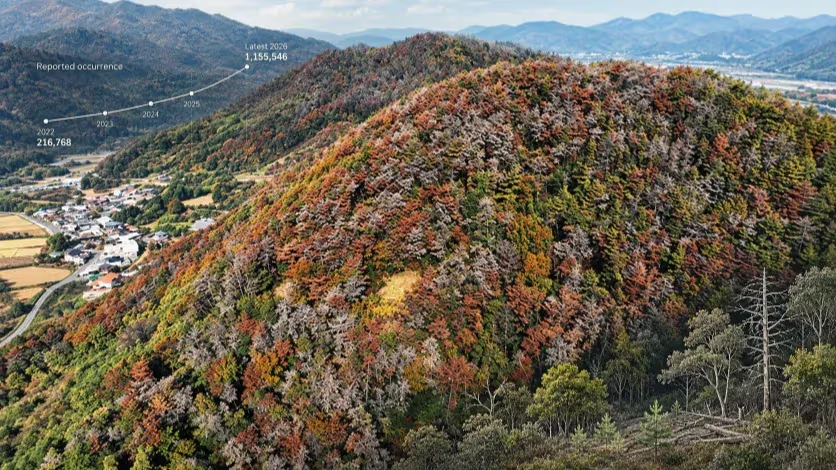
Gyeongnam’s Pine-Wilt Surge Is Forcing a Shift From Tree Removal to Forest Management
Gyeongnam’s pine-wilt outbreak has grown beyond a tree-removal problem. As re...
 NewsSep 22, 2026
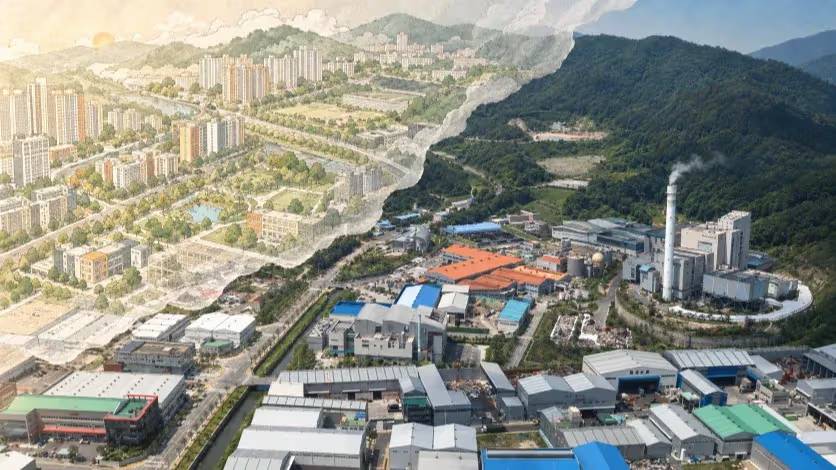
Busan Is Growing Westward as Its Waste Infrastructure Stays Put
Busan’s proposed Saenggok incinerator has moved from 800 to 500 tons a day. T...
 NewsAug 17, 2026
What South Korea’s 87% Drop in Aquaculture Heat Losses Really Measures
South Korea reported an 87 percent drop in aquaculture losses from high water...
More from the author
More from this byline
Stay with the same line of reporting through more work from this byline.
 NewsSep 16, 2026
Busan’s Young-Adult Migration Turns Sharply at 25–29
Reader Signal
Community readWhat did this report leave you with?
Choose the signal that best reflects your reading. Select it again to remove it.
One response per article
No response selected
A moderated conversation about the reporting.
One-level replies and newsroom moderation keep the conversation anchored to this article.
Discussion Status
Open
Please sign in to join the discussion.
Newsletter
Weekly reporting and context from Busan and Korea.