Can University Mergers Save Regional Higher Education?
South Korea’s regional universities are facing a crisis, and the Changwon-Geochang-Namhae merger is at the center of the debate. Will this bold move save regional higher education, or will legal and enrollment challenges derail the plan?

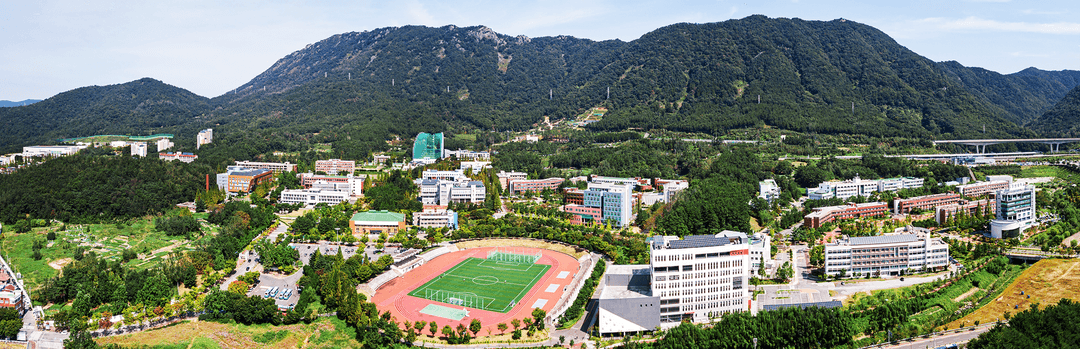
Changwon, South Korea – As South Korea grapples with the decline of regional universities, an ambitious plan is unfolding in Gyeongnam Province. The government-backed Glocal University Initiative, aimed at revitalizing struggling institutions, has led to a proposed merger between Changwon National University, Gyeongnam Provincial Geochang College, and the University of Gyeongnam Namhae. The integration is expected to create a new model for higher education, one that enhances research capabilities, aligns academic programs with industry needs, and ultimately prevents further decline in regional enrollment.
Yet, as promising as the plan appears, the path to implementation is riddled with obstacles. Disputes over student enrollment quotas, legal uncertainties surrounding academic structures, and skepticism from faculty and studentscontinue to raise concerns. Supporters view the merger as a much-needed solution to the demographic crisis, while critics worry that without careful execution, it could become another policy experiment that fails to deliver meaningful change.
The Glocal University Initiative represents South Korea’s attempt to stem the collapse of regional higher education. With birth rates plunging and university admissions shrinking, many institutions outside Seoul are struggling to remain financially viable. The government’s solution has been to encourage mergers, promising financial support and structural autonomy in exchange for long-term sustainability plans.
The proposed merger between Changwon National University, Gyeongnam Provincial Geochang College, and the University of Gyeongnam Namhae seeks to create a multi-campus institution, maintaining existing facilities while restructuring academic programs. The new system is intended to be more flexible and industry-driven, offering both 2-year associate degrees and 4-year bachelor's programs. The merger also envisions specialized programs tailored to Gyeongnam’s regional industries, with a focus on smart manufacturing, healthcare, tourism, aerospace, and renewable energy.
However, beyond the ambitious vision, the merger raises fundamental concerns that could determine its success or failure.
At the heart of the debate is a fundamental disagreement over student intake. The Education Ministry has emphasized the need to reduce enrollment quotas in response to the country’s declining college-age population. However, local officials argue that such reductions disproportionately affect regional universities, worsening an already uneven education system that favors the Seoul metropolitan area.
Gyeongnam Province has resisted these enrollment cuts, insisting that the new university should maintain its current admission levels. The province points out that while university enrollment in the Seoul metropolitan area decreased by just 2.1% in the past decade, Gyeongnam’s student population dropped by 27%, exacerbating an already widening education gap. Regional policymakers argue that rather than reducing student numbers, the focus should be on realigning curricula with industry needs, ensuring that graduates have strong job prospects within the province.
"Instead of limiting student opportunities, we should be reinforcing education that supports regional industries," says Director of Gyeongnam’s Higher Education Cooperation Division. "The long-term goal should not be downsizing but restructuring education to serve the demands of a changing economy."
The government’s stance on enrollment quotas will be a critical factor in determining the merger’s future, as local officials and university administrators attempt to negotiate terms that balance sustainability with accessibility.
Another significant roadblock is the legal framework—or lack thereof—for the proposed academic structure. The newly merged university is designed to operate under a multi-tiered degree system, where students can choose between a two-year vocational program or a full four-year degree track. While this system is already common in other countries, South Korea’s Higher Education Act does not currently allow for such a structure, making the merger’s execution legally uncertain.
A bill to legalize multi-tiered academic structures was introduced in the National Assembly last year but remains stalled due to opposition from private universities, which fear increased competition. Without clear legislative approval, the merger plan risks becoming legally entangled, forcing institutions to operate under conflicting regulations.
To bypass this hurdle, Gyeongnam Province has requested a regulatory exemption, which would allow the new university to trial the system under a "Higher Education Innovation Special Zone." If granted, this could serve as a pilot model for future university mergers. However, if the legal framework is not clarified soon, the transition could face significant administrative delays.
Beyond policy and legal issues, the merger must also overcome resistance from within the universities themselves. Faculty and staff members remain wary of potential restructuring, fearing job losses, funding reductions, and shifts in academic direction. Students, too, are apprehensive, uncertain whether the merged institution will enhance their degrees’ credibility or complicate academic progression.
The strongest concerns center around program integrity and long-term recognition. Some faculty members worry that consolidating programs across different campuses could result in fragmented academic oversight, while students fear that merging degree programs could affect their career prospects and access to national certifications.
Although an internal survey showed that 78.9% of respondents support the merger, many stakeholders emphasize that execution will be key. Without clear communication, transparent decision-making, and guarantees of academic stability, resistance is likely to persist.
However, the challenges remain formidable. The success of the merger depends on whether the government will allow enrollment flexibility, whether legal frameworks can be adapted in time, and whether faculty and students can be reassured that the transition will enhance rather than disrupt their education. The coming months will determine if this initiative becomes a blueprint for the future—or yet another example of policy ambitions failing to translate into reality.
Continue this reporting
Reporting on the same issue
Related coverage selected from the article's desk, topics and newsroom relationships.
 NewsDec 3, 2025
Sacheon Hosts the Space Agency, but Seoul Still Makes the Decisions
Korea placed its headquarters in the south, but authority, engineering and la...
 NewsJun 27, 2025
Foreign Students Trapped in Korea’s Failing Universities
Foreign students arrive in Korea expecting opportunity—but many find empty ca...
 NewsJun 2, 2025
Talk Talk Korea 2025 Opens for Global Creators
The Talk Talk Korea 2025 competition opens its doors to global creators, offe...
More from the author
More from this byline
Stay with the same line of reporting through more work from this byline.
 NewsSep 18, 2026
The Other AI Race Is for the Freedom to Change Course
 NewsSep 5, 2026
How a Political Appointment Becomes a Judgment of Character
Reader Signal
Community readWhat did this report leave you with?
Choose the signal that best reflects your reading. Select it again to remove it.
One response per article
No response selected
A moderated conversation about the reporting.
One-level replies and newsroom moderation keep the conversation anchored to this article.
Discussion Status
Open
Please sign in to join the discussion.
Newsletter
Weekly reporting and context from Busan and Korea.