Busan’s Charter School-Inspired Endeavor
Education, often seen as the linchpin of societal evolution, constantly evolves, echoing the rhythm of our dynamically shifting world. Audacious initiatives occasionally surface, aiming to recalibrate educational frameworks for the contemporary student. A prime example is Busan Metropolitan City's recent collaboration with the Sasang District. Together, they are on the brink of redefining educational paradigms by unveiling plans for an Autonomous Public High School. In an announcement today, at
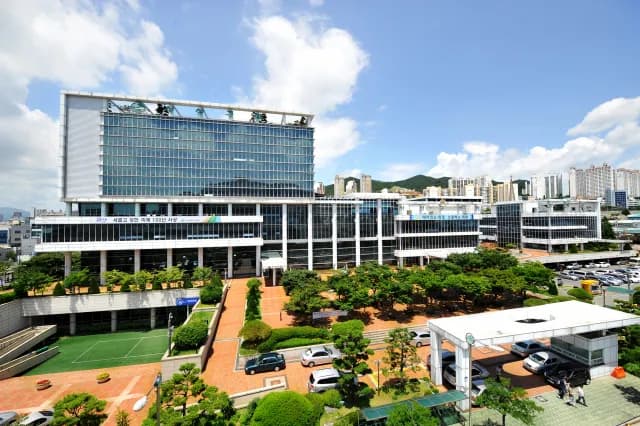
Education, often seen as the linchpin of societal evolution, constantly evolves, echoing the rhythm of our dynamically shifting world. Audacious initiatives occasionally surface, aiming to recalibrate educational frameworks for the contemporary student. A prime example is Busan Metropolitan City's recent collaboration with the Sasang District. Together, they are on the brink of redefining educational paradigms by unveiling plans for an Autonomous Public High School.
In an announcement today, at the Sasang District Office's community hall, Busan City revealed its intention to sign an agreement for the establishment and operation of an Autonomous Public High School 2.0 and a boarding middle school. Key signatories at this ceremony will include Busan Mayor Park Heong-jun, Busan Superintendent Ha Yoonsoo, and Sasang District Mayor Cho Byeong-gil. Furthermore, National Assembly member Jang Je-won is expected to attend, extending his support and commitment to the establishment of exemplary middle and high schools in the Sasang District.
This ambitious proposal from Busan draws inspiration from the American Charter School model—a system that empowers schools with autonomy to tailor learning environments more closely to student needs. Such a move by Busan is not just the inauguration of a new educational entity but a manifestation of the city's commitment to holistic educational transformation, positioning them to aptly respond to a rapidly transforming global milieu.
Details of the New Initiative:
- Location: Within Sasang District, Busan.
- School Size: Autonomous Public High School (18 classes), Boarding Middle School (15 classes).
- Student Selection: Principal’s selection (50% from all of Busan, 40% from the western Busan region, and 10% designated for socially vulnerable students).
This agreement is grounded in the vision of establishing exemplary middle and high schools in the western Busan region. The ultimate goal is to bridge the educational disparities between the eastern and western parts of the city and enhance the competitiveness of public education in Busan. In a declaration made on September 14th, local governments, educational offices, universities, and corporations unveiled their fundamental direction to foster regional educational development and nurture top talents through collaborative efforts.
To preemptively amplify the competitiveness of public education, this agreement has been formulated, focusing on the establishment of outstanding autonomous public high schools and boarding facilities. With this agreement as a launching pad, the city plans to promote the "Education Free Zone" in collaboration with educational offices, universities, public institutions, and corporations.
Yet, as with any innovative proposal, the Autonomous Public High School concept is not without its challenges. From ensuring equity and integration to maintaining rigorous oversight, the path forward requires a delicate balance.
America's Charter School Discourse: A Parable for Busan?
The educational fabric of the U.S. is punctuated with the evocative narrative of Charter Schools—a topic that has incited fervent debates among educators, policymakers, and the public alike. These schools, often hailed as avant-garde disruptors, have consistently been at the epicenter of discussions regarding the evolution of American pedagogy.
Media portrayals, most notably documentaries like "Waiting for Superman", positioned Charter Schools as the much-needed antidote to America's pedagogical challenges. With promises of agility, sweeping autonomy, and an unwavering focus on students, they were anointed as the new gold standard, poised to rejuvenate an arguably languishing system. However, as commendations amplified, so did critical appraisals. Counter-narratives, such as "The Inconvenient Truth Behind Waiting for Superman," urged circumspection, flagging potential shortcomings. Chief among these were concerns over the inadvertent exacerbation of societal inequalities, periodic governance oversights, and the potential fiscal drain on traditional public schools.
The U.S. Charter School account, replete with its triumphs and tribulations, underscores the intricate dance of educational innovation. They've illuminated new pedagogical avenues but concurrently emphasized the imperatives of meticulous and equitable execution—a lesson Busan might do well to heed as it embarks on its own charter-inspired journey.
The Busan Proposal: Challenges and Solutions
1. Equity and Access
Challenge: Will the autonomous public high school, with its unique selection criteria, truly represent the diversity of Busan’s student population? There's a risk that it might predominantly attract students from more privileged backgrounds, thereby widening the gap between the haves and the have-nots.
Solution: Implement a holistic admissions process that looks beyond test scores, factoring in students’ backgrounds, challenges faced, and personal attributes. Furthermore, initiate outreach programs in less affluent neighborhoods to raise awareness about the school and its mission. Reserved slots for marginalized communities can ensure that the student body remains diverse.
2. Oversight and Quality Control
Challenge: Autonomy can sometimes lead to a lack of standardization or deviation from expected educational outcomes.
Solution: Establish a periodic review process where the school's curriculum, teaching methodologies, and overall performance are assessed by an independent body. This body can comprise educators, community leaders, and representatives from the city's education department. Regular feedback loops and public reports will ensure accountability and encourage the school to maintain high standards.
3. Financial Implications
Challenge: The autonomous nature of the school might require more funding, potentially diverting resources from other schools within Busan.
Solution: Explore alternative funding mechanisms. Engage with private enterprises, alumni, and philanthropic entities to sponsor programs or facilities within the school. Furthermore, allocate a fixed percentage of the city's educational budget specifically for this initiative, ensuring that other institutions aren't adversely affected.
4. Integration with the Larger System
Challenge: The school, while autonomous, still needs to fit within the broader educational landscape of Busan. There's a risk of creating a siloed institution, detached from the city's overall educational vision.
Solution: Ensure that the school’s curriculum is aligned with national standards, even if the methods of delivery are innovative. Promote teacher exchange programs where educators from the autonomous school collaborate with those from traditional public schools, fostering a shared learning environment. Organize city-wide educational forums where the school can showcase its methodologies, encouraging integration and mutual growth.
Continue this reporting
Reporting on the same issue
Related coverage selected from the article's desk, topics and newsroom relationships.
 NewsSep 8, 2026
Busan Port’s Bigger Balance Sheet May Come With Less Control
Busan enters South Korea’s port-authority merger with the largest assets, the...
 NewsSep 7, 2026
How 38,000 Future Residents Entered Busan’s Growth Plan
Busan’s 2040 master plan counts 38,000 Eco Delta City residents toward develo...
 NewsSep 3, 2026
Busan’s Quantum-Sensing Cluster Begins With Battery Inspection
Busan’s battery-sensing project shows what South Korea’s new quantum cluster...
More from the author
More from this byline
Stay with the same line of reporting through more work from this byline.
 NewsSep 5, 2026
How a Political Appointment Becomes a Judgment of Character
 NewsAug 27, 2026
South Korea Has Outgrown Washington’s Nuclear Rules
Editorial Record
Corrections, sourcing notes and newsroom disclosures remain part of the published record. View Newsroom Notes →
Reader Signal
Community readWhat did this report leave you with?
Choose the signal that best reflects your reading. Select it again to remove it.
One response per article
No response selected
A moderated conversation about the reporting.
One-level replies and newsroom moderation keep the conversation anchored to this article.
Discussion Status
Open
Please sign in to join the discussion.
Newsletter
Weekly reporting and context from Busan and Korea.