Busan's Sinpyeong-Jangnim Industrial Complex Gets Green Light for Transformation into Eco-Friendly Hub
Busan, South Korea - Busan Metropolitan City has announced that the Sinpyeong-Jangnim Industrial Complex has been selected as a candidate for the "2024 Smart Green Industrial Complex" initiative, a joint project led by the Ministry of Land, Infrastructure, and Transport, and the Ministry of Trade, Industry, and Energy. On April 18, the two ministries held a meeting of the Old Industrial Complex Competitiveness Enhancement Promotion Committee and selected three regions as candidates for the "Old

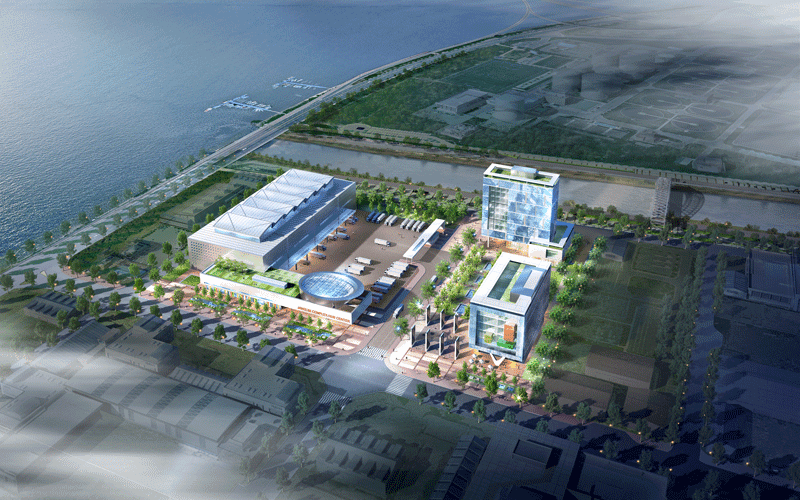
Busan, South Korea - Busan Metropolitan City has announced that the Sinpyeong-Jangnim Industrial Complex has been selected as a candidate for the "2024 Smart Green Industrial Complex" initiative, a joint project led by the Ministry of Land, Infrastructure, and Transport, and the Ministry of Trade, Industry, and Energy.
On April 18, the two ministries held a meeting of the Old Industrial Complex Competitiveness Enhancement Promotion Committee and selected three regions as candidates for the "Old Industrial Complex Competitiveness Enhancement Project" to be implemented starting next year. These regions include the Sinpyeong-Jangnim Industrial Complex (Busan), Gwangyang National Industrial Complex (Jeonnam), and the Korean Export Industrial Complex (Incheon Bupyeong and Juan).
Established in the early 1970s, the Sinpyeong-Jangnim Industrial Complex has played a pivotal role in Busan's industrial development. Spanning over 6.2 million square meters, the complex has been home to various industries, including machinery, automotive parts, and root industries. Over the years, the complex has contributed to the local economy and job creation; however, it has faced challenges due to outdated infrastructure and the need for modernization.
The project aims to help aging industrial complexes like Sinpyeong-Jangnim grow into regional hubs for strengthening local industries and creating jobs by providing concentrated support through collaboration among various government ministries. This collaboration is intended to help these complexes adapt to rapidly changing industrial environments, including digital transformation, carbon neutrality, and environmental, social, and governance (ESG) management requirements.
The city proposed a vision of "creating an advanced manufacturing hub where industry, environment, and people coexist and drive regional development" and was ultimately selected as a candidate for the project. The industrial complex has the potential for mini-clustering based on industry type.
With this selection, the city plans to invest a total of 294.6 billion KRW ($245 million) in 21 projects, focusing on building a future-oriented industrial ecosystem, creating eco-friendly smart green industrial complexes, and developing innovative spaces attractive to young people. The city aims to achieve these goals by collaborating with Saha-gu District Office and regional innovation agencies, as well as consulting with private sector experts to determine core projects.
Meanwhile, the Sinpyeong-Jangnim Industrial Complex was previously selected as a linked industrial complex in 2021, and its candidacy for the Smart Green Industrial Complex is based on its potential to serve as a regional hub, considering factors such as its need and ability to fulfill that role. The city is working closely with local council members and Saha-gu District to address issues such as job mismatch, declining operation rates, and employment capacity, and weakening competitiveness of resident companies by transforming the aging industrial complex into a digital and eco-friendly industrial park.
Mayor Park Heong-joon emphasized, "The city is striving to become a green smart city and is applying innovation across all areas of city administration." He added, "It is imperative to respond quickly to changes in industrial structure and rejuvenate stagnant industrial complexes like Sinpyeong-Jangnim through innovation. Through this selection, we will do our utmost to transform the Sinpyeong-Jangnim Industrial Complex into a digital, eco-friendly smart green industrial complex, fulfill our role as a regional innovation hub, and drive the local economy."
Continue this reporting
Reporting on the same issue
Related coverage selected from the article's desk, topics and newsroom relationships.
 NewsOct 16, 2026
What Is Still Worth Going to See?
Busan’s biennale faces questions of artistic judgment and institutional care....
 NewsOct 14, 2026
What Became of Busan’s University Streets?
From 2015 to 2023, registered businesses grew near Pusan National University...
 NewsOct 12, 2026
Bukangi, the Shark That Stayed in Busan’s North Port
A rescue net guided Bukangi toward the sea, but the dusky shark returned to B...
More from the author
More from this byline
Stay with the same line of reporting through more work from this byline.
 NewsOct 9, 2026
Why “Busan Is Good” Falls Short as a City Brand
 NewsSep 18, 2026
The Other AI Race Is for the Freedom to Change Course
Reader Signal
Community readWhat did this report leave you with?
Choose the signal that best reflects your reading. Select it again to remove it.
One response per article
No response selected
A moderated conversation about the reporting.
One-level replies and newsroom moderation keep the conversation anchored to this article.
Discussion Status
Open
Please sign in to join the discussion.
Newsletter
Weekly reporting and context from Busan and Korea.