Busan Selected to Host Prestigious International Nuclear Conference in 2025
The City of Busan has announced that it has been chosen as the host city for the 21th International Topical Meeting on Nuclear Reactor Thermal Hydraulics (NURETH-21), organized by the American Nuclear Society (ANS). NURETH is the world's largest and most prestigious academic conference in the nuclear field, attracting over 1,000 participants, including global nuclear academics and industry officials, since its inception in 1980. The 21th International Topical Meeting on Nuclear Reactor Thermal
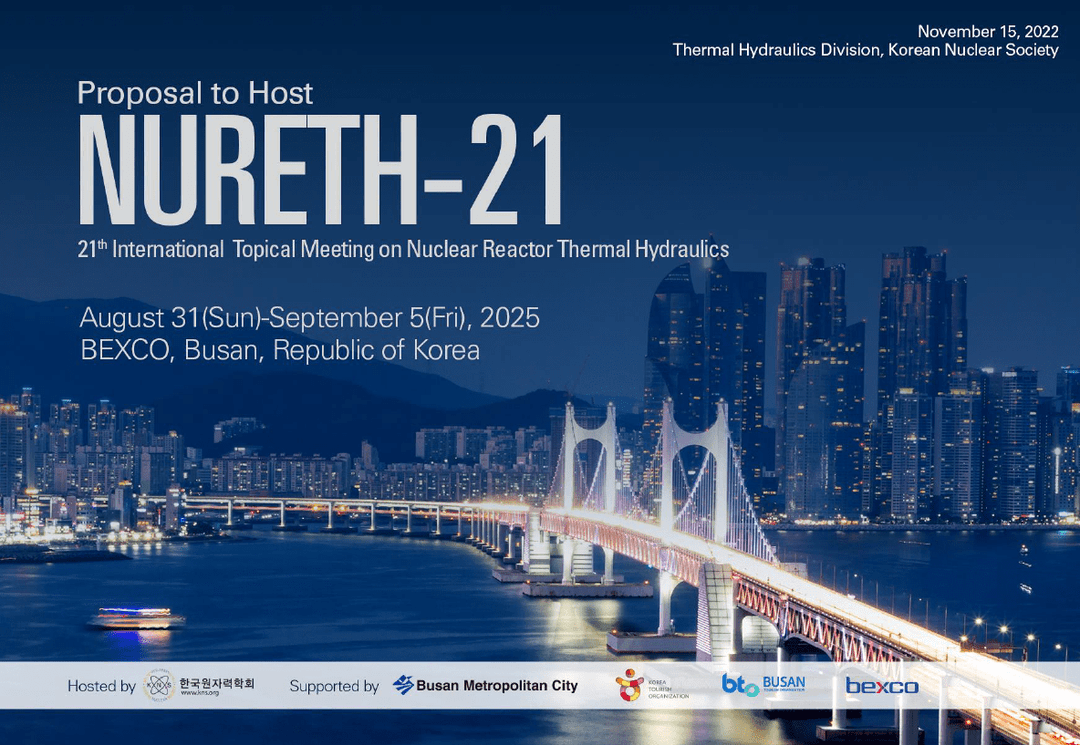
The City of Busan has announced that it has been chosen as the host city for the 21th International Topical Meeting on Nuclear Reactor Thermal Hydraulics (NURETH-21), organized by the American Nuclear Society (ANS). NURETH is the world's largest and most prestigious academic conference in the nuclear field, attracting over 1,000 participants, including global nuclear academics and industry officials, since its inception in 1980.
The 21th International Topical Meeting on Nuclear Reactor Thermal Hydraulics (NURETH-21) is set to take place at BEXCO in Busan from August 31 to September 5, 2025. This marks the second time in 22 years that the conference will be held in South Korea, following Seoul in 2003.
Busan's successful bid is the result of collaboration with the Korean Nuclear Society, Busan Tourism Organization, and BEXCO since last year. The city's efforts included sending an invitation letter to the American Nuclear Society's organizing committee, ultimately triumphing over strong competitors such as China and Japan.
The official announcement is scheduled to be made at the 20th International Conference on Nuclear Reactor Hydropower in Washington, DC, in August.
Hosting the conference in Busan is expected to actively support local companies' entry into the international market by showcasing innovative and exceptional domestic technology in various fields, including safety, industry, and components. It will also highlight the supply chain of nuclear power plant parts and the nuclear power industry ecosystem in the Southeast region to the global stage. In particular, the successful bid is anticipated to have a positive impact on Busan's city brand and its bid for the 2030 Busan World Expo.
Busan Mayor Park Heong-joon expressed enthusiasm for the conference, saying, "We welcome this international conference to Busan." He added, "Starting with this conference, we will do our best to become an international center for research on innovative nuclear technologies such as small modular reactors (SMRs), nuclear decommissioning technology, and carbon-free energy (CF100)."
Editor's Comments
CF100 and RE100 are initiatives aimed at promoting different types of clean energy. While both have the common goal of reducing carbon emissions and promoting sustainable energy, they focus on different aspects of clean energy. Here's a brief explanation of each:
- CF100 (Carbon-Free 100): CF100 is a less common term and not as well-established as RE100. It generally refers to initiatives or commitments made by companies, cities, or countries to achieve 100% carbon-free energy. This may include not only renewable energy sources like solar, wind, and hydroelectric power but also other low or zero-carbon technologies such as nuclear energy or carbon capture and storage. The primary goal of CF100 is to eliminate greenhouse gas emissions from energy generation, thereby addressing climate change and creating a more sustainable energy landscape.
- RE100 (Renewable Energy 100): RE100 is a global initiative led by The Climate Group in partnership with CDP (formerly the Carbon Disclosure Project). It is a commitment by companies to source 100% of their electricity from renewable energy sources such as solar, wind, hydro, and geothermal power. By joining RE100, companies publicly pledge to achieve this goal by a specific target date, typically within a few decades. The RE100 initiative focuses solely on promoting the use of renewable energy and does not encompass other low or zero-carbon technologies like nuclear power or carbon capture and storage.
While both CF100 and RE100 initiatives aim to promote clean energy and reduce carbon emissions, CF100 generally encompasses a broader range of low or zero-carbon technologies, whereas RE100 focuses exclusively on renewable energy sources.
Continue this reporting
Reporting on the same issue
Related coverage selected from the article's desk, topics and newsroom relationships.
 NewsOct 16, 2026
What Is Still Worth Going to See?
Busan’s biennale faces questions of artistic judgment and institutional care....
 NewsOct 14, 2026
What Became of Busan’s University Streets?
From 2015 to 2023, registered businesses grew near Pusan National University...
 NewsOct 12, 2026
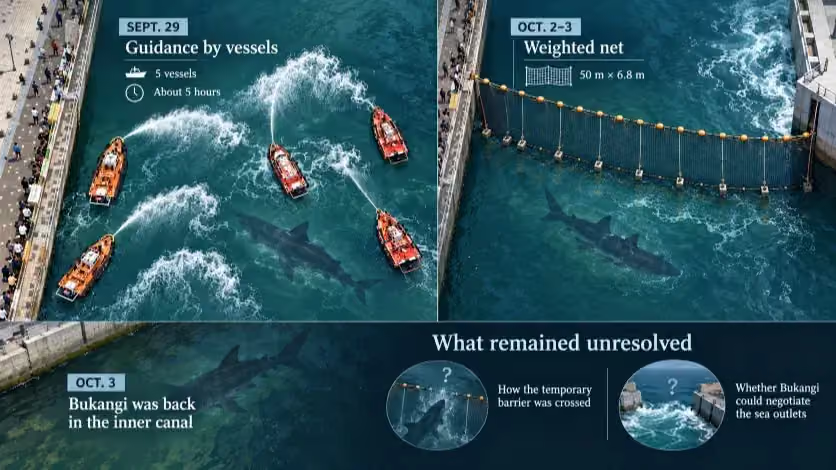
Bukangi, the Shark That Stayed in Busan’s North Port
A rescue net guided Bukangi toward the sea, but the dusky shark returned to B...
More from the author
More from this byline
Stay with the same line of reporting through more work from this byline.
 NewsOct 9, 2026
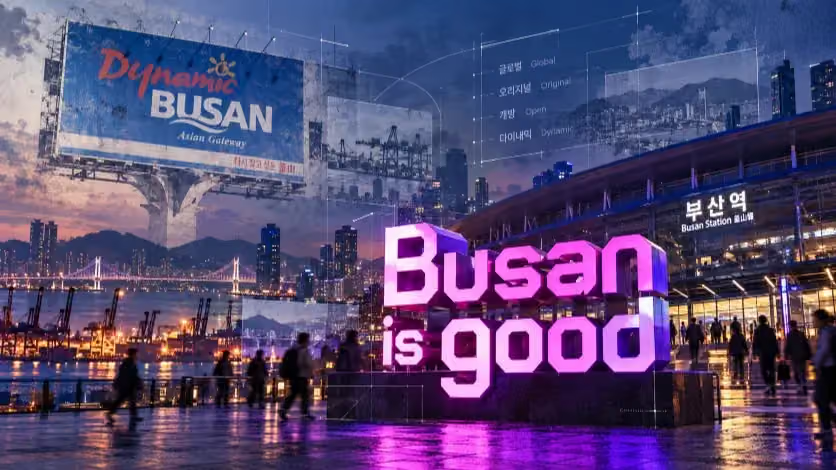
Why “Busan Is Good” Falls Short as a City Brand
 NewsSep 18, 2026
The Other AI Race Is for the Freedom to Change Course
Reader Signal
Community readWhat did this report leave you with?
Choose the signal that best reflects your reading. Select it again to remove it.
One response per article
No response selected
A moderated conversation about the reporting.
One-level replies and newsroom moderation keep the conversation anchored to this article.
Discussion Status
Open
Please sign in to join the discussion.
Newsletter
Weekly reporting and context from Busan and Korea.