Busan, Ulsan, and Gyeongnam United for Gadeokdo Airport’s Success
Busan, South Korea - The Gadeokdo New Airport project, long envisioned as a transformative infrastructure initiative, has taken a major step forward. On December 20, in Busan, the city governments of Busan and Ulsan, the provincial government of Gyeongsangnam-do, and the Gadeokdo New Airport Construction Corporation signed a comprehensive agreement. This collaboration aims to establish the airport as a hub for logistics and economic revitalization in the southern region, marking a critical miles

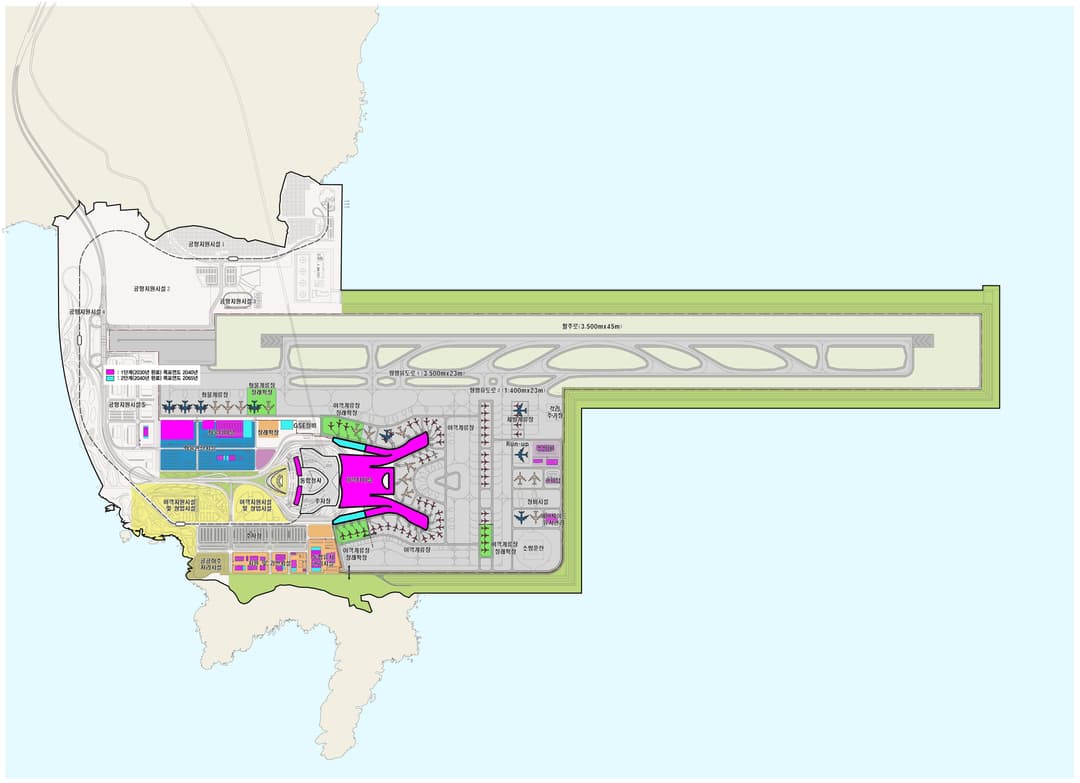
Busan, South Korea - The Gadeokdo New Airport project, long envisioned as a transformative infrastructure initiative, has taken a major step forward. On December 20, in Busan, the city governments of Busan and Ulsan, the provincial government of Gyeongsangnam-do, and the Gadeokdo New Airport Construction Corporation signed a comprehensive agreement. This collaboration aims to establish the airport as a hub for logistics and economic revitalization in the southern region, marking a critical milestone in addressing the country's economic imbalance.
The agreement, which details plans for airport construction and regional economic development, has been described by officials as a turning point for the southern peninsula. Busan Mayor Park Heong-joon expressed his strong support for the project, stating, “The key to overcoming the crisis of the Seoul-centric structure lies in Gadeokdo New Airport. It will enable us to establish Busan as a global hub city for innovation in Korea.” His statement reflects the widespread belief that the project holds the potential to shift economic and logistical paradigms in the region.
The Gadeokdo New Airport is not merely another transport facility. Designed to host a 3,500-meter runway capable of handling the largest cargo aircraft and operating around the clock, the airport represents a leap in South Korea’s logistics and connectivity capabilities. Officials have emphasized the integration of the airport with Busan Port, one of the world’s largest transshipment hubs, and the regional transport network, including highways and railways. This integration aims to create a seamless logistics chain that enhances the country’s position in global trade.
The project, with a budget exceeding 13 trillion KRW, is slated for completion in 2029. Its facilities will include a state-of-the-art passenger terminal capable of accommodating over 17 million passengers annually and a cargo terminal designed to handle substantial freight volumes. These features highlight the airport's dual purpose as both a passenger and cargo hub.
The economic implications of the project are vast. Projections indicate that the airport will generate economic benefits of nearly 29 trillion KRW, with Busan expected to receive the lion’s share, over 18 trillion KRW. The remaining benefits will bolster the economies of Gyeongsangnam-do and Ulsan, creating a ripple effect throughout the southern region. Additionally, the project is anticipated to create over 116,000 jobs, with approximately 73,000 in Busan alone.
Busan Mayor Park further underscored the broader significance of the project, adding, “This is not just about opening an airport. It’s about redefining our economic structure and paving the way for balanced regional development.”
Despite the ambitious vision, the project faces significant challenges. One of the primary obstacles is the construction site itself, located on a soft seabed that requires complex engineering solutions. Furthermore, the region is susceptible to extreme weather conditions, including typhoons and potential sea-level rise, adding another layer of complexity. These factors have already led to delays, with multiple failed bids for the initial site development stage raising concerns about the project's timeline.
However, the Ministry of Land, Infrastructure, and Transport has reaffirmed its commitment to overcoming these challenges. Minister Park Sang-woo stated, “We will ensure that Gadeokdo New Airport opens on time, providing top-tier service and utmost safety while addressing the long-standing regional gap with the capital area.”
In addition to technical and logistical hurdles, environmental concerns have been raised regarding the potential impact on local ecosystems. To address these issues, the project has undergone rigorous environmental assessments, including a strategic environmental impact assessment that was conditionally approved in 2023.
Recognizing the complexity and scope of the project, the government has proposed a governance council that will include over 30 related institutions. This council is expected to play a pivotal role in addressing challenges, resolving disputes, and ensuring that the airport achieves its full potential. Key priorities for the council include expanding international flight networks, developing access infrastructure, and fostering collaboration between air and sea logistics operations.
The project also emphasizes tourism and regional development. Officials have pointed out that the airport could serve as a gateway for international tourists, boosting the local tourism industry and supporting cultural exchange. Additionally, the development of surrounding areas, including industrial and commercial zones, is expected to create new economic opportunities.
As the Gadeokdo New Airport project progresses, it has come to symbolize more than just an infrastructure upgrade. It embodies a vision of a more balanced and equitable South Korea, where the southern regions can stand as economic powerhouses alongside the capital. Gyeongsangnam-do Governor Park Wan-soo highlighted this ambition, stating, “We will strengthen our collaboration with the government and ensure that Gadeokdo New Airport becomes the cornerstone of a unified Busan-Ulsan-Gyeongnam mega-region.”
While challenges remain, the Gadeokdo New Airport project represents a bold step toward a new economic era for southern Korea. With strong government support, local commitment, and the promise of transformative economic benefits, the project has captured the nation’s attention and raised expectations for its impact on the future. For now, all eyes remain on Gadeokdo as it paves the way toward 2029 and beyond.
Continue this reporting
Reporting on the same issue
Related coverage selected from the article's desk, topics and newsroom relationships.
 NewsOct 16, 2026
What Is Still Worth Going to See?
Busan’s biennale faces questions of artistic judgment and institutional care....
 NewsOct 14, 2026
What Became of Busan’s University Streets?
From 2015 to 2023, registered businesses grew near Pusan National University...
 NewsOct 12, 2026
Bukangi, the Shark That Stayed in Busan’s North Port
A rescue net guided Bukangi toward the sea, but the dusky shark returned to B...
More from the author
More from this byline
Stay with the same line of reporting through more work from this byline.
 NewsOct 9, 2026
Why “Busan Is Good” Falls Short as a City Brand
 NewsSep 18, 2026
The Other AI Race Is for the Freedom to Change Course
Reader Signal
Community readWhat did this report leave you with?
Choose the signal that best reflects your reading. Select it again to remove it.
One response per article
No response selected
A moderated conversation about the reporting.
One-level replies and newsroom moderation keep the conversation anchored to this article.
Discussion Status
Open
Please sign in to join the discussion.
Newsletter
Weekly reporting and context from Busan and Korea.