Why Hundreds of Korean Workers Were Detained at a Georgia Battery Plant
The Ellabell raid highlights a structural flaw in U.S. policy: labor shortages in advanced manufacturing collide with restrictive visa rules, leaving investors and workers in a legal trap.

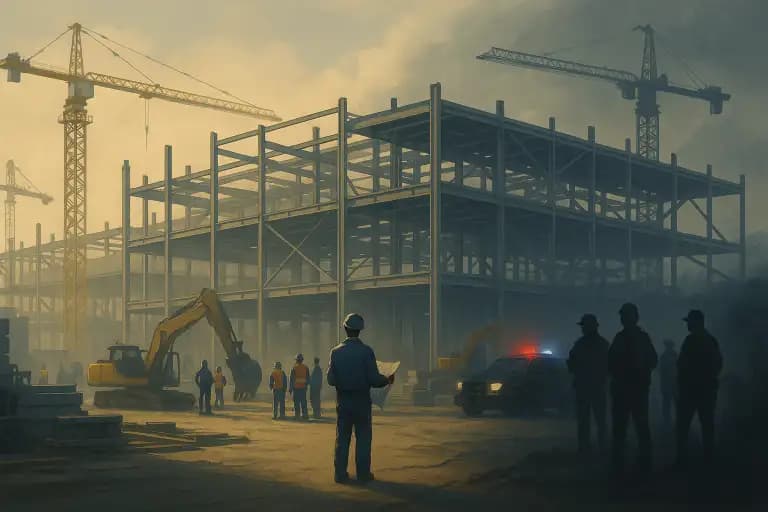
In September 2025, federal immigration agents carried out the largest single-site enforcement action in recent U.S. history at the Hyundai–LG Energy Solution electric vehicle battery project in Ellabell, Georgia. Over the course of a single day, 475 workers were taken into custody; more than 300 were identified as South Korean nationals. The scale of the raid moved the event beyond routine enforcement. It became a collision point between Washington’s industrial ambitions, its immigration system, and the realities of global supply chains.
Georgia has positioned itself as a manufacturing hub for the U.S. South, drawing billions in foreign investment with land incentives and tax abatements. Yet the state’s labor market has struggled to provide the specialized skills required for large-scale battery and automotive projects. To meet construction and commissioning deadlines, Korean firms relied on short-term staff brought from headquarters. Visa rules offered few lawful channels for this kind of deployment. Stopgap use of business or travel visas became common, creating precisely the legal exposure federal agencies have now acted upon.
The Ellabell operation highlights a deeper contradiction: the United States seeks foreign capital to build its industrial base, but restricts the movement of the very expertise needed to execute those projects. For Korean companies, the message is clear. Investment is welcome, but staffing must conform to U.S. immigration frameworks—even when those frameworks fail to match the industrial realities on the ground.
Factories Without Workers: America’s Missing Manufacturing Skills
American manufacturing has faced a chronic shortage of trained workers for more than a decade. Industry groups estimate that by 2030, as many as two million manufacturing jobs could remain unfilled nationwide. The causes are well documented: an aging workforce, declining vocational pipelines, and the shift toward advanced technologies that require more specialized training than traditional assembly line work.
Battery production and electric vehicle assembly intensify these pressures. Construction of gigafactories demands workers familiar with precision installation of imported machinery, quality-control systems, and proprietary production protocols. In Georgia, despite robust state workforce programs, local labor pools were unable to supply the depth of expertise needed on the timeline demanded by global automakers.
For Hyundai, LG, and other Korean firms, the solution was to dispatch technicians and engineers from headquarters. These personnel carried intimate knowledge of the production equipment, much of it manufactured in Korea, and were considered essential for safe installation and commissioning. From the corporate perspective, relying solely on local contractors would have risked delays, cost overruns, and technical errors.
The gap between what the U.S. labor market could provide and what the projects required created a structural dependence on foreign specialists. It also set the stage for legal conflict. With limited visa options available for short-term, highly technical assignments, companies turned to temporary business travel categories that do not permit hands-on work. The reliance on these workarounds made enforcement action almost inevitable once federal authorities chose to scrutinize the sites.
When Legal Pathways Don’t Fit: How Visa Rules Manufactured Illegality
The U.S. immigration system provides few viable avenues for the type of short-term, specialized assignments required in large industrial projects. The H-1B program, the most recognized channel for foreign technical staff, is capped annually and heavily oversubscribed. The L-1 visa, designed for intra-company transfers, is often limited to longer-term managerial or specialized knowledge roles and involves lengthy approval processes. Neither category readily accommodates a six-month deployment of equipment installers or commissioning engineers.
Faced with deadlines and absent clear pathways, companies resorted to temporary business visas such as B-1 or visa waiver entries under ESTA. By statute, these visas permit only meetings, training, or oversight functions — not physical labor or direct involvement in production. Yet in practice, workers on these visas were dispatched to factory sites, where their tasks went well beyond the narrow definitions of permissible activity.
This dynamic created what labor attorneys describe as “manufactured illegality”: workers whose assignments were essential to the project, but who were made violators by the rigidity of the visa regime. Responsibility was diffuse. Workers themselves often had limited understanding of the legal boundaries, subcontractors managed the deployments, and the parent companies pressed for speed. The result was a chain of compliance gaps that federal investigators could later present as systemic violations.
The Ellabell raid illustrates the consequences of this structure. By treating visa misuse as a matter for mass enforcement rather than regulatory adjustment, U.S. authorities signaled that operational necessity offers no protection from immigration statutes. The episode underscores the tension between industrial policy objectives and the inflexible architecture of immigration law.
Layers of Contracts, Layers of Risk: Who Bears Responsibility?
At the Ellabell site, as at most large-scale industrial projects, the workforce was layered through multiple tiers of subcontractors. Hyundai and LG Energy Solution maintained that the detained workers were not their direct employees, but rather hired by subcontracting firms responsible for construction and equipment installation. This structure is common in global manufacturing projects, where specialized tasks are delegated to niche contractors.
The arrangement complicates accountability. U.S. law places clear obligations on employers to verify work authorization through Form I-9 documentation. In theory, the liability extends up the chain if a subcontractor systematically violates immigration rules. In practice, however, diffuse contracting structures make oversight uneven. Prime contractors can argue that responsibility rests with lower-tier firms, while subcontractors may operate with minimal scrutiny in the rush to meet deadlines.
Investigators have suggested that this diffusion of responsibility was not incidental but systemic. By relying on multiple subcontractors — some foreign-based, others operating locally — companies insulated themselves from direct liability while ensuring the project received the labor it required. For immigration authorities, the subcontracting network became evidence not only of individual violations but of a broader pattern of circumvention.
The raid’s focus on subcontracted labor highlights a wider compliance challenge in U.S. industrial policy. Large projects are encouraged through tax incentives and subsidies, yet the federal government expects full adherence to immigration rules even when oversight is structurally fragmented. The Ellabell case demonstrates how the subcontracting model, essential for efficiency, can also serve as the weakest link in legal compliance.
Why Rural Georgia Became a Magnet for Global Manufacturing
Georgia has become a cornerstone of the United States’ push to anchor advanced manufacturing in the South. Generous land grants, tax abatements, and workforce training programs have drawn billions in foreign investment over the past decade. Hyundai’s electric vehicle “Metaplant” and the adjacent LG battery complex are the most visible symbols of this policy, designed to turn rural counties into high-tech industrial corridors.
Yet the very features that made Georgia attractive to global automakers have also exposed its weaknesses. The state’s rural counties offer inexpensive land and political support, but the local labor market is thin. Advanced battery assembly and equipment installation require technical expertise that cannot be quickly developed through short-term training initiatives. While Georgia’s Quick Start program has built a reputation for rapid workforce preparation, it cannot bridge the gap in specialized commissioning skills needed for projects of this scale.
For Korean firms, this mismatch necessitated importing technicians from abroad. For local communities, the visibility of foreign workers fueled mixed reactions: on one hand, excitement over economic growth and ancillary job creation; on the other, unease that promised employment opportunities were not fully realized for local residents.
The Ellabell raid magnified these tensions. It exposed the dissonance between state-level incentives aimed at securing investment and federal enforcement actions that punished the labor practices those incentives effectively encouraged. Georgia’s role as both beneficiary and battleground underscores how regional economic strategy intersects with national immigration politics.
Law, Optics, and Politics: Why the Raid Became a Spectacle
The Ellabell raid cannot be read solely as an exercise in immigration compliance. Its timing and scale point to broader political objectives. The Trump administration, entering its second term, has doubled down on a hardline approach to immigration, presenting visible enforcement as proof of its commitment to “protect American jobs.” Large-scale actions carry symbolic weight that smaller audits or fines cannot deliver.
Georgia provided a politically resonant stage. The state has emerged as a battleground in national elections, and its communities have voiced concerns about demographic change and economic displacement. A high-profile raid in a rural county sent a clear message: immigration laws would be applied without exception, even against workers connected to allied nations and flagship industrial projects.
For federal authorities, the optics were as important as the legal case. Deploying helicopters, armored vehicles, and hundreds of agents transformed the raid into a public spectacle. The dramatic imagery was broadcast across national media, reinforcing the administration’s narrative of decisive enforcement. The fact that many detainees were highly skilled Korean technicians rather than undocumented laborers from the region underscored the breadth of the campaign’s reach.
Critics argue that the action served more as political theater than a proportionate response to regulatory infractions. The core violations involved visa misuse, a technical breach stemming from systemic shortages in lawful pathways, not criminal infiltration. Yet by staging the raid on such a scale, the administration demonstrated that symbolic enforcement can override industrial and diplomatic considerations when immigration policy becomes a political instrument.
Handcuffed Technicians, Strained Alliances: The Wider Repercussions
The Ellabell raid reverberated far beyond Georgia. In Seoul, the South Korean government convened emergency meetings, dispatched consular staff, and lodged formal protests with Washington. Officials framed the detentions as a humanitarian issue, emphasizing due process and the welfare of their citizens. At the same time, they avoided direct confrontation, mindful of the strategic importance of the U.S.–Korea alliance in security and trade.
For Korean companies, the episode was a warning that U.S. hospitality toward foreign investment has limits. Hyundai and LG stressed that the detained workers were not their direct employees, underscoring the role of subcontractors. Yet the reputational damage was immediate. Investors and employees alike questioned whether the U.S. market — celebrated as a pillar of supply-chain resilience — had instead become a source of regulatory risk.
American officials defended the operation as a neutral application of immigration law. But the optics of handcuffed engineers from a key ally unsettled diplomatic partners. South Korea has been central to U.S. efforts to diversify critical supply chains away from China. By targeting a Korean-led project, the raid complicated that strategy, raising doubts about the coherence of U.S. industrial and immigration policies.
At the industrial level, the raid disrupted construction schedules and heightened scrutiny of subcontracting practices across the sector. Other Korean firms — including SK and Hanwha, both of which operate or plan facilities in the U.S. South — began reassessing compliance structures. The broader foreign investor community took note as well. The Ellabell case suggested that investment incentives offered by state governments do not insulate projects from federal enforcement risks.
The incident thus functions as both a diplomatic irritant and a market signal: foreign capital is welcome, but only on terms set by a rigid immigration regime. Whether that regime can reconcile with the labor demands of high-tech manufacturing remains an open question.
Two Agendas, One Collision: Industrial Reshoring vs. Immigration Law
At its core, the Ellabell raid illustrates a clash between two pillars of U.S. policy: the drive to reshore advanced manufacturing and the insistence on a rigid immigration enforcement regime. Each objective is defensible on its own terms. Together, they generate contradictions that fall hardest on foreign investors and their workers.
On the industrial side, Washington has committed vast subsidies to lure battery and electric vehicle production. State governments, particularly in the South, have aligned with this strategy, offering land and tax abatements. Yet these projects depend on highly specialized labor that cannot be sourced locally in the short term. Without foreign technicians, machinery goes uninstalled and production timelines collapse.
On the immigration side, the system offers no tailored visa category for short-term, high-skill assignments of this type. Business visas prohibit hands-on work, while employment visas are capped, delayed, or ill-suited. The result is a legal vacuum. Companies face pressure to deliver on schedule but lack lawful tools to staff their projects. Enforcement actions then treat these structural deficiencies as corporate misconduct.
This dynamic creates a paradox. The U.S. invites foreign capital to build strategic industries, but simultaneously penalizes the operational practices that make such investments feasible. The burden falls on workers who are neither undocumented nor seeking permanent migration, but who become violators by necessity of the system.
The structural irony is clear. By staging a high-profile raid, the government affirmed its commitment to immigration law. But in doing so, it undercut its own industrial policy, jeopardizing projects meant to serve national economic and security interests. The contradiction is not incidental; it reflects a broader failure to align labor mobility rules with industrial strategy.
The Test Case for America’s Industrial Credibility
The Ellabell raid underscores the fragility of the framework underpinning America’s industrial ambitions. The country has set out to rebuild strategic supply chains in electric vehicles and batteries, courting foreign capital as a cornerstone of that strategy. Yet it has not reconciled those ambitions with the mechanics of its immigration system. When investment collides with enforcement, the outcome is disorder at the ground level: disrupted projects, diplomatic strain, and workers caught in legal limbo.
For South Korea, the episode raises doubts about the reliability of the U.S. as a partner in industrial cooperation. For Korean companies, it highlights the need to harden compliance systems and accelerate local workforce training, even if doing so slows project execution. For American policymakers, it exposes the risks of pursuing reshoring without addressing labor bottlenecks. A rigid immigration regime designed for other contexts cannot meet the needs of high-tech factories operating on compressed timelines.
Several questions remain unresolved. How will federal authorities treat the detained workers — as deportable violators, as candidates for bond release, or as pawns in a larger political narrative? Will Washington consider creating a visa channel tailored for temporary, specialized industrial assignments, or will it continue to rely on headline-grabbing raids to enforce outdated rules? And will foreign investors recalculate the risks of entering a market where incentives are abundant but operational certainty is elusive?
What is clear is that the Ellabell raid is not an isolated enforcement action. It is a test case, signaling how the United States intends to manage the tension between its industrial strategy and its immigration regime. The outcome will shape not only the trajectory of Korean investment in the South, but the credibility of U.S. policy at the intersection of economics, law, and global partnership.
The Weekly Breeze
Keep pace with Busan's deep narratives.
Delivered every Monday morning.