When Labor Remains but Workers Vanish
Algorithms assign the tasks. Platforms reap the value. But the human presence behind labor is fading from legal, social, and existential view.

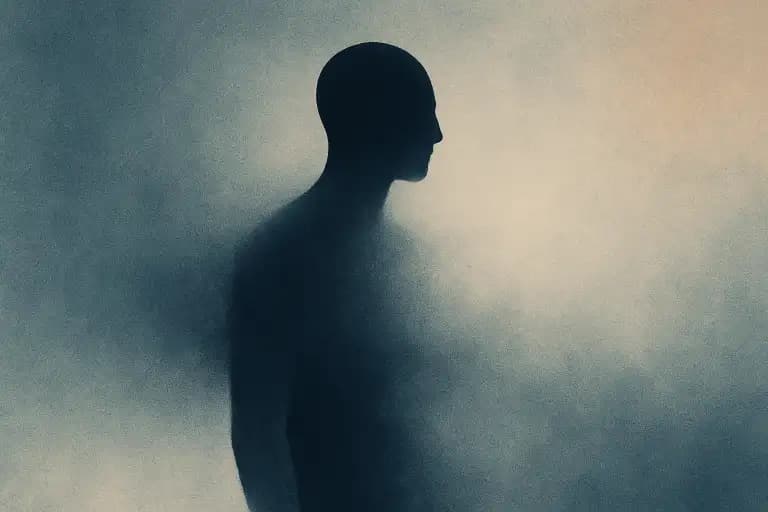
As artificial intelligence and automation reshape the modern economy, the conversation has largely focused on disappearing jobs. But something deeper is vanishing as well: the human being as a visible, recognized actor in the world of labor.
Across gig platforms, freelance content networks, and creator economies, people are working more than ever—yet fewer of them are formally recognized as workers. Tasks are assigned, completed, and evaluated by systems, often without a clear employer, legal contract, or workplace. Labor persists, but its subjects are dissolving into roles without names.
In this emerging regime, what’s eroding is not just employment—but the very notion of human action itself.
The Rise of Liquid Labor
The traditional idea of a job—fixed hours, stable contracts, a clear workplace—is quietly being replaced. In its place is something more fluid, less secure, and often invisible: tasks completed on-demand, income earned per click, and performance evaluated by algorithms rather than supervisors.
Sociologists and labor theorists have called this transformation “liquid labor.” Drawing from Zygmunt Bauman’s concept of liquid modernity, the term refers to labor that is no longer bound by time, space, or formal roles. In a liquid labor system, people shift between gigs, apps, and identities, constantly adapting to the platform that demands their attention.
Delivery workers, freelance designers, content creators, and remote microtaskers are among the most visible examples. They work without contracts, without benefits, and often without being legally classified as employees. But they do work—and often intensively.
The paradox is striking: labor is everywhere, but the laborer is nowhere.
This liquefaction is not just a technical change. It alters how people understand their role in society. When work is fragmented and invisible, it becomes difficult to say, I am a worker. Instead, individuals become what one scholar called “residues of roles”—present in the system, but not acknowledged by it.
As labor loses form, workers lose ground—not just legally, but existentially. They become flexible, responsive, available—but rarely recognized.
And in this fluidity, the foundation of human agency begins to erode.
How Jobs Became Tasks
The workplace used to give people structure: a title, a schedule, a manager. But across today's platform economy, many workers no longer have any of these. They log into apps instead of entering offices. They complete tasks, not careers.
This shift has led some sociologists to describe modern labor as "liquid." The term, adapted from Zygmunt Bauman’s theory of liquid modernity, captures how jobs today are short-term, flexible, and hard to define. They change by the day, the app, or the algorithm.
A delivery driver, a freelance designer, or a TikTok content creator may all be working—but they rarely appear as “employees.” Their income depends on metrics, ratings, and platform logic—not on formal agreements. As a result, they carry the risks of entrepreneurship without the protections of employment.
Labor still exists. But the laborer—legally, socially, even conceptually—is disappearing.
This has major implications not only for income stability, but for identity. Without stable roles, it becomes harder for people to describe what they do—or who they are.
And when labor loses its form, workers lose more than security. They lose recognition.
The Quiet Collapse of Human Agency
In today’s world of work, effort is constant but authorship is rare. Tasks are completed. Deadlines are met. Metrics are optimized. But behind the productivity, something else is quietly eroding: the human sense of being the one who acts.
This may sound abstract. But consider the structure of a typical day for a platform worker—a food courier, for example. Their decisions are framed by app-based prompts: where to go, what to pick up, when to accept. There is little room for deliberation, less for refusal. Their labor unfolds inside someone else’s logic, written in code and hidden from view.
This is not just a new mode of work—it’s a new grammar of life. We are moving from a world where people act, to one in which they are acted upon.
Hannah Arendt once described action as the highest expression of human freedom: to begin something new, to appear among others as a speaking, willing subject. But when the structure of labor becomes entirely responsive—when every move is calculated by external signals—we begin to lose that space for action. We perform, but do not decide. We react, but do not initiate.
This is what thinkers like Karl Marx feared when they wrote about alienation. Not merely that work would be hard, or unfair, but that it would sever us from the very sense of ourselves as creative beings. Marx called this species-being—the human as a maker, not just a doer. Jean-Paul Sartre echoed this concern in different terms, warning of the ease with which people slide into bad faith, surrendering their agency to the structures that define them.
Today, those structures are invisible. They do not wear uniforms. They are interfaces.
When labor is designed to suppress the act of choosing—when workers are filtered, predicted, optimized—it’s not just power that changes hands. It’s authorship.
In this world, agency does not disappear in a sudden collapse.
It fades, almost imperceptibly, behind the glow of a well-functioning app.
The Disappearance of the Worker
For much of the twentieth century, to be a worker was to be legible. You had a title. A union. A paycheck that followed a rhythm. Perhaps most importantly, you had a name in the eyes of the law—a position within the social contract that gave your labor not just value, but visibility.
That visibility is fading.
In the platform economy, millions of people work without ever formally being called “workers.” They are partners, users, creators, contributors—terms that suggest agency, even prestige. But beneath the surface, these labels mask the removal of rights, protections, and recognition. They perform labor, but the system they work for treats them as independent entities—until accountability is needed.
The result is a strange inversion. People who work constantly—delivering meals, editing videos, managing online communities—are often more precarious than those between jobs. They are not unemployed, but unclassified.
Sociologist Guy Standing refers to this growing population as the precariat—a class defined not by occupation but by instability. What unites them is not the kind of work they do, but the absence of guarantees. They exist in motion, without contracts, without safety nets, without the political vocabulary that once framed their demands.
T.H. Marshall, a British sociologist writing in the postwar years, saw labor as central to citizenship. The right to work was intertwined with the right to belong. But when work no longer confers identity—when it is piecemeal, anonymous, and algorithmically assigned—citizenship becomes untethered. People float between tasks, outside the structures that once gave their labor meaning.
You can see it in the language people use. They don’t say, “I work as a writer.” They say, “I do some writing.” Not “I’m a driver,” but “I drive sometimes.” Identity becomes vague, contingent, and increasingly self-managed.
The system prefers it that way.
To be a worker is to be someone the law must protect, someone whose rights can be claimed.
To be merely a participant in a digital marketplace is to be responsible for your own risk—and largely invisible in the process.
In the modern labor economy, people work more than ever—but disappear as they do it.
The Algorithmic Employer
There is no boss. No office. No corner desk with a view. And yet, decisions are made every second—about who gets work, how much they’re paid, and whether they’ll be invited back tomorrow.
This is the paradox of the algorithmic employer: a system that governs without governing bodies. It replaces the visible hierarchies of traditional employment with lines of code and predictive analytics. The manager is now a dashboard; the supervisor, a score.
On platforms like Uber, YouTube, Fiverr, or Amazon Mechanical Turk, workers rarely speak to a human. Instructions are automated, performance is monitored in real-time, and feedback arrives not in conversation but through ratings, metrics, and sometimes silence. The message is clear: the system is always watching, but never speaking.
The philosopher Shoshana Zuboff has called this surveillance capitalism—a new economic logic in which behavior is both monitored and monetized. Labor is no longer merely a means to produce value; it is itself the object of extraction. Human action becomes data, which becomes prediction, which shapes future behavior. In this cycle, the worker is not just being measured—they are being designed.
For some, this structure feels like freedom: no office politics, no clock to punch, no boss breathing down your neck. But the freedom is often illusory. As Byung-Chul Han notes, we have shifted from coercion to self-optimization. The worker internalizes the logic of the algorithm, pushing harder not because they are forced—but because the system whispers they are falling behind.
You are free to post—but only if the algorithm favors you.
You are free to drive—but only when surge pricing is high.
You are free to rest—but only if you can afford to fall out of the feed.
These are not conditions of employment. They are conditions of participation.
The employer doesn’t sign a contract—it writes the rules of the game.
And like all good games, the rules are hidden.
In such an economy, control becomes ambient. Power becomes infrastructural. No one orders you to work a sixteen-hour day. But if you don’t, the algorithm may quietly demote your visibility, your opportunities, your income. The punishment is never declared. It is simply statistical disappearance.
There is no face to confront, no voice to appeal to, no human to blame.
Only the system—and the illusion that you chose it.
The Post-Work Illusion
In conversations about the future, few ideas are more seductive than the end of work.
Automation, we’re told, will liberate us from the burden of labor. Algorithms will handle the tasks, robots will deliver the goods, and universal basic income will pay the bills. What remains is freedom—time to create, to think, to rest.
But behind this vision lies a quieter question: what if we eliminate work, and find we have also eliminated a structure that gave us meaning?
The dream of a post-work society rests on a hopeful assumption—that labor has always been a necessary evil, and its disappearance will reveal a more authentic version of life. But for many, especially those whose identity has been forged through making, caring, or doing, labor is not simply survival. It is how we show up in the world. It is how we matter.
Nick Srnicek and Alex Williams, in their book Inventing the Future, advocate for full automation as a way to decouple life from labor. They see work as artificially scarce and increasingly unnecessary. The real challenge, they argue, is distribution—not effort.
But automation doesn’t just remove tasks. It removes stages for action.
And in that absence, we may begin to feel the loss of something more fundamental than income: presence.
Philosopher Hartmut Rosa calls this social resonance—the feeling that our actions echo back to us through relationships, institutions, and shared meaning. Without resonance, even free time can feel empty. Even liberation can feel silent.
Arendt warned of this long before AI entered the equation. In her view, action—speech, creation, political life—was not just desirable, but essential. Without it, human beings do not become free. They become invisible.
A society without work may indeed be possible. But will it be inhabited by subjects—or by consumers? By agents—or by audiences?
What the post-work fantasy often omits is that labor, in its richest form, is not merely toil.
It is the verb through which we appear. And if we remove the verb, we risk removing the subject.
We may find that the future without work is not a utopia—but a very quiet void.
Writing Ourselves Back Into the Sentence
For all its failures—its exhaustion, its inequality, its indignities—work has long been one of the few places where human beings could insist: I do, therefore I am.
It gave rhythm to time, shape to identity, and a name to one’s presence in the world.
Not always noble. Not always fair. But real.
Today, as labor liquefies, as tasks replace roles, and platforms replace institutions, we risk losing not just protection or pay—but a grammar of existence.
What would it mean to reclaim labor, not as a set of tasks, but as a space of action?
Simone Weil once described attention as the rarest and purest form of generosity.
To work, she believed, was not just to produce—it was to attend to the real.
A mechanic fixing a car. A nurse adjusting a blanket. A writer choosing a word.
Each moment was a form of care, not just function.
This is the labor we must recover.
Not the industrial machine. Not the digital hustle.
But the labor of verbs: to make, to tend, to teach, to repair, to resist, to listen.
These are not scalable verbs.
They don’t trend. They don’t optimize. They don’t impress investors.
But they anchor us—to others, to purpose, to time.
To rethink labor is to ask: what kind of doing makes a person visible?
What kind of action restores the subject to the sentence?
We do not need to go backward—to factories, to time clocks, to cubicles.
But we do need to go deeper—to a politics that values human presence not as a data point, but as a verb in motion.
To work, in this vision, is not simply to survive.
It is to enter the world as someone who can still act.
Restoring the Grammar of the Human
Language begins with verbs. Not things, but actions.
Not “stone,” but “strike.” Not “home,” but “build.”
To act is to enter the world with intention, with risk, with authorship.
But in the labor systems we are building—algorithmic, anonymous, ambient—we are scripting out the human verb.
We are becoming grammatical objects in our own sentences.
Something is done to us. But it is no longer we who do.
This is the quiet crisis beneath the noise of automation and digital disruption.
Not the disappearance of jobs, but the disappearance of the actor.
Not that we cease working, but that we forget how to say “I act.”
Restoring labor will take more than laws or platforms.
It will require a new political imagination—one that sees labor not as a relic to be managed, but as a stage on which the human appears.
To restore the grammar of the human means more than offering jobs.
It means offering verbs. Real ones. Verbs that connect, verbs that resist, verbs that speak.
The future of work is not about how many tasks remain.
It is about whether people still have the space—and the right—to be subjects in motion.
Not just employed.
But engaged.
Not just productive.
But present.
Because when the verb disappears,
so does the human.
The Weekly Breeze
Keep pace with Busan's deep narratives.
Delivered every Monday morning.