The Age of Outsourced Thinking
AI is not merely accelerating learning; it is reshaping the ecology of cognition. And without a philosophical anchor, education risks surrendering the very capacities that make us human.


Last spring, a major university in Seoul discovered that more than 190 students had used generative AI to produce nearly identical answers on the same exam. The shock was not the cheating itself—Korean universities have long dealt with fierce academic competition—but the institution’s paralysis. There were no rules, no shared philosophy, no system prepared for a world in which students outsource their academic work to machines. The adults in charge were simply unprepared.
The incident came only weeks after the Korean government suspended its $800 million push for AI-powered digital textbooks. Teachers protested they lacked training, parents raised privacy concerns, and technologists questioned the basic pedagogical logic. Korea, a country celebrated for its technological speed, suddenly found itself without a compass. It had advanced the tools but skipped the thinking that must guide them.
Because of its unique mixture—hyper-competitive exams, early adoption of new technologies, and a culture that equates learning with output—Korea is becoming the world’s most revealing test case. What unfolds in its classrooms today foreshadows what will confront the United States, Europe, and the rest of Asia tomorrow. And beneath the headlines, the crisis is not about devices, cheating, or detection software.
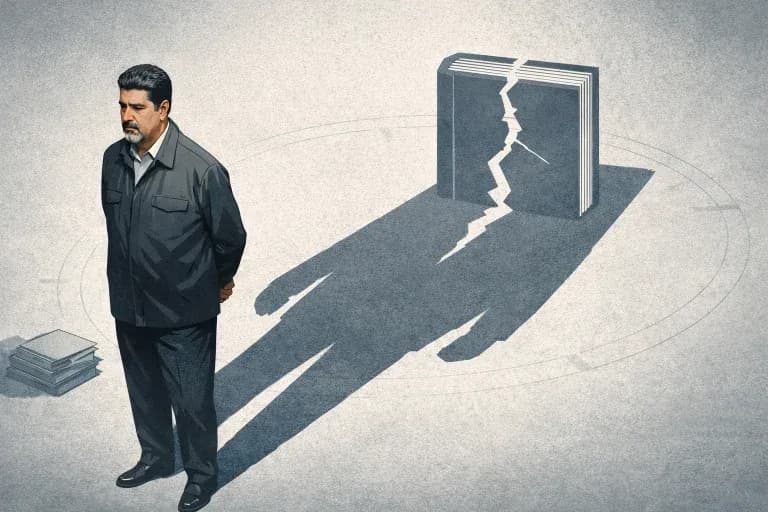
It is about outsourcing—of thinking, of emotion, of judgment, and increasingly of relationships. Young people are not just using AI to finish tasks faster; they are letting it think for them, soothe them, decide for them, and even stand in for human connection. In a school system that already limits autonomy and rewards compliance, AI has quietly stepped into roles that once belonged to teachers, peers, and the students themselves.
This is not a story about technology. It is a story about human agency. Korea, whether it seeks the role or not, is showing the world what happens when an entire generation begins to offload the work of being human. And the question now facing Korean education—and every nation watching—is clear:
What parts of the human mind must we protect in the age of AI, and what will be lost if we fail?
The Slow Hollowing
Korea’s current struggle with AI in education reveals a shift more consequential than plagiarism or misconduct: students are quietly transferring core parts of their inner lives to machines. The most visible form of this transfer is cognitive. Generative AI drafts essays, solves equations, summarizes texts, and produces arguments at a level polished enough to pass most academic tasks. In a school culture where speed and correctness are often more valued than original thought, many students no longer see a reason to wrestle with difficult ideas on their own. They begin by using AI to check their thinking, then to shape it, and eventually to replace it. What disappears is not just the process of reasoning, but the capacity to define a problem for oneself—a skill that cannot survive prolonged automation.
This outsourcing does not end with thought. It extends inward, blurring into the emotional lives of young people who already navigate one of the world’s most intense educational environments. AI offers infinite patience, gentle tone, and predictable responses, becoming a source of comfort that demands nothing and misunderstands nothing. For a teenager exhausted by academic pressure or isolated by competitive schooling, this can feel like relief. But emotional growth depends on the friction of real relationships, not on the simulation of empathy. When young people turn to machines to regulate their feelings, they may feel momentarily steadier, yet gradually lose the vocabulary and resilience that only human interaction can cultivate.
Judgment is the next layer of erosion, and perhaps the most concerning. Under pressure to produce the “right” answer, students often accept AI-generated outputs as authoritative simply because they appear coherent. The machine’s confidence becomes a substitute for their own discernment. Over time, the habit of evaluating evidence, weighing alternatives, or questioning assumptions grows thin. In a culture that traditionally respects expertise, this deference to algorithmic fluency accelerates quickly, and a generation raised to trust the surface of an answer may struggle to make independent choices when consequences matter. Judgment, unlike information, is not something a machine can lend; it must be formed through lived ambiguity and accountable decision-making.
The final loss is relational. As AI companions and tutors insinuate themselves into daily life, students increasingly encounter social interactions without risk—no conflict, no misunderstanding, no negotiation required. This might feel like a refuge, particularly in a society where hierarchy and academic pressure make peer relationships fraught. Yet the absence of discomfort comes at a price. Human relationships are not efficient, and it is their inefficiency that forms the basis of empathy, cooperation, and mutual responsibility. When machines mediate or replace these encounters, the foundations of social maturity weaken. What emerges is not isolation but fragility—a generation less prepared for the messy, demanding work of living with others.
Across these domains—thinking, feeling, judging, relating—the pattern is unmistakable. AI is not simply performing tasks faster; it is quietly absorbing the developmental labor that once belonged to students themselves. And because Korea’s educational system has long constrained autonomy, curiosity, and collaborative learning, the technology flows into the empty spaces with remarkable ease. The danger is not that machines are becoming like students, but that students are learning to live as if machines can be their minds, their confidants, their guides, and their social partners. This is the deeper crisis beneath the scandals, the one no detection software can solve: the gradual outsourcing of humanity itself. And unless education confronts this shift directly, any attempt to regulate or restrict AI will fail before it begins.
Control Without Control
Attempts to control or prohibit AI use in Korean classrooms are destined to fail, not because students are predisposed to circumvent rules, but because the educational architecture itself creates conditions in which prohibition has no chance of succeeding. The country’s school system moves on a clockwork built around high-stakes exams, relentless competition, and a near-sacred belief that academic outcomes determine life trajectories. In such an environment, any tool that increases efficiency becomes not merely attractive but necessary, and AI—available everywhere, embedded in devices, fluent across subjects—arrives as the perfect companion for an anxious generation. A ban in this context does not reduce reliance; it simply drives it underground.
The very nature of AI makes enforcement impossible. Detection tools cannot keep pace with increasingly integrated machine learning models, and students know it. When generative AI is woven into operating systems, search engines, messaging platforms, and productivity suites, the line between permitted and prohibited action dissolves. Teachers may police the use of one platform only to find students shifting seamlessly to another. Administrators may craft guidelines, but those guidelines will always lag behind the next update. The asymmetry is structural: innovation moves at machine speed, while regulation moves through committees, budgets, negotiations, and institutional caution. The gap widens every month.
Even if detection were somehow feasible, the cultural logic of Korean education undermines enforcement. A system that rewards accuracy over inquiry and speed over deliberation implicitly encourages students to seek whatever advantage allows them to survive. When academic pressure is this intense, prohibitions feel less like ethical imperatives and more like obstacles to be navigated. Students do not see themselves as cheating; they see themselves as adapting, playing by the rules of a game they did not design. In that sense, AI misuse is not a moral failure of students but a structural failure of the system that governs them. The insistence on prohibition merely exposes the gap between normative rules and lived reality.
The adults responsible for shaping policy—administrators, teachers, and government officials—are also unprepared, and this unpreparedness becomes another reason bans cannot hold. Many educators lack training in AI literacy, prompting a mix of fear, dependence, and avoidance. Policymakers, meanwhile, often equate AI integration with hardware deployment or digital modernization, overlooking the philosophical and pedagogical shifts required to guide its use. The collapse of the AI-textbook initiative showed exactly this disconnect: a technologically ambitious plan moving faster than the teacher workforce charged with implementing it. When institutional actors do not understand the tools they regulate, enforcement becomes symbolic rather than substantive.
Most important, prohibitions ignore the developmental realities of learning in the twenty-first century. Young people inhabit digital environments that blur the boundaries between self and technology; they move through spaces where identity, communication, creativity, and problem-solving are inseparable from algorithmic mediation. To tell a teenager immersed in such spaces to avoid AI is not an invitation to integrity but a denial of the world they inhabit. Education cannot succeed by pretending that world does not exist. It must instead teach students how to navigate it without surrendering their agency.
For Korea, this challenge is particularly acute. A society that prides itself on technological advancement cannot retreat into denial, nor can it outsource the problem to detection software or punitive rules. The more forcefully AI is banned, the more quietly it will be used. Prohibition addresses the visibility of AI, not the vulnerability that drives reliance. And unless the vulnerabilities are addressed—the lack of autonomy, the pressure to perform, the absence of reflective learning—any control measure becomes a performance of authority rather than a function of guidance.
The failure of bans, then, is not merely a practical matter. It is evidence of a deeper truth: the educational system must be rebuilt around the capacities that AI cannot replace, rather than fortified against the capabilities it already possesses. Without such a shift, Korea will continue to chase an illusion of control while students adapt to a reality that adults refuse to acknowledge. And this gap between regulation and lived experience—already wide—will only widen further.
After the Calculator, After the Mind
The last time education confronted a technology that threatened to upend its foundations, the device was small, silent, and far less intelligent than anything students carry today. When calculators entered classrooms in the late twentieth century, many teachers feared that arithmetic itself would collapse, that students would forget how to add, subtract, or multiply without electronic help. For a brief moment, the panic felt justified. But what actually happened was something far more interesting: mathematics did not disappear; it evolved. Schools gradually shifted focus from mechanical computation to conceptual reasoning, from procedural drills to problem-solving, from manipulating numbers to understanding the structures behind them. The calculator did not kill math. It pushed math education to become more mathematical.
The arrival of AI presents a similar turning point, but on a scale the calculator never approached. AI does not merely compute; it composes, interprets, analyzes, translates, argues, and even mimics creativity. What the calculator did for arithmetic, AI now does for writing, for reading comprehension, for research, for experimentation, and for the kinds of analytical tasks that once defined academic rigor. Students can generate entire essays in seconds, complete problem sets without understanding the methods they contain, and produce explanations that read as though they were crafted by seasoned tutors. The boundary between mastery and mimicry becomes porous, almost invisible to the untrained eye.
In Korea, this boundary collapses even faster. A school system that has long measured achievement through speed, accuracy, and uniformity finds itself perfectly aligned with AI’s strengths. If calculators relieved students of mechanical arithmetic, AI relieves them of mechanical thought—of drafting sentences, organizing arguments, synthesizing texts. Yet while math classrooms eventually adapted, restructuring their goals to protect deeper reasoning, Korea’s broader curriculum has not undergone a similar transformation. The system continues to reward surface performance, leaving students vulnerable to the illusion of competence that AI so easily supplies.
The calculator analogy is useful precisely because it shows what must happen next. When a technology automates lower-level tasks, education must ascend to a higher plane. A school system that responds to AI by clinging to old metrics—unreflective essay writing, rigid problem sets, standardized test answers—will not preserve rigor; it will merely preserve irrelevance. The point is not to defend the forms of work that AI can already do better. The point is to protect the kinds of thinking that AI cannot do at all. Problem framing, critical interpretation, ethical reasoning, relational understanding—these are the intellectual equivalents of conceptual mathematics, the competencies that technology forces us to elevate rather than abandon.
What makes this moment different from the calculator era is not only the breadth of tasks AI can automate but the depth of human experience it reaches. The calculator never composed a paragraph that sounded like a student’s voice. It never mediated a friendship or offered comfort during a moment of academic despair. It never influenced judgment or reinforced biases in ways that shaped how young people saw the world. AI does all of this, often invisibly, and often with a fluency that encourages dependence. The question, then, is not how to extract AI from classrooms but how to redesign education so that AI becomes a catalyst for higher thinking rather than a substitute for it.
Korea sits on the leading edge of this transformation, not by choice but by circumstance. Its technological infrastructure accelerates change; its exam culture magnifies the risks; its students adapt with breathtaking speed. If any nation must confront the meaning of learning in an age when machines perform the visible work of intellect, it is Korea. And if Korea manages to reimagine education not around the tasks AI can complete but around the human capacities it cannot, it will not merely solve a national crisis—it will offer the world a blueprint for navigating the most significant educational shift since the invention of compulsory schooling.
The Human Core
If AI has forced Korea to confront what learning no longer needs to be, it must now confront what learning absolutely cannot lose. Every era of educational reform begins with a technological provocation—the printing press, the calculator, the computer—and each time the provocation forces society to decide which human abilities are too fundamental to outsource. The difference today is that AI casts its shadow across nearly every domain of cognition. It writes more elegantly than many students, speaks more fluently than they do in a second language, solves problems faster than they can read them, and offers emotional responses crafted to feel perfectly attuned. When a machine imitates so much of what schools have traditionally demanded, the question becomes unavoidable: what remains that only a human being can do?
Perhaps the most endangered capacity is the ability to define a problem in the first place. AI excels at producing answers, but it cannot determine which questions matter or why. It cannot sense the ambiguity in a poorly framed prompt or the ethical stakes concealed in a seemingly neutral task. Students trained to chase correct answers can come to believe that inquiry begins only after a question is handed to them, rather than with the friction of their own curiosity. If this habit continues, AI will not merely complete their assignments; it will choose the horizons of their thinking. And that would mark the quiet end of intellectual independence.
Equally fragile is the capacity for critical reasoning—the willingness to inspect claims, resist surface coherence, and interrogate hidden assumptions. Students who grow accustomed to AI’s smooth confidence may lose the instinct to doubt, to check, to trace the logic of an argument. Machines do not announce their uncertainties; they speak as though they know. Education must teach students to respond not with deference but with scrutiny, the kind that keeps democracies honest and knowledge alive. Without it, the line between truth and plausibility collapses, and the world becomes easier to manipulate than to understand.
Yet even critical thinking is insufficient without an awareness of one’s own mind. Metacognition—the ability to reflect on one’s reasoning, to recognize bias, to revise oneself—cannot be delegated. A machine can propose alternatives, but it cannot cultivate humility. It cannot teach a student to see their own limitations or to value the process of revising a belief. When students rely on AI to correct their writing or organize their arguments, they may polish the output while leaving the self untouched. Reflection becomes optional. And without reflection, growth becomes accidental rather than intentional.
Beyond thought lies the domain of emotion, and here the danger is more subtle. AI can offer comfort, but it cannot teach emotional resilience. It can mimic empathy, but it cannot help a student navigate the discomfort that empathy requires. Emotional intelligence develops through conflict, vulnerability, and repair—the messy exchanges that no algorithm can simulate. A generation that turns to machines for emotional steadiness may feel soothed, but the soothing masks an erosion of the inner muscles needed to weather difficulty. The cost may not appear in test scores, but it will appear in adulthood.
Intertwined with emotion is the human need to relate meaningfully to others, to build trust, negotiate tension, and form shared understanding. These are not academic skills; they are civic ones, the foundation of functioning societies. AI can assist with communication, but it cannot replace the lived experience of collaboration. In a culture like Korea’s, where competition often eclipses cooperation, machines offer a tempting escape from the vulnerability of social life. If education allows that escape to become routine, it risks raising students who know how to perform well but not how to live well with others.
There remains, finally, the capacity for meaning-making—the ability to interpret information, to shape narratives, to understand one’s place in the world. AI can summarize texts, but it cannot wrestle with them; it can generate prose, but it cannot feel the weight of an idea. Meaning is constructed through experience, memory, and moral orientation, all of which lie beyond the reach of computation. If students mistake fluency for understanding, they inherit words without inheriting wisdom.
These capacities—problem framing, critical scrutiny, self-reflection, emotional depth, relational responsibility, and meaning-making—are not skills in the conventional sense. They are forms of human agency, the very qualities that allow individuals to navigate uncertainty and shape the world rather than be shaped by it. Korea’s challenge, and the world’s, is not to teach students how to use AI efficiently but to ensure that the parts of themselves they cannot replace remain intact. Without this commitment, the educational system may produce graduates who perform impressively in the presence of machines yet falter the moment the script ends and they must act as humans rather than operators.
Learning Without the Crutches
If Korea is to protect the human capacities that AI cannot replicate, it must rethink not only how students learn but what they are expected to learn in the first place. The curriculum, long organized around predictable outputs and standardized demonstrations of mastery, was designed for a world in which knowledge was scarce and effort was visible. AI reverses both conditions: knowledge is now abundant and effort is increasingly invisible. A curriculum that once rewarded procedural fluency now competes with machines that perform procedures effortlessly. A curriculum that prized polished writing now confronts tools that generate clean prose on command. Unless Korea redesigns the aims, methods, and texture of learning, students will master the performance of school while growing further from the experience of understanding.
The first shift must be conceptual rather than technological. Education cannot continue to treat subjects as collections of tasks to be completed but as ways of seeing the world that require human presence. Language, for example, must become less about producing essays and more about developing the capacity to articulate thought, negotiate meaning, and interpret ideas with nuance. AI can produce sentences, but it cannot detect subtext or experience the emotional weight of a metaphor. If Korean language classrooms continue to grade fluency instead of insight, they will train students to outsource exactly the abilities that give language its power.
Mathematics must undergo a similar transformation. For decades, Korean students have excelled at procedural accuracy, a strength that has propelled them to the top of international assessments but left many with a fragile sense of mathematical intuition. AI now exposes this fragility. It can solve equations faster than any student, yet it cannot ask why a model makes sense or whether a method applies beyond the page. Korean math education must therefore become a place where students learn to test the boundaries of a solution, question the assumptions behind a formula, and use mathematical thinking to interpret the world rather than to recite it. If computation is automated, comprehension becomes the core.
Science education, perhaps more than any other subject, must reclaim the spirit of inquiry. Students accustomed to copying procedures or memorizing definitions will find themselves overtaken by machines that conduct every step more efficiently. Yet AI cannot design a meaningful question or judge whether an experimental outcome contradicts an expectation. Korean science classrooms must teach students to notice anomalies, to design experiments that matter, and to interpret uncertainty as a generative force rather than a flaw. The next generation must learn that science is not the accumulation of correct answers but the disciplined pursuit of better questions.
History and social studies face the challenge of helping students navigate a world in which information is plentiful but context is scarce. AI can summarize narratives, but it cannot understand power, bias, or perspective. It cannot explain why an event was inevitable or why an injustice is still unresolved. Korean students must therefore learn to interrogate the stories they are given, to see how data reflects decisions, and to develop the civic capacities that prevent them from becoming passive consumers of algorithmic truth. If the humanities do not cultivate perspective-taking, AI will supply information without wisdom.
Even arts and physical education require reimagining. These subjects have long been treated as supplements to academic rigor, but in the age of AI they may become the most essential arenas for cultivating embodied experience, sensory intelligence, and authentic creativity. Machines can generate images and melodies, but they cannot feel the resistance of materials, the frustration of practice, or the exhilaration of mastery. Korean schools must allow students to inhabit the physical and emotional dimensions of learning that machines cannot touch, for it is in these spaces that selfhood takes shape.
This redefinition of curriculum does not require abandoning traditional disciplines but restoring their human center. It demands that Korean education stop treating subjects as containers for assessment and start seeing them as forms of consciousness—ways of thinking, feeling, and relating that structure how people encounter the world. AI can accelerate the superficial parts of learning, but it cannot animate them. Only students can do that. And if the curriculum continues to privilege what AI can do, rather than what students must become, Korea will continue to produce learners who excel in artificial tasks while faltering in human ones.
The task, then, is not to design new subjects but to rediscover the purpose of the old ones. Korea must ask what capacities each discipline is meant to cultivate in a world where machines perform the visible work of intellect. It must build learning around struggle rather than shortcuts, inquiry rather than output, reflection rather than replication. Without such a reorientation, the curriculum will drift further from the lives students are living, and the gap between schooling and humanity will widen until it can no longer be bridged.
Thinking Before Asking
If curriculum defines what students should become, pedagogy defines how they get there, and in Korea the methods of teaching have remained anchored to an industrial rhythm that no longer matches the cognitive landscape students inhabit. The traditional sequence—lecture, note-taking, assignment, test—was built for a world in which the teacher was the primary source of knowledge and the classroom the primary site of intellectual struggle. AI dissolves both assumptions. Students now arrive with access to infinite explanations, endless examples, and real-time assistance more responsive than any human instructor. The task of pedagogy is therefore no longer to deliver information but to choreograph an experience in which students learn to think in the presence of a machine without surrendering their agency to it. This requires a model in which AI is neither idolized nor avoided, but integrated in a way that strengthens rather than supplants the human mind.
The first movement of such a model begins before the machine enters the room. Students must learn to confront a question, concept, or problem on their own terms, however tentatively. Without this pre-thinking stage, AI becomes an intellectual prosthetic rather than an intellectual partner. A learner who has not struggled to articulate an idea cannot recognize the value of what the machine returns, nor can they judge its limitations. Reflection precedes delegation; that principle must anchor Korean classrooms. Teachers must resist the urge to rush toward efficiency and instead cultivate the silent, uncertain moment in which students form their initial intuitions.
Once this foundation is laid, AI can step in—not to replace thought but to expand the horizon of what is possible. When used deliberately, AI can provide examples that clarify a concept, perspectives that broaden it, and counterarguments that complicate it. The key is not the volume of output but the dialogue between the student’s intention and the machine’s suggestions. In Korea, where speed is often mistaken for mastery, teachers will need to slow this interaction down, helping students articulate why they requested a particular form of assistance and what they intend to do with it. The moment AI is treated as a vending machine for answers rather than a stimulus for inquiry, the pedagogy collapses.
Yet even thoughtful use of AI becomes dangerous without a third movement: the critical examination of what the machine has produced. Students must learn to treat AI-generated text not as wisdom but as raw material. They must interrogate the logic, test the assumptions, question the sources, and identify what is missing or misleading. This is where intellectual character is formed—at the junction where convenience meets scrutiny. Korea’s educational tradition, rooted in accuracy and trust in authority, must evolve toward a pedagogy that teaches students to doubt even the most coherent responses, especially when those responses arrive with algorithmic confidence. Critical engagement with AI output should become as routine as peer review once was.
The final movement restores what might otherwise be lost: the student’s ownership of thought. After exploring ideas independently, receiving support from AI, and auditing its contributions, students must return to themselves. They must choose a direction, articulate a conclusion, revise their own reasoning, and decide what they believe. This act of reclaiming judgment is perhaps the most essential of all, because it teaches students that while AI can participate in the process, it cannot carry responsibility for the outcome. Human judgment remains irreplaceable not because it is flawless but because it is accountable, situated, and capable of ethical reflection. If Korean classrooms can cultivate this final movement, AI will not weaken student autonomy; it will sharpen it.
This four-stage cycle is not a formula or a protocol. It is a choreography of attention, effort, and agency. It acknowledges the presence of AI without ceding the purpose of education to it. It teaches students to think before they seek help, to use technology without becoming dependent on it, to evaluate information rather than absorb it, and to claim their conclusions with integrity. For Korea, this model is not merely a pedagogical adjustment; it is a cultural transformation. It shifts classrooms from performance to process, from speed to depth, from compliance to authorship. And in doing so, it opens the possibility that AI—far from diminishing human capabilities—might become the catalyst through which Korean education discovers them anew.
Measuring What Machines Cannot
If pedagogy determines the rhythms of thought, assessment determines the incentives that govern them, and in Korea the gravitational pull of evaluation has always been stronger than the ideals of instruction. Students learn what the system rewards, and for decades the system has rewarded speed, accuracy, replication, and the polished performance of knowledge. AI now performs these tasks so easily that continuing to assess them is not simply inefficient; it is educationally destructive. When a machine can write essays, solve problem sets, and summarize texts faster and more fluently than any student, insisting that these outputs reflect human mastery becomes an act of self-deception. A system that measures the wrong things invites students to mimic learning rather than to experience it, and AI accelerates this mimicry until the distinction between the two nearly disappears.
The first illusion Korea must confront is that effort can be inferred from output. In the past, a clean essay or faultless solution set suggested diligence, comprehension, and intellectual care. Today, the same surface polish is available at no cost and in no time. The visible indicators of learning have been severed from the invisible labor that once produced them, yet Korea’s assessment structures continue to cling to the products rather than the processes. Students internalize this message quickly: what matters is not how you think but what you submit. And once they learn that submission can be delegated to a machine, the internal logic of assessment collapses.
To repair this break, Korea must bring evaluation back into alignment with the lived experience of learning. The work that cannot be outsourced is the work that must be assessed. This does not mean replacing exams with endless portfolios or abandoning structure in favor of vague ideals but reanimating the relationship between thinking and evidence. If a student cannot explain the reasoning behind an answer, the answer has no pedagogical value. If they cannot trace the path that led to a conclusion, the conclusion is meaningless. For too long, Korean assessments have treated these reflective dimensions as optional, as something that belonged to good teachers rather than to the system itself. AI has eliminated that luxury. The reflection that once seemed supplementary is now the only reliable marker of human authorship.
Oral examinations, collaborative inquiry, and process-driven evaluations are not fashionable trends; they are necessities in a world where written output is increasingly automated. Speaking forces students to inhabit their own arguments, to reveal their hesitations, and to revise themselves in real time. Collaboration exposes them to perspectives they cannot predict, requiring negotiation and accountability. Process documentation—once dismissed as bureaucratic—becomes the record of thought that distinguishes genuine understanding from beautifully packaged simulation. These forms of assessment demand more from teachers, but they restore something Korea has long suppressed: the complexity of learning that cannot be captured in a single correct response.
Yet the challenge is not only practical but cultural. Korea’s obsession with standardized testing is rooted in a desire for fairness, predictability, and efficiency. These values are understandable in a society where educational outcomes shape life chances with unforgiving precision. But fairness purchased through oversimplification becomes another form of injustice. When tests measure what machines do well rather than what humans must learn to do, equality of scoring disguises inequality of development. Students who rely heavily on AI are not advantaged; they are impoverished, denied the struggle that forms intellectual character. The metric becomes a mirror that reflects nothing true.
Assessment reform therefore requires a shift in collective imagination. Korea must stop asking how to prevent students from using AI and start asking what kinds of thinking survive contact with it. The purpose of evaluation cannot be to catch misconduct; it must be to illuminate the contours of a mind as it moves through uncertainty. This means designing tasks that require interpretation, judgment, dialogue, and ethical consideration—tasks whose answers emerge not from computation but from reflection. In such a system, AI becomes a reference point rather than a replacement, a tool that helps students refine their reasoning rather than disguise the absence of it.
Ultimately, the reform of assessment is a reform of courage. It demands that Korea loosen its grip on the measurable and embrace forms of learning that resist easy quantification. It requires trust—in teachers, in students, in the idea that education is more than the sum of what can be scored. If the country can make this shift, it will not only protect its students from the hollow comforts of automated achievement; it will restore dignity to the act of learning itself. And if it cannot, the system will continue to reward the very capacities that no longer belong to students at all, handing the substance of education to machines while mistaking the residue for human progress.
The Unprepared Generation
The conversation about AI in Korean education often circles around students—what they do, what they misuse, what they lack—and in doing so misses the most inconvenient truth: the real obstacle to meaningful reform is not the children but the adults. A system is shaped less by youthful behavior than by the assumptions, anxieties, and blind spots of the people who design, manage, and judge it. In Korea, where education is both a public institution and a national obsession, the adults who carry responsibility for its direction have been caught unprepared not because they lack intelligence or dedication, but because they are products of an earlier world whose habits no longer map onto the present. AI exposes this misalignment with a clarity that many find uncomfortable.
Teachers, for instance, have been placed at the center of a transformation for which they were never adequately trained. They are expected to understand the philosophical implications of AI, manage its classroom presence, evaluate its outputs, and guide students in using it responsibly—all while maintaining existing workloads, meeting administrative demands, and satisfying a culture that still equates good teaching with test performance. Many teachers understandably respond with hesitation or defensiveness, not because they resist innovation but because the institutional scaffolding that should support them has been missing for decades. The collapse of Korea’s AI-textbook initiative made this problem unmistakable: a technologically ambitious reform faltered because it asked teachers to execute a vision they were never invited to shape.
Policymakers face a similar disorientation. For years, educational innovation in Korea has meant digitization—new platforms, new devices, new infrastructures—without meaningful reconsideration of what learning is for. When AI arrived, many officials treated it as the next item on a modernization checklist, not as a challenge to the foundations of the system itself. But AI is not a tool to be integrated; it is a force that alters the ecology of cognition. To regulate it requires not only technical guidelines but philosophical clarity about human agency, autonomy, and the purpose of schooling. Without that clarity, policies drift toward the appearance of progress—pilot programs, devices, competency charts—while leaving the deeper structure untouched.
Parents form the third layer of the bottleneck, though their role is more emotional than administrative. In a society where education is inseparable from family identity and social mobility, parents understandably fear being left behind. Many turn to AI-enhanced tutoring or automated study aids because the pressure to secure an advantage for their children is overwhelming. Others resist AI entirely, hoping to preserve the integrity of learning by shielding their children from a force they do not trust. Both impulses are responses to insecurity rather than to understanding, and both inadvertently reinforce the system’s confusion. The former accelerates outsourcing; the latter deepens isolation. Neither equips students to navigate the world they already inhabit.
The result is a kind of generational dissonance. Students adapt quickly to AI because they live in an environment shaped by its presence. Adults respond slowly because they live in a memory of schooling that no longer exists. The mismatch produces friction, resentment, and policy cycles that lurch between panic and denial. Korea’s predicament illustrates this vividly: the country that built the fastest networks and the most digitally literate consumers has discovered that innovation at the infrastructure level does not guarantee innovation at the conceptual level. The hardware moved forward; the mental models stayed behind.
Reforming education in the age of AI therefore requires something more difficult than new curricula or assessment structures. It requires a transformation in adult consciousness. Teachers need opportunities to reflect on the assumptions they inherited, to reconsider the meaning of expertise in a world where machines generate knowledge faster than humans can evaluate it. Policymakers must move beyond the incrementalism of past reforms and confront the possibility that the core metrics of Korean schooling—speed, standardization, quantifiability—are incompatible with the human capacities AI forces us to protect. Parents must be supported not with slogans or fear-based warnings but with genuine guidance about how to nurture autonomy, resilience, and judgment in children growing up amid cognitive abundance.
This shift will not happen quickly, nor will it be comfortable. Adults must learn to surrender the illusion of control that standardized schooling once promised and replace it with a more demanding responsibility—the responsibility to cultivate humans who can think in the company of machines without relinquishing themselves to them. Korea cannot reform its students until it reforms its adults, because it is the adults who build the structures students must navigate. If those structures remain anchored to outdated beliefs about learning, no amount of technological sophistication will save the system from irrelevance.
Korea stands at a moment when its greatest educational challenge is no longer student performance but adult imagination. The bottleneck is not youth adaptability but institutional humility. If adults can learn to change—slowly, deliberately, with courage—students will follow. If not, the system will continue to mistake surveillance for guidance and compliance for learning, even as the ground beneath it quietly shifts. In a world shaped by AI, the future of education depends less on what the next generation can do and more on what the current generation is willing to unlearn.
The World’s Preview
What makes Korea’s struggle with AI in education so urgent is not that it is uniquely vulnerable, but that it is uniquely revealing. Few countries compress technological ambition, academic pressure, cultural cohesion, and generational anxiety into as tight a space as Korea does. This compression turns the country into a kind of intellectual barometer, a place where the pressures shaping global education register early and intensely. The dilemmas Korea faces today—outsourced thinking, eroded judgment, fractured attention, and institutional unpreparedness—are not local anomalies but early signals of a transformation that will soon confront classrooms across the world. Korea simply experiences these pressures first because the forces accelerating them are woven more deeply into its social fabric.
The nation’s rapid adoption of digital technologies has created an environment in which new tools diffuse faster than norms can stabilize. Students in Seoul, Busan, and Daegu encounter AI not as an optional study aid but as an ambient presence—embedded in search engines, messaging platforms, tutoring services, and productivity apps. In many Western countries, debates about AI in education remain abstract, framed in committee rooms and policy drafts; in Korea, the debate unfolds in the lived practices of teenagers who wield AI as casually as earlier generations wielded calculators. This immediacy forces questions that other nations still postpone: What does academic integrity mean when authorship is ambiguous? What constitutes understanding when fluency can be synthesized? What becomes of effort when invisible assistance is indistinguishable from personal mastery?
Korea’s exam culture intensifies these questions, turning AI from a curiosity into a survival mechanism. High-stakes competition creates an incentive structure where any tool that improves performance feels compulsory. In countries where assessment is more diffuse or holistic, students may experiment with AI without integrating it deeply into their academic identity. In Korea, the technology fuses with the logic of schooling itself. This fusion reveals something other systems have not yet acknowledged: the tension between human development and performance metrics is no longer theoretical. AI exposes how brittle the metrics always were. The problem is not that Korea has misused technology; it is that the global idea of academic meritocracy is itself unequipped for an era when performance can be manufactured.
The country’s teacher workforce further sharpens this global preview. Korean teachers are respected and overburdened, skilled and exhausted, technologically aware yet structurally constrained. Their struggle to integrate AI mirrors the struggle of educators worldwide, but Korea’s size, homogeneity, and centralized governance make the contours of this struggle more legible. Where larger nations experience fragmentation and inconsistency, Korea presents a concentrated view of the same anxieties: uncertainty about AI’s pedagogical role, fear of eroding expertise, frustration with policy directives, and an acute awareness that the old equilibrium will not return. The clarity of these tensions offers other countries a window into their own near future.
Even Korea’s failures—the aborted digital-textbook initiative, the uneven rollout of AI guidelines, the surge of AI-assisted cheating—serve as global lessons. They show what happens when innovation moves faster than philosophy, when devices arrive before purpose, when policy imagines technology as a solution rather than a provocation. These missteps are not uniquely Korean; they are prototypes of mistakes other nations will make unless they understand the stakes earlier. Korea’s experience demonstrates that the challenge of AI in education is not technological integration but existential reconsideration: what is the role of a teacher when knowledge is abundant, what is the meaning of effort when output is automated, and what does it mean to learn when the boundary between thinking and assistance blurs?
For this reason, Korea’s story matters far beyond its borders. It marks the beginning of a global reckoning with the purpose of schooling in an age when machines can imitate many of the tasks once used to measure learning itself. If Korea succeeds in reorienting its system toward the cultivation of judgment, reflection, and autonomy—toward the preservation of what cannot be outsourced—it will offer not just a national example but a blueprint for educational renewal in the twenty-first century. If it fails, the consequences will still be instructive: a demonstration of how quickly a high-performing system can hollow itself out when it confuses technological acceleration with human progress.
In this sense, Korea is not the outlier but the preview. The questions it confronts today will become the questions the world confronts tomorrow, and the clarity with which it addresses them may determine not only its own future but the trajectory of global education in the age of AI. Whether as a warning or a guide, Korea stands at the frontier of a transformation that no nation will escape.
What Others Must Learn
If Korea has become an early mirror of the world’s educational anxieties, it is also poised to become the place where their solutions take shape. Because the pressures that expose the limits of traditional schooling appear in Korea with such intensity, the responses forged there—whether successful or not—carry lessons for societies still several steps from the same brink. The most important of these lessons is that AI does not diminish the need for human-centered education; it amplifies it. The countries that will navigate this transition most effectively are those willing to confront the philosophical stakes before they become crises, and Korea’s experience makes clear where that confrontation must begin.
The first global lesson emerging from Korea is that technological integration without pedagogical purpose is destined to fail. Nations that rush to deploy AI tools, platforms, and curricula without anchoring them in a clear vision of human development will repeat the confusion and resistance Korea faced in its failed digital-textbook initiative. The problem was not ambition but incoherence. The world can see, through Korea’s missteps, that educational technology must be guided by a question more fundamental than efficiency: what kinds of human beings must schools cultivate when machines reside in every pocket? Until that question is answered, tools will drift without direction, accumulating cost without cultivating capacity.
A second lesson is that teacher development must be treated not as a logistical necessity but as a cultural transformation. Korea’s struggle shows that teachers cannot be expected to shepherd students through an era of cognitive abundance while clinging to pedagogical habits inherited from a time of cognitive scarcity. Other nations, observing this tension, can move sooner to reimagine teacher preparation not as technical upskilling but as philosophical renewal—preparing educators to guide judgment, facilitate dialogue, and model intellectual humility in the presence of machines. Korea’s experience proves that without such renewal, any structural reform becomes cosmetic.
The third lesson is that assessment reform cannot be postponed. Many countries still cling to standardized exams as emblems of fairness, reliability, or national identity, even as AI renders their assumptions obsolete. Korea, because of its deep reliance on such assessments, reveals the collapse earlier: the metrics that once signaled merit now signal access to technology; the performances once taken as evidence of learning now reveal little about the mind behind them. By witnessing Korea’s struggle, other nations can recognize more quickly that clinging to automated outputs is not stability but denial. True assessment must illuminate human thought, not mask it.
There is also a civic lesson embedded in Korea’s experience. The outsourcing of thinking and judgment is not merely an educational risk but a democratic one. A society in which citizens habitually defer to algorithmic fluency becomes vulnerable to manipulation, polarization, and apathy. Korea’s early confrontation with this reality underscores a truth the world must heed: education in the age of AI is not primarily about preparing workers for an AI-powered economy; it is about preparing citizens for a world where the boundary between truth and simulation grows less visible. The countries that ignore this civic dimension risk weakening the very institutions they rely on to navigate technological change.
Finally, Korea teaches that no nation can approach AI with the assumption that its existing strengths—high achievement, technological infrastructure, cultural cohesion—will translate automatically into resilience. In fact, those very strengths can become liabilities. High-performing systems tend to preserve their structures long after their usefulness has expired; technologically advanced cultures adopt tools before they develop norms; cohesive societies move quickly but sometimes without reflection. The world can see through Korea that adaptation requires not just capacity but clarity, not just innovation but introspection.
In offering these lessons—some hopeful, others cautionary—Korea becomes more than a national case study. It becomes a lighthouse of sorts, illuminating the terrain ahead for countries moving toward the same horizon. Whether they choose to adjust course or continue forward blindly is their own decision, but Korea’s experience provides the map they have not yet had to draw.
What Humanity Must Keep
The questions Korea faces at this moment reach beyond policy or curriculum; they reach into the deeper territory of what it means to remain human in an age when machines can simulate so much of what once defined our intellectual identity. AI exposes the fragility of educational systems built on output rather than understanding, on performance rather than presence, on the assumption that learning is something that can be measured without attending to the mind that produces it. Korea’s struggle is therefore not a temporary disruption to be managed; it is an invitation to reconsider the purpose of schooling at a time when machines increasingly perform the tasks we once mistook for signs of human capability.
If the essence of education were merely the transfer of information, AI would already have surpassed us. If it were the production of clean writing, correct answers, or polished explanations, the human role would be diminishing by the day. But education at its core has never been about these visible artifacts. It has been about cultivating the capacity to see the world clearly, to navigate uncertainty, to make judgments that carry moral weight, and to enter relationships with a depth that no algorithm can replicate. These are not decorative extras; they are the foundations of a life that is genuinely lived rather than algorithmically scripted. They are also the foundations of a society capable of sustaining democratic responsibility, collective imagination, and mutual care.
Korea stands at a threshold where it must decide whether to double down on a system that rewards what machines do well or to build one that strengthens what only humans can do. This choice will not be easy. It will require loosening familiar structures, defying ingrained expectations, and trusting forms of learning that do not always lend themselves to rankings or standardization. It will require investing in teachers not as content-delivery instruments but as guides of judgment and cultivators of thought. It will require assessments that illuminate rather than obscure, classrooms that invite dialogue rather than repetition, and a national imagination willing to see schooling not as a race but as a site of human formation.
Other countries will soon face the same choice, but Korea faces it now, and the urgency of its predicament offers the world a preview of what is coming. If it responds with clarity and courage—if it builds an education system that treats AI not as a shortcut to performance but as a catalyst for deeper humanity—it may become the first nation to harness the technology without surrendering to it. If it responds with denial or nostalgia, it may become a warning of how quickly a high-achieving system can hollow itself out when it confuses efficiency with wisdom.
In the end, the future of Korean education is inseparable from the future of its children, and the future of its children is inseparable from the qualities they retain that no machine can imitate. The task before Korea is not to keep pace with technological change but to ensure that, in the rush forward, it does not lose the very capacities that make learning meaningful and life worth living. The challenge is immense, but so is the opportunity. In choosing what to protect, Korea will shape not only the character of its next generation but the contours of humanity in an age when the boundaries between the human and the artificial grow thinner every day.
Continue this reporting
Reporting on the same issue
Related coverage selected from the article's desk, topics and newsroom relationships.
 NewsApr 23, 2026
Freedom Without Buffer
More South Koreans live alone, delay marriage, distrust institutions and draw...
 NewsJan 22, 2026
The End of Functional Labor
When functional competence becomes abundant, markets reprice labor around the...
 NewsJan 7, 2026
Venezuela, Greenland, and the Moment Law Fell Behind Power
The postwar order was built on a simple expectation: force would wait for law...
More from the author
More from this byline
Stay with the same line of reporting through more work from this byline.
 NewsOct 9, 2026
Why “Busan Is Good” Falls Short as a City Brand
 NewsSep 18, 2026
The Other AI Race Is for the Freedom to Change Course
Reader Signal
Community readWhat did this report leave you with?
Choose the signal that best reflects your reading. Select it again to remove it.
One response per article
No response selected
A moderated conversation about the reporting.
One-level replies and newsroom moderation keep the conversation anchored to this article.
Discussion Status
Open
Please sign in to join the discussion.
Newsletter
Weekly reporting and context from Busan and Korea.