The Gender Ideology Gap Is Global. Why Is Korea’s the Deepest?
In South Korea, the gender divide among Gen Z voters has become a central axis of political life. What other democracies are facing as a drift, Korea is living as a rupture—one amplified by grievance politics and a radicalizing digital ecosystem.

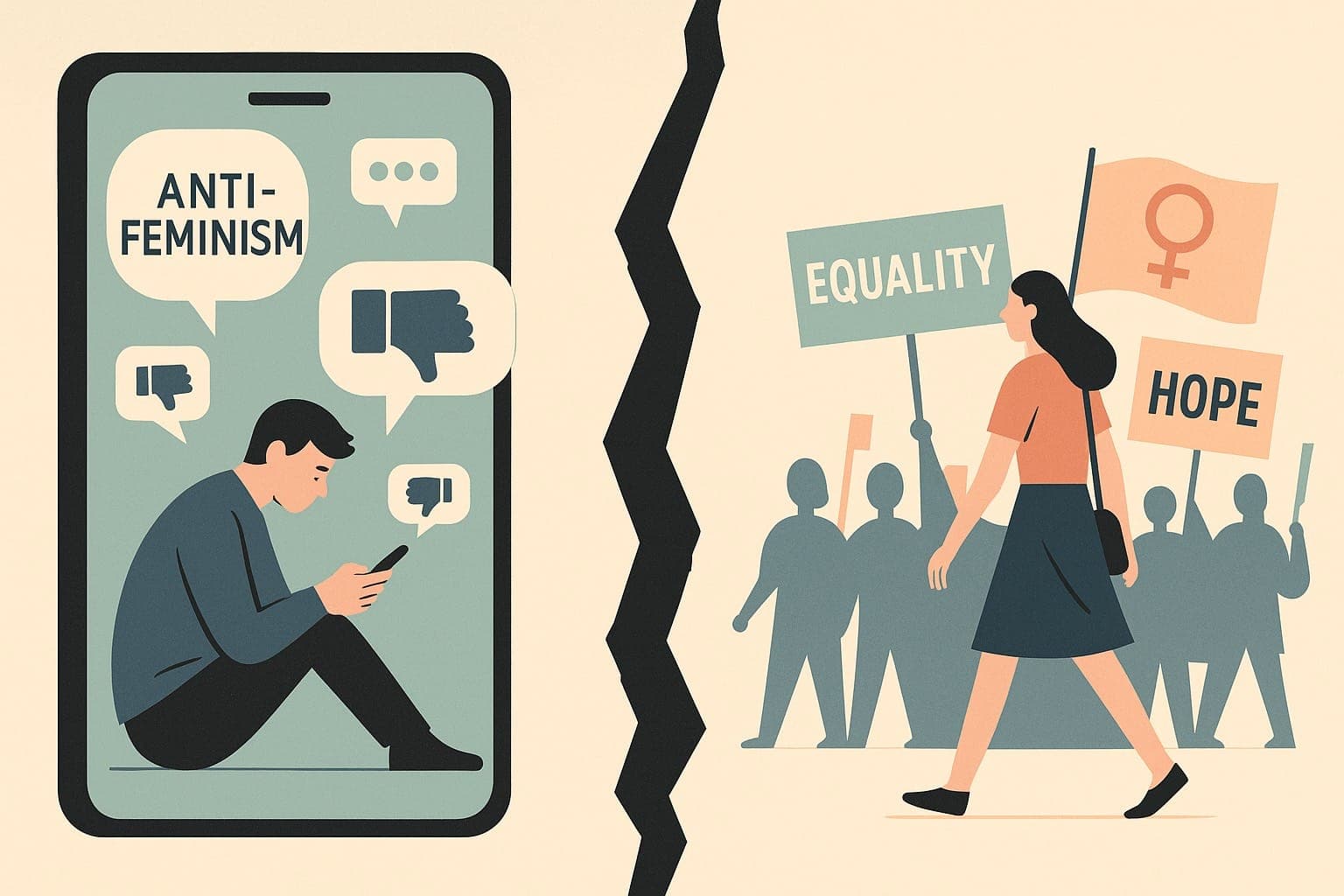
In the 2025 South Korean presidential election, one of the most striking divisions wasn’t between progressives and conservatives, but between young men and women. Exit polls revealed that nearly 60% of men in their 20s voted for conservative or anti-feminist candidates, while over 55% of their female peers supported the liberal opposition. The gender gap wasn't just wide—it was an ideological chasm.
This generational rupture isn’t unique to South Korea. Across the globe, data shows that young women are increasingly leaning liberal, while young men are drifting rightward. From the United States to the United Kingdom and Germany, the Financial Times has charted this divergence with precision, capturing how gender, once a secondary factor in voting behavior, is becoming the central divide of generational politics.
But what makes South Korea’s case exceptional is not just the scale of the divide—it is the speed, intensity, and political weaponization of it. While in other countries, the ideological shift among young men is largely cultural or reactionary, in Korea, it has been institutionalized. Anti-feminism has moved from fringe internet forums to the center of presidential campaigns. The grievances of young men, once expressed in anonymous comment sections, are now echoed in the language of mainstream politics.
These men are not merely voting conservative; many are rejecting progressive politics outright, seeing them as complicit in what they perceive to be a system rigged in favor of women. And this isn’t just about politics—it’s about identity. Fueled by economic anxiety, algorithmic radicalization, and a pervasive sense of being left behind, a generation of young Korean men has become the vanguard of a new kind of gendered populism.
The Global Trend: Why Young Men Are Leaning Right
Across continents, a quiet political realignment is underway. While young women increasingly identify with progressive values, their male counterparts are charting a markedly different course—toward nationalism, cultural conservatism, and anti-feminist sentiment. What was once a subtle divergence is now a defining ideological split within the youngest generations.
This phenomenon is not confined to one country or political system. In 2023, a data analysis by the Financial Times found that in countries including the United States, Germany, and the United Kingdom, the gender-ideology gap among people aged 18 to 29 had widened to between 15 and 30 percentage points. In the U.S., Gallup data from 2022 showed that 44% of young women identified as liberal, compared to 25% of young men—a dramatic reversal from the early 2000s, when men were more left-leaning than women.
In Germany, support among young men for the far-right Alternative für Deutschland (AfD) party has surged, particularly in economically depressed regions of the former East. In the UK, polling by YouGov shows that 18–24-year-old women overwhelmingly favor Labour, while young men are more evenly split—some leaning toward Reform UK, a party that has positioned itself against "woke politics."
This trend correlates with broader social indicators. Across OECD countries, young men are now less likely than young women to attend university, more likely to experience long-term unemployment, and report declining mental health outcomes. At the same time, discussions around gender, privilege, and structural inequality have become more prominent in public discourse—often leaving young men feeling excluded from narratives of injustice.
On social platforms, these anxieties have found an outlet. A growing number of young men are drawn into online spaces where anti-feminist rhetoric is normalized, often under the guise of “men’s rights” or “truth-telling.” Influencers and platforms that frame gender equity as a threat—rather than a goal—thrive on algorithm-driven platforms like YouTube, TikTok, and Reddit.
In the digital economy of attention, content that provokes anger, grievance, and division is rewarded. As a result, young men who engage with content expressing skepticism about feminism are soon fed more extreme videos and ideas. Researchers at MIT and Mozilla have found that YouTube’s recommendation algorithm is more likely to push users toward ideological extremes—especially when it detects outrage-driven engagement.
The net effect is a subtle but powerful political funnel. What begins as dissatisfaction or disorientation—about jobs, education, or identity—can, over time, harden into ideology. And while this trend exists in many Western democracies, South Korea represents the most acute case—where the ideological divide has not only widened, but been institutionalized into formal party politics.
The Korean Exception: When Grievance Becomes Doctrine
Nowhere has the ideological gender divide among young people become more stark—or more politically consequential—than in South Korea. While the global trend reflects gradual attitudinal drift, in Korea, the split has crystallized into a central axis of national politics, visible not only in cultural discourse but in voting booths, campaign platforms, and state policy.
In the 2025 presidential election, the divide was explicit. According to exit polls, over 74% of men in their 20s voted for either the conservative People's Power Party candidate or a center-right populist challenger, both of whom courted the so-called I-dae-nam ("20s male") demographic with anti-feminist rhetoric. In contrast, more than 58% of women in the same age group voted for the liberal Democratic Party candidate. The result was the largest gender-based ideological split among youth voters observed anywhere in the developed world.
This polarization did not happen by accident. In South Korea, gender grievance has been elevated—intentionally—into a political strategy. Beginning with the 2022 campaign of President Yoon Suk-yeol, mainstream politicians began explicitly targeting young men’s frustrations. Yoon’s pledge to abolish the Ministry of Gender Equality and Family, paired with statements dismissing feminism as a "source of division," signaled a turning point: anti-feminism had moved from internet subculture to official policy language.
What made this strategy effective was not just the message, but the audience's readiness. South Korean men in their 20s are the only demographic group in the country with lower educational attainment and employment prospects than their female peers. According to data from Statistics Korea, women in their 20s now outperform men in university enrollment, civil service examinations, and initial job placement. Meanwhile, men face an additional 18 to 21 months of compulsory military service, often during the prime of their academic or career-building years.
To many, this combination of structural obligation and perceived disadvantage has crystallized into a sense of injustice. As public discourse shifted to topics like gender quotas, the wage gap, and women's underrepresentation, a growing number of young men came to feel that they were being asked to make sacrifices without receiving comparable social protection or recognition. Online, this sentiment was sharpened and weaponized.
What distinguishes Korea from its Western counterparts is not merely the presence of these grievances, but how quickly they were absorbed into electoral politics and policy agendas. In many democracies, gender backlash remains a cultural undercurrent—tangible but unofficial. In South Korea, it has become a legitimate political identity, one that parties court, mobilize, and even legislate around.
As a result, young men in Korea are not just leaning conservative—they are voting based on a shared narrative of betrayal, one in which feminism is seen not as a movement for equality, but as a political force that has ignored or dismissed their suffering.
The Algorithm Effect: How Platforms Hardened the Divide
If politics gave voice to young South Korean men’s grievances, it was the digital ecosystem that shaped—and radicalized—their expression. Unlike previous generations, whose political identities were formed through family, campus activism, or traditional media, today's 20-something men have come of age in an environment where YouTube recommendations, anonymous forums, and algorithmic curation are the dominant forces of ideological socialization.
The result is not merely a shift in content consumption, but a transformation in the emotional structure of political belief. South Korean men, particularly in their teens and early twenties, are disproportionately active in male-dominated online communities such as DC Inside, FM Korea, and Ilbe—a site often likened to 4chan for its aggressive anti-feminist content. These platforms operate not just as forums, but as echo chambers, reinforcing shared narratives of injustice, marginalization, and betrayal.
More significantly, YouTube has become the primary political educator for many in this demographic. According to a 2023 report by the Korea Press Foundation, YouTube is the most-used news source among South Koreans in their 20s, outpacing traditional news media by more than double. But the implications go beyond preference. As studies by Mozilla and MIT have shown, YouTube's recommendation algorithm has a structural bias toward polarizing and emotionally charged content, with videos that elicit outrage, fear, or grievance being disproportionately promoted.
For a young man who watches a video criticizing gender quotas or mocking feminist protests, the algorithm is likely to serve up dozens of related videos—some framed as comedy, others as serious critique, many veering into conspiracy. Within a few days, a user who begins with mild skepticism may find himself immersed in a worldview that sees feminism not as flawed, but as malicious.
This process is accelerated by personalization, which tailors feeds to user behavior with little counterbalancing input. Unlike older media environments that exposed viewers to a range of perspectives—however unevenly—algorithmic platforms curate a political identity through emotional reinforcement, not ideological coherence.
Crucially, this digital conditioning does not occur in isolation—it overlaps with and reinforces real-life resentment.
Young Korean men already feeling economically displaced, socially unrecognized, and politically ignored find in these platforms a mirror for their frustrations, and more importantly, a villain. In this framework, feminism becomes not a political philosophy or social movement, but the embodiment of a system that is perceived to have abandoned them.
In many ways, the algorithm doesn’t create ideology—it intensifies it, packaging male disaffection into a consumable narrative, and then looping it endlessly until it ossifies into conviction. While anti-feminist sentiment may begin as an emotional reaction, the platform transforms it into an identity.
Generational Drift: Three Decades, Three Different 20s
While South Korea’s current cohort of young men appears uniquely disillusioned and politically alienated, their trajectory is not without precedent. Every generation has faced its own version of uncertainty in early adulthood—economic precarity, social upheaval, political fragmentation. But the way young men have responded to those pressures has changed dramatically across generations.
A comparison of South Korean men born in the 1980s, 1990s, and 2000s—each coming of age under different structural, cultural, and technological conditions—reveals a slow but steady shift away from collective politics toward individual grievance.
1980s-born: The Idealists in the Age of Reform
Men who were in their 20s during the 2000s came of age in the post-democratization era, when civic engagement was still framed around social solidarity and national reform.
Despite the lingering aftershocks of the 1997 Asian Financial Crisis, this generation witnessed relative economic recovery and retained some belief in upward mobility.
Campus protests, labor movements, and candlelight vigils formed the backbone of political engagement, and progressive causes were dominant among youth voters.
Traditional media still held sway, and the internet—then in its early stages—served more as a supplementary tool than an ideological incubator. Exposure to opposing viewpoints was more common, and politics was largely understood as a collective endeavor.
1990s-born: The Disillusioned Pragmatists
In contrast, men who were in their 20s during the 2010s came of age amid prolonged economic stagnation and increasing social stratification.
The optimism of earlier reforms had faded, replaced by what was often called the “Hell Joseon” era—a term describing a rigid, competitive society with shrinking opportunities for the young.
This generation was the first to grapple seriously with perceived "reverse discrimination" in public discourse. The rise of feminist platforms like Megalia in 2015, followed by contentious online battles over gender quotas, affirmative action, and speech codes, began to splinter the previously progressive youth consensus.
Still, while some drifted rightward, most 90s-born men remained ideologically fragmented rather than polarized. Their cynicism leaned toward apathy rather than conviction. Politics became something to criticize, not to embrace.
2000s-born: The Digitally Hardened Atomists
Today’s 20-something men represent a qualitative break from the past. Born after the Asian Financial Crisis, they inherited structural pessimism as a baseline, not an exception.
For them, home ownership, stable employment, and social mobility are not delayed—they are viewed as unattainable. The civic language of previous generations—solidarity, reform, public good—has given way to “fairness,” “competition,” and “survival.”
Their political education has been conducted almost entirely online. YouTube channels, algorithm-driven content streams, and emotionally charged forums became their primary source of political framing—not institutions, not movements, not even schools.
The result is an ideologically atomized group whose worldview is shaped less by coherent ideology and more by emotionally encoded identity. They are not necessarily conservative in the traditional sense; rather, they are reactive, defensive, and politically anti-progressive, often defining their stance in direct opposition to feminism, government institutions, and mainstream media.
Failure to Intervene: How Politics and Media Let the Divide Widen
While young South Korean men drifted steadily toward anti-progressive sentiment, neither politics nor media moved to meet them in any meaningful way. Instead, many institutions misread the growing backlash—not as a structural crisis rooted in identity, inequality, and digital feedback loops—but as a reactionary phase, a fringe outburst to be ignored, criticized, or politically exploited.
South Korea’s major progressive parties, historically grounded in labor rights and democratic reform, failed to engage with the economic and emotional dislocation experienced by young men. While these parties invested political capital in feminist legislation and gender equality initiatives—legitimate causes in a deeply patriarchal society—they often lacked the language, framing, or policies to address how those same initiatives were being interpreted by a generation of young men as signs of their own exclusion.
This wasn’t just a failure of messaging—it was a failure of political imagination. Rather than situating gender equity within a broader vision of economic justice and social cohesion, progressive actors often leaned into a binary narrative: feminism versus backlash, justice versus grievance, progress versus resentment.
In doing so, they allowed anti-feminist actors to monopolize the vocabulary of “fairness” and “merit,” framing progressive politics as not merely irrelevant, but hostile to young men’s interests.
Meanwhile, conservative parties quickly recognized the electoral potential of the “I-dae-nam” demographic. Beginning in 2022, the right adopted explicit anti-feminist language and constructed entire campaigns around the idea that gender equality had gone too far. This was not subtle dog-whistling—it was overt messaging, tailored for algorithmic virality and emotional resonance.
Where progressives offered policy nuance, conservatives offered clear villains—and in the attention economy, villains spread faster.
The media, for its part, often played the role of amplifier rather than moderator. Headlines emphasized the most extreme expressions of gender conflict, distilling complex social dynamics into easy binaries.
Rather than exploring the economic roots of male disaffection or the structural effects of algorithmic radicalization, many outlets resorted to shallow coverage—treating “young angry men” as a social curiosity or political inconvenience.
The cumulative effect was a representational vacuum.
As political parties retreated into ideological silos and media failed to investigate the deeper structural shifts, a growing number of young men found their emotional truths only validated in anonymous forums, reactionary YouTube channels, and anti-feminist influencers.
They were not organized, but they were numerous.
They were not ideological, but they were emotionally unified.
And most crucially, they had no counter-narrative offered by the mainstream.
Toward Recognition, Not Rejection
In the story of South Korea’s radicalizing young men, it is tempting to see only backlash: anti-feminism, political regression, digital anger. But beneath the surface of that reaction lies a deeper, quieter emotion—exclusion. Not just from jobs, housing, or social status, but from the very narratives of justice that have come to define modern progressivism.
These men are not marching in the streets, nor are they joining political parties. They are voting, watching, commenting—accumulating into a silent demographic rupture. And unlike earlier generations, they are doing so in fragmented, algorithmically curated spaces where the language of grievance is far louder than the language of solidarity.
What makes this moment urgent is not the scale of their reaction, but the absence of alternatives. When politics fails to narrate your struggle, and media fails to represent your reality, resentment becomes identity. When institutions do not recognize your story, you find belonging in opposition.
The irony is sharp: South Korea, a country that has risen from dictatorship to digital democracy in a single generation, now faces a political crisis born not from authoritarian suppression, but from representational neglect. A generation that grew up connected to everything—data, platforms, discourse—feels emotionally and politically disconnected from everyone.
The way forward does not lie in validating hatred, nor in dismissing grievance. It lies in rebuilding a language of inclusion that does not pit gender justice against economic dignity, or identity against fairness. It lies in a politics capable of holding multiple truths—that feminism is necessary, that structural inequality must be challenged, and that young men’s feelings of alienation are real, even when their targets are misplaced.
To speak to this generation is not to capitulate to its anger, but to confront the social conditions and algorithmic architectures that produced it. It requires recognition without justification, and empathy without endorsement.
Because if we continue to mistake silence for submission, and frustration for fanaticism, we risk doing what no algorithm or politician could do alone: make that divide permanent.
The Weekly Breeze
Keep pace with Busan's deep narratives.
Delivered every Monday morning.