South Korea Faces Retail Real Estate Crunch as Vacancies Surge in Urban Districts
Retail vacancy rates in South Korea hit multi-year highs, with both trendy districts and new apartment complexes struggling to attract tenants.

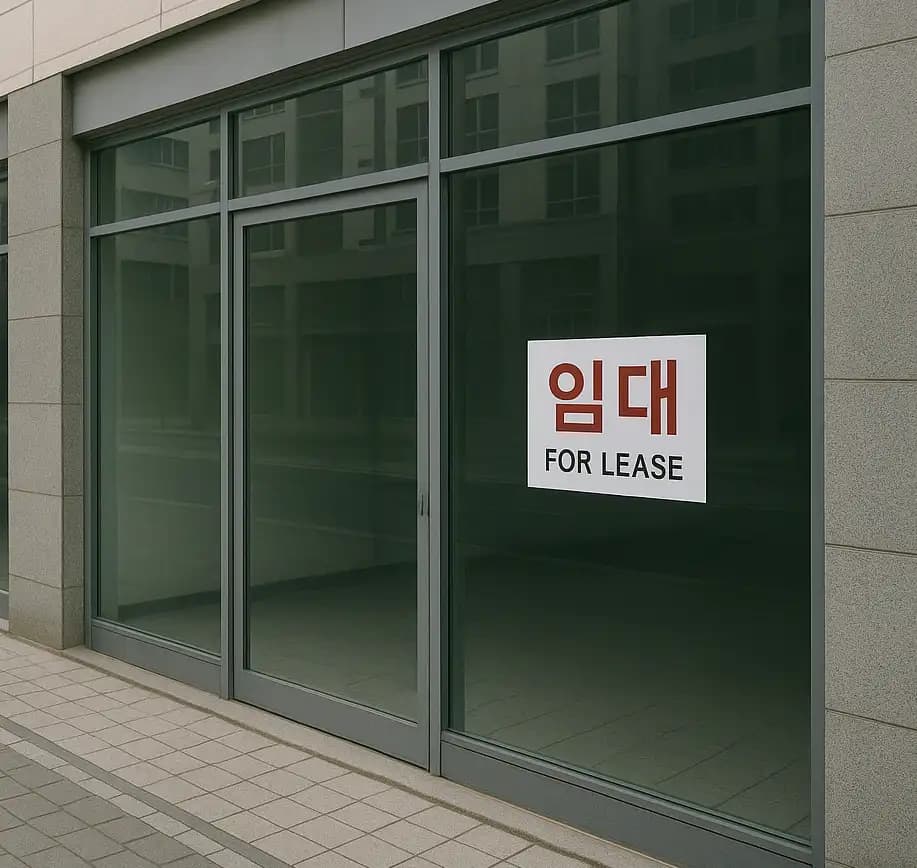
South Korea is witnessing a sharp and sustained increase in retail property vacancies, not only in traditional shopping districts but also within newly developed residential complexes. Once considered reliable anchors of neighborhood commerce, first-floor storefronts in apartment buildings now stand empty at unprecedented rates. Even high-traffic commercial corridors in major cities are showing signs of structural fatigue.
According to Q1 2025 data from the Korea Real Estate Board, vacancy rates for mid-sized retail properties have climbed to 13.2% nationally, with urban hubs such as Busan and Gwangju reporting localized rates above 20%. Meanwhile, retail units built into new apartment complexes—long marketed as built-in customer bases—are seeing occupancy rates fall below 70% in several regions.
Market analysts suggest the trend reflects a deeper imbalance between real estate development practices, shifting consumption behavior, and the declining viability of small-scale commercial operations. The result is a retail landscape characterized by stalled foot traffic, falling rental yields, and growing investor caution in a segment once considered low-risk.
Structural Drivers Behind the Surge in Vacancies
Mandatory Retail Construction in Residential Projects
A key contributor to the growing number of underused retail spaces is a long-standing zoning requirement that mandates the inclusion of commercial units in large-scale apartment complexes. Intended to foster walkable, self-contained neighborhoods, the policy now increasingly results in supply-demand mismatches, as retail spaces are planned mechanically based on household count rather than real market need.
Real estate developers often include first-floor retail to satisfy these regulatory obligations while leveraging them as profit centers. Commercial units are typically sold at a premium price per square meter compared to residential units, allowing developers to enhance upfront returns. However, once construction is complete and units are sold, long-term occupancy and operational risk shift entirely to the buyers—frequently individual investors or small-scale landlords—who are left managing vacancies.
Oversupply and Redundancy Across Districts
Many of the newly constructed commercial units replicate service offerings—cafés, convenience stores, hair salons—already saturated in nearby blocks. Without differentiated demand or anchoring institutions, these shops struggle to build customer traffic. In some newly completed apartment developments, up to 30% of retail units remain vacant more than a year after residents move in.
This oversupply is compounded by the clustering of similar commercial units across adjacent complexes. In mid-sized cities, even modest increases in housing supply have generated surplus retail real estate far beyond the area's consumption capacity, especially amid falling population density and aging demographics.
Platform Economy and the Decline of Physical Footfall
Concurrently, the rise of e-commerce, food delivery platforms, and remote work has further weakened the position of neighborhood-based retail. Services once tied to physical storefronts—such as lunch spots for office workers or specialty retailers—are increasingly accessed online, reducing the volume and consistency of foot traffic. Even in areas once considered “prime,” weekday consumer presence has dropped sharply.
Major delivery platforms such as Baemin and Coupang Eats have also altered consumption behavior. Many food and beverage operators now report a shift in revenue dependency toward digital orders, where platform fees can erode profitability, leaving less margin to support physical store operations.
From Popular Districts to Dormant Corridors
In Busan’s once-vibrant university district near Pusan National University, vacancy rates for retail storefronts have reached 23.4% as of early 2025—surpassing both traditional markets like Nampo-dong (17.9%) and commercial zones near Bujeon Station (17.1%). Once populated by late-night diners and student-focused cafés, the area has seen a sharp decline in foot traffic following pandemic-era shifts to remote learning and persistent declines in enrollment.
Despite an increase in residential density around the university, many first-floor retail units in new apartments remain unleased. Local governments and business associations have begun organizing events and offering incentives, but leasing activity remains subdued. Retail brokers note that even at discounted rates, many units generate insufficient traffic to sustain operations.
In Seoul, trend-sensitive districts like Yeonnam-dong and Seongsu-dong show how fast retail saturation can turn into stagnation. These neighborhoods enjoyed explosive growth in the late 2010s, fueled by Instagram-driven consumer interest in cafés, galleries, and niche fashion. But in 2024–2025, leasing turnover has increased sharply. Many stores close within 12 to 24 months of opening, and even well-established brands are vacating high-rent locations in favor of online-first operations or suburban hubs.
Analysts refer to this as “short-cycle consumption,” where the lifecycle of a trending district has compressed from a decade to just a few years. Without structural demand—such as stable office workers or daily services—these areas become vulnerable to market fatigue.
Market Signals and Investor Exposure
Rising vacancy rates across commercial districts are beginning to weigh on investor confidence in South Korea’s retail property market. Analysts warn that continued underperformance in ground-floor retail—especially in mixed-use residential complexes—could force a repricing of assets previously considered stable cash-flow generators.
According to commercial real estate consultancies, net yields on small to mid-sized retail units in non-core districts have fallen by as much as 30% compared to their 2019 levels. In many cases, returns are now insufficient to cover borrowing costs amid elevated interest rates. Institutional investors are increasingly shifting allocations toward logistics and data center assets, leaving neighborhood retail behind.
Local retail-focused real estate investment trusts (REITs) have also come under pressure. While flagship commercial properties in central business districts have maintained relatively stable returns, suburban and neighborhood-oriented portfolios are experiencing persistent occupancy drag. Some REITs have begun divesting underperforming retail assets or redeveloping them into non-commercial uses.
For property developers, the persistence of retail vacancies poses a reputational and strategic risk. While first-floor commercial space can boost short-term project profitability through separate title sales at premium prices, long-term operational challenges have led to criticism from residents and local governments alike. Complaints include decreased community vibrancy, security concerns, and unmet retail service expectations.
As a result, some developers are pushing for more flexible zoning regulations, allowing unleased retail space to be converted into shared amenities, daycare centers, or even micro-housing units. However, regulatory rigidity and fragmented ownership structures remain obstacles to efficient adaptation.
In the meantime, the default model for many projects remains speculative: overbuild retail, sell fast, and exit before long-term vacancy consequences materialize.
Policy Reform or Prolonged Stagnation?
Retail Vacancy as a Structural Signal
Across South Korea, retail spaces—from high-traffic shopping streets to newly built apartment complexes—are increasingly sitting empty. This is not just a post-pandemic correction, but a long-term signal of structural imbalance between urban planning, shifting consumer preferences, and the changing economics of small-scale businesses.
Zoning regulations continue to enforce the supply of ground-floor commercial units, even as real-world demand wanes. Digital platforms have redrawn the retail map, while rising operational costs make it harder for independent merchants to survive. What remains is a dissonance: modern cityscapes above, deserted storefronts below.
Unless policy evolves and planning becomes demand-driven, retail vacancy risks becoming a permanent feature of Korea’s urban economy—an inefficiency designed into its concrete.
As South Korea's retail property market undergoes a prolonged recalibration, policymakers face mounting pressure to revisit the zoning norms and financial incentives that underpin commercial oversupply. Analysts argue that without structural changes—particularly around the mandatory inclusion of retail units in residential developments—cities may continue to accumulate underutilized space that fails to serve either residents or investors.
Some local governments have begun experimenting with adaptive reuse strategies, converting empty storefronts into public services, social enterprises, or cultural hubs. However, regulatory rigidity, fragmented ownership, and slow permitting processes have limited the scale of such interventions. Meanwhile, calls for a more integrated urban planning framework—where demographic shifts, consumption trends, and land use are considered holistically—remain largely unaddressed at the national level.
In the absence of reform, market participants warn of a widening gap between planned and lived urban space. While the glass-walled storefronts lining new apartment towers may suggest economic vitality, their emptiness tells a more sobering story about mismatched expectations, exhausted consumption, and a business model in urgent need of reinvention.
Continue this reporting
Reporting on the same issue
Related coverage selected from the article's desk, topics and newsroom relationships.
 NewsSep 21, 2026
Europe’s Electrical-Steel Safeguard Now Reaches Inside the Transformer
A new EU safeguard follows electrical steel into certain finished transformer...
 NewsSep 14, 2026
Foreign Tourist Spending Is Reshaping Busan’s Nampo District
Foreign spending is making long-empty commercial space valuable again in Namp...
 NewsSep 11, 2026
Busan-Jinhae’s New Industrial Strategy Meets a Jobs Divide
As BJFEZ prepares to add AI, data and advanced energy to its industrial prior...
More from the author
More from this byline
Stay with the same line of reporting through more work from this byline.
 NewsOct 9, 2026
Why “Busan Is Good” Falls Short as a City Brand
 NewsSep 18, 2026
The Other AI Race Is for the Freedom to Change Course
Reader Signal
Community readWhat did this report leave you with?
Choose the signal that best reflects your reading. Select it again to remove it.
One response per article
No response selected
A moderated conversation about the reporting.
One-level replies and newsroom moderation keep the conversation anchored to this article.
Discussion Status
Open
Please sign in to join the discussion.
Newsletter
Weekly reporting and context from Busan and Korea.