The State Is Paying for AI. What Does the Public Own?
Korea’s AI strategy is publicly financed but largely operated through private companies and foreign technology. The decisive issue is what authority remains with the public after the money is spent.

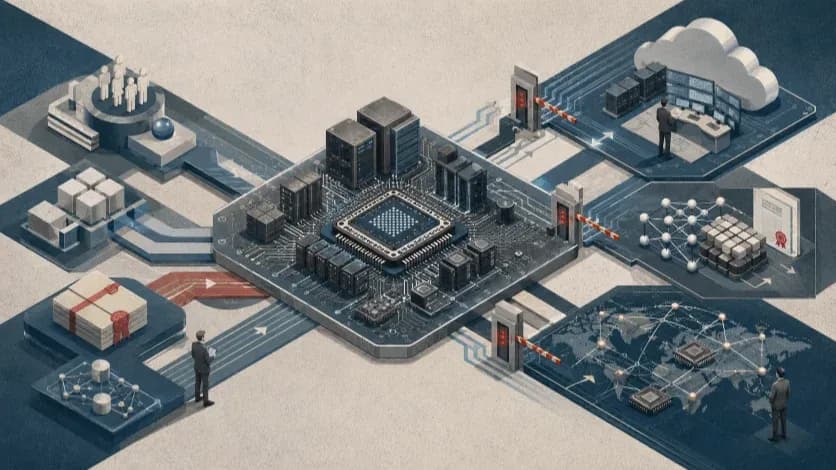
South Korea is financing computing infrastructure, foundation models and technology companies on a scale private capital could not sustain alone. The durability of that strategy will depend on the authority, access and commercial rights that remain after private operators, model developers and foreign suppliers enter the system.
South Korea’s national artificial intelligence computing center was originally designed around an ownership structure intended to make its public purpose unmistakable. State-backed institutions would hold 51 percent of the company created to build the facility, while private investors would own the remaining 49 percent and provide much of the capital, engineering expertise and operating capacity needed to turn a government project into a competitive data center. The center was expected to give universities, startups and domestic model developers access to advanced computing that few could purchase at commercial rates, while creating a production-scale environment in which Korean AI processors could be tested beyond controlled demonstrations.
Private investors declined the offer. Two procurement rounds ended without a viable bidder, exposing a mismatch between the authority allocated through the ownership structure and the risks assigned to the companies expected to carry out the project. A private consortium would have financed construction, purchased equipment whose economic value could fall sharply as newer generations arrived and remained responsible for electricity, cooling, networking, cybersecurity and specialist staff. It would also have reserved part of the capacity for institutions and early-stage companies central to the center’s public mission but unable to support a conventional commercial revenue model, all while operating as a minority shareholder.
When the government reopened the competition in September 2025, it reversed the balance that had defined the original plan. Private ownership would rise above 70 percent, the public stake would fall below 30 percent, a disputed condition governing the state-backed shares was removed and the obligation to introduce Korean processors became more flexible. A Samsung SDS-led consortium emerged as the sole bidder and signed the implementation, investment and shareholder agreements in May 2026.
Initial equity was fixed at 400 billion won, of which public institutions supplied 116 billion won and private participants 284 billion won. Samsung SDS invested 120 billion won for a 30 percent position, placing it just ahead of the public sector’s 29 percent. The project company is expected to raise additional financing for a facility valued at about 2.5 trillion won and designed to accommodate 15,000 advanced AI accelerators by 2028.
The revised structure gave Seoul something the original plan had failed to secure: a group of companies prepared to finance, build and operate the center. It also moved the principal safeguards for the national mission away from a voting majority and into contractual provisions that have not been released in full. The ownership table shows how the initial capital was divided, but it does not reveal the number of public directors, the decisions requiring their consent, the protection against dilution, the treatment of contracts involving consortium affiliates or the amount of capacity that must remain available to policy users when commercial demand rises.
Those details will determine whether the center operates as national infrastructure with a commercial engine or as a privately controlled data-center business carrying a limited set of public obligations. Either structure can be defensible. The government needed an operator capable of raising capital and managing equipment that will require repeated replacement, while the consortium needed enough authority to make decisions for which its shareholders would be financially accountable. The unresolved issue lies in whether the agreements preserve sufficient public influence once those interests begin to diverge.
The center is the most visible expression of a wider strategy in which the government finances processors, foundation models and technology companies while private operators and developers retain much of the day-to-day authority. Several essential layers of the resulting system will continue to come from American suppliers, particularly advanced accelerators, software environments and hosted frontier models. Korean companies will control much of the domestic cloud operation, model commercialization and industrial deployment, while public institutions will occupy different positions as shareholders, purchasers, lenders and providers of subsidized infrastructure.
State leadership remains clear in the selection of priorities and the absorption of early risk. It says less about who will control the assets after the money has been committed. Shareholder agreements, procurement contracts, software licenses and investment terms will determine whether Korea’s AI spending produces capabilities that remain usable across changes in suppliers, ownership and political conditions.
The Bargain That Made the Center Buildable
The first center proposal asked private investors to assume the obligations of an operator without granting them the authority normally associated with that role. They would have financed a large share of construction, acquired hardware exposed to rapid depreciation and remained accountable for service quality as customers demanded newer processors, larger networks and more sophisticated software. Public institutions could have defined the center’s mission through their majority stake, yet they did not intend to manage the daily technical decisions or accept direct responsibility when utilization fell, power costs rose or a generation of equipment lost competitiveness.
AI infrastructure demands recurring investment long after the building has been completed. Accelerators become less attractive as new products improve training speed and energy efficiency, while storage, switching, cooling and security systems require replacement or expansion. The operator must commit fresh capital before the original investment has been recovered, and its ability to do so depends on customers whose workloads can move quickly toward the latest platform.
The center’s intended users complicated that revenue model. Universities, research institutes and younger companies were included because they lacked access to advanced computing, which also meant that many could not pay the rates available from corporations purchasing capacity through multi-year cloud contracts. A subsidized allocation still consumes electricity, engineering support and valuable machine time. The project company would therefore have to reconcile a public-service obligation with the commercial discipline required to finance successive hardware cycles.
Korean neural-processing units introduced a separate industrial-policy objective. Domestic accelerator companies need access to large systems where customers can evaluate reliability, software compatibility and sustained performance under real workloads, since benchmark results alone do not establish that a processor can support a commercial cloud or industrial application. The center can close part of that gap, but its operator must also serve developers whose software is already built around Nvidia’s compilers, libraries, networking products and support tools. Moving an established workload to a less mature platform can require extensive code changes and specialist assistance that the customer did not plan to purchase.
The revised tender retained the testing role for Korean processors while giving the operator greater discretion over commercial deployment. Public descriptions of the project envisage research and validation environments in which domestic chips can be evaluated before moving closer to production use. Such a sequence can turn the center into an industrial testbed without requiring every paying customer to absorb the risks of an immature platform from the outset.
Private control also aligned decision-making more closely with the companies responsible for assembling the project. The consortium combines cloud operation, semiconductor systems, construction, telecommunications and regional development, allowing many of the center’s physical and technical requirements to be coordinated within the shareholder group rather than negotiated across unrelated contractors. That concentration offers an execution advantage, particularly for a project whose earlier structure had failed to attract any bidder.
It also creates governance risks that cannot be resolved through the headline ownership percentages. Several consortium members may later become both owners and suppliers to the project company. Construction, telecommunications, cloud and semiconductor services could be purchased from firms represented among the shareholders, while some may also become large customers of the center. Related-party contracts can be commercially sensible when the consortium was formed precisely because its members possess complementary capabilities, but their legitimacy will depend on approval thresholds, independent review and evidence that the price and terms serve the project company rather than the shareholder supplying the service.
A competitive procurement might have allowed the ministry to compare different approaches to affiliated transactions, public pricing and capacity allocation. Samsung SDS’s consortium was the only bidder after the earlier failures, leaving the government able to determine whether the proposal met its revised requirements but unable to test whether another group would have offered a stronger balance between commercial authority and public protection. The absence of a competing proposal makes the shareholder agreement more consequential because market comparison could not perform the same disciplinary role.
Public announcements promise discounts, vouchers, consulting and commercialization support for startups, universities and research institutions. Their economic substance will depend on the amount of capacity reserved, the criteria used to select recipients, the reference price from which discounts are calculated and the procedure followed when subsidized demand competes with customers willing to pay more. A privately controlled company can fulfil a national mission, provided that the obligation is specific enough to survive a period when commercial use becomes materially more profitable.
The signed agreements may contain substantial protections for the state-backed shareholders, and the absence of those provisions from government announcements does not establish that they were omitted. The disclosure gap nevertheless prevents an outside assessment of what authority replaced the original voting majority. Publishing the broad governance architecture would not require the ministry to reveal valuations, supplier prices or sensitive operating details. It could identify the number of public directors, the categories of decision subject to state consent, the existence of anti-dilution protection and the form of the public-capacity obligation while keeping detailed commercial schedules confidential.
The government made the center financeable by moving authority toward the consortium carrying the largest financial and operating risks. Its eventual public value will depend on whether the rights left with the state-backed minority remain effective after the initial political attention has faded and the project company begins confronting the ordinary pressures of capital expenditure, shareholder returns and competition for its most profitable capacity.
Public Hardware, Private Gateways
Korea’s direct GPU procurements remove the special-purpose company from the transaction because the government itself finances the equipment. They preserve, however, the division between owning a processor and controlling the environment in which it becomes useful. Domestic cloud providers supply the data centers, power, networking, storage, security and scheduling systems through which national projects and selected users reach the machines, giving them operational authority over far more than routine maintenance.
The 2025 program selected Naver Cloud, NHN Cloud and Kakao to acquire and install 13,136 advanced GPUs. Of that total, 10,456 were assigned to government use and 2,680 to the participating providers. In June 2026, the Ministry of Science and ICT selected Naver Cloud, Samsung SDS and Elice Group for a second procurement valued at about 2.08 trillion won. The new program covers 9,704 Nvidia accelerators—2,016 Vera Rubin units and 7,688 B300s—with all of the Vera Rubin processors and 4,360 B300s, or 6,376 units in total, designated for sovereign-model development, national AI projects and support for companies, universities and research institutions. The providers receive the remaining 3,328 B300s for their own cloud services and AI development.
The model gives the state rapid access to scarce hardware without requiring it to establish an independent national cloud operator. It also allows Korean providers to develop the expertise needed to run frontier clusters, where high-speed networking, distributed storage, workload scheduling, fault recovery and cooling matter as much as the nominal performance of the processor. That knowledge can strengthen the domestic cloud sector while the public portion supports projects that would otherwise struggle to obtain computing at a comparable scale.
A comparison of machine counts cannot determine whether the exchange is balanced. The commercial value of the providers’ allocation depends on utilization, electricity prices, service configuration and the customers able to purchase it, while the cost of operating the public capacity includes data-center space, networking and engineering over several years. The ministry has disclosed the allocation of processors and the broad service schedule but not a financial model showing how the private-use capacity corresponds to the providers’ obligations.
Operational authority extends through the systems surrounding the hardware. Cloud companies administer the accounts through which recipients enter, the storage holding training data and checkpoints, the schedulers deciding when jobs run, and the monitoring and security tools used to operate the resulting models. A startup may receive publicly subsidized GPU time while building its application around databases, orchestration services and deployment tools owned by the operator, turning temporary computing support into a longer commercial relationship.
That attachment can arise without restrictive conduct. Managed services reduce engineering work and help a small team demonstrate progress before its allocation expires; remaining in the same environment may later cost less than rebuilding the application elsewhere, even when another cloud offers cheaper processors. The relationship becomes a policy concern because public money financed the entry into the system while the available notices provide little information about the recipient’s position after the support period ends.
Procurement totals also provide an incomplete measure of performance. A processor can be installed yet remain idle because applicants cannot obtain an allocation, operate below capacity because workloads are configured inefficiently or become unavailable during a period of peak demand. Cloud operators already collect awarded and consumed computing hours, queue times, interrupted jobs and unused allocations, making aggregate reporting possible without revealing the technical details of individual models.
The record should distinguish among recipient groups and follow projects beyond the allocation period. A university that completes a research program, a startup that trains a model but never deploys it and a company that becomes a long-term commercial customer produce different forms of public value, even though each may initially appear as one successful award. Tracking those outcomes would show whether the procurement widened access for institutions previously excluded from large-scale computing or mainly subsidized organizations already equipped to navigate a complex application and cloud environment.
Providers receive benefits beyond their assigned machines. Their engineers gain early experience with new hardware, while workload patterns reveal which sectors require large-scale computing and which supported companies are approaching commercialization. Some recipients will remain as customers, allowing the same program to support emerging developers and strengthen the domestic companies operating the gateway.
That dual purpose can serve the public interest when private operators are adequately compensated for a difficult and capital-intensive service and policy users receive computing they could not otherwise obtain. A credible evaluation would measure usable capacity, waiting times, distribution among recipient groups and the commercial resources granted to the operators, rather than treating the physical arrival of the processors as the completion of the policy.
Open Weights, Unequal Rights
Public computing determines who can afford to train or refine a model. The license attached to the finished weights determines whether the result becomes a platform for other companies or remains a product whose most valuable downstream uses are controlled by the original developer.
Korea’s Sovereign AI Foundation Model project requires participating teams to design and pre-train their systems domestically rather than begin with foreign base weights, preserving the architecture, training knowledge and engineering capability needed to continue development independently. LG AI Research, SK Telecom and Upstage advanced from the initial evaluation, while a Motif Technologies-led consortium joined through an additional selection round. The four teams entered the next phase of the program in 2026.
The first public releases show how technical sovereignty and downstream openness can diverge. SK Telecom’s A.X K1 is published under Apache License 2.0, allowing commercial use, modification and redistribution subject to the license’s notice, attribution and patent provisions. A developer can adapt the model and distribute the modified work without negotiating a separate commercial license with SK Telecom.
Upstage permits commercial use and derivative development under the Solar license while requiring distributed derivative models to retain the Solar identity and acknowledge the technological origin of the system. The terms allow another company to modify and commercialize the weights while preserving visible recognition of the original model across the derivative lineage.
LG AI Research’s K-EXAONE agreement permits commercial and noncommercial use, modification and derivative work, but commercial distribution, sublicensing or provision of the model or a derivative to a third party requires a separate agreement. A company operating the model internally or placing it behind an application therefore occupies a different legal position from a business whose product consists of delivering adapted weights to hospitals, manufacturers or financial institutions.
All three approaches provide more control than a closed application-programming interface because the user can hold and run a copy of the model. They do not create the same market for downstream developers. A.X K1 provides broad redistribution rights under a familiar framework; Solar allows derivative distribution while preserving branding and attribution; K-EXAONE retains additional authority over commercial delivery of the model itself to third parties.
Those distinctions reflect legitimate commercial interests. Training a foundation model requires expensive computing, data preparation and specialist labor, while a highly permissive release can allow larger companies to capture more commercial value than the team that financed and conducted the training. Branding requirements preserve recognition, and distribution restrictions can protect a licensing business in markets where the adapted model rather than an application built around it is the product being sold.
Public support adds another interest because the project is intended to create national capacity beyond the recipient’s balance sheet. Permission to operate a paid application does not necessarily allow a company to distribute adapted weights to a customer, and access suitable for an academic researcher may not support a domestic model integrator building a product for a hospital or manufacturer. The practical value of a supported model depends on the activities its license permits, not merely on whether the files can be downloaded.
The ministry has included ecosystem contribution and broader usability in its evaluation process without imposing a single licensing model. That flexibility can attract strong private developers, but it also produces publicly supported systems that offer markedly different opportunities to other Korean companies.
A uniform Apache-style requirement would ignore the developer’s own investment and commercial strategy. A proportional approach could tie public obligations to the scale and scarcity of the support provided. Limited evaluation assistance may justify few additional conditions, while a model trained with extensive public GPU allocations, publicly financed data and direct investment presents a stronger case for research access, durable government-use rights and meaningful room for downstream domestic businesses.
Public-service continuity can be separated from general commercial openness. A ministry adopting a supported model for an essential function needs assurance that it can continue operating the version it deployed if the developer changes its license, discontinues support or is acquired. A perpetual license for defined government uses, supplemented where necessary by escrow of essential code and documentation, could preserve that function without transferring the developer’s wider commercial business to the state.
Downloadable weights provide greater autonomy than a closed service, although they do not necessarily satisfy the broader standard associated with open-source AI, which also concerns the materials and permissions needed to study, modify and share the system. A model can therefore be locally deployable while remaining legally or technically difficult to reproduce, adapt or redistribute.
Domestic training gives Korea engineering knowledge that would otherwise remain concentrated abroad. The license determines how widely that benefit travels through the domestic economy and whether public support creates a common industrial foundation or a group of privately controlled national champions.
Between American Jurisdiction and Chinese Coordination
Korea’s hybrid strategy sits between two larger AI systems whose advantages rest on institutions Seoul cannot reproduce at the same scale. The United States concentrates frontier technology in globally dominant private companies while using federal jurisdiction, diplomacy, financing and export controls to shape its international distribution. China allows model developers to compete but connects them to public finance, computing infrastructure, industrial policy and early demand through a denser state-directed network.
Korean companies gain substantially from the American ecosystem. Nvidia accelerators and the CUDA software environment give developers access to the platform around which much of the global AI industry has organized its code and engineering practices, while American cloud and model providers can shorten development cycles and connect Korean products to international markets. Samsung Electronics and SK Hynix supply memory and other components essential to that system, creating mutual economic value even though the legal authority governing several critical layers remains outside Korea.
Washington has made international adoption of American AI an explicit policy objective while retaining control through export licensing, end-user rules and national-security policy. Commercial expansion and strategic oversight therefore operate through the same institutional framework, allowing American companies to sell an integrated technology stack abroad while the federal government preserves authority over where its most advanced components can be supplied and used.
The rules governing advanced chip exports have changed repeatedly. The Commerce Department rescinded the Biden administration’s AI Diffusion Rule in May 2025 before its principal compliance requirements took effect, initially saying that a replacement framework would follow. A proposed successor was withdrawn in March 2026, and by July the official overseeing export controls said the administration no longer intended to replace the Biden-era regime, although further regulatory action covering AI and semiconductors remained under preparation.
For Korea, the continuing discretion matters more than the fate of any single rule. A lawfully acquired processor installed in a Korean data center may continue operating, but future deliveries, technical support, software updates or access to a later generation can be affected by licensing and security decisions made in Washington. Physical location reduces some forms of exposure without transferring authority over the full supply chain.
Hosted models bring the issue closer to daily operation. In June 2026, the U.S. government applied restrictions to Anthropic’s Fable 5 and Mythos 5 models, requiring the company to limit foreign-national access. Anthropic said it lacked a reliable way to verify nationality in real time and suspended both systems for every user. The controls were lifted later that month; Fable 5 returned globally, while Mythos 5 was initially restored only for a limited set of approved American organizations as broader access remained under discussion.
The episode arose from a specific cybersecurity dispute and does not indicate that Washington intends to remove ordinary AI services from Korean customers. It demonstrated that a compliant user can lose access because the supplier is governed by another jurisdiction, a risk that becomes consequential when the model is embedded in administration, healthcare, energy or industrial systems that cannot be replaced through a routine software update.
China has developed a different route to national capacity. Its major model companies are not all state-owned, and central ministries do not design every system, but public authorities shape the environment around the competition through policy banks, government funds, industrial parks, computing facilities, electricity, procurement and access to state-owned customers. The country’s AI Plus initiative links adoption across science, manufacturing, consumption and public services, treating infrastructure and deployment as parts of one development program.
Open-model diffusion is central to that strategy. Widespread adoption produces derivatives, tools and evaluations that make the underlying model more useful to the next group of users; Alibaba’s Qwen family had generated more than 100,000 derivative models on Hugging Face by 2026. Industrial deployment adds another source of advantage because factories, logistics systems and robots generate sensor records, operating failures and engineering constraints unavailable in public internet data. Lower-cost access to models allows more companies to deploy AI in those settings, and the resulting operational data can improve later products.
Private-investment figures alone do not capture that system. The 2026 Stanford AI Index recorded $285.9 billion in U.S. private AI investment during 2025, more than 23 times China’s $12.4 billion, while warning that government guidance funds and related public mechanisms were not fully represented in the Chinese total. The same report found that the performance gap between the strongest American and Chinese models had narrowed to 2.7 percent by March 2026.
China’s institutions can carry a promising chip, robotics or model company through several engineering cycles by connecting capital, infrastructure and early customers. They can also preserve weak facilities and firms when local governments compete to satisfy strategic priorities or institutions resist acknowledging that an earlier investment has failed. Long coordination and delayed exit emerge from the same institutional capacity.
Korea cannot import either system intact. It lacks the concentration of frontier companies and legal jurisdiction that gives the United States influence over the global technology stack, while its policy banks, regional governments and public enterprises do not exercise the reach available to China. Its strongest leverage lies instead in physical industries—semiconductors, shipbuilding, batteries, ports and energy systems—where Korean companies control operating environments and specialized data that upstream model suppliers cannot reproduce.
The American system gives Korea access to the world’s strongest technology while leaving several critical layers subject to foreign jurisdiction. China demonstrates the industrial value of connecting models, infrastructure, finance and early demand, together with the fiscal and governance risks of sustaining that coordination for too long. Korea’s task is to preserve access to the former while building a more accountable version of the latter, using public support to strengthen the industrial environments in which domestic companies already possess bargaining power.
Connecting public computing, domestic models and policy capital to those industries would allow Korea to accumulate technical knowledge through deployment rather than through procurement alone. Continued participation in the American ecosystem would preserve access to technologies the country cannot efficiently replace, while control of industrial data, evaluation methods and integration knowledge would give Korean firms a credible ability to change upstream suppliers after the technology enters the factory, port or power system.
When Public Capital Takes the Long Risk
The National Growth Fund extends the state’s role from purchasing infrastructure to financing the companies expected to supply strategic technologies. The program is designed to provide 150 trillion won over five years and 30 trillion won during 2026 through direct investment, privately managed funds, infrastructure finance and low-interest lending. Each channel places public capital in a different economic position: equity participates in losses and potential gains, loans create repayment claims with limited upside, infrastructure finance can secure rights over project cash flow and capacity, and indirect funds transfer selection and exit decisions to private managers.
The fund has already approved positions in domestic model and accelerator developers, including Rebellions, Upstage and FuriosaAI, moving public finance directly into companies that are also connected to Korea’s computing and sovereign-model policies. Those transactions address the long interval between a successful technical demonstration and reliable commercial demand.
An accelerator company may show strong benchmark performance and still require another design, a costly manufacturing run, mature software and years of customer qualification before cloud or industrial users will reorganize their systems around its platform. A foundation-model developer may employ valuable researchers while carrying computing costs that current revenue cannot support. Private investors must decide whether the potential return justifies waiting through those cycles, and many will need liquidity before the technology is established.
Public capital can wait longer because part of the expected benefit—engineering knowledge, supply-chain resilience or competition in a concentrated market—may accrue to the economy rather than solely to the investor. The broader mandate also creates room for companies to describe continuing support as strategically necessary after technical or commercial evidence has weakened, making the rights and discipline attached to the investment essential.
Preferred shares, conversion provisions and voting rights determine whether public capital shares in the upside or mainly absorbs early risk. Later financing can dilute an initial position, while an acquisition may produce an attractive return and transfer engineers, intellectual property or production decisions outside Korea. Preventing every foreign sale would depress valuations and discourage co-investment; ignoring the issue could leave the state financing the difficult years without preserving the capability that justified the intervention.
Investment agreements can manage that conflict through limited conditions rather than permanent government ownership. A supported company might maintain domestic research for a defined period, seek consent before transferring specified technology, preserve access needed for public projects or provide an additional return when assets created with substantial state backing are sold. The appropriate claim should vary with the financial instrument and the scale of support.
The public-participation component of the fund makes the allocation of losses unusually visible. Individual investors supplied the full 600 billion won target by the end of May 2026, while 120 billion won in government capital was placed beneath the retail money in the loss order, absorbing initial losses within a defined limit for each subfund. The managers also contributed a much smaller amount of junior seed capital.
For households, the government position provides a cushion against part of the downside. For taxpayers, the same structure places public money beneath private capital. The arrangement may mobilize investment that would otherwise remain outside strategic industries, but its success should be measured by the additional private funding and productive projects it creates rather than the speed with which the retail product sold out.
A proposed ultra-long-term technology fund addresses another mismatch: conventional investment vehicles may reach the end of their lives before a semiconductor, pharmaceutical or aerospace company completes the necessary engineering and regulatory cycles. The plan presented in July 2026 envisaged an 880 billion won vehicle, 680 billion won of it from policy and budget sources, with a life of up to 15 years and an investment period of up to seven. At that stage the fund remained under design rather than in operation.
A longer horizon becomes valuable when it allows new evidence to emerge—improved production yields, an independent customer trial, regulatory approval or a second product generation that resolves the weaknesses of the first. It becomes protection when financing continues after repeated milestones are missed and customers remain unwilling to adopt the technology. Staged commitments can preserve patience while requiring a new decision at each material point.
A credible public portfolio will include failures. Chip designs can arrive after the market has moved, model companies can lose their advantage and industrial users can reject technology that performed well in a controlled demonstration. Reporting no losses would suggest either that the state selected only investments the private market already wanted or that weak assets were not being recognized.
Approval documents can state the technical and commercial assumptions, later financing can be linked to measurable milestones and eventual write-offs can be disclosed once sensitive information no longer needs protection. The distinction that matters is between a defensible risk that failed and a commitment maintained because officials and managers resisted revising an earlier judgment.
Success requires the same clarity. Equity gains, loan repayments and infrastructure revenues may be recycled into later technology investments, returned to the financing institution or absorbed into the general budget. Strategic benefits such as retained engineering teams and domestic production capability can form part of the evaluation, provided they are measured against a baseline rather than invoked broadly enough to make every intervention appear successful.
Korea’s policy funds now hold financial claims on companies central to its AI strategy. Whether those positions amount to patient investment or public risk without corresponding authority will depend on the information, voting, conversion, repayment and exit rights written into the transactions, together with the willingness to stop when the evidence no longer supports the original thesis.
From Contractual Rights to Operational Control
The major programs use different legal instruments, yet the gaps in the public record are strikingly similar. The computing-center announcements do not fully reveal the authority retained by the minority public shareholder; GPU notices say little about the position of a recipient after a subsidy ends; model licenses offer different downstream rights; and investment releases rarely provide a common account of how financial and strategic returns will be divided after success or failure.
A public assessment need not reproduce every confidential clause. It should identify how much subsidized capacity remains available, who holds administrative authority, whether users can recover the assets they created, which rights survive a supplier’s failure or license change and what claims the state retains when a supported company is sold. Those rights acquire substance only when they can be exercised in practice.
A startup’s right to retrieve a checkpoint is useful only if the file can be restored elsewhere; a public agency’s access to a domestic model matters only if engineers have already deployed it; and a Korean accelerator provides resilience only after a production workload has run on it. For critical systems, periodic switching exercises could record the time, engineering cost and performance loss involved in moving among providers, models and hardware platforms.
Cloud portability provides the most immediate example. A working application contains identity policies, databases, deployment pipelines, monitoring tools and provider-specific services in addition to its data. Moving a representative workload while the original environment remains available would reveal which parts transfer cleanly, which must be rebuilt and how long the transition takes.
The European Union’s Data Act treats switching as part of cloud-market regulation and will eliminate switching charges, including data-egress fees, from January 12, 2027. Removing those charges will not eliminate the engineering work required to rebuild an application, but it establishes mobility as an expected feature of the market rather than a concession granted by the incumbent.
Korea can attach comparable requirements to the GPU programs it finances without waiting for a broader statute. Operating agreements can require proprietary dependencies to be identified before an allocation begins, preserve data and checkpoints in documented formats, provide a defined transition period and obligate the provider to assist until the recipient has verified that the workload functions elsewhere. Critical systems and projects receiving larger public contributions would justify stronger conditions.
Model substitution requires a different exercise because two systems rarely produce interchangeable outputs. Applications can depend on one model’s response format, safety behavior, context management and tool calls, while evaluation or regulatory approval may cover only the primary provider. Databases, retrieval systems and business rules can be kept outside the model interface, and a secondary model can be run periodically against representative workloads to measure accuracy, latency and the engineering changes needed for deployment.
A domestic open-weight model may serve as a useful fallback without matching the strongest foreign service on every benchmark. Its value lies in preserving a known level of operation under locally held weights and a durable license, but that capacity exists only after the institution has secured suitable hardware, completed a security review and trained engineers to run it.
Hardware replacement takes longer because an accelerator is embedded in compilers, libraries, networks and engineering practice. The useful measure of a Korean chip is the work required to move an existing production task onto it, including code changes, unsupported operations, power use, throughput, reliability and specialist labor. A trial may show that a domestic processor cannot replace Nvidia across every workload while remaining capable of sustaining a narrower set of essential functions. That narrower capability can still provide resilience and identify the software gaps that must be closed before the next generation receives a larger deployment.
Operational authority also depends on people. A ministry can possess contractual step-in rights while the engineers who understand the system remain employed by the private operator, leaving the state unable to exercise its authority during a failure. Critical projects need a retained technical team—inside a public institution, university or specialist contractor—capable of reading operating records, challenging the provider’s claims and participating in a migration or takeover.
Industrial projects should preserve the evaluation data, interface specifications and integration records required to replace an upstream model or cloud provider. Formal ownership of the original factory data offers limited protection when processed features, workflow design and operating knowledge accumulate inside the vendor’s proprietary platform. Competition becomes credible only when another qualified supplier can reproduce the service without forcing the industrial operator to reconstruct work already financed.
For major AI projects, the government could publish the principal operator, foreign dependencies, supported-access obligation, migration standard, continuity plan, public return mechanism and conditions governing termination or sale. Critical systems could add the date of the latest switching exercise, the estimated replacement time and the largest unresolved obstacle, allowing progress to be measured through declining transition costs rather than the percentage of components labelled domestic.
The requirement should remain proportional. A small academic allocation does not need the governance structure of a multibillion-won data center, and a limited research grant should not carry the same commercial conditions as a model trained with extensive public computing and direct investment. Larger, scarcer and longer-duration contributions justify stronger access, mobility, continuity and return provisions because the state has accepted more of the risk.
Commercial confidentiality is compatible with that standard. The government can identify whether public directors possess consent rights without publishing board deliberations, disclose the existence of anti-dilution protection without revealing valuations and describe a portability requirement without exposing security architecture or customer data. The purpose is to establish what was secured, not to release every commercial term.
Most of these rights become important only under pressure. Board consent matters when shareholders disagree, portability when a recipient leaves, a perpetual license when a developer changes its terms, step-in authority when an operator fails and loss priority when an investment declines. By then the budget has been committed and the technical architecture may be expensive to alter, which is why the requirements need to be defined before selection and tested while the primary system is still functioning.
What the Public Bought
South Korea entered the AI market because private finance alone was unlikely to provide enough advanced computing, tolerate the development cycles of domestic accelerators or fund foundation models whose wider national value could exceed the revenue available to the company that trained them. The state has become a shareholder, purchaser, lender, infrastructure financier and organizer while leaving much of the engineering and commercial operation to private companies.
That intervention has expanded what Korean institutions can attempt. Universities and startups have gained access to computing they could not readily purchase, domestic teams have trained large models from their own technical foundations and accelerator companies have obtained capital extending beyond the normal horizon of many private funds. The national computing center, after failing twice under a public-majority structure, now has a consortium with the financial and technical capability to build it.
The decision to surrender the voting majority cannot yet be classified as a success or failure. The answer will emerge from the rights contained in the shareholder agreement, the capacity ultimately supplied to policy users and the center’s conduct when commercial demand begins competing with the commitments used to justify the project. The same standard extends across the wider strategy: GPU ownership must be assessed through actual use and the position of recipients after support ends; domestic models through the permissions attached to their weights; and public investment through the claims retained after success, failure or sale.
Korea will continue relying on foreign technology because excluding the leading hardware, software and models would raise costs and slow development. The strategic risk appears when an essential function rests on a supplier that cannot be replaced within an acceptable period, particularly where several layers of the system are governed by the same company or foreign jurisdiction.
Public control in a hybrid system rests on enforceable access, sufficient operational visibility, credible migration capacity and financial claims proportionate to the risks the state has accepted. Those rights do not require the government to operate every cluster or own every model, but they must remain usable after the original commercial relationship changes.
Korea can already measure the scale of its AI commitment through budgets, processor counts and announced fund sizes. The more difficult record—the authority retained in shareholder agreements, the computing actually consumed, the models that users can lawfully redistribute, the workloads that have moved between suppliers and the returns recovered from patient capital—will show how much public capacity that spending has secured.
Until those records are available, Korea will be able to count how many processors it bought and how much capital it committed more precisely than how much capacity users actually received, how freely they can move their work and what the public recovers when the investments succeed.
Editorial Context
"Independent journalism relies on radical transparency. View our full log of editorial notes, corrections, and project dispatches in the Newsroom Transparency Log."
Reader Pulse
The report's impact signal
Be the first to provide a reading pulse. These collective signals help our newsroom understand the impact of our reporting.
Join the discussion
A more thoughtful conversation, anchored to the story
Atlantic-style discussion for this article. One-level replies, editor prompts, and moderation-first participation are now powered directly by Prisma.
Discussion Status
Open
Please sign in to join the discussion.
The Weekly Breeze
Independent reporting and analysis on Busan,
Korea, and the broader regional economy.