Technology•Aug 23, 2026
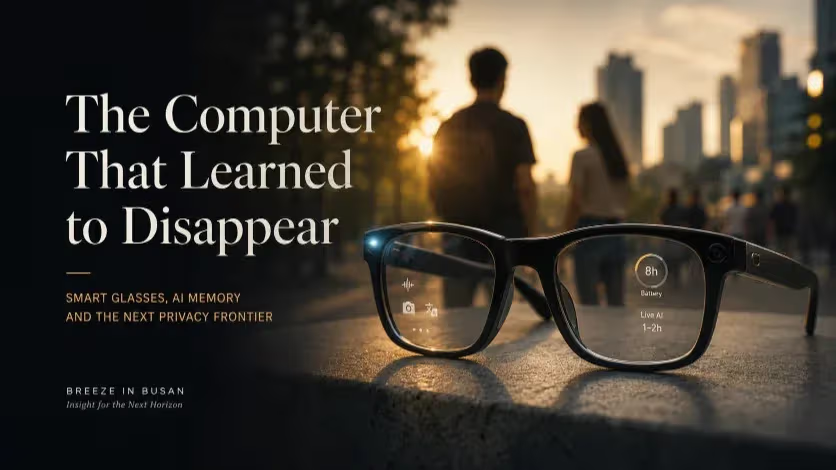
When Smart Glasses Stop Looking Like Computers
The most successful smart glasses are learning to disappear. Their next challenge may be what everyone else loses when the computer becomes difficult to see.
THE EDITORIAL ARCHIVE
Curated picks, deep dives, and vital reporting from the Breeze in Busan newsdesk.
Access our full archive of investigative reporting and community alerts through the Explorer Hub.
Our most vital investigative reporting and local intelligence, delivered to your inbox every Friday afternoon.
Join 4,200+ regular readers from Busan and beyond. No spam, ever.
The most successful smart glasses are learning to disappear. Their next challenge may be what everyone else loses when the computer becomes difficult to see.

Another Trump-Kim summit would unfold on a peninsula where North Korea is harder to isolate, U.S. military priorities are increasingly global and South Korea is seeking greater authority over the defense of its own state.
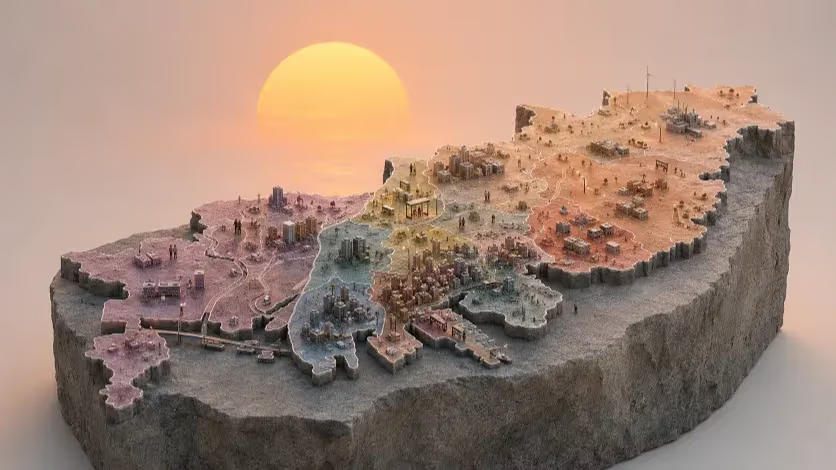
Busan’s 16 local governments operate under the same fiscal system, but they are paying for very different cities. Fiscal records and service data show how population decline, rapid growth, inherited infrastructure and earlier commitments narrow the choices left in the next budget.

Busan’s factories, exporters and consumers are showing signs of recovery. Beneath those gains, fewer new businesses are entering the market, more established operators are leaving, and a shrinking, aging city is changing the commercial conditions confronting those that remain.
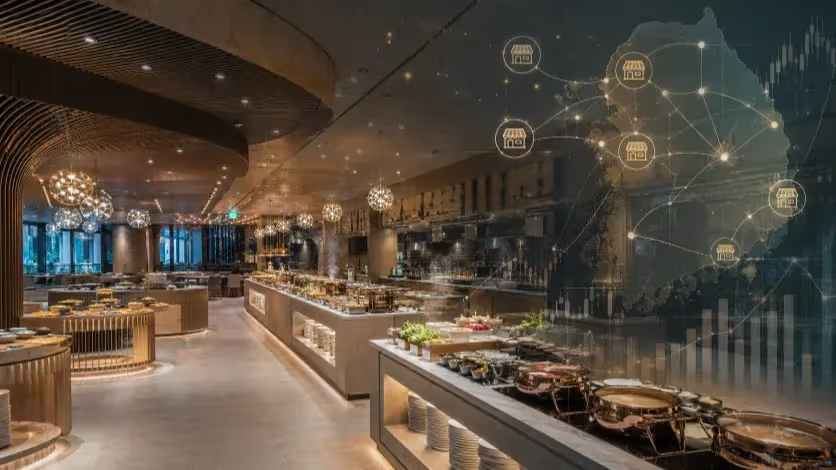
South Korea’s large-format restaurants are scaling into a difficult market, revealing how franchising can accelerate expansion while placing the physical investment behind each new dining room on very different balance sheets.

South Korea reported an 87 percent drop in aquaculture losses from high water temperatures in 2025. But data from major black rockfish farming waters show that local heat exposure, early harvest and emergency releases changed alongside farm protection.