The Permission Line and South Korea’s Nuclear Submarine Ambition
Between permission and power lies the new frontier of alliance politics. South Korea’s pursuit of nuclear propulsion tests not only technology, but the architecture of trust built over seventy years.

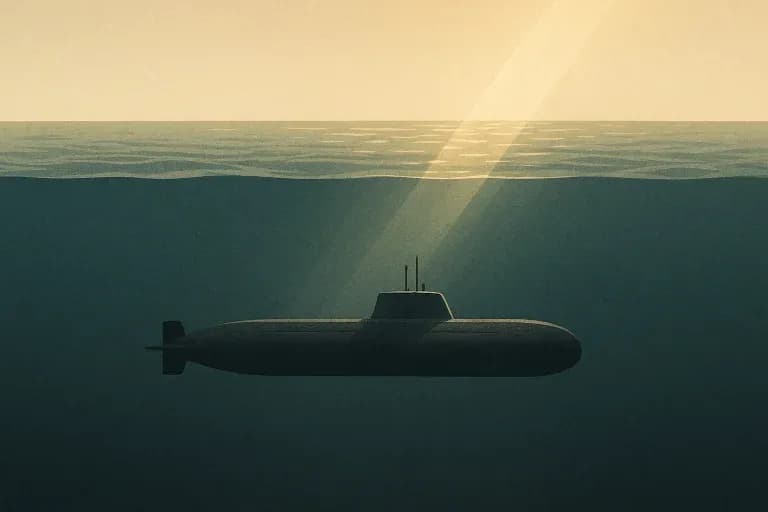
Donald Trump’s claim that he had “given South Korea approval to build a nuclear-powered submarine” reopened one of Washington’s oldest strategic taboos. The remark, brief yet disruptive, forced a reconsideration of how alliance politics, industrial ambition, and legal restraint intersect in the Indo-Pacific. For Seoul, it marked a rare moment when symbolism met strategy — the point where technological parity began to reshape diplomatic hierarchy.
When Donald Trump posted on Truth Social that he had “given South Korea approval to build a Nuclear Powered Submarine, rather than the old fashioned, and far less nimble, diesel powered Submarines that they have now” (Truth Social post), the words were brief, but their implications were vast. It was not a policy announcement, nor an official directive — it was a political signal. Yet in diplomacy, signals often travel farther than formal decisions.
For seventy years, Washington has restricted the transfer of nuclear propulsion technology even to its closest allies — a restraint rooted in the U.S. Atomic Energy Act of 1954 and successive 123 Agreements (42 U.S. Code § 2153). The logic was consistent: deterrence through monopoly. South Korea, despite its technical readiness and strategic rationale, remained outside that circle — capable, but constrained by the norms of non-proliferation and the hierarchy of alliance.
Trump’s public remark — described by The Washington Post (Oct 30 2025) as “a campaign-style signal rather than an executive order” — did not alter any statute, but it punctured the silence. It placed nuclear propulsion — a subject long buried beneath classified memoranda and diplomatic restraint — into the public domain. For Seoul, this mattered. What was once whispered in think-tank corridors could now be discussed as a plausible policy option.
Whether Trump’s comment was tactical improvisation or deliberate signaling, it created a new political space. Within hours, the issue that had hovered at the periphery of alliance politics moved to its center:
Could South Korea, with U.S. acquiescence, finally cross the threshold from conventional defense to strategic propulsion?
That question — not yet answered, but no longer unaskable — now defines the next phase of the U.S.–ROK alliance.
History of Denial
For nearly seven decades, South Korea’s ambition to develop nuclear-powered submarines was constrained not by its technical capacity but by political boundaries. Under the U.S. Atomic Energy Act (1954) and the bilateral 123 Agreement first signed in 1974 (amended 2015), Washington prohibited any transfer of nuclear materials or reactor technologies that could serve military purposes (U.S. DOE & NRC records, updated 2024). The restriction was not aimed at Seoul alone; it was part of a broader architecture meant to preserve the moral integrity of the non-proliferation regime built around the 1968 Nuclear Non-Proliferation Treaty (NPT). Still, for South Korea — a nation that has built one of the world’s most advanced civilian nuclear industries (ranking 6th globally in reactor exports, IAEA 2024 data) — the boundary felt both arbitrary and strategic.
Throughout the Cold War, the issue surfaced and receded with the tides of U.S.–Korean relations. In the 1970s, President Park Chung-hee explored an indigenous nuclear capability (declassified CIA Memorandum 1978, “ROK Nuclear Intentions”) but retreated under U.S. pressure following the Ford administration’s nuclear assurance diplomacy. Later administrations focused on civil energy programs — notably the Wolsong and Kori plants — earning Washington’s approval while quietly maintaining the knowledge base that could support a military propulsion effort.
By the early 2000s, as regional security tilted toward maritime competition, the debate resurfaced. The Korea Atomic Energy Research Institute (KAERI) developed the SMART modular reactor (2003–2012), and the Defense Acquisition Program Administration launched the KSS-III submarine project (Doosan Enerbility & HD Hyundai Shipbuilding). By the late 2010s, the distinction between nuclear and conventional propulsion was no longer about engineering feasibility but about authorization. The SMART design (IAEA TECDOC-2019) and the KSS-III’s 3,000-ton hull provided a latent framework for a small naval reactor.
Washington’s repeated refusals rested on two calculations: first, that strict non-proliferation discipline outweighed any need for technological parity within the alliance; second, that extending propulsion technology to a non-nuclear state — even a trusted ally — risked eroding the normative firewall that separates “responsible use” from potential proliferation (Arms Control Association, Policy Brief #204, 2023).
Yet East Asia’s reality has shifted faster than the policy frameworks built to contain it. North Korea’s 2024 test of the Pukguksong-5A SLBM (UN Panel of Experts Report S/2025/12) and China’s launch of its Type-096 SSBN (PLAN press release, 2025) have redefined maritime balance. Japan’s steady defense normalization — its 2023 security strategy allowing counter-strike capability — added pressure. In that context, South Korea’s case for nuclear-powered submarines moved from ambition to necessity.
The Trump–Lee exchange in Seoul did not erase the long history of denial, but it disrupted its continuity. It underscored a truth both capitals must now confront: treaties can preserve hierarchy, but technology and threat perception evolve beyond their reach.
The Summit as Theater
Donald Trump’s statements in Seoul were not part of a coordinated policy announcement (White House press correspondence confirmed no NSC directive, Oct. 29 2025). They emerged instead from a moment of political theater — deliberate in timing, improvisational in tone. On the surface, his suggestion that South Korea “should now be allowed” to build nuclear-powered submarines read as another populist flourish intended to display alliance loyalty and national strength. Beneath that surface lay a calculation that was anything but impulsive.
Trump’s message, amplified through his campaign network (via his “Make American Shipbuilding Great Again” — MASGA — platform first outlined in Trump Campaign Speech, Iowa, Oct. 17 2025), aligned with his larger narrative of “industrial nationalism.” Linking a major ally’s strategic ambition to that slogan served dual purposes. Domestically, it reframed alliance management as industrial revival, promising jobs at home and defense contracts on U.S. soil. Internationally, it signaled that future U.S. strategic cooperation would be transactional — governed by visible economic return (Brookings Foreign Policy Brief, Oct. 2025).
For Seoul, this was risky but potentially useful. The Lee administration (elected May 2024) has sought to expand strategic autonomy without rupturing alliance trust (Blue House press conference, Oct. 30 2025). Trump’s rhetoric offered an opening — not a guarantee — to move a sensitive issue from closed technical channels into the open political arena. Once publicly debated, such topics become harder for future governments to dismiss.
Behind the choreography of mutual praise, both sides understood the asymmetry. Washington’s real message was: build it, but build it with us. The implied arrangement — later described by campaign aides as part of the MASGA framework (Politico, Oct. 31 2025) — suggested that the first submarine would be constructed in Philly Shipyard, Pennsylvania, a U.S. facility recently acquired by Hanwha Ocean (formerly Daewoo Shipbuilding & Marine Engineering) in early 2025 (Financial Times, Mar. 2025). The concept promised American labor and political optics, while granting Seoul partial recognition and controlled access to propulsion-related technologies long withheld.
This theatrical symmetry — Trump’s campaign optics and Seoul’s strategic timing — created a moment of shared symbolism rather than shared policy. It elevated South Korea’s strategic ambition to visibility without yet changing its legal status.
The MASGA Bargain
The MASGA concept was never a formal defense initiative; rather, it functioned as a political-industrial proposition — rebuilding U.S. shipyards through allied capital, binding foreign demand to domestic labor (Trump campaign policy draft, leaked via Axios, Oct. 2025). Within this framework, South Korea’s nuclear propulsion ambition offered near-perfect optics: alliance strength abroad, job creation at home.
Under this logic, Trump’s “signal of approval” was less a technological handover than a form of industrial choreography. The proposal, as reported by Reuters, AP, and Yonhap (Oct. 30–31 2025), envisioned the first submarine being built on U.S. soil using American infrastructure, with Korean financing and modular design input. Hanwha Ocean and HD Hyundai Heavy Industries would provide advanced hull and reactor component integration, effectively underwriting a revival of U.S. naval industrial capacity.
For Seoul, the trade-off was evident. Building the first vessel in the U.S. provided political cover — mitigating concerns from the IAEA and neighboring states — while offering a stepping-stone toward access to restricted propulsion domains. However, it postponed the deeper question of autonomy. A project governed by American export controls and labor laws could not yet define independent propulsion capability (RAND Asia Strategic Review, 2025).
From Washington’s perspective, MASGA operationalized a new form of transactional alliance management — converting defense cooperation into industrial reciprocity (CSIS, Oct. 2025 analysis). For Seoul, participation offered incremental entry into a field once locked by law and hierarchy. The arrangement echoed precedents like the F-35 Joint Strike Fighter Program (DoD Contract History 2006–2018), where allied partnership delivered access but not full sovereignty.
The domestic U.S. dimension was equally strategic. By positioning South Korea as both investor and ally, Trump sought to portray the project as a triumph of “industrial re-nationalization” — restoring America’s shipyards through foreign partnership (Trump campaign white paper, Oct. 2025). In effect, the MASGA deal became the civilian-industrial analog to AUKUS — alliance through production rather than defense guarantees.
Whether this framework matures into a binding agreement or remains symbolic theater will depend on political continuity in both capitals. A second Trump administration could accelerate formal coordination through a revised 123 Agreement, while a Democratic successor might reframe it under stricter non-proliferation oversight. For Seoul, the strategic calculus is less about ideology than continuity: any structure that embeds its industrial expertise into U.S. shipbuilding gives it leverage that previous generations of Korean diplomacy lacked.
In the final analysis, MASGA’s real meaning lies in inversion — the ally now funds the patron’s industrial base. It is not only an act of strategic cooperation but also a subtle redefinition of who depends on whom.
Law, Loopholes, and the IAEA Dilemma
Behind the political noise lies an intricate legal architecture. Any nuclear propulsion cooperation between the United States and South Korea runs directly into the U.S. Atomic Energy Act of 1954 (42 U.S. Code §2153) and the U.S.–ROK 123 Agreement, which prohibit the transfer of nuclear materials or reactor designs for military use without explicit congressional authorization (U.S. Department of Energy, Nuclear Cooperation Agreements Database, revised 2024). To advance such collaboration, Washington would need either a supplementary 123 Agreement or an amendment to the existing law — a process that historically takes years (Congressional Research Service Report, RL34234, updated 2023).
Beyond U.S. domestic law, the International Atomic Energy Agency (IAEA) introduces another layer of complexity. Under INFCIRC/153, Article 14, states may remove nuclear material from safeguards for “non-explosive military use,” including naval propulsion (IAEA Safeguards Glossary, 2022 edition). However, this clause has never been invoked by a non-nuclear-weapon state under the NPT (1968). If applied to South Korea, it would represent an unprecedented interpretation, a precedent scrutinized closely since the AUKUS consultations began in 2021 (IAEA General Conference Proceedings, 2023).
To balance secrecy and verification, Seoul is reportedly considering a fuel-leasing arrangement, wherein enriched uranium — whether low-enriched (LEU) or sealed high-enriched (HEU) modules — would be supplied, monitored, and retrieved by the United States (Yonhap News, Oct. 31 2025; Arms Control Today, Nov. 2025). The precise fuel type remains under review by the Korea Atomic Energy Research Institute (KAERI) and the U.S. Naval Reactors Office, with technical consultations to continue under IAEA supervision in early 2026 (IAEA Safeguards Division Note, Oct. 2025).
For Washington, the legal debate extends beyond compliance into precedent management. Allowing a non-nuclear ally to operate nuclear-propelled vessels — even under full safeguards — risks softening the international firewall between “non-weaponized” and “weapon-capable” nuclear use (Carnegie Endowment Policy Analysis, 2024). The decision also carries ripple effects: Japan, Canada, and European NATO allies have already expressed interest in parallel access, citing parity within alliance frameworks (Financial Times Defense Brief, Nov. 2025).
Critics within the U.S. Arms Control community warn that “one exception, even for Seoul, could become the rule” (ACA, Policy Statement, Oct. 2025). Advocates counter that South Korea’s compliance record — 40 years without a single IAEA infraction, and full participation in the Additional Protocol since 2004 — makes it the safest possible candidate for a controlled propulsion regime (IAEA Country Safeguards Report: Republic of Korea, 2025).
The final outcome will depend on whether Washington and Vienna interpret nuclear propulsion as a proliferation threat or as an adaptive form of deterrence modernization. In either case, the precedent will redraw the conceptual map of non-proliferation law in the Indo-Pacific.
Strategic Shifts in East Asia
If realized, South Korea’s entry into the circle of nuclear propulsion operators would alter the maritime balance of power in East Asia. As of 2025, only six nations — the United States, Russia, China, the United Kingdom, France, and India — operate nuclear-powered submarines (Jane’s Fighting Ships 2025 Edition). Seoul’s accession would make it the seventh, effectively elevating it into the upper tier of maritime deterrence.
For Washington, such cooperation enhances allied interoperability and extends U.S. maritime reach into contested waters, notably the South China Sea and the East China Sea (U.S. Indo-Pacific Command Strategic Outlook, 2025). But it also dilutes America’s monopoly over nuclear propulsion — a technology long viewed as an instrument of hierarchical deterrence.
For Seoul, nuclear propulsion offers endurance, stealth, and strategic credibility — deterrence measured not in warheads but in persistence and reach. The ability to patrol continuously in distant waters would mark a profound evolution from a regional to a near-global naval posture (Korea Institute for Defense Analyses, Naval Strategy Paper, 2025).
In Beijing, the move is viewed through the lens of containment. The People’s Liberation Army Navy (PLAN) has already accelerated its own undersea modernization, with the Type-096 SSBN entering service in mid-2025 and three Type-095 SSNs under construction (Chinese Defense White Paper, July 2025). State-run editorials in the Global Times (Oct. 30 2025) labeled the potential U.S.–ROK propulsion deal “AUKUS 2.0,” warning it would trigger a regional arms spiral.
Tokyo, meanwhile, faces a doctrinal dilemma. Japan’s 2023 National Security Strategy permits counter-strike capabilities but remains silent on nuclear propulsion. If Seoul proceeds, Tokyo will come under pressure to match its ally’s endurance capabilities, potentially revisiting restrictions under its Three Non-Nuclear Principles (Cabinet Resolution, 1971).
Regionally, the propulsion debate reframes deterrence from nuclear weapons to nuclear mobility — a more subtle but equally consequential threshold. In this view, mobility itself becomes deterrence: the ability to remain unseen, to project power without escalation.
Globally, the case will test the adaptability of the Non-Proliferation Treaty (NPT) and the IAEA safeguard regime. If South Korea, a non-nuclear state in full compliance, can operate nuclear-powered submarines under verified conditions, the distinction between “military use” and “proliferation” becomes elastic rather than absolute (IAEA Policy Forum Proceedings, Sept. 2024). The credibility of the regime may hinge not on prohibition but on managed transparency.
For the United States, success would demonstrate that the non-proliferation order can evolve without fracture. For China, it would justify countermeasures under the rhetoric of symmetry. And for South Korea, it would mark entry into the rare circle where technology and sovereignty converge — not as defiance, but as design.
Politics at Home, Industry at Work
At home, the issue has already begun reshaping South Korea’s political discourse. President Lee Jae-myung’s open discussion of nuclear propulsion during his meeting with Trump was both a diplomatic signal and a domestic gamble. The administration frames it as evidence of strategic maturity; the opposition characterizes it as risky but overdue. Rarely has a defense-industrial project drawn such bipartisan sympathy — an indication that public sentiment now leans toward pragmatic realism amid intensifying regional insecurity.
Economically, Korea’s industrial conglomerates — Hanwha Group, HD Hyundai Heavy Industries, Doosan Enerbility, and Korea Shipbuilding & Offshore Engineering — all stand to benefit regardless of where the first hull is built. Their combined defense revenue exceeded $22.4 billion in 2024 (Defense Industry Journal, Jan. 2025). Integrating civilian shipbuilding with defense propulsion programs reinforces a narrative of technological sovereignty through industrial sophistication. Yet practical limits remain: reactor fuel will be leased, cores sealed, and oversight shared (IAEA Briefing, Oct. 2025; U.S. State Department, Nuclear Cooperation Fact Sheet, 2025).
The propulsion debate mirrors a deeper national identity question: South Korea as a middle power managing dependence. For decades, its diplomacy has combined compliance with creativity — expanding its strategic space through law-abiding innovation. The challenge now lies in converting technological parity into strategic credibility without breaching non-proliferation norms (Korea National Diplomatic Academy Review, Q3 2025).
Public reaction, though largely supportive, has not been devoid of caution. Civil society groups, including the Korea Peace Network and Green Korea United, have warned that propulsion cooperation could open a “dual-use gray zone” where civilian and military technology become indistinguishable (Kyunghyang Shinmun, Nov. 1 2025). Still, among policymakers, the tone is less moralistic than managerial. The question is no longer whether South Korea should pursue nuclear propulsion, but how it can do so without compromising its international image as a responsible state.
The defense industry, meanwhile, sees alignment rather than tension. Contracts for KSS-III Batch II submarines have already been adjusted to accommodate potential reactor modules (Defense Acquisition Program Administration release, Oct. 28 2025). The industry expects an estimated ₩12 trillion investment over the next decade, contingent on U.S. cooperation and IAEA verification structures. The propulsion debate, in this sense, operates not only as strategic discourse but as industrial policy — a merging of ambition and pragmatism that defines modern Korean statecraft.
Between Autonomy and Alliance
The nuclear propulsion debate reveals a structural truth about South Korea’s position in the post–Cold War alliance system: it seeks autonomy within dependence, not outside it. Its technological rise has outpaced the diplomatic architecture meant to contain it. Each new capability — from space launch vehicles (KSLV-II “Nuri,” first launched 2021) to precision missiles and now nuclear propulsion — stretches the elasticity of an alliance built for protection, not parity (U.S.–ROK Mutual Defense Treaty, 1953; MOD Strategic Review 2024). Yet Seoul is learning to bend, not break, that structure — using cooperation as a path to independence.
Over the coming months, process will matter more than proclamation. Washington must navigate domestic politics — congressional scrutiny under the Atomic Energy Act (1954) and potential amendments to the 123 Agreement (2015 revision) — before any formal cooperation can occur (Congressional Research Service, RL34234 update 2023). The IAEA will need to draft a verification framework consistent with Article 14 of INFCIRC/153, setting conditions for South Korea’s possible use of safeguarded fuel for propulsion (IAEA Legal Affairs Division, Oct. 2025). For Seoul, the task is to institutionalize what has so far been political theater — translating symbolic consent into structured cooperation without igniting regional backlash.
If managed prudently, the propulsion initiative could mark a new phase of the U.S.–ROK alliance — one defined less by dependency and more by shared operational responsibility (Brookings Asia Security Study, 2025). If mishandled, it could revive old anxieties: nuclear proliferation, alliance drift, and political backlash in Congress or Beijing. Either way, the precedent will redefine the operational grammar of deterrence in East Asia.
Ultimately, autonomy for South Korea is not a destination but a discipline — a continuous negotiation between ambition and restraint, sovereignty and partnership. The pursuit of nuclear propulsion encapsulates that paradox. It symbolizes a nation confident enough to seek parity yet pragmatic enough to pursue it within the alliance that once set its limits.
What began as a campaign remark and a diplomatic gamble may evolve into a structural precedent for 21st-century alliance management. The era when nuclear technology divided allies into “trusted” and “restricted” categories is giving way to one where technology itself becomes the medium of trust (Foreign Affairs, Nov. 2025 commentary). South Korea may not yet possess full autonomy — but it is now shaping the very meaning of permission.
The Weekly Breeze
Keep pace with Busan's deep narratives.
Delivered every Monday morning.