Foreign Students Trapped in Korea’s Failing Universities
Foreign students arrive in Korea expecting opportunity—but many find empty campuses, language barriers, and degrees with little value. Their experiences reveal the deeper cracks in Korea’s education system.


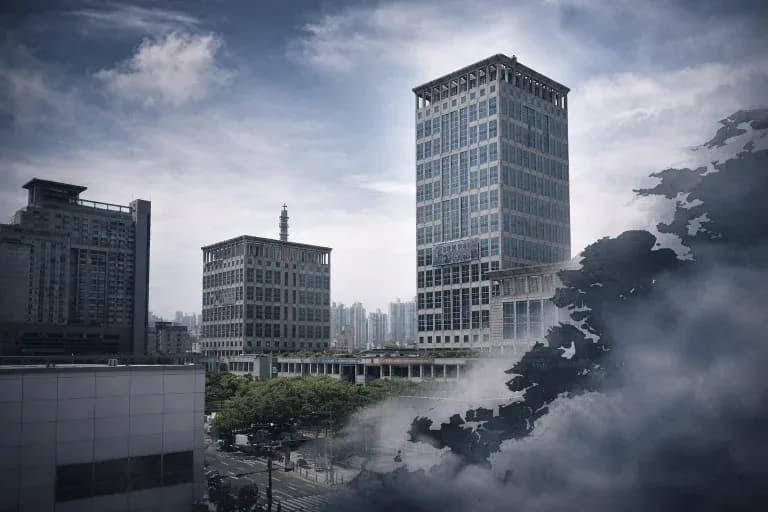
At first glance, the campus of a provincial university in South Korea appears ordinary: a modern facade, a landscaped quad, a library bathed in fluorescent light. But inside the lecture halls, there is a stark emptiness. Once bustling with Korean undergraduates, these classrooms are now sparsely populated—often filled only by international students from Vietnam, Uzbekistan, or Mongolia, quietly taking notes in languages they barely understand.
Korea’s regional universities are facing an existential crisis. Fueled by the country’s collapsing birth rate and the intensifying migration of young talent to Seoul, many non-capital institutions are operating far below capacity. In response, universities have turned to a short-term solution: importing students from abroad. These international enrollees—who often pay full tuition in cash—now make up a growing proportion of student bodies in rural and coastal areas.
But the cost of survival has come with a new kind of collapse: the erosion of educational quality, rising cultural isolation, and a growing chorus of foreign students who say they were promised one thing but received another. From incomplete English-language instruction to disconnected faculty and outdated curricula, the stories from the ground point not only to a demographic problem, but to a systemic failure in how South Korea manages its regional higher education system.
For many international students, studying in South Korea is marketed as a gateway to high-tech opportunity, global education, and cultural exchange. But for those enrolled in non-capital regional universities, the reality often feels starkly different.
“I was told the classes would be in English,” said one student from Nepal on Reddit. “But most lectures are conducted entirely in Korean—and the professors don’t really engage with foreign students. They just read off the slides.”
Another student studying at a university in South Gyeongsang Province described the academic environment as “shockingly easy” and “deeply disengaged.” “Sometimes I feel like they’re just trying to get us through the system to collect our tuition,” he wrote.
These experiences are not isolated. Interviews and online testimonials from international students paint a consistent picture: a lack of academic rigor, disorganized administration, and minimal support for integration. In some cases, students are randomly assigned thesis advisors who have no expertise in their field. In others, foreign students report that professors don’t respond to emails and often fail to show up for office hours.
According to government data, more than 20% of the student body in some regional universities is now made up of foreign nationals, with some institutions exceeding 30%. These students are often admitted under relaxed academic and language requirements compared to Korean applicants, sometimes without Korean-language skills or entrance exams.
While these policies keep schools afloat financially, they may be undermining the integrity of the academic system. “Korean undergrad is a joke,” one foreign student wrote bluntly. “I’m in my 14th week, and we’re still learning basic high school math.”
This lowering of standards isn’t just an academic issue—it’s also reputational. Degrees from many regional universities carry little weight outside Korea, and even within Korea, employers remain skeptical of their value. For the majority of international graduates, post-graduation employment is nearly impossible: only about 8.2% of foreign students find work in Korea, while more than half remain in limbo after their student visas expire.
In response to mounting concerns over demographic collapse and educational inequality, the South Korean government introduced several initiatives aimed at “revitalizing” regional higher education. Chief among them is the Glocal University 30 project, a short-term funding program that promises up to 100 billion won over five years to selected universities that demonstrate innovation and regional engagement.
But critics argue that such programs are not only insufficient—they’re misaligned with the reality on the ground. Indeed, only a small fraction of institutions have been selected for the Glocal initiative, leaving the majority of at-risk universities without meaningful support. More importantly, the project is not accompanied by legal mechanisms to encourage structural reform—such as faculty accountability, curriculum modernization, or enrollment caps.
Meanwhile, regional universities continue to rely heavily on tuition from foreign students, many of whom are unaware that they’re entering a system stretched to its limits. Without meaningful integration policies, improved teaching standards, or post-graduation job pathways, these international recruits are left in a system that offers degrees, but few futures.
Other countries facing similar demographic and geographic challenges have taken bolder steps. In Japan, the Ministry of Education has designated over 100 institutions as “underperforming,” with mandatory restructuring or phased closure based on enrollment, research output, and student outcomes. Germany’s federal–state coordination model emphasizes consolidation, cross-campus specialization, and regional education hubs that share faculty and resources.
South Korea, by contrast, has no legal framework for downsizing or merging failing universities—especially private ones. This means that institutions can continue to operate with declining quality and accountability, even as public funds are poured in through development grants and international recruitment campaigns.
For many foreign students, the sense of disillusionment runs deep. They arrive in South Korea with hopes of quality education and international opportunity. Instead, they often find themselves in underfunded classrooms, isolated from local peers, and ultimately stranded in a job market that doesn’t want them.
“I paid full tuition, passed every class, but still couldn’t get a single interview,” said a Mongolian graduate of a provincial university. “No one explained that the degree would mean almost nothing when I applied for a job in Korea.”
These experiences underscore a painful truth: Korea’s regional universities are no longer institutions of higher learning—they are struggling enterprises clinging to relevance through the tuition of students they cannot properly serve. The damage is not just institutional or economic; it is personal, felt by the thousands of young people—Korean and foreign alike—who are promised a future and left with debt, disappointment, and diplomas of diminished value.
Without structural reform—one that includes faculty renewal, institutional mergers, curriculum modernization, and legal accountability—the system will continue to erode. Stopgap funding projects like Glocal University may prolong the timeline, but they do not change the trajectory.
As Korea grapples with the demographic cliff and global competition, the real test will be whether it can build an education system that produces knowledge, not just credentials—and whether it has the political will to let failing universities close, so that stronger ones may evolve.
The Weekly Breeze
Keep pace with Busan's deep narratives.
Delivered every Monday morning.