Eat Less, Recover More: The Future of the Lunch Hour
Skipping lunch may sound extreme — until you see what a short nap, sunlight, or quiet time can do for your mind, metabolism, and mood.

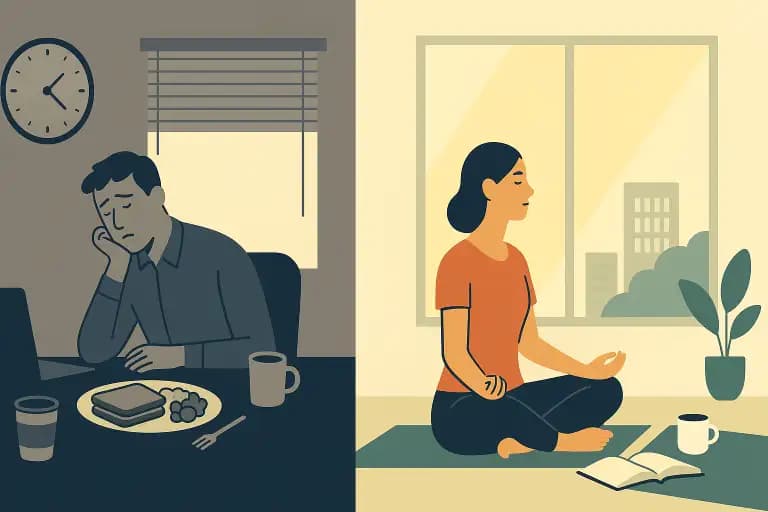
Across offices in Seoul, New York, and Berlin, a quiet transformation is underway. The lunch break — once a non-negotiable hour for shared meals and mental reset — is increasingly being skipped, trimmed, or repurposed. In one global survey, nearly 1 in 2 workers admitted to skipping lunch at least once a week, many citing productivity pressure or a desire to avoid post-meal fatigue.
For much of the modern era, lunch has been treated as a fixed ritual — a midday meal seen as vital to maintaining energy and productivity. But as daily life shifts toward desk-bound work and prolonged cognitive load, the physiological logic behind this tradition is being reexamined. A growing body of research suggests that the conventional lunch — often heavy, rushed, and automatic — may dull focus, disrupt circadian rhythms, and contribute to metabolic stress.
In its place, alternatives are emerging: time-restricted eating, low-glycemic snacking, structured midday naps, and even fasting are being explored not just for weight management, but for their effects on brain function, hormonal balance, and long-term health. Increasingly, what the body and brain may need at midday is not a full meal, but a reset — a deliberate pause that prioritizes recovery over refueling.
The Body Runs on Light, Not the Clock
The idea of eating three fixed meals a day is a relatively modern invention. For most of human history, food was consumed opportunistically — when available — rather than according to the clock. In hunter-gatherer societies, meal timing was shaped by activity, daylight, and survival, not rigid schedules. The standardized "breakfast-lunch-dinner" structure only emerged with the rise of industrial labor in the 18th and 19th centuries, when factory shifts demanded a predictable rhythm of rest and refueling.
Yet biology has not evolved in tandem with this cultural construct. According to research in chrononutrition and circadian biology, the human body is metabolically primed for caloric intake earlier in the day. Insulin sensitivity, digestive efficiency, and lipid metabolism all peak during the morning and early afternoon, then gradually decline into the evening.
Studies show that consuming the majority of calories late in the day — or during periods of biological "rest" — increases the risk of metabolic disorders, including type 2 diabetes and obesity. Conversely, aligning food intake with circadian peaks — for example, limiting meals to an 8-hour window between 8 a.m. and 4 p.m. — has been associated with improved glucose control, fat oxidation, and even gene expression related to aging.
In this light, the traditional lunch — often delayed, large, and misaligned with biological timing — may be doing the opposite of what it's intended to: rather than boosting energy, it may be impairing it.
The Midday Reset Your Brain Was Built For
In contrast to the idea that food is the only effective fuel for the afternoon, recent research suggests that strategic rest may outperform a standard meal when it comes to sustaining mental clarity and metabolic balance. Cognitive neuroscientists have long observed the post-lunch dip — a period of reduced alertness and reaction time that occurs regardless of actual food intake. While part of this dip is governed by circadian rhythms, it is often intensified by high-calorie, high-carbohydrate meals that raise blood glucose rapidly and then trigger a crash.
One increasingly studied countermeasure is the short-duration nap. A 2002 NASA study found that a 26-minute nap could enhance alertness by 54% and improve performance by 34%. More recent research from the University of Michigan and the University of California, Berkeley, confirms that 10–30 minute naps not only improve memory consolidation and mood but can also reduce the body’s stress response by lowering cortisol levels. In Korea, a longitudinal study of 3,400 adults over five years found that brief naps taken once or twice a week correlated with a 48% reduction in cardiovascular risk, including heart attack and stroke.
From a metabolic perspective, time-restricted eating (TRE) — particularly early-TRE, which concentrates meals in the morning and early afternoon — has shown promising results. A 2020 randomized trial published in Cell Metabolism revealed that participants who followed a 6-hour eating window from 8 a.m. to 2 p.m. had significantly better insulin sensitivity, lower blood pressure, and reduced oxidative stress compared to those on a typical eating schedule. Importantly, the benefits occurred independent of calorie intake, indicating that timing, not just quantity, plays a pivotal role.
These findings converge on a common insight: the body and brain may not require a heavy midday meal to function optimally. In many cases, they perform better with less — or with nothing at all — so long as recovery, not depletion, is prioritized.
From Cafeterias to Quiet Zones
As the science around midday recovery gains traction, a quiet cultural shift is taking place in offices around the world. In place of cafeterias packed with employees, some workplaces now feature nap pods, meditation rooms, or flexible break policies that allow workers to spend their lunch hour resting, walking, or engaging in low-stimulation activities.
In South Korea, where work intensity and desk time are among the highest in the OECD, some startups and media companies have begun offering “quiet time zones” during the lunch hour — designated areas where employees can stretch, nap, read, or simply unplug. In Australia and the U.S., companies such as Google, Adobe, and Zappos have adopted structured nap policies or introduced “non-meeting blocks” during early afternoons to protect employees’ cognitive recovery windows.
These shifts aren’t just wellness trends; they align with measurable productivity outcomes. A 2023 report by the American Psychological Association found that employees who took non-eating restorative breaks — including short naps, silent breaks, or time in nature — reported 18% higher afternoon task performance and 34% lower reported stress than those who ate lunch while working or skipped breaks altogether.
There’s also growing interest in redefining lunch breaks as “recovery sessions” — brief interludes that restore neurochemical balance and protect long-term mental health. Rather than mandating full meals, progressive employers are beginning to offer choice: snack bars and hydration stations in place of buffets, or opt-in “recharge rooms” in lieu of cafeterias. The shift is not just physical but philosophical — a recognition that in knowledge-based work, cognitive energy is the true calorie, and protecting it requires more than just food.
Who Should Skip Lunch — and Who Shouldn’t
While the emerging science supports midday recovery over traditional lunch for many, no single routine fits all bodies, brains, or workplaces. As with any shift in eating or recovery patterns, context and personal physiology matter. The goal is not to eliminate lunch universally, but to encourage intentional design of the midday interval — guided by biology, not just habit.
For some, especially those with sedentary workstyles and consistent morning nutrition, skipping or simplifying lunch may enhance clarity and metabolic balance. A light snack paired with a short nap or mindful pause can deliver better afternoon focus than a heavy meal. Others — particularly those with high physical demands, irregular sleep, or blood sugar sensitivity — may require more structured mid-day nutrition.
Chronobiologists also caution against late, large meals as compensation. Time-restricted eating shows its greatest benefits when meals are confined to daylight hours, ideally concluding before 6 p.m. Evening feasting after a skipped lunch can counteract metabolic gains and disrupt sleep quality.
Mental health must also be factored in. For individuals with a history of disordered eating, rigid control over meal timing can trigger unhealthy behaviors. Flexibility, professional oversight, and the option of “light but nourishing” midday meals may be more sustainable and psychologically sound than total omission.
For employers and institutions, the takeaway is not to ban lunch, but to diversify its function. Whether through designated quiet zones, flexible meal policies, or integrated wellness windows, the structure of the midday break can — and arguably should — evolve to reflect how modern brains and bodies work best.
The Pause That Performs
The idea that food must anchor the midday break is deeply embedded in culture, reinforced by school bells, lunch menus, and workplace calendars. But biology tells a different story — one in which timing, recovery, and rhythm matter more than ritual.
For modern workers navigating cognitive overload and sedentary routines, the most productive lunch hour may not revolve around food at all. It may be a restorative interval, shaped by silence, movement, sunlight, or sleep — designed not to feed the body, but to reset the mind.
As science advances and work culture evolves, so too must our assumptions about sustenance. Lunch isn’t going away — it’s being redesigned.
The Weekly Breeze
Keep pace with Busan's deep narratives.
Delivered every Monday morning.