Can the 15-Minute City Climb? Rethinking Urban Equity in the Hills of Busan
As the 15-minute city model spreads, Busan tests its limits—facing elevation, equity, and the future of urban design.

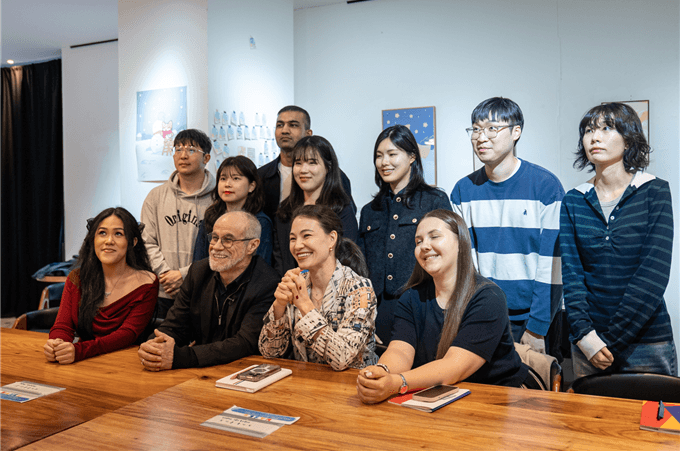
As one of the world’s densest and most topographically complex cities, Busan is putting Carlos Moreno’s “15-minute city” theory to the test—with steep slopes, aging neighborhoods, and shifting demographics demanding an urban model that moves beyond the flat maps of Paris.
When Carlos Moreno, the French-Colombian urbanist behind the global “15-minute city” movement, returned to Busan last week, he wasn’t just revisiting a city. He was confronting a challenge to his own theory.
Three years ago, Moreno praised Busan’s vision to decentralize daily life—bringing work, education, culture, and healthcare within a 15-minute walk or bike ride from any home. This year, he walked the narrow streets of its trial districts, spoke with young citizens in youth hubs, and stood in the city’s new anchor spaces like the “Deullak-Nallak” children’s cultural complex. His verdict was warm: Busan is emerging as Asia’s boldest laboratory for his ideas.
But beneath the optimism lies a difficult truth: Busan is not Paris. And the 15-minute city was never designed for vertical living.
Moreno’s core idea—chrono-urbanism—calls for a return to human-centered urban time. It seeks to collapse the distances that modern planning stretched out, reducing car dependency while strengthening local life. But his model assumes a degree of spatial continuity: a city you can walk through, not climb.
Busan, carved between mountains and coastlines, is a city of fractured geographies. In neighborhoods like Ami-dong or Yeongdo, 15 minutes on foot might mean 300 stairs—not a stroll through a shaded boulevard.
This physical reality exposes a conceptual gap. What does 15 minutes mean when it includes a 30-meter vertical ascent? Can equity in urban time be measured in minutes if those minutes include pain, sweat, and barriers for the elderly or disabled?
As Moreno himself has acknowledged, “The 15-minute city is a living concept—it must adapt to context.” In Busan, the context is slope.
Experts and local planners are now calling for a revision of the theory—one that moves from “chrono-urbanism” to “topo-urbanism.” In this framework, elevation is not a footnote but a central axis of urban justice.
This means recalculating access by factoring in slope-adjusted walking time, rethinking public mobility as a vertical system, and designing policies that don’t just bring services closer—but bring people closer to services.
Cities like Medellín, Colombia, offer inspiration. Its award-winning Metrocable gondola system connected previously isolated hillside communities to the urban core. Ridership soared. Crime fell. So did inequality. Could Busan follow suit?
The city’s current mobility plans include light trams and public elevators, but most routes remain confined to flat new developments like Eco Delta City. Hillside communities still rely on narrow alleys and staircases—many of them unlit, crumbling, or steep enough to deter all but the young and healthy.
Without a vertical transit revolution, Busan’s dream of equitable urban access remains grounded.
Busan has earned praise for its “anchor facility” strategy—planting cultural, social, and ESG hubs throughout neighborhoods. But these efforts are often concentrated in well-connected areas, bypassing the most vulnerable zones: aging hillside districts where vacancy rates are rising and infrastructure is decaying.
Public elevators, where installed, suffer from low utilization and inconsistent maintenance. Residents report feelings of insecurity, especially at night. Meanwhile, older homes perched on slopes remain uninsulated, structurally weak, and increasingly abandoned.
Without integrated solutions, Busan risks accelerating the hollowing of its core—the very opposite of what the 15-minute city promises.
So what would a truly “Busan-style” 15-minute city look like?
Urbanists propose a layered approach: a network of inclined lifts, mini-funiculars, and slope-assisted e-mobility options; zoning reforms that cluster mixed-use services on hilltops as well as valleys; pedestrianized “living alleys” reclaimed from neglected backstreets; and public mapping systems that calculate accessibility based on real terrain—not Google Map flatness.
But just as importantly, the city must address housing. Introducing renovation grants, incentivizing landlords to revitalize vacant hillside homes, and ensuring affordable housing is embedded not just in new districts but in the vertical cityscape.
This is not about copying Paris. It’s about creating an original, resilient model—one that could lead the next wave of innovation for cities like Rio, Hong Kong, Naples, and Freetown.
Moreno ended his visit by inviting Busan to the upcoming global 15-minute city conference in Paris this fall. “I hope Busan will be a hub for Asia,” he said. But the real stage is not in Paris. It’s here.
If Busan succeeds in adapting the 15-minute city for steep, fragmented, rapidly aging geographies, it won’t just join the movement—it will redefine it.
The question is no longer, “Can the 15-minute city climb?”
It’s: “Can we build cities worth staying in, no matter where you live—valley or hill, alley or avenue?”
In Busan, the climb has already begun.
The Weekly Breeze
Keep pace with Busan's deep narratives.
Delivered every Monday morning.