Busan Unveils BuTX Rail Plan at RailLog Korea 2025
Busan reveals its hydrogen-powered BuTX rail project at RailLog Korea 2025, drawing global attention to sustainable urban transit and smart mobility.

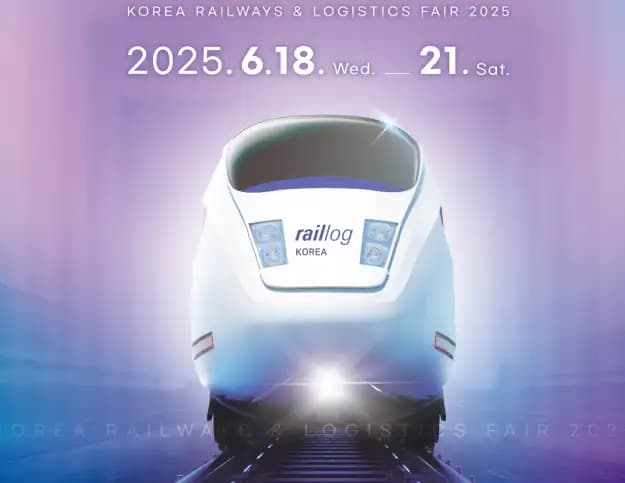
Busan, South Korea — RailLog Korea 2025 opened this week in Busan amid heightened attention to sustainable mobility and transit innovation. Held biennially since 2003, the event brings together railway manufacturers, technology providers, and policy institutions from across 17 countries. This year’s edition, the largest to date, hosts 137 companies across 951 booths at the BEXCO convention center.
While the exhibition serves as a global platform for showcasing advances in rolling stock, infrastructure, and digital systems, it also offers the host city a moment to articulate its own ambitions in transit modernization. At the center of that effort is BuTX—the Busan-type Express Rail—introduced by the city government as a proposed hydrogen-powered express commuter system designed to improve connectivity across the metropolitan region. Though still at the planning stage, the project forms part of a broader discussion in Korea about next-generation transport infrastructure and climate-oriented urban policy.
The BuTX project is a proposal by the Busan Metropolitan Government to establish a high-speed, hydrogen-powered urban rail line that would serve as a new axis of mobility across the city. Designed to operate on dedicated deep-level corridors, the line would offer rapid connections between major districts and strategic sites, including the planned Gadeok New Airport. According to city officials, the service is intended to alleviate transit deserts—areas currently underserved by conventional subway infrastructure—and to reduce congestion along existing east–west routes.
Technologically, BuTX is envisioned as part of a shift toward cleaner and more efficient public transportation. Hydrogen propulsion, which emits only water vapor, is seen as a potential solution to the dual challenge of reducing urban emissions while maintaining high-capacity, long-distance service. The concept mirrors a growing interest in hydrogen rail systems globally, including early deployments in countries such as Germany and Japan.
However, the project remains in a conceptual and promotional phase. Details regarding funding mechanisms, route engineering, or implementation timelines have not yet been finalized. Its inclusion in the exhibition highlights both the city’s forward-looking posture and the uncertainties that often accompany long-term infrastructure planning. Observers note that the success of BuTX will depend not only on technological feasibility, but also on sustained political will, inter-agency coordination, and public support.
This year’s RailLog Korea arrives at a moment when the rail industry is navigating both technological transformation and shifting geopolitical competition. The 2025 exhibition brings together 137 companies from 17 countries, making it the largest in the event’s history. The show occupies more than 17,000 square meters at BEXCO, with displays ranging from rolling stock and signaling systems to clean propulsion and digital management platforms.
South Korea’s major manufacturers have a visible presence. Hyundai Rotem is presenting a working model of a hydrogen-powered train developed for both domestic use and international export, including versions tailored for projects in Canada. Woojin Industrial Systems is exhibiting its fully autonomous light rail vehicle, the K-AGT, alongside an electric self-driving bus, which the company says could offer a low-emission solution for feeder routes in urban environments. Other domestic firms are showcasing advances in braking systems, onboard electronics, and condition-based monitoring.
International participation includes China's state-owned CRRC, the world’s largest rolling stock producer. Its presence highlights both market interest in Korean partnerships and a broader competition among Asian and European suppliers to define the next generation of urban and intercity rail standards. While exhibitors emphasize sustainability and automation, many of the technologies remain at the prototype or pilot stage, with commercial readiness varying widely across firms and product types.
Despite the forward-looking tone of the exhibition, questions remain about the practical viability and timelines of many of the technologies on display. While hydrogen propulsion has garnered attention for its environmental benefits, the infrastructure required to support it—such as fueling stations, safety protocols, and supply chains for green hydrogen—remains limited in South Korea. For projects like BuTX to proceed beyond concept, significant investment in parallel systems would be required.
Similarly, artificial intelligence tools demonstrated at RailLog, including station navigation aids and multilingual digital assistants, reflect the industry’s growing interest in automation and user experience. However, most remain in testbed or pilot environments, with limited deployment in live railway settings. Integration with legacy systems, privacy concerns, and regulatory approval processes represent additional hurdles.
Some exhibitors acknowledged that market adoption depends as much on public policy and procurement frameworks as on technical readiness. In this context, RailLog serves less as a launchpad for immediate deployment and more as a platform for shaping narratives, building networks, and signaling intent. For cities like Busan, the challenge will lie in translating high-level proposals into coherent long-term plans, backed by funding, institutional support, and phased implementation strategies.
Busan’s role as the host of RailLog Korea is not incidental. As South Korea’s second-largest city and a key logistics hub, Busan has long sought to differentiate itself through large-scale infrastructure projects and regional development initiatives. Its repeated hosting of RailLog—far from the political and economic gravity of Seoul—aligns with its strategic ambitions to become a center for smart mobility and international trade connectivity.
The proposed BuTX project plays into this vision. If realized, the express rail line would support the development of Gadeokdo New Airport, a project the city sees as critical to its long-term competitiveness in Northeast Asia. By improving access to the airport and connecting peripheral districts to the urban core, BuTX could enhance both passenger mobility and freight efficiency. City officials have also linked the project to broader efforts around carbon neutrality, suggesting that hydrogen-powered transit could become a model for sustainable urban planning.
Yet the proposal exists within a complex policy landscape. Busan is part of the so-called “Southeast Megacity” initiative, which aims to foster greater integration between Busan, Ulsan, and Gyeongnam Province. Coordination across municipal and national agencies will be essential for any large-scale infrastructure plan to move forward. Moreover, as with other regional development projects in Korea, questions about budget allocations, environmental assessments, and long-term demand forecasts remain central to the debate.
Alongside its emphasis on innovation and infrastructure, RailLog Korea 2025 includes programming aimed at workforce development. A railway job fair, held on June 20 as part of the event’s official schedule, brings together public institutions such as KORAIL and the Korea National Railway with private sector manufacturers and service providers. The goal, according to organizers, is to create clearer pathways into the rail industry for students and early-career professionals.
Information booths, recruitment presentations, and consultation sessions are designed to give attendees insight into the diverse roles within the sector—from mechanical engineering and systems development to project planning and digital operations. With many of Korea’s transportation agencies facing workforce aging and a competitive talent environment, events like RailLog offer a chance to reintroduce the industry to a new generation.
Still, it remains to be seen how directly such exhibitions translate into employment outcomes. Critics point out that the majority of hiring in the public transport sector occurs through formal civil service examinations or long-established recruitment pipelines. Moreover, while RailLog facilitates networking, long-term labor challenges such as automation, wage stagnation, and regional job imbalances require broader structural responses.
Nevertheless, the inclusion of employment programming suggests a recognition that transit infrastructure is not only a matter of capital investment, but also one of human capacity. As the rail sector evolves toward greater digitalization and green technologies, attracting and training a technically skilled workforce will be critical to realizing the ambitions presented at events like RailLog.
RailLog Korea 2025 positions itself at the intersection of government policy, industrial research, and urban development strategy. A wide range of technical seminars and forums held during the exhibition address topics such as cybersecurity in rail systems, interoperability standards, battery-powered rolling stock, and the integration of hydrogen mobility into existing networks. These sessions provide a venue for knowledge exchange between engineers, regulators, and corporate stakeholders, and reflect the increasingly multidisciplinary nature of modern transit planning.
Public agencies including the Korea Railroad Research Institute and the Ministry of Land, Infrastructure and Transport use the exhibition to share updates on national projects and infrastructure priorities. In turn, private firms leverage the event to present prototypes and position themselves for future contracts, both domestically and abroad. The event’s format, which combines open exhibits with closed-door briefings and business matching sessions, underscores its dual function as a trade show and policy platform.
However, RailLog’s public-facing dimension remains relatively narrow. While the exhibition is open to general visitors on its final day, the bulk of the programming is tailored to industry insiders. Interactive displays and merchandise outlets, such as KORAIL’s "Train Mates" gift shop, provide some cultural touchpoints, but deeper civic engagement—such as public feedback on urban rail planning or community involvement in project prioritization—is limited.
From hydrogen propulsion to AI-enabled station services, many of the innovations presented remain early in their lifecycle. The path from prototype to practical deployment involves not just technical refinement, but also infrastructure investments, regulatory coordination, and long-term public support. For BuTX in particular, key questions—ranging from funding mechanisms to ridership forecasts—remain unanswered. Without clear implementation timelines or intergovernmental agreements, the project risks remaining more symbolic than structural.
Still, the exhibition’s international scope and growing corporate participation suggest that Korea’s rail industry is increasingly embedded in a broader global context. As competition intensifies for export markets, technology leadership, and environmental credibility, events like RailLog may serve as both a testing ground and a diplomatic venue. For Busan, the combination of strategic location, industrial base, and institutional backing provides a strong foundation—but one that will require sustained political and fiscal commitment to evolve into a functional mobility ecosystem.
Whether RailLog’s proposals translate into tangible results will depend on decisions made long after the exhibition halls are cleared. What is evident, however, is that the conversation around urban mobility in South Korea is no longer limited to technical specifications—it now encompasses climate policy, spatial equity, and the future shape of the city itself.
The Weekly Breeze
Keep pace with Busan's deep narratives.
Delivered every Monday morning.