Busan International Film Festival Marks 30 Years with New Awards and Global Lineup
At 30, the Busan International Film Festival redefines its global role. BIFF 2025 introduces the Busan Awards, premieres Park Chan-wook’s No Other Choice, and gathers filmmakers from 64 countries for Asia’s largest film festival.

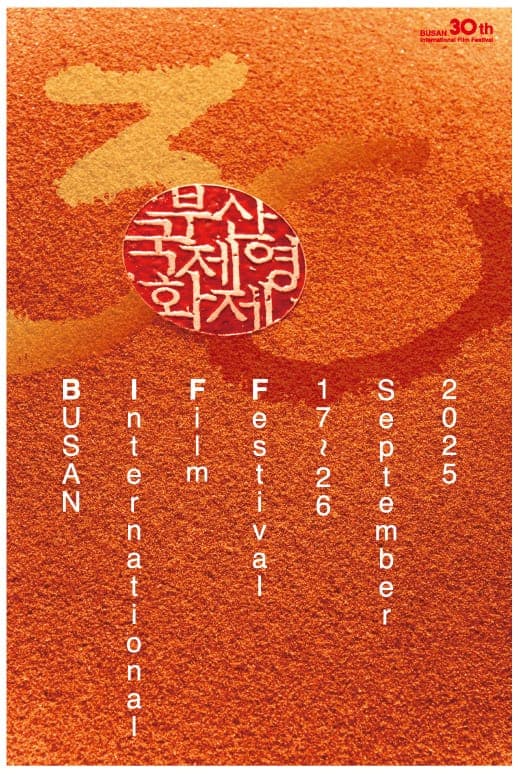
Busan, South Korea — The Busan International Film Festival (BIFF) opens its 30th edition on September 17 with a program that reflects both continuity and reinvention. What began in 1996 as a modest showcase for Asian cinema now stretches across seven theaters and 31 screens, presenting 241 official selections from 64 countries alongside community screenings that bring films into the city’s streets and neighborhoods.
At the center of this turning point stands Park Chan-wook’s No Other Choice. Adapted from Donald Westlake’s novel The Ax, the 139-minute feature follows a middle-aged manager whose sudden layoff triggers a spiral of desperation. With Lee Byung-hun, Son Ye-jin, Park Hee-soon, and Cha Seung-won in leading roles, the film paints unemployment not as a statistic but as a corrosive force that eats into dignity, family, and morality. Park has described the project as a twenty-year obsession; its arrival now, in an age of AI-driven labor disruption, feels pointed. Critics in Venice called it a “state-of-the-nation satire” and one of the competition’s standouts, and the film has already been chosen as Korea’s Oscar submission with North American release secured by distributor NEON.
The introduction of an official competition section defines BIFF’s 30th edition. Fourteen films from across Asia — spanning Iran, Sri Lanka, Taiwan, Japan, and Tajikistan — will vie for the newly created Busan Awards. The trophies, designed by Apichatpong Weerasethakul, carry symbolic weight: the visual language of one of Asia’s most experimental filmmakers lending authority to a new contest. The jury, led by Korean director Na Hong-jin and joined by Tony Leung Ka-fai, Nandita Das, Marzieh Meshkini, Kogonada, Yulia Evina Bhara, and Han Hyo-joo, represents a spectrum of perspectives that is itself a statement of intent.
Recognition this year also reaches beyond the competition. Iranian director Jafar Panahi receives the Asian Filmmaker of the Year award, honoring decades of work made under censorship and travel bans. Sylvia Chang, the Taiwanese actor-director whose career bridges commercial and art cinema, is celebrated with the Camellia Award. Korean veteran Chung Ji-young is named for the Korean Film Achievement Award. These selections remind audiences that BIFF has long been as much about resilience and memory as about premieres.
Industry has its counterpart in the Asia Contents & Film Market (ACFM), celebrating its twentieth year at BEXCO from September 20 to 23. Here, 1,200 companies from 50 countries converge, and new platforms like InnoAsia and Doc Square highlight the festival’s recognition that cinema is inseparable from technology and transnational collaboration. The ACFM does not just run parallel to the festival; it has become one of the reasons Busan is a fixed stop on the global film calendar.
What makes BIFF distinctive, however, is its insistence on keeping the festival porous. The Community BIFF programs, returning to Nampo-dong squares and neighborhood theaters, and the Dongne Bangne screenings across 15 districts, are less about glamour than about embedding cinema into daily civic life. Few major festivals sustain this double structure: one aimed at industry and global press, another woven into the fabric of a port city.
As BIFF turns thirty, its ambitions are clear. The new competition signals a desire to be measured against Cannes and Venice, yet the expansion of community programs affirms that its identity remains local, participatory, and public. That duality — global aspiration and neighborhood intimacy — may be what keeps Busan singular in a crowded festival landscape.
The Weekly Breeze
Keep pace with Busan's deep narratives.
Delivered every Monday morning.