Why AI Needs to be Regulated: The Importance of Ethical Considerations
Artificial intelligence (AI) has rapidly evolved over the years, becoming an integral part of our daily lives. From chatbots to self-driving cars, AI has significantly impacted various industries, from healthcare to finance. However, the lack of regulation and ethical considerations surrounding the development and deployment of AI has led to serious concerns. As a result, it is imperative that AI is regulated and legislated alongside humanities and philosophers. The development of AI is primari


Artificial intelligence (AI) has rapidly evolved over the years, becoming an integral part of our daily lives. From chatbots to self-driving cars, AI has significantly impacted various industries, from healthcare to finance. However, the lack of regulation and ethical considerations surrounding the development and deployment of AI has led to serious concerns. As a result, it is imperative that AI is regulated and legislated alongside humanities and philosophers.
The development of AI is primarily driven by technical expertise, with little consideration for the ethical implications of its deployment. As AI continues to evolve and become increasingly sophisticated, there is a growing concern that its deployment could have unintended consequences. For example, facial recognition technology has been shown to be biased against certain ethnicities, leading to concerns about racial profiling. Similarly, AI algorithms used in credit scoring have been criticized for being discriminatory against certain groups of people.
The ethical implications of AI deployment are not limited to bias and discrimination. There are also concerns about privacy violations, as AI technology can be used to track individuals’ movements and behaviors. Additionally, the increasing automation of jobs could lead to widespread unemployment, potentially resulting in social unrest and economic instability.
To address these concerns, regulation and legislation are necessary. This would involve setting ethical standards for the development and deployment of AI, as well as defining its limits and applications. However, regulating AI requires more than just technical expertise. It requires an understanding of the social, cultural, and ethical implications of AI technology.
Incorporating humanities and philosophy into the regulation and legislation of AI is crucial. Humanities and philosophy provide a unique perspective on the ethical implications of AI technology, allowing for a more comprehensive understanding of its impact on society. The incorporation of humanities and philosophy would ensure that the development and deployment of AI is done in a manner that is ethical, just, and equitable.
Moreover, incorporating humanities and philosophy into the development and deployment of AI would enable the creation of a framework that prioritizes human values, such as privacy, autonomy, and fairness. This would ensure that the development of AI is aligned with human needs, rather than just technological advancements.
The development and deployment of AI require regulation and legislation that incorporates the perspectives of humanities and philosophy. As AI technology continues to evolve and impact various aspects of our daily lives, it is imperative that it is developed and deployed in a manner that is ethical, just, and equitable. Failure to do so could have unintended and harmful consequences for individuals and society as a whole. Therefore, it is our collective responsibility to ensure that AI is developed and deployed in a manner that is aligned with human values and needs.
Continue this reporting
Reporting on the same issue
Related coverage selected from the article's desk, topics and newsroom relationships.
 NewsOct 19, 2026
What an Accurate Rainfall Forecast Can Still Miss
AI weather forecasts can capture where rain will fall while underestimating i...
 NewsOct 7, 2026
The Moon’s Industrial Future Begins With What Missions No Longer Need to Carry
Water, sunlight, safe landing terrain, communications and power do not natura...
 NewsOct 2, 2026
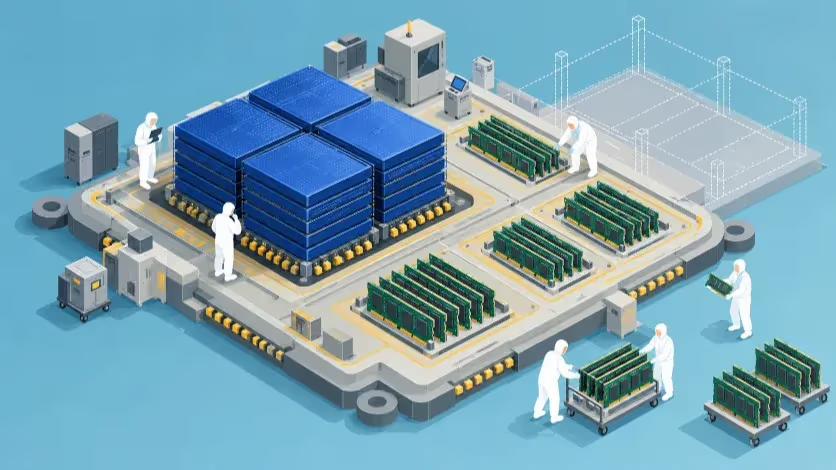
AI Is Reallocating the World’s Memory Factories
AI demand is forcing memory makers to decide how scarce DRAM capacity is divi...
More from the author
More from this byline
Stay with the same line of reporting through more work from this byline.
 NewsOct 9, 2026
Why “Busan Is Good” Falls Short as a City Brand
 NewsSep 18, 2026
The Other AI Race Is for the Freedom to Change Course
Reader Signal
Community readWhat did this report leave you with?
Choose the signal that best reflects your reading. Select it again to remove it.
One response per article
No response selected
A moderated conversation about the reporting.
One-level replies and newsroom moderation keep the conversation anchored to this article.
Discussion Status
Open
Please sign in to join the discussion.
Newsletter
Weekly reporting and context from Busan and Korea.